
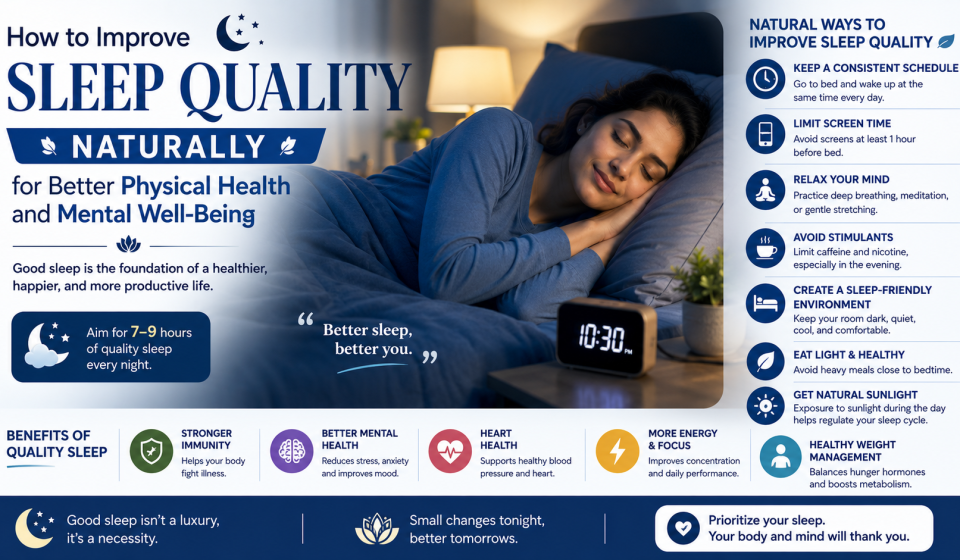
Sleep Better Naturally: Proven Ways to Improve Sleep Quality for Better Physical Health and Mental Well-Being

Developing healthy sleep habits naturally can significantly improve both physical and mental health without relying on medication.
Quality sleep is one of the most essential pillars of good health, yet it is often neglected in today’s fast-paced world. Many people struggle with falling asleep, staying asleep, or waking up feeling refreshed due to stress, unhealthy lifestyle habits, excessive screen time, or underlying health conditions. Poor sleep can affect every aspect of life, from energy levels and concentration to immune function and emotional well-being.Sleep is much more than simply resting the body. During sleep, the brain processes information, repairs tissues, regulates hormones, strengthens the immune system, and restores energy for the next day. Consistently getting high-quality sleep can reduce the risk of chronic diseases, improve mood, enhance productivity, and support long-term wellness. Understanding the importance of healthy sleep and adopting natural strategies can help individuals enjoy deeper, more restorative rest every night.
Why Sleep Quality Matters
Sleep quality refers to how well you sleep, not just how many hours you spend in bed. Good-quality sleep means falling asleep easily, staying asleep throughout the night, and waking up feeling refreshed and energized.
Poor sleep can negatively affect:
- Physical health
- Mental health
- Memory
- Concentration
- Mood
- Immune function
- Heart health
- Hormone balance
- Weight management
Adults generally need between seven and nine hours of quality sleep each night for optimal health.
Health Benefits of Quality Sleep
Getting enough restorative sleep offers numerous health benefits.
These include:
- Stronger immune system
- Improved memory and learning
- Better concentration
- Increased productivity
- Balanced hormones
- Healthy weight management
- Lower blood pressure
- Reduced stress
- Improved mood
- Better heart health
- Faster muscle recovery
- Reduced risk of chronic diseases
Quality sleep also supports emotional resilience and overall quality of life.
Common Causes of Poor Sleep
Many factors can interfere with healthy sleep.
Common causes include:
- Stress and anxiety
- Depression
- Excessive screen time
- Irregular sleep schedule
- Caffeine consumption late in the day
- Alcohol use before bedtime
- Heavy meals at night
- Lack of physical activity
- Chronic pain
- Sleep disorders such as insomnia or sleep apnea
- Noisy or uncomfortable sleeping environment
Identifying the cause is the first step toward improving sleep naturally.
Establish a Consistent Sleep Schedule
Going to bed and waking up at the same time every day helps regulate the body’s internal clock.
Even on weekends, maintaining a regular sleep schedule supports better sleep quality and makes it easier to fall asleep naturally.
Consistency is one of the most effective long-term sleep improvement strategies.
Create a Relaxing Bedtime Routine
A calming bedtime routine signals the brain that it is time to sleep.
Healthy bedtime activities include:
- Reading a book
- Taking a warm bath
- Practicing deep breathing
- Gentle stretching
- Meditation
- Listening to calming music
Avoid stimulating activities immediately before bedtime.
Limit Screen Time Before Bed
Smartphones, tablets, computers, and televisions emit blue light that suppresses melatonin production, making it harder to fall asleep.
Try to avoid screens for at least one hour before bedtime.
Instead, choose relaxing offline activities that promote sleep.
Improve Your Sleep Environment
Your bedroom should encourage restful sleep.
Helpful adjustments include:
- Keeping the room cool
- Using comfortable bedding
- Reducing noise
- Blocking outside light
- Maintaining good ventilation
- Choosing a supportive mattress and pillow
A comfortable sleep environment promotes uninterrupted rest.
Exercise Regularly
Regular physical activity helps people fall asleep faster and experience deeper sleep.
Beneficial activities include:
- Walking
- Cycling
- Swimming
- Strength training
- Yoga
- Stretching
Aim for at least 150 minutes of moderate exercise each week, but avoid intense workouts immediately before bedtime.
Eat Sleep-Friendly Foods
Certain foods naturally support healthy sleep.
Good options include:
- Bananas
- Almonds
- Walnuts
- Oatmeal
- Kiwi
- Cherries
- Yogurt
- Whole grains
- Leafy green vegetables
These foods provide nutrients like magnesium, calcium, and tryptophan that promote relaxation.
Avoid Late-Night Eating
Eating large meals close to bedtime can cause indigestion and discomfort that interfere with sleep.
Finish dinner at least two to three hours before going to bed whenever possible.
If hungry later, choose a light snack instead of a heavy meal.
Reduce Caffeine and Alcohol Intake
Caffeine can remain in the body for several hours and interfere with falling asleep.
Avoid coffee, energy drinks, and caffeinated soft drinks during the evening.
Although alcohol may initially cause drowsiness, it often disrupts deep sleep and leads to frequent nighttime awakenings.
Manage Stress Naturally
Stress is one of the leading causes of poor sleep.
Effective stress management techniques include:
- Meditation
- Mindfulness
- Journaling
- Deep breathing exercises
- Prayer
- Spending time in nature
- Talking with supportive friends or family
Reducing stress often leads to noticeable improvements in sleep quality.
Stay Hydrated
Drinking enough water supports overall health, but avoid consuming large amounts immediately before bedtime to reduce nighttime bathroom visits.
Maintaining proper hydration during the day contributes to better sleep.
Limit Daytime Naps
Short naps of 20 to 30 minutes can improve alertness without affecting nighttime sleep.
Long naps or naps taken late in the afternoon may make it difficult to fall asleep at night.
When to Seek Medical Help
Occasional sleep problems are common, but persistent sleep difficulties may indicate an underlying medical condition.
Consult a healthcare professional if you experience:
- Difficulty sleeping for several weeks
- Loud snoring
- Pauses in breathing during sleep
- Extreme daytime fatigue
- Frequent nighttime awakenings
- Morning headaches
- Difficulty concentrating due to poor sleep
Early diagnosis can help identify sleep disorders such as insomnia or sleep apnea and improve long-term health.
Natural Supplements and Sleep
Some people benefit from natural supplements such as melatonin or magnesium, but these should only be used after consulting a healthcare provider.
Self-medicating without professional guidance may not address the underlying cause of poor sleep.
Long-Term Habits for Better Sleep
Healthy sleep habits should become part of your daily lifestyle.
Successful long-term strategies include:
- Maintaining a regular bedtime
- Exercising consistently
- Eating a balanced diet
- Managing stress
- Limiting screen exposure
- Creating a peaceful bedroom environment
- Avoiding nicotine and excessive alcohol
- Seeking medical advice when necessary
Small daily improvements often lead to lasting sleep benefits.
Source Links
- https://www.who.int
- https://www.cdc.gov/sleep
- https://www.nhlbi.nih.gov
- https://www.sleepfoundation.org
- https://www.mayoclinic.org
Conclusion
Improving sleep quality naturally is one of the most effective ways to enhance physical health, mental well-being, and overall quality of life. Consistent sleep schedules, balanced nutrition, regular exercise, stress management, and a relaxing bedtime routine all contribute to deeper and more restorative sleep. By making healthy lifestyle changes and addressing sleep problems early, individuals can improve energy levels, strengthen their immune system, support emotional health, and reduce the risk of chronic diseases. Prioritizing quality sleep is a simple yet powerful investment in lifelong health and wellness.
Frequently Asked Questions (FAQ)
1. How many hours of sleep do adults need each night?
Most adults need between seven and nine hours of quality sleep every night for optimal physical and mental health.
2. What foods help improve sleep naturally?
Foods such as bananas, almonds, walnuts, oatmeal, kiwi, cherries, yogurt, and whole grains contain nutrients that may promote better sleep.
3. Does exercise improve sleep quality?
Yes. Regular physical activity helps people fall asleep faster, sleep more deeply, and wake up feeling more refreshed.
4. Why should I avoid screens before bedtime?
Electronic devices emit blue light that reduces melatonin production, making it more difficult to fall asleep and maintain healthy sleep cycles.
5. When should I see a doctor about sleep problems?
Seek medical advice if sleep difficulties persist for several weeks, cause excessive daytime fatigue, involve loud snoring or breathing pauses, or significantly affect your daily life.