Preventive Healthcare for Every Age Group: Essential Health Checkups for Children, Adults, and Senior Citizens

Healthcare professionals emphasize prevention because many serious conditions such as diabetes, hypertension, heart disease, osteoporosis, and certain cancers can develop silently without noticeable symptoms.
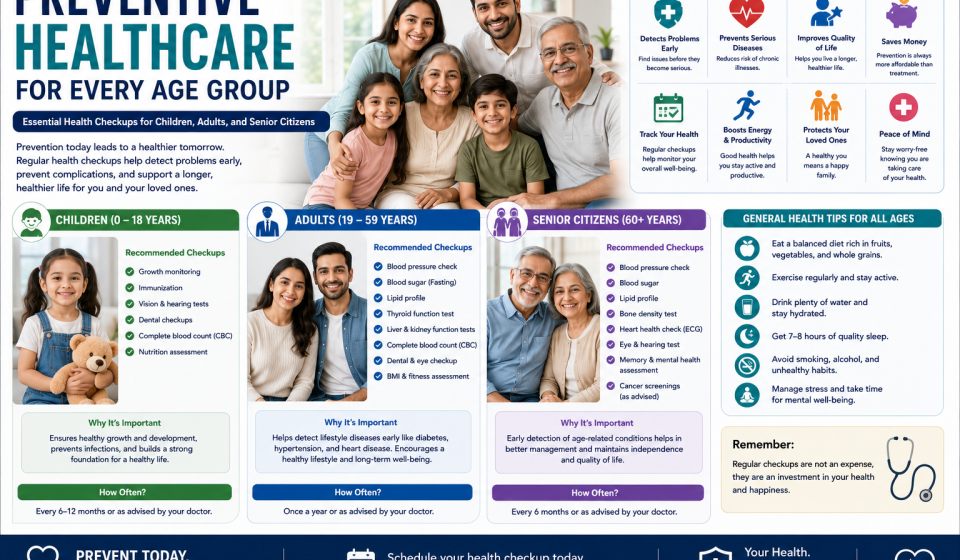
Preventive healthcare is one of the most effective ways to maintain good health, detect diseases early, and improve quality of life. Rather than waiting for symptoms to appear, preventive healthcare focuses on regular medical checkups, screenings, vaccinations, healthy lifestyle habits, and risk assessments that help identify health concerns before they become serious. From childhood to old age, every stage of life comes with unique health challenges and medical needs. Understanding which preventive measures are appropriate for each age group can significantly reduce the risk of chronic diseases and improve long-term well-being.Regular health screenings and routine examinations provide opportunities for early diagnosis and timely intervention. Whether it is monitoring a child’s growth, assessing an adult’s cardiovascular health, or screening an older adult for age-related conditions, preventive healthcare plays a vital role in supporting healthier and longer lives. This comprehensive guide explores essential preventive healthcare practices and recommended health checkups for children, adults, and senior citizens.
What Is Preventive Healthcare?
Preventive healthcare refers to medical services and lifestyle practices designed to prevent illnesses, detect diseases early, and maintain overall wellness.
Main Goals of Preventive Healthcare
- Disease prevention
- Early detection
- Health promotion
- Risk reduction
- Improved quality of life
- Increased life expectancy
Preventive care helps individuals stay healthier while reducing healthcare costs and complications.
Why Preventive Healthcare Matters
Regular preventive care offers numerous benefits throughout life.
Benefits
- Early disease diagnosis
- Better treatment outcomes
- Reduced risk of chronic illnesses
- Improved physical and mental health
- Lower healthcare expenses
- Enhanced longevity
Taking proactive steps toward health can significantly improve future outcomes.
Preventive Healthcare for Children
Childhood is a critical period for growth and development.
Importance
Early healthcare monitoring helps identify developmental issues, nutritional deficiencies, and medical conditions before they become serious.
Regular Pediatric Checkups
Routine visits to a pediatrician help monitor overall health.
Common Assessments
- Height and weight tracking
- Growth monitoring
- Developmental milestones
- Physical examinations
These evaluations ensure healthy development.
Childhood Vaccinations
Vaccines protect children from potentially serious infectious diseases.
Common Childhood Vaccines
- Measles
- Mumps
- Rubella
- Polio
- Hepatitis
- Diphtheria
Following recommended vaccination schedules provides essential protection.
Vision Screening for Children
Vision problems can affect learning and development.
Benefits
- Early detection of visual impairments
- Improved academic performance
- Better eye health
Routine eye examinations support healthy vision.
Hearing Tests for Children
Hearing plays an important role in communication and learning.
Importance
Early identification of hearing issues improves speech and language development.
Dental Checkups for Children
Oral health begins early in life.
Benefits
- Cavity prevention
- Proper tooth development
- Healthy oral habits
Regular dental visits promote lifelong oral health.
Nutrition Assessment for Children
Proper nutrition supports growth and development.
Focus Areas
- Balanced diet
- Healthy weight
- Nutritional deficiencies
Parents should encourage healthy eating habits from an early age.
Preventive Healthcare for Teenagers
Adolescence involves significant physical and emotional changes.
Key Areas
- Mental health
- Nutrition
- Physical activity
- Risk behavior prevention
Preventive care helps teenagers develop healthy lifelong habits.
Mental Health Screening for Adolescents
Mental health concerns often emerge during teenage years.
Conditions Assessed
- Anxiety
- Depression
- Behavioral disorders
Early intervention improves outcomes.
Preventive Healthcare for Adults
Adulthood is often associated with increasing lifestyle-related health risks.
Goals
- Prevent chronic disease
- Monitor health risks
- Promote wellness
Regular screenings become increasingly important during adulthood.
Annual Physical Examinations
Routine checkups help monitor overall health.
Assessments
- Blood pressure
- Weight
- Body Mass Index
- General physical examination
Annual evaluations support preventive care efforts.
Blood Pressure Screening
Hypertension often develops without symptoms.
Importance
Early detection reduces the risk of:
- Heart disease
- Stroke
- Kidney disease
Regular monitoring is essential.
Cholesterol Testing
Cholesterol screening evaluates cardiovascular health.
Components
- Total cholesterol
- LDL cholesterol
- HDL cholesterol
- Triglycerides
Healthy cholesterol levels reduce heart disease risk.
Diabetes Screening
Diabetes affects millions worldwide.
Common Tests
- Fasting Blood Sugar
- HbA1c Test
Early diagnosis helps prevent complications.
Weight and Obesity Assessment
Maintaining a healthy weight supports overall wellness.
Risks of Obesity
- Diabetes
- Hypertension
- Heart disease
Weight management should be part of preventive healthcare.
Cancer Screenings for Adults
Cancer screenings can identify disease at an early stage.
Common Screenings
- Breast cancer screening
- Cervical cancer screening
- Colorectal cancer screening
- Prostate cancer screening
Early detection improves treatment success.
Breast Cancer Screening
Mammograms
Mammography helps identify breast cancer before symptoms appear.
Benefits
- Earlier diagnosis
- Better treatment outcomes
Cervical Cancer Screening
Pap Smear Tests
Pap tests help detect abnormal cervical cells.
HPV Testing
Human papillomavirus screening identifies increased cancer risk.
Colorectal Cancer Screening
Common Methods
- Colonoscopy
- Stool-based tests
Routine screening significantly reduces colorectal cancer mortality.
Skin Cancer Screening
Regular skin examinations help identify suspicious changes.
Benefits
Early treatment improves outcomes.
Mental Health Assessments for Adults
Mental health is an important component of preventive care.
Common Conditions
- Anxiety
- Depression
- Chronic stress
Early support improves overall well-being.
Preventive Healthcare for Senior Citizens
Aging increases the risk of various health conditions.
Goals
- Maintain independence
- Prevent complications
- Improve quality of life
Comprehensive healthcare becomes increasingly important in later years.
Bone Density Testing
Bone density assessments help identify osteoporosis risk.
Benefits
- Fracture prevention
- Improved bone health
Early intervention reduces complications.
Vision Examinations for Seniors
Age-related eye conditions become more common with advancing age.
Conditions Screened
- Cataracts
- Glaucoma
- Macular degeneration
Regular eye exams support vision preservation.
Hearing Screenings for Older Adults
Hearing loss affects communication and quality of life.
Benefits
- Early diagnosis
- Improved social interaction
Regular hearing evaluations are recommended.
Cognitive Health Assessments
Monitoring cognitive function helps detect memory-related concerns.
Conditions
- Mild cognitive impairment
- Dementia
Early identification supports better management.
Cardiovascular Screening for Seniors
Heart disease risk increases with age.
Common Evaluations
- Blood pressure
- Cholesterol levels
- Heart rhythm assessments
Preventive monitoring reduces cardiovascular complications.
Fall Risk Assessment
Falls are a leading cause of injury among older adults.
Prevention Strategies
- Balance exercises
- Home safety improvements
- Vision correction
Reducing fall risk improves independence.
Vaccinations for Adults and Seniors
Vaccinations remain important throughout life.
Common Vaccines
- Influenza vaccine
- COVID-19 vaccine
- Pneumococcal vaccine
- Shingles vaccine
Immunization protects against serious infections.
Lifestyle Habits That Support Preventive Healthcare
Healthy habits complement routine medical screenings.
Essential Practices
- Balanced nutrition
- Regular exercise
- Adequate sleep
- Stress management
- Smoking cessation
- Limited alcohol consumption
Lifestyle choices significantly influence long-term health outcomes.
Benefits of Preventive Healthcare Across All Ages
Physical Benefits
- Better health outcomes
- Reduced disease risk
- Improved longevity
Financial Benefits
- Lower healthcare costs
- Reduced hospitalization risk
Emotional Benefits
- Greater peace of mind
- Improved quality of life
Preventive healthcare supports comprehensive wellness.
Building a Personal Preventive Healthcare Plan
Steps
- Schedule routine checkups
- Follow vaccination schedules
- Maintain healthy habits
- Discuss family medical history
- Follow screening recommendations
Personalized healthcare plans improve effectiveness.
Source Links
https://www.who.int
https://www.cdc.gov
https://www.nih.gov
https://www.mayoclinic.org
Conclusion
Preventive healthcare is a lifelong investment that benefits individuals at every stage of life. From childhood vaccinations and developmental assessments to adult screenings for chronic diseases and senior evaluations for age-related conditions, proactive healthcare measures support better health outcomes and improved quality of life. Regular medical checkups, healthy lifestyle habits, and early disease detection empower individuals to take control of their health and reduce future risks. By embracing preventive healthcare practices, families can enjoy healthier, longer, and more fulfilling lives.
FAQ
1.What is preventive healthcare?
Preventive healthcare involves medical services and lifestyle practices aimed at preventing disease and detecting health problems early.
2.Why are regular health checkups important?
Regular checkups help identify health concerns before symptoms develop and improve treatment outcomes.
3.What preventive care is important for children?
Vaccinations, growth monitoring, vision screenings, hearing tests, and dental checkups are essential.
4.How often should adults have health screenings?
The frequency depends on age, risk factors, and medical history, but regular evaluations are generally recommended.
5.Why is blood pressure screening important?
High blood pressure often has no symptoms and can increase the risk of heart disease and stroke.
6.What screenings are recommended for senior citizens?
Bone density testing, vision exams, hearing assessments, cognitive evaluations, and cardiovascular screenings are commonly recommended.
7.Are vaccinations necessary for older adults?
Yes, vaccines such as influenza, shingles, and pneumococcal vaccines help protect against serious infections.
8.How does preventive healthcare improve quality of life?
Preventive care reduces disease risk, supports early treatment, improves wellness, and promotes longer, healthier lives.