
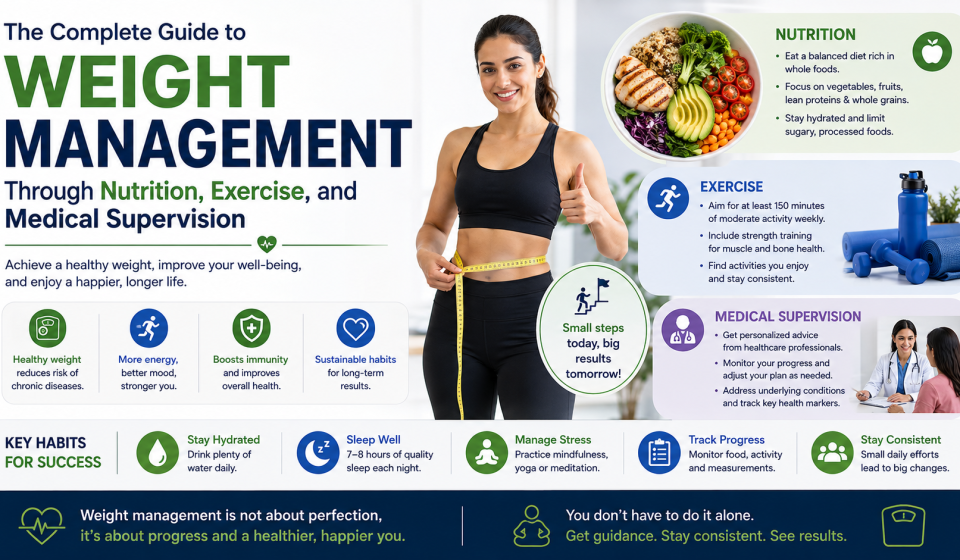
The Ultimate Guide to Healthy Weight Management Through Nutrition, Exercise, and Medical Supervision

Achieving and maintaining a healthy weight is about much more than appearance—it is one of the most important factors in preventing chronic diseases and improving overall well-being.
Excess body weight increases the risk of conditions such as heart disease, type 2 diabetes, high blood pressure, certain cancers, sleep apnea, and joint problems. While many people try fad diets or quick-fix weight loss programs, sustainable weight management requires a balanced approach that combines proper nutrition, regular physical activity, healthy lifestyle habits, and professional medical guidance when necessary.Successful weight management is a lifelong journey rather than a short-term goal. Every individual has unique nutritional needs, metabolic rates, medical histories, and fitness levels, making personalized strategies far more effective than one-size-fits-all solutions. By understanding the science behind weight management and incorporating healthy habits into daily life, individuals can achieve lasting results while improving their physical and mental health.
Understanding Weight Management
Weight management refers to maintaining a healthy body weight through a balance between calorie intake and calorie expenditure. It involves developing sustainable eating habits, engaging in regular exercise, monitoring health indicators, and addressing any medical conditions that may affect body weight.
Rather than focusing solely on losing weight quickly, effective weight management emphasizes long-term health, gradual progress, and maintaining muscle mass while reducing excess body fat.
Why Maintaining a Healthy Weight Matters
Keeping a healthy weight provides numerous physical and mental health benefits.
Some of the most important benefits include:
- Reduced risk of heart disease
- Lower blood pressure
- Better blood sugar control
- Reduced risk of type 2 diabetes
- Improved cholesterol levels
- Better joint health
- Increased energy levels
- Improved sleep quality
- Enhanced self-confidence
- Better mental well-being
- Increased life expectancy
Maintaining a healthy weight also improves overall quality of life and daily functioning.
The Role of Nutrition in Weight Management
Nutrition is the foundation of successful weight management. Consuming nutrient-rich foods supports metabolism, preserves muscle mass, and provides lasting energy.
Eat a Balanced Diet
A balanced diet should include:
- Fresh fruits
- Vegetables
- Whole grains
- Lean protein
- Healthy fats
- Low-fat dairy products
- Plenty of water
Avoid relying heavily on processed foods that contain excessive sugar, unhealthy fats, and sodium.
Prioritize Protein
Protein helps:
- Build muscle
- Increase satiety
- Reduce hunger
- Support metabolism
- Preserve lean body mass during weight loss
Healthy protein sources include fish, chicken, eggs, beans, lentils, tofu, and low-fat dairy products.
Choose Complex Carbohydrates
Complex carbohydrates digest more slowly and help maintain stable blood sugar levels.
Healthy options include:
- Brown rice
- Oats
- Whole wheat bread
- Sweet potatoes
- Quinoa
- Whole-grain pasta
Limit refined carbohydrates and sugary snacks.
Include Healthy Fats
Healthy fats support hormone production and heart health.
Good sources include:
- Avocados
- Olive oil
- Nuts
- Seeds
- Fatty fish
Moderation is important because fats are calorie-dense.
Practice Portion Control
Even healthy foods can contribute to weight gain when eaten in excessive amounts.
Helpful portion control strategies include:
- Using smaller plates
- Reading food labels
- Measuring serving sizes
- Eating slowly
- Avoiding distractions during meals
Mindful eating improves satisfaction while preventing overeating.
The Importance of Regular Exercise
Physical activity burns calories, strengthens muscles, improves cardiovascular health, and supports long-term weight maintenance.
Aerobic Exercise
Cardio activities include:
- Walking
- Running
- Swimming
- Cycling
- Dancing
- Hiking
Experts generally recommend at least 150 minutes of moderate-intensity aerobic exercise each week.
Strength Training
Resistance exercises help build muscle, which increases resting metabolism.
Examples include:
- Weightlifting
- Resistance bands
- Bodyweight exercises
- Push-ups
- Squats
- Lunges
Strength training should be performed at least twice weekly.
Flexibility and Balance Exercises
Stretching, yoga, and Pilates improve flexibility, posture, and injury prevention while supporting overall fitness.
Lifestyle Habits That Support Healthy Weight
Healthy daily habits significantly influence long-term weight management.
Important habits include:
- Sleeping seven to nine hours every night
- Managing stress effectively
- Drinking enough water
- Limiting sugary beverages
- Reducing alcohol intake
- Avoiding smoking
- Planning meals ahead
- Tracking food intake when appropriate
- Staying physically active throughout the day
Consistency is more important than perfection.
Medical Supervision in Weight Management
Some individuals struggle to lose weight despite healthy lifestyle changes due to underlying medical conditions.
Medical supervision is especially important for people with:
- Obesity
- Diabetes
- Thyroid disorders
- Hormonal imbalances
- Polycystic ovary syndrome (PCOS)
- Heart disease
- Sleep apnea
Healthcare providers evaluate overall health before recommending personalized treatment plans.
Medical Treatments for Weight Management
Doctors may recommend additional interventions when lifestyle modifications alone are insufficient.
These may include:
Nutritional Counseling
Registered dietitians develop personalized meal plans based on medical history, lifestyle, and nutritional needs.
Behavioral Therapy
Behavioral counseling helps individuals identify unhealthy eating patterns and develop sustainable habits.
Prescription Weight-Loss Medications
Some patients may benefit from FDA-approved weight-loss medications under professional supervision.
These medications are typically recommended alongside healthy eating and regular exercise.
Bariatric Surgery
For individuals with severe obesity and obesity-related health conditions, bariatric surgery may be considered.
Procedures such as gastric bypass or sleeve gastrectomy can significantly improve long-term health outcomes when combined with lifelong lifestyle changes.
Common Mistakes to Avoid
Many people unintentionally slow their progress by following unhealthy weight-loss practices.
Avoid these common mistakes:
- Skipping meals
- Crash dieting
- Eliminating entire food groups
- Excessive cardio without strength training
- Ignoring sleep quality
- Drinking sugary beverages
- Unrealistic weight-loss expectations
- Frequent emotional eating
- Inconsistent exercise routines
Healthy weight loss is gradual and sustainable.
Setting Realistic Goals
Experts recommend losing approximately 0.5 to 1 kilogram (1 to 2 pounds) per week for safe and sustainable results.
Small achievements build motivation and encourage long-term success.
Celebrate improvements such as:
- Better energy
- Improved blood pressure
- Healthier eating habits
- Increased physical activity
- Better fitness levels
Health improvements are just as important as the number on the scale.
Long-Term Success Strategies
Maintaining weight loss requires ongoing commitment.
Successful individuals often:
- Continue exercising regularly
- Monitor body weight periodically
- Prepare healthy meals
- Stay hydrated
- Practice mindful eating
- Seek professional guidance when needed
- Adjust routines as life changes
Long-term consistency creates lasting health benefits.
Source Links
- https://www.who.int
- https://www.cdc.gov
- https://www.nhlbi.nih.gov
- https://www.niddk.nih.gov
- https://www.mayoclinic.org
Conclusion
Healthy weight management is a lifelong commitment that combines balanced nutrition, regular physical activity, healthy lifestyle habits, and medical supervision when appropriate. Rather than chasing quick fixes or restrictive diets, focusing on sustainable changes leads to better physical health, improved mental well-being, and a lower risk of chronic diseases. Every small step toward healthier eating, increased activity, and consistent self-care contributes to long-term success. Working closely with healthcare professionals ensures that weight management strategies are safe, personalized, and effective, helping individuals achieve lasting results and a healthier future.
Frequently Asked Questions (FAQ)
1. What is the healthiest way to manage body weight?
The healthiest approach combines a balanced diet, regular exercise, sufficient sleep, stress management, and consistent healthy habits rather than extreme dieting.
2. How much exercise is recommended for weight management?
Adults should aim for at least 150 minutes of moderate-intensity aerobic activity each week, along with strength training exercises on two or more days.
3. When should I seek medical supervision for weight management?
Medical supervision is recommended if you have obesity, chronic health conditions, hormonal disorders, or have difficulty losing weight despite following a healthy lifestyle.
4. Can nutrition alone help with weight loss?
Nutrition plays a major role, but combining healthy eating with regular physical activity and lifestyle modifications provides the best long-term results.
5. Is rapid weight loss safe?
Rapid weight loss is generally not recommended because it can lead to muscle loss, nutritional deficiencies, and weight regain. Gradual, sustainable weight loss is considered the safest and most effective approach.