Warning Signs Your Body Should Never Ignore: Common Symptoms That Require Early Medical Attention and Professional Diagnosis

Modern medicine has greatly improved the ability to detect and treat illnesses, but successful treatment often depends on how early a condition is identified.
Many people ignore unusual symptoms, hoping they will disappear on their own. While some minor health issues resolve naturally, certain symptoms can be early warning signs of serious medical conditions that require prompt attention. Recognizing these warning signals and seeking medical advice at the right time can make a significant difference in treatment outcomes, recovery rates, and overall health. Early diagnosis often allows healthcare professionals to identify diseases in their initial stages when they are easier to manage and treat effectively.Unfortunately, many diseases such as heart disease, cancer, diabetes, infections, and neurological disorders may initially present with subtle symptoms that people overlook. Understanding which symptoms should never be ignored empowers individuals to take proactive steps toward protecting their health and preventing complications that could become life-threatening if left untreated.
Why Early Diagnosis Matters
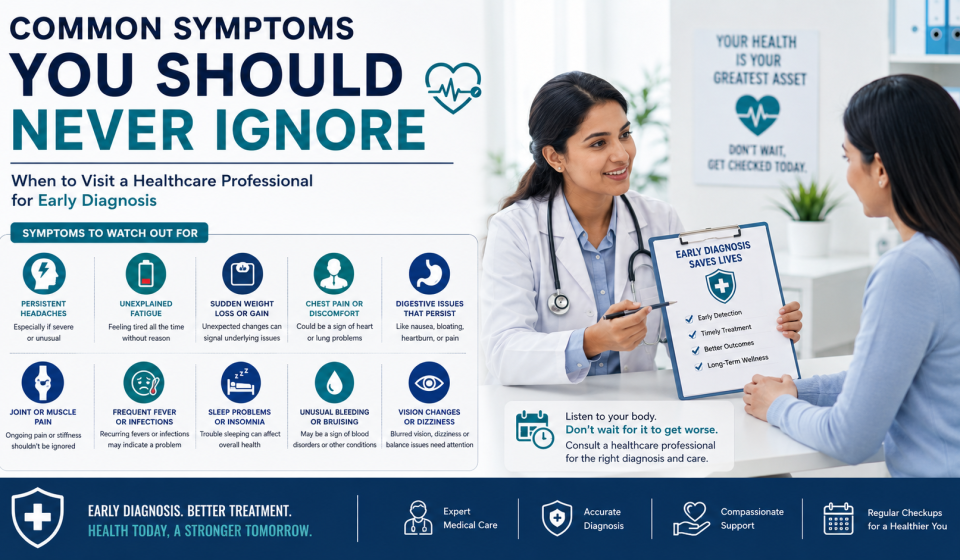
Early diagnosis is one of the most important factors in successful healthcare outcomes. Detecting illnesses in their early stages often results in more effective treatments, lower healthcare costs, and improved quality of life.
Benefits of early diagnosis include:
- Better treatment success rates
- Reduced risk of complications
- Faster recovery
- Lower medical expenses
- Improved long-term health outcomes
- Increased survival rates for serious illnesses
Ignoring symptoms can allow diseases to progress silently, making treatment more difficult and increasing the likelihood of permanent damage.
Persistent Chest Pain
Chest pain is one of the most serious symptoms that should never be ignored.
Although chest discomfort can sometimes result from indigestion, muscle strain, or anxiety, it may also indicate potentially life-threatening conditions such as:
- Heart attack
- Coronary artery disease
- Pulmonary embolism
- Aortic dissection
- Severe respiratory conditions
Seek immediate medical attention if chest pain is accompanied by:
- Shortness of breath
- Sweating
- Nausea
- Dizziness
- Pain spreading to the jaw, neck, shoulder, or arm
Prompt treatment can significantly improve outcomes during cardiac emergencies.
Shortness of Breath
Difficulty breathing or unexplained shortness of breath should always be evaluated by a healthcare professional.
Potential causes include:
- Asthma
- Pneumonia
- Chronic obstructive pulmonary disease (COPD)
- Heart failure
- Pulmonary embolism
- Severe allergic reactions
If breathing difficulties occur suddenly or worsen rapidly, emergency medical care may be necessary.
Unexplained Weight Loss
Losing weight without changing diet or exercise habits can be a warning sign of an underlying health problem.
Possible causes include:
- Cancer
- Diabetes
- Hyperthyroidism
- Gastrointestinal disorders
- Chronic infections
- Mental health conditions
Healthcare providers generally recommend evaluation if a person loses a significant amount of weight unintentionally over a short period.
Persistent Fatigue
Occasional tiredness is normal, but ongoing fatigue that interferes with daily activities should not be ignored.
Chronic fatigue may be associated with:
- Anemia
- Thyroid disorders
- Diabetes
- Heart disease
- Sleep disorders
- Depression
- Chronic infections
A thorough medical evaluation can help identify the underlying cause and appropriate treatment options.
Severe or Frequent Headaches
Headaches are common, but certain types require immediate medical attention.
Warning signs include:
- Sudden severe headache
- Headache accompanied by confusion
- Vision changes
- Difficulty speaking
- Weakness or numbness
- Loss of consciousness
These symptoms may indicate serious conditions such as:
- Stroke
- Brain hemorrhage
- Meningitis
- Brain tumors
Prompt evaluation is essential for preventing complications.
Changes in Vision
Vision problems can develop gradually or suddenly and may indicate serious health concerns.
Symptoms include:
- Blurred vision
- Double vision
- Sudden vision loss
- Flashes of light
- Eye pain
Potential causes may include:
- Glaucoma
- Retinal detachment
- Stroke
- Diabetes-related eye disease
- Neurological disorders
Early treatment can help preserve vision and prevent permanent damage.
Persistent Cough
A cough lasting more than several weeks should be assessed by a healthcare professional.
Potential causes include:
- Respiratory infections
- Asthma
- Chronic bronchitis
- Lung disease
- Gastroesophageal reflux disease (GERD)
- Lung cancer
Seek immediate medical attention if coughing is accompanied by:
- Blood
- Chest pain
- Breathing difficulties
- Significant weight loss
Blood in Urine, Stool, or Cough
The presence of blood should never be ignored.
Blood may appear in:
Urine
Possible causes include:
- Urinary tract infections
- Kidney stones
- Kidney disease
- Bladder cancer
Stool
Possible causes include:
- Hemorrhoids
- Ulcers
- Inflammatory bowel disease
- Colorectal cancer
Cough
Potential causes include:
- Lung infections
- Tuberculosis
- Lung cancer
- Pulmonary embolism
Any unexplained bleeding requires medical evaluation.
Persistent Abdominal Pain
Abdominal pain can result from minor digestive issues or serious medical emergencies.
Seek medical attention if abdominal pain is:
- Severe
- Persistent
- Accompanied by fever
- Associated with vomiting
- Linked to unexplained weight loss
Potential causes include:
- Appendicitis
- Gallbladder disease
- Pancreatitis
- Ulcers
- Gastrointestinal infections
- Cancer
Changes in Bowel Habits
Long-lasting changes in bowel movements may indicate digestive disorders or more serious conditions.
Symptoms include:
- Chronic diarrhea
- Persistent constipation
- Narrow stools
- Blood in stool
- Frequent urgency
Potential causes include:
- Irritable bowel syndrome
- Inflammatory bowel disease
- Infections
- Colorectal cancer
Early diagnosis can improve treatment effectiveness.
Unusual Lumps or Swelling
Any unexplained lump or swelling should be examined by a healthcare professional.
Areas commonly affected include:
- Neck
- Breast
- Armpits
- Groin
- Testicles
Although many lumps are benign, some may indicate:
- Cancer
- Infections
- Cysts
- Enlarged lymph nodes
Early evaluation helps determine the cause and appropriate management.
Persistent Fever
A fever that lasts longer than expected may indicate an underlying health issue.
Potential causes include:
- Bacterial infections
- Viral infections
- Autoimmune disorders
- Certain cancers
Persistent or recurrent fever warrants medical investigation.
Dizziness and Fainting
Occasional dizziness may result from dehydration or low blood sugar, but repeated episodes should not be ignored.
Potential causes include:
- Heart conditions
- Neurological disorders
- Inner ear problems
- Blood pressure abnormalities
- Anemia
Sudden fainting may require urgent medical attention.
Numbness or Weakness
Unexpected weakness, numbness, or tingling can signal serious neurological conditions.
Possible causes include:
- Stroke
- Multiple sclerosis
- Nerve damage
- Vitamin deficiencies
- Diabetes complications
Emergency evaluation is especially important when symptoms affect one side of the body.
Persistent Skin Changes
Changes in the skin can provide important clues about overall health.
Warning signs include:
- New moles
- Changing moles
- Non-healing wounds
- Persistent rashes
- Skin discoloration
These symptoms may indicate:
- Skin cancer
- Autoimmune diseases
- Infections
- Allergic reactions
Early dermatological evaluation can improve treatment outcomes.
Difficulty Swallowing
Trouble swallowing should always be assessed by a healthcare provider.
Potential causes include:
- Acid reflux
- Esophageal disorders
- Neurological conditions
- Throat cancer
Persistent swallowing difficulties may lead to nutritional deficiencies and other complications.
Mental Health Symptoms That Should Not Be Ignored
Mental health is equally important as physical health.
Seek professional help for:
- Persistent sadness
- Anxiety
- Mood changes
- Sleep disturbances
- Social withdrawal
- Thoughts of self-harm
Early intervention often leads to better mental health outcomes and improved quality of life.
Symptoms in Children That Require Medical Attention
Parents should monitor children for symptoms such as:
- High fever
- Difficulty breathing
- Persistent vomiting
- Severe dehydration
- Unusual lethargy
- Seizures
Prompt medical evaluation can prevent complications and ensure appropriate treatment.
Symptoms in Older Adults
Older adults may experience subtle signs of illness that are easily overlooked.
Warning signs include:
- Sudden confusion
- Memory changes
- Frequent falls
- Unexplained weakness
- Appetite loss
Regular medical assessments are particularly important for aging individuals.
How Regular Checkups Support Early Diagnosis
Routine health examinations can detect diseases before symptoms become severe.
Regular screenings may identify:
- High blood pressure
- Diabetes
- Cancer
- Heart disease
- Kidney disease
- Osteoporosis
Preventive healthcare allows healthcare professionals to intervene early and improve long-term outcomes.
When to Seek Emergency Medical Care
Call emergency services or seek immediate medical attention if you experience:
- Chest pain
- Difficulty breathing
- Stroke symptoms
- Severe allergic reactions
- Sudden vision loss
- Loss of consciousness
- Uncontrolled bleeding
Timely treatment can save lives and reduce long-term complications.
Source Links
- World Health Organization (WHO)
- Centers for Disease Control and Prevention (CDC)
- National Institutes of Health (NIH)
- MedlinePlus Health Information
- Mayo Clinic Health Resources
Conclusion
Listening to your body and recognizing warning signs early can have a profound impact on your health and well-being. Symptoms such as chest pain, shortness of breath, unexplained weight loss, persistent fatigue, abnormal bleeding, severe headaches, and unusual lumps should never be ignored. While not every symptom indicates a serious condition, seeking timely medical evaluation ensures that potential health issues are identified and treated before they progress. Early diagnosis remains one of the most effective tools in modern healthcare, helping individuals achieve better treatment outcomes, improved quality of life, and greater peace of mind. Prioritizing regular health checkups and consulting healthcare professionals when concerning symptoms arise are essential steps toward maintaining lifelong health.
FAQ
1.Why is early diagnosis important?
Early diagnosis allows diseases to be identified and treated before they become severe, improving recovery rates and reducing complications.
2.Which symptoms require immediate medical attention?
Chest pain, difficulty breathing, stroke symptoms, sudden vision loss, severe allergic reactions, and loss of consciousness require emergency care.
3.Can unexplained weight loss be a sign of a serious illness?
Yes, unintended weight loss may indicate conditions such as cancer, diabetes, thyroid disorders, or chronic infections.
4.When should I see a doctor for a headache?
Seek medical attention if headaches are severe, sudden, recurrent, or accompanied by neurological symptoms.
5.Is persistent fatigue normal?
Ongoing fatigue that interferes with daily activities should be evaluated because it may indicate an underlying medical condition.
6.Should I worry about blood in my urine or stool?
Yes, unexplained bleeding should always be assessed by a healthcare professional.
7.How long should a cough last before seeing a doctor?
A cough lasting more than a few weeks or accompanied by blood, chest pain, or breathing difficulties should be evaluated.
8.Are changes in bowel habits serious?
Persistent changes in bowel movements may indicate digestive disorders or colorectal disease and should be discussed with a doctor.
9.What skin changes should be checked by a healthcare provider?
Changing moles, non-healing sores, unusual pigmentation, and persistent rashes should be examined promptly.
10.How do regular checkups help detect diseases early?
Routine screenings and health assessments can identify risk factors and diseases before symptoms become severe.