
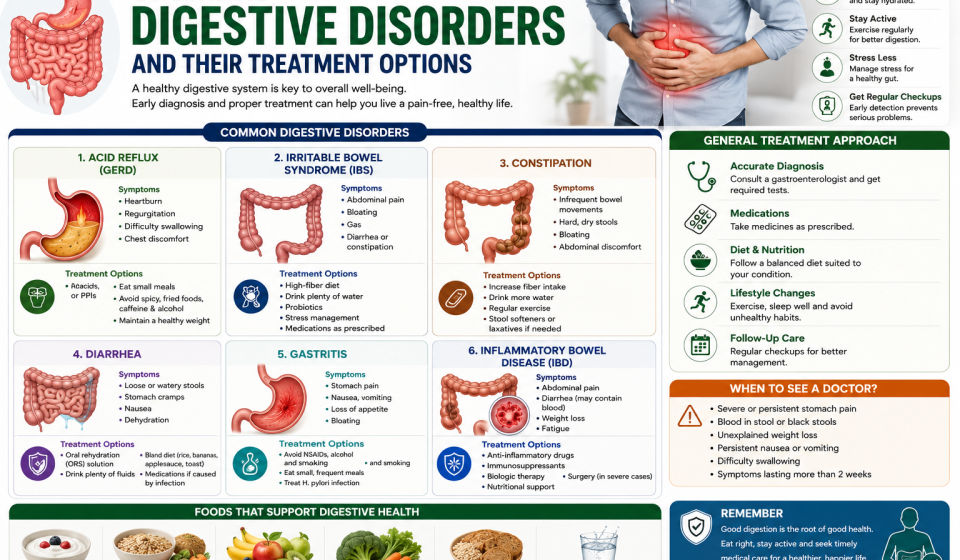
Common Digestive Disorders and Their Treatment Options: A Complete Guide to Better Digestive Health

This comprehensive guide explores common digestive disorders, their causes, symptoms, diagnosis, treatment options, and preventive strategies for long-term digestive wellness.
The digestive system plays a vital role in maintaining overall health by breaking down food, absorbing nutrients, and eliminating waste from the body. When the digestive system functions properly, it provides the energy and nutrients needed for growth, repair, and daily activities. However, millions of people worldwide experience digestive disorders that can affect their quality of life, productivity, and overall well-being. Digestive problems may range from mild and temporary discomfort to chronic conditions requiring long-term medical management. Understanding these disorders and their treatment options is essential for maintaining optimal digestive health.
Digestive disorders can affect different parts of the gastrointestinal tract, including the esophagus, stomach, intestines, liver, gallbladder, and pancreas. Symptoms such as abdominal pain, bloating, constipation, diarrhea, acid reflux, nausea, and indigestion are common indicators that the digestive system may not be functioning properly. While some digestive issues can be managed through lifestyle changes and dietary adjustments, others may require medical treatment and ongoing monitoring.
Understanding the Digestive System
The digestive system is responsible for processing food and absorbing nutrients necessary for health.
Major digestive organs include:
- Mouth
- Esophagus
- Stomach
- Small intestine
- Large intestine
- Liver
- Gallbladder
- Pancreas
Proper functioning of these organs is essential for overall wellness.
Why Digestive Disorders Occur
Digestive disorders can develop due to several factors, including:
- Poor dietary habits
- Infections
- Chronic inflammation
- Stress
- Genetics
- Medication side effects
- Lifestyle factors
Understanding the cause is important for selecting the most effective treatment.
1. Gastroesophageal Reflux Disease (GERD)
GERD is a chronic condition in which stomach acid flows back into the esophagus.
Common Symptoms
- Heartburn
- Chest discomfort
- Sour taste in the mouth
- Difficulty swallowing
- Chronic cough
Treatment Options
- Dietary modifications
- Weight management
- Avoiding trigger foods
- Elevating the head during sleep
- Medications that reduce stomach acid
Early treatment can prevent complications.
2. Irritable Bowel Syndrome (IBS)
IBS is a common digestive disorder affecting the large intestine.
Symptoms
- Abdominal pain
- Bloating
- Constipation
- Diarrhea
- Changes in bowel habits
Treatment Options
- High-fiber diet
- Stress management
- Regular exercise
- Adequate hydration
- Symptom-specific medications
Lifestyle changes often play a major role in symptom control.
3. Constipation
Constipation occurs when bowel movements become infrequent or difficult to pass.
Causes
- Low fiber intake
- Dehydration
- Physical inactivity
- Certain medications
Treatment Options
- Increased fiber consumption
- Drinking more water
- Regular exercise
- Healthy bowel habits
Most cases improve with lifestyle adjustments.
4. Diarrhea
Diarrhea involves frequent loose or watery stools.
Common Causes
- Infections
- Food intolerance
- Medication side effects
- Digestive disorders
Treatment Options
- Hydration
- Oral rehydration solutions
- Dietary adjustments
- Medical evaluation if symptoms persist
Preventing dehydration is a primary concern.
5. Peptic Ulcers
Peptic ulcers are sores that develop in the stomach or upper small intestine.
Symptoms
- Burning stomach pain
- Nausea
- Bloating
- Indigestion
Treatment Options
- Medications to reduce stomach acid
- Treatment of bacterial infections
- Avoiding irritants such as smoking and excessive alcohol
Early treatment promotes healing and reduces complications.
6. Inflammatory Bowel Disease (IBD)
IBD includes chronic inflammatory conditions such as Crohn’s disease and ulcerative colitis.
Symptoms
- Persistent diarrhea
- Abdominal pain
- Weight loss
- Fatigue
Treatment Options
- Anti-inflammatory medications
- Nutritional support
- Ongoing medical monitoring
- Specialized treatment plans
Long-term management is often necessary.
7. Celiac Disease
Celiac disease is an autoimmune condition triggered by gluten consumption.
Symptoms
- Diarrhea
- Bloating
- Fatigue
- Weight loss
Treatment Options
- Strict gluten-free diet
- Nutritional monitoring
- Medical follow-up
Dietary compliance is essential for symptom control.
8. Gallstones
Gallstones are hardened deposits that form in the gallbladder.
Symptoms
- Upper abdominal pain
- Nausea
- Digestive discomfort after fatty meals
Treatment Options
- Dietary changes
- Medical monitoring
- Surgical treatment in some cases
Management depends on symptom severity.
9. Lactose Intolerance
Lactose intolerance occurs when the body cannot properly digest lactose found in dairy products.
Symptoms
- Bloating
- Gas
- Diarrhea
- Abdominal discomfort
Treatment Options
- Limiting dairy products
- Lactose-free alternatives
- Enzyme supplements
Many individuals successfully manage symptoms through dietary adjustments.
10. Hemorrhoids
Hemorrhoids are swollen veins in the rectum or anus.
Symptoms
- Rectal discomfort
- Itching
- Bleeding during bowel movements
Treatment Options
- Increased fiber intake
- Hydration
- Warm baths
- Medical procedures when necessary
Preventing constipation can help reduce symptoms.
Common Symptoms of Digestive Disorders
Digestive conditions often share similar symptoms.
Common warning signs include:
- Abdominal pain
- Bloating
- Nausea
- Vomiting
- Constipation
- Diarrhea
- Heartburn
- Appetite changes
Persistent symptoms should be evaluated by a healthcare professional.
The Role of Diet in Digestive Health
Nutrition has a significant impact on digestive function.
Healthy dietary habits include:
- Eating fruits and vegetables
- Choosing whole grains
- Limiting processed foods
- Maintaining adequate hydration
A balanced diet supports digestive wellness.
Importance of Fiber
Fiber promotes healthy digestion and regular bowel movements.
Benefits include:
- Improved gut health
- Reduced constipation
- Better bowel regularity
- Support for beneficial gut bacteria
High-fiber foods are important for digestive health.
Hydration and Digestive Function
Water supports several digestive processes.
Benefits include:
- Improved nutrient absorption
- Softer stools
- Better bowel function
Adequate hydration is essential for digestive wellness.
Stress and Digestive Disorders
Stress can significantly affect digestive health.
Possible effects include:
- Increased abdominal discomfort
- Worsening IBS symptoms
- Changes in bowel habits
Stress management techniques may help improve digestive symptoms.
The Gut Microbiome and Health
The digestive system contains trillions of beneficial microorganisms.
These microbes help with:
- Digestion
- Immune function
- Nutrient absorption
Supporting a healthy gut microbiome contributes to overall wellness.
Importance of Physical Activity
Exercise supports digestive function by:
- Encouraging bowel movement regularity
- Supporting weight management
- Reducing stress
Regular physical activity benefits overall digestive health.
Diagnostic Tests for Digestive Disorders
Healthcare providers may use various tests to diagnose digestive conditions.
Common evaluations include:
- Blood tests
- Stool tests
- Endoscopy
- Colonoscopy
- Imaging studies
Accurate diagnosis helps guide effective treatment.
When to Seek Medical Attention
Medical evaluation is recommended if symptoms include:
- Severe abdominal pain
- Blood in stool
- Persistent diarrhea
- Unexplained weight loss
- Difficulty swallowing
Early diagnosis can improve treatment outcomes.
Preventing Digestive Disorders
Preventive measures include:
- Healthy eating habits
- Adequate hydration
- Regular exercise
- Stress management
- Avoiding tobacco
These habits help support long-term digestive health.
Long-Term Benefits of Digestive Wellness
Maintaining digestive health can improve:
- Nutrient absorption
- Energy levels
- Immune function
- Quality of life
A healthy digestive system contributes significantly to overall well-being.
Source Links
https://www.niddk.nih.gov
https://www.cdc.gov
https://www.who.int
https://www.mayoclinic.org
https://www.ncbi.nlm.nih.gov
Conclusion
Digestive disorders are among the most common health concerns affecting people of all ages. Conditions such as GERD, IBS, constipation, diarrhea, peptic ulcers, inflammatory bowel disease, celiac disease, gallstones, lactose intolerance, and hemorrhoids can significantly impact daily life if left untreated. Fortunately, many digestive problems can be effectively managed through lifestyle changes, healthy nutrition, hydration, stress reduction, and appropriate medical care. Early diagnosis and personalized treatment plans play a crucial role in improving symptoms and preventing complications. By understanding common digestive disorders and adopting healthy habits, individuals can support long-term digestive wellness and overall health.
FAQ
1- What are the most common digestive disorders?
Common digestive disorders include GERD, IBS, constipation, diarrhea, peptic ulcers, celiac disease, and inflammatory bowel disease.
2- What causes digestive disorders?
Digestive disorders may result from diet, infections, stress, genetics, inflammation, or underlying medical conditions.
3- How can I improve digestive health naturally?
Healthy eating, hydration, regular exercise, and stress management can help improve digestive health.
4- What foods are good for digestion?
Fruits, vegetables, whole grains, legumes, and fiber-rich foods support healthy digestion.
5- When should I see a doctor for digestive symptoms?
Medical evaluation is recommended for persistent symptoms, severe pain, unexplained weight loss, or blood in the stool.
6- Can stress affect digestion?
Yes, stress can worsen digestive symptoms and contribute to conditions such as IBS.
7- What is GERD?
GERD is a condition in which stomach acid frequently flows back into the esophagus, causing heartburn and irritation.
8- How is IBS treated?
IBS management often includes dietary changes, stress reduction, hydration, exercise, and symptom-specific treatments.
9- Why is fiber important for digestive health?
Fiber promotes regular bowel movements, supports gut bacteria, and helps prevent constipation.
10- Can digestive disorders be prevented?
Many digestive problems can be reduced through healthy lifestyle habits, proper nutrition, hydration, and regular medical care.