Understanding Women’s Health: Essential Screenings Every Woman Should Schedule at Different Life Stages for a Healthier Future

Discover the essential health screenings every woman should schedule at different life stages. Learn how preventive care helps detect diseases early and supports lifelong wellness.
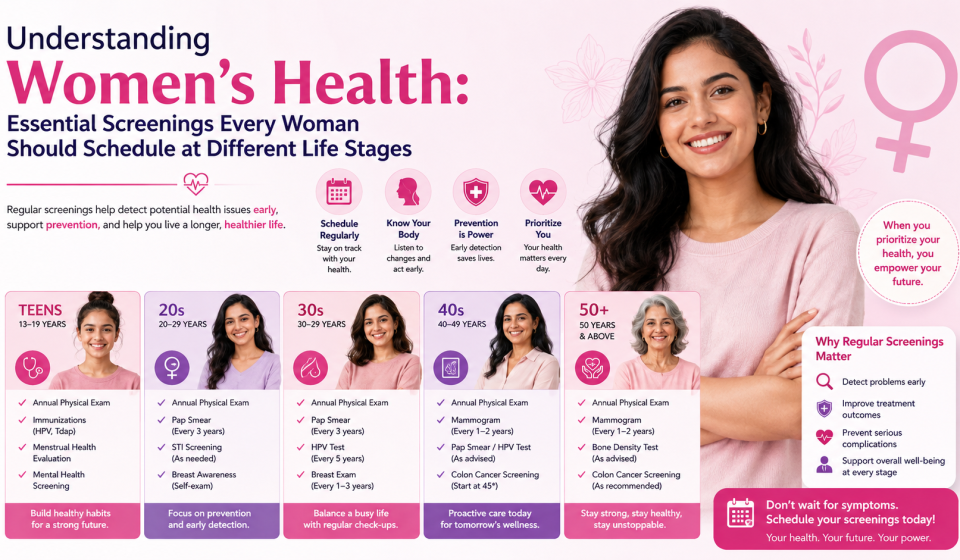
Women’s health is a lifelong journey that requires regular medical care, preventive screenings, and healthy lifestyle choices. From adolescence to older adulthood, every stage of life brings unique health needs that require attention. Scheduling recommended health screenings helps detect diseases early, improve treatment outcomes, and support overall physical and mental well-being. Preventive healthcare is one of the most effective ways to maintain long-term health and reduce the risk of serious medical conditions.Many diseases such as breast cancer, cervical cancer, osteoporosis, diabetes, heart disease, and high blood pressure often develop silently without noticeable symptoms. Regular health screenings allow healthcare providers to identify these conditions before they become severe. Understanding which screenings are appropriate at different ages empowers women to make informed decisions and live healthier, longer lives.
Why Women’s Health Screenings Matter
Preventive screenings are medical tests designed to detect diseases before symptoms appear. Early diagnosis often leads to easier treatment, lower healthcare costs, and better recovery rates. Regular checkups also provide an opportunity to discuss lifestyle habits, reproductive health, nutrition, mental wellness, and family medical history with healthcare professionals.
Routine screenings can help:
- Detect diseases early
- Monitor existing health conditions
- Reduce complications
- Improve quality of life
- Increase life expectancy
- Encourage healthy lifestyle habits
Essential Health Screenings During Teenage Years (13–19)
The teenage years establish the foundation for lifelong health. Preventive care focuses on growth, development, vaccinations, and healthy habits.
Recommended screenings include:
- Annual physical examination
- Height and weight monitoring
- Blood pressure checks
- Vision screening
- Hearing test
- Mental health assessment
- Depression and anxiety screening
- HPV vaccination
- Nutritional assessment
- Sexual health education when appropriate
Girls who become sexually active should discuss reproductive health, contraception, and sexually transmitted infection (STI) testing with their healthcare provider.
Health Screenings for Women in Their 20s
Women in their twenties often experience major life changes including higher education, careers, marriage, or pregnancy planning. Preventive care becomes increasingly important during this period.
Recommended screenings include:
Annual Physical Exam
A yearly health examination helps evaluate overall health and identify early signs of illness.
Blood Pressure Screening
Blood pressure should be checked at least every two years if normal and more frequently if elevated.
Cervical Cancer Screening
Women should begin Pap smear screening at age 21 regardless of sexual activity. Pap tests help detect abnormal cervical cells before cancer develops.
STI Testing
Women who are sexually active should receive screening for sexually transmitted infections based on individual risk factors.
Mental Health Screening
Depression, anxiety, and stress-related disorders are common during young adulthood. Routine mental health evaluations can improve early intervention.
Skin Examination
Women with a family history of skin cancer or significant sun exposure should receive regular skin evaluations.
Health Screenings for Women in Their 30s
During the thirties, women often balance work, family, and personal health. Preventive care should continue while monitoring additional risk factors.
Important screenings include:
- Blood pressure check
- Cholesterol screening
- Diabetes screening if overweight or high risk
- Cervical cancer screening
- Breast examination
- Thyroid function evaluation when indicated
- Eye examination every two years
- Dental checkups every six months
Women planning pregnancy should also discuss prenatal vitamins, genetic counseling, vaccination status, and fertility health.
Essential Screenings for Women in Their 40s
Health risks gradually increase during the forties, making regular screenings even more important.
Mammogram
Breast cancer screening usually begins between ages 40 and 50 depending on personal and family risk factors. Women should discuss the appropriate starting age with their healthcare provider.
Cholesterol Test
Regular cholesterol testing helps reduce the risk of heart disease and stroke.
Diabetes Screening
Blood glucose testing identifies prediabetes and diabetes before complications develop.
Eye Health Examination
Comprehensive eye exams help detect glaucoma, cataracts, and vision changes.
Blood Pressure Monitoring
High blood pressure often develops without symptoms and increases cardiovascular risk.
Colon Cancer Screening
Some women with family history or higher risk may begin colorectal cancer screening before age 45.
Health Screenings for Women in Their 50s
The menopausal transition brings hormonal changes that increase the risk of osteoporosis, cardiovascular disease, and metabolic disorders.
Recommended screenings include:
Bone Density Test
Bone mineral density testing helps identify osteoporosis and fracture risk.
Mammograms
Continue breast cancer screening according to healthcare provider recommendations.
Colon Cancer Screening
Routine colon cancer screening becomes increasingly important after age 45.
Blood Sugar Testing
Regular glucose monitoring helps identify diabetes early.
Cholesterol Screening
Heart disease becomes one of the leading health risks after menopause.
Hearing Evaluation
Age-related hearing changes may begin during this stage.
Health Screenings for Women Aged 60 and Older
Healthy aging depends on continued preventive care and early disease detection.
Essential screenings include:
- Bone density testing
- Mammograms
- Colon cancer screening
- Blood pressure monitoring
- Diabetes screening
- Cholesterol testing
- Vision examinations
- Hearing assessments
- Memory and cognitive screening
- Fall risk evaluation
- Vaccinations including influenza, shingles, and pneumonia
Regular medication reviews are also important to prevent drug interactions and ensure safe treatment.
Breast Cancer Screening
Breast cancer remains one of the most common cancers affecting women worldwide. Early detection significantly improves survival rates.
Women should:
- Become familiar with normal breast appearance
- Report unusual lumps or changes immediately
- Attend scheduled mammograms
- Discuss family history with their healthcare provider
Cervical Cancer Prevention
Regular Pap tests and HPV testing have dramatically reduced cervical cancer deaths.
Women should also:
- Receive HPV vaccination if eligible
- Avoid smoking
- Practice safe sexual behaviors
- Follow recommended screening intervals
Heart Health Screening
Heart disease is the leading cause of death among women. Important cardiovascular screenings include:
- Blood pressure
- Cholesterol
- Blood sugar
- Body mass index (BMI)
- Lifestyle assessment
Healthy eating, regular exercise, and smoking cessation significantly reduce heart disease risk.
Osteoporosis Screening
Bone loss accelerates after menopause due to reduced estrogen levels.
Prevention includes:
- Calcium-rich foods
- Vitamin D
- Weight-bearing exercise
- Avoiding smoking
- Limiting alcohol intake
Bone density testing helps identify women who need treatment before fractures occur.
Mental Health Matters
Women’s health extends beyond physical wellness. Emotional health deserves equal attention.
Healthcare providers may screen for:
- Depression
- Anxiety
- Stress
- Sleep disorders
- Postpartum depression
- Cognitive decline
Seeking support early improves long-term emotional well-being.
Healthy Lifestyle Supports Preventive Care
Screenings work best when combined with healthy daily habits.
Maintain health by:
- Eating balanced meals
- Exercising regularly
- Sleeping 7–9 hours nightly
- Drinking plenty of water
- Maintaining a healthy weight
- Managing stress
- Avoiding tobacco
- Limiting alcohol
- Staying up to date with vaccinations
When to See Your Doctor Immediately
Schedule medical care promptly if you notice:
- Unexplained weight loss
- Breast lump
- Abnormal vaginal bleeding
- Persistent pelvic pain
- Chest pain
- Shortness of breath
- Severe headaches
- Changes in vision
- Persistent fatigue
- Blood in stool or urine
Ignoring these warning signs may delay diagnosis and treatment.
Source Links
https://www.who.int
https://www.cdc.gov
https://www.acog.org
https://www.cancer.org
https://www.nia.nih.gov
Conclusion
Women’s health requires proactive care throughout every stage of life. Preventive screenings provide one of the best opportunities to detect illnesses early, reduce health risks, and improve quality of life. From adolescence through older adulthood, routine health checkups, cancer screenings, cardiovascular evaluations, and mental health assessments play an essential role in maintaining lifelong wellness. Partnering with a trusted healthcare provider and following age-appropriate screening recommendations empowers women to take control of their health and enjoy a healthier, longer, and more fulfilling life.
FAQ
1. How often should women have a general health checkup?
Most women should schedule a general health examination once a year, although frequency may vary depending on age, existing medical conditions, and individual risk factors.
2. At what age should women start getting Pap smear tests?
Pap smear screening generally begins at age 21 and continues at recommended intervals based on age and healthcare provider guidance.
3. When should women begin mammogram screening?
Many women start mammograms around age 40, but the appropriate age depends on personal risk factors and family history.
4. Why are preventive health screenings important?
Preventive screenings detect diseases before symptoms develop, allowing earlier treatment and improving long-term health outcomes.
5. Which screening is most important after menopause?
After menopause, bone density testing, mammograms, blood pressure monitoring, cholesterol testing, diabetes screening, and colon cancer screening become especially important.