Best Foods to Improve Your Immune System Naturally: The Ultimate Guide to Strengthening Immunity Through Nutrition

This comprehensive guide explores the best foods for improving the immune system naturally, their health benefits, and practical ways to include them in a healthy lifestyle.
A strong immune system is essential for protecting the body against infections, illnesses, and various health challenges. The immune system is a complex network of cells, tissues, and organs that work together to identify and eliminate harmful bacteria, viruses, and other pathogens. While no single food can guarantee immunity from disease, maintaining a healthy and balanced diet provides the nutrients the immune system needs to function effectively. In today’s fast-paced world, where stress, poor dietary habits, lack of sleep, and environmental factors can weaken immunity, paying attention to nutrition has become more important than ever.
Many natural foods contain vitamins, minerals, antioxidants, and other beneficial compounds that support immune health. Nutrients such as vitamin C, vitamin D, zinc, selenium, and probiotics play vital roles in maintaining immune defenses and promoting overall wellness. By incorporating nutrient-rich foods into daily meals, individuals can help strengthen their body’s natural protective mechanisms and reduce the risk of illness.
Understanding the Immune System
The immune system acts as the body’s defense mechanism against harmful microorganisms and foreign substances.
Its primary functions include:
- Detecting pathogens
- Fighting infections
- Removing damaged cells
- Supporting healing processes
A healthy immune system helps the body respond effectively to health threats.
Why Nutrition Matters for Immunity
Nutrition directly influences immune function.
The body requires essential nutrients to:
- Produce immune cells
- Support antibody production
- Reduce inflammation
- Protect against oxidative stress
Poor nutrition can weaken immune defenses and increase susceptibility to illness.
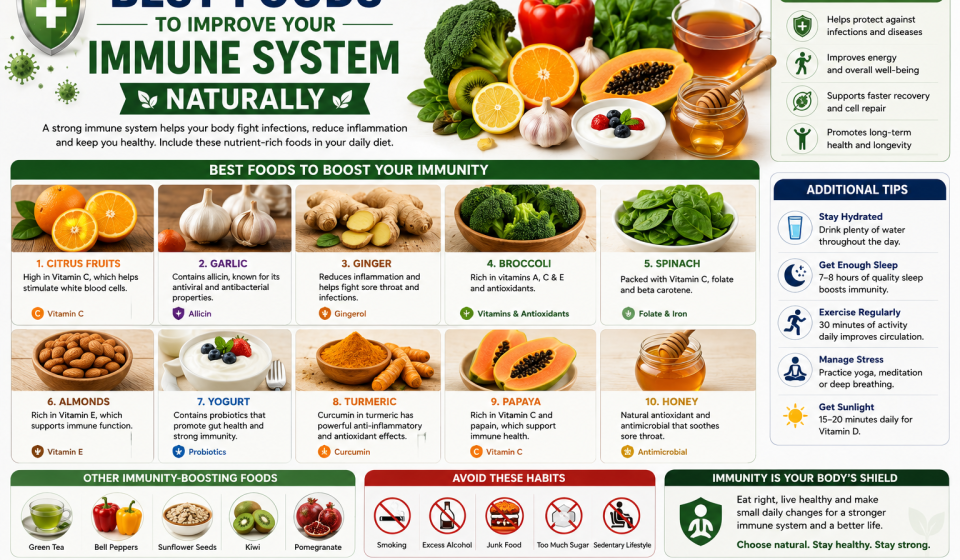
1. Citrus Fruits
Citrus fruits are among the most popular immune-supporting foods.
Examples include:
- Oranges
- Lemons
- Grapefruits
- Limes
- Tangerines
Benefits
Citrus fruits are rich in vitamin C, which supports immune cell function and antioxidant protection.
2. Berries
Berries are packed with antioxidants and nutrients.
Healthy options include:
- Blueberries
- Strawberries
- Raspberries
- Blackberries
Benefits
Berries help combat oxidative stress and support immune system health through their high antioxidant content.
3. Garlic
Garlic has been valued for its medicinal properties for centuries.
Benefits
Garlic contains sulfur compounds that may support immune function and overall wellness.
Adding garlic to meals can be a flavorful way to enhance nutrition.
4. Ginger
Ginger is widely used in traditional and modern health practices.
Benefits
Ginger contains natural compounds that support healthy inflammatory responses and overall immune health.
It can be consumed in teas, soups, or various recipes.
5. Yogurt
Yogurt provides beneficial probiotics that support gut health.
Benefits
A healthy gut microbiome plays an important role in immune function.
Choose yogurt with live and active cultures when possible.
6. Leafy Green Vegetables
Leafy greens are among the most nutrient-dense foods available.
Examples include:
- Spinach
- Kale
- Swiss chard
- Collard greens
Benefits
These vegetables provide vitamins, minerals, antioxidants, and fiber that support overall health and immunity.
7. Broccoli
Broccoli is rich in vitamins and plant compounds.
Benefits
Broccoli provides:
- Vitamin C
- Vitamin A
- Fiber
- Antioxidants
These nutrients contribute to immune system support.
8. Almonds
Almonds are an excellent source of healthy fats and vitamin E.
Benefits
Vitamin E acts as an antioxidant that helps protect immune cells from damage.
Almonds also support heart and metabolic health.
9. Sunflower Seeds
Sunflower seeds contain several nutrients that contribute to immune function.
Benefits
They provide:
- Vitamin E
- Selenium
- Healthy fats
These nutrients help support the body’s defense systems.
10. Fatty Fish
Fatty fish are rich in omega-3 fatty acids and other important nutrients.
Examples include:
- Salmon
- Sardines
- Mackerel
- Tuna
Benefits
Omega-3 fats help support healthy inflammatory responses and overall wellness.
11. Eggs
Eggs provide high-quality protein and important nutrients.
Benefits
Protein is essential for producing immune cells and maintaining tissue health.
Eggs also contain vitamins and minerals important for overall wellness.
12. Mushrooms
Certain mushrooms contain compounds that may support immune function.
Popular varieties include:
- Shiitake
- Button mushrooms
- Oyster mushrooms
Benefits
Mushrooms provide nutrients and antioxidants that contribute to immune health.
13. Sweet Potatoes
Sweet potatoes are rich in beta-carotene.
Benefits
The body converts beta-carotene into vitamin A, which supports healthy skin and immune defenses.
Sweet potatoes also provide fiber and antioxidants.
14. Green Tea
Green tea contains powerful plant compounds known as polyphenols.
Benefits
These compounds support overall health and provide antioxidant protection.
Green tea can be included as part of a balanced lifestyle.
15. Turmeric
Turmeric contains curcumin, a compound known for its health-supporting properties.
Benefits
Turmeric contributes antioxidants and may support healthy inflammatory responses.
It is commonly used in cooking and beverages.
The Role of Vitamin C in Immunity
Vitamin C supports several immune functions.
Benefits include:
- Antioxidant protection
- Immune cell support
- Collagen production
Foods rich in vitamin C include citrus fruits, berries, and vegetables.
Importance of Vitamin D
Vitamin D plays an important role in immune regulation.
Sources include:
- Sunlight exposure
- Fatty fish
- Fortified foods
- Eggs
Adequate vitamin D supports overall health and immune function.
Zinc and Immune Health
Zinc is a mineral essential for immune cell development.
Good dietary sources include:
- Nuts
- Seeds
- Legumes
- Seafood
Maintaining adequate zinc intake supports healthy immune responses.
Selenium and Antioxidant Protection
Selenium helps protect cells from oxidative damage.
Sources include:
- Sunflower seeds
- Fish
- Eggs
- Whole grains
This mineral contributes to immune system support.
Importance of Gut Health
A large portion of the immune system is closely connected to the digestive tract.
Supporting gut health through:
- Probiotic-rich foods
- Fiber-rich foods
- Balanced nutrition
can contribute to stronger immunity.
Hydration and Immunity
Water supports many bodily functions, including immune system performance.
Benefits include:
- Nutrient transport
- Waste removal
- Temperature regulation
Adequate hydration is essential for overall health.
Healthy Lifestyle Habits for Strong Immunity
Nutrition works best when combined with other healthy habits.
Important practices include:
- Regular exercise
- Quality sleep
- Stress management
- Tobacco avoidance
These habits support immune resilience.
Foods That May Weaken Immune Health
Certain dietary patterns may negatively affect immunity.
Examples include:
- Excess sugar
- Highly processed foods
- Excessive alcohol
- Nutrient-poor diets
Limiting these foods supports overall wellness.
Building an Immune-Friendly Meal Plan
A balanced meal plan should include:
- Fruits
- Vegetables
- Whole grains
- Lean proteins
- Healthy fats
- Probiotic foods
Variety helps ensure adequate nutrient intake.
Long-Term Benefits of a Healthy Immune System
Supporting immune health contributes to:
- Better overall wellness
- Improved recovery from illness
- Reduced risk of infections
- Enhanced quality of life
Consistent healthy habits provide lasting benefits.
Source Links
https://www.who.int
https://www.cdc.gov
https://www.nih.gov
https://www.hsph.harvard.edu
https://www.ncbi.nlm.nih.gov
Conclusion
A strong immune system relies on a combination of healthy lifestyle habits and proper nutrition. Foods such as citrus fruits, berries, garlic, ginger, yogurt, leafy greens, broccoli, almonds, fatty fish, eggs, mushrooms, sweet potatoes, green tea, and turmeric provide important nutrients that support immune function naturally. Vitamins, minerals, antioxidants, healthy fats, and probiotics all contribute to the body’s ability to defend itself against infections and maintain overall wellness. By incorporating these nutrient-rich foods into a balanced diet and combining them with adequate sleep, regular exercise, hydration, and stress management, individuals can build a stronger immune system and promote long-term health.
FAQ
1- What foods are best for boosting the immune system naturally?
Citrus fruits, berries, garlic, ginger, yogurt, leafy greens, broccoli, almonds, fatty fish, and other nutrient-rich foods support immune health.
2- Why is vitamin C important for immunity?
Vitamin C supports immune cell function, antioxidant protection, and overall immune system performance.
3- Can probiotics improve immune health?
Yes, probiotics help support a healthy gut microbiome, which plays an important role in immune function.
4- Which foods provide vitamin D?
Fatty fish, eggs, fortified foods, and sunlight exposure contribute to vitamin D levels.
5- How does hydration support immunity?
Water helps transport nutrients, regulate body functions, and support overall health.
6- Are antioxidants important for the immune system?
Yes, antioxidants help protect immune cells from oxidative stress and support healthy immune responses.
7- Can diet alone prevent illness?
No single diet can guarantee protection from illness, but proper nutrition supports immune function and overall health.
8- What role does sleep play in immunity?
Quality sleep helps regulate immune processes and supports the body’s natural defenses.
9- Are processed foods harmful to immune health?
Frequent consumption of highly processed foods may negatively affect overall health and immune function.
10- What is the best way to strengthen immunity naturally?
A combination of balanced nutrition, regular exercise, adequate sleep, stress management, and healthy lifestyle habits provides the best support for immune health.