Everything You Need to Know About Managing Diabetes Through Lifestyle Changes, Nutrition, and Regular Medical Care

Managing Diabetes Successfully: The Complete Guide to Lifestyle Changes, Healthy Nutrition, Exercise, and Regular Medical Care for Better Blood Sugar Control
Diabetes is one of the most common chronic health conditions affecting millions of people worldwide. It occurs when the body either does not produce enough insulin or cannot effectively use the insulin it produces, leading to elevated blood sugar levels. If left unmanaged, diabetes can increase the risk of serious complications such as heart disease, kidney damage, vision problems, nerve damage, and stroke. Fortunately, with proper lifestyle changes, balanced nutrition, regular physical activity, and consistent medical care, people living with diabetes can effectively manage their condition and enjoy a healthy, active life. Understanding how diabetes affects the body and learning practical management strategies are essential steps toward maintaining optimal health and preventing complications.
Managing diabetes is not solely about taking medication. It requires a comprehensive approach that includes healthy eating habits, regular exercise, stress management, adequate sleep, routine health monitoring, and ongoing support from healthcare professionals. Whether you have Type 1 diabetes, Type 2 diabetes, or prediabetes, adopting healthy lifestyle practices can significantly improve blood sugar control and enhance overall well-being. By making informed choices and staying proactive, individuals can reduce health risks, improve energy levels, and achieve a better quality of life.
Understanding Diabetes
Diabetes is a chronic metabolic disorder characterized by high levels of glucose in the bloodstream. Glucose serves as the body’s primary source of energy, but it requires insulin to enter cells effectively.
What Is Insulin?
Insulin is a hormone produced by the pancreas that helps regulate blood sugar levels. When insulin production is insufficient or the body’s cells become resistant to insulin, blood sugar levels rise, resulting in diabetes.
Types of Diabetes
Type 1 Diabetes
Type 1 diabetes is an autoimmune condition in which the immune system attacks insulin-producing cells in the pancreas. Individuals with Type 1 diabetes require insulin therapy for survival.
Type 2 Diabetes
Type 2 diabetes is the most common form of diabetes. It occurs when the body becomes resistant to insulin or does not produce enough insulin to maintain normal blood sugar levels.
Prediabetes
Prediabetes occurs when blood sugar levels are higher than normal but not yet high enough for a Type 2 diabetes diagnosis. Early intervention can often prevent progression to diabetes.
Gestational Diabetes
Gestational diabetes develops during pregnancy and usually resolves after childbirth. However, it increases the future risk of developing Type 2 diabetes.
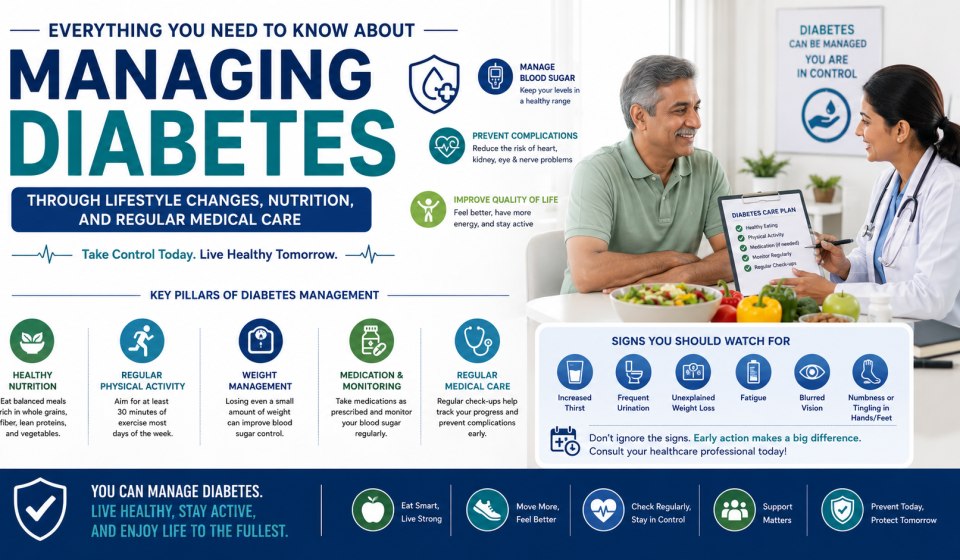
Common Symptoms of Diabetes
Recognizing symptoms early can lead to faster diagnosis and treatment.
Common symptoms include:
- Frequent urination
- Excessive thirst
- Increased hunger
- Unexplained weight loss
- Fatigue
- Blurred vision
- Slow wound healing
- Frequent infections
- Tingling or numbness in hands and feet
Anyone experiencing these symptoms should consult a healthcare professional for evaluation.
Why Diabetes Management Is Important
Proper diabetes management helps prevent complications and supports overall health.
Benefits include:
- Improved blood sugar control
- Reduced risk of heart disease
- Better kidney health
- Improved vision protection
- Reduced nerve damage risk
- Enhanced energy levels
- Better quality of life
Consistent management significantly lowers the likelihood of long-term complications.
The Role of Nutrition in Diabetes Management
Healthy eating is one of the most powerful tools for controlling blood sugar levels.
Focus on Balanced Meals
A balanced diet should include:
- Vegetables
- Fruits
- Whole grains
- Lean proteins
- Healthy fats
Balanced meals help stabilize blood sugar and provide essential nutrients.
Choose Complex Carbohydrates
Complex carbohydrates digest more slowly and have a smaller impact on blood sugar.
Examples include:
- Brown rice
- Oats
- Whole wheat bread
- Quinoa
- Sweet potatoes
- Legumes
These foods provide sustained energy and improve blood sugar control.
Increase Fiber Intake
Fiber slows glucose absorption and supports digestive health.
High-fiber foods include:
- Beans
- Lentils
- Vegetables
- Fruits
- Whole grains
- Chia seeds
Higher fiber intake is associated with improved diabetes management.
Limit Refined Sugars
Refined sugars can cause rapid spikes in blood glucose levels.
Foods to limit include:
- Sugary beverages
- Candy
- Cakes
- Pastries
- Sweetened cereals
Replacing sugary foods with healthier alternatives supports stable blood sugar levels.
Monitor Portion Sizes
Portion control helps prevent overeating and supports healthy weight management.
Using smaller plates, measuring servings, and eating mindfully can help regulate calorie intake.
The Importance of Physical Activity
Regular exercise improves insulin sensitivity and helps lower blood sugar levels.
Benefits of Exercise for Diabetes
Exercise can:
- Improve glucose utilization
- Reduce insulin resistance
- Promote weight loss
- Improve heart health
- Increase energy levels
- Reduce stress
Recommended Exercise Types
Aerobic Exercise
Examples include:
- Walking
- Cycling
- Swimming
- Jogging
- Dancing
Adults should aim for at least 150 minutes of moderate aerobic activity per week.
Strength Training
Strength training helps build muscle and improve blood sugar control.
Examples include:
- Weightlifting
- Resistance bands
- Bodyweight exercises
Performing strength exercises two or more times weekly is generally recommended.
Flexibility and Balance Exercises
Activities such as yoga and stretching improve mobility, flexibility, and stress management.
Weight Management and Diabetes
Maintaining a healthy weight is particularly important for individuals with Type 2 diabetes.
Benefits of healthy weight management include:
- Improved insulin sensitivity
- Lower blood sugar levels
- Reduced blood pressure
- Improved cholesterol levels
- Lower risk of cardiovascular disease
Even modest weight loss can produce significant health benefits.
Monitoring Blood Sugar Levels
Regular blood glucose monitoring provides valuable information about diabetes management effectiveness.
Monitoring helps individuals:
- Understand how foods affect blood sugar
- Assess medication effectiveness
- Prevent complications
- Detect dangerous glucose fluctuations
Healthcare providers can recommend appropriate monitoring schedules based on individual needs.
Managing Stress for Better Blood Sugar Control
Stress can negatively impact blood sugar levels by triggering hormonal responses that increase glucose production.
Effective stress management strategies include:
- Meditation
- Deep breathing exercises
- Yoga
- Physical activity
- Time management
- Relaxation techniques
Reducing stress supports both physical and mental health.
The Importance of Quality Sleep
Sleep plays a vital role in metabolic health and blood sugar regulation.
Poor sleep may contribute to:
- Insulin resistance
- Increased appetite
- Weight gain
- Elevated blood sugar levels
Most adults should aim for seven to nine hours of quality sleep each night.
Medication and Insulin Therapy
Lifestyle changes are essential, but many individuals also require medications to manage diabetes effectively.
Common treatments may include:
- Oral diabetes medications
- Injectable medications
- Insulin therapy
Patients should follow healthcare provider instructions carefully and never adjust medications without professional guidance.
Regular Medical Care and Checkups
Routine medical visits are critical for monitoring diabetes and preventing complications.
Healthcare providers may assess:
- Blood sugar levels
- Hemoglobin A1C
- Blood pressure
- Cholesterol levels
- Kidney function
- Eye health
- Foot health
Regular evaluations help identify concerns before they become severe.
Preventing Diabetes Complications
Effective diabetes management reduces the risk of complications.
Cardiovascular Disease Prevention
People with diabetes have a higher risk of heart disease.
Prevention strategies include:
- Maintaining healthy blood sugar levels
- Exercising regularly
- Eating a heart-healthy diet
- Avoiding smoking
Kidney Protection
Regular kidney screenings and blood sugar control help preserve kidney function.
Eye Health
Annual eye examinations can detect diabetes-related vision problems early.
Foot Care
Daily foot inspections help prevent infections, ulcers, and other complications.
Diabetes Management for Different Age Groups
Children and Adolescents
Management focuses on:
- Blood sugar monitoring
- Healthy nutrition
- Physical activity
- Family support
Adults
Adults benefit from:
- Weight management
- Preventive screenings
- Lifestyle modifications
- Consistent medical follow-up
Older Adults
Older individuals may require:
- Medication adjustments
- Increased monitoring
- Fall prevention strategies
- Chronic disease management
Building a Sustainable Diabetes Management Plan
Successful diabetes management requires long-term commitment and consistency.
Key steps include:
- Follow a balanced diet.
- Exercise regularly.
- Monitor blood sugar levels.
- Take medications as prescribed.
- Manage stress effectively.
- Get adequate sleep.
- Attend regular medical appointments.
- Avoid tobacco products.
- Limit alcohol consumption.
- Stay informed about diabetes care.
Creating realistic and sustainable habits leads to better long-term outcomes.
Source Links
- World Health Organization (WHO) – Diabetes Information
- Centers for Disease Control and Prevention (CDC) – Diabetes Resources
- National Institute of Diabetes and Digestive and Kidney Diseases (NIDDK)
- American Diabetes Association (ADA)
- MedlinePlus – Diabetes Health Information
Conclusion
Managing diabetes successfully requires a combination of healthy lifestyle choices, proper nutrition, regular physical activity, stress management, adequate sleep, medication adherence, and consistent medical care. While diabetes is a lifelong condition, individuals can take control of their health and significantly reduce the risk of complications through proactive management. Small daily habits, such as choosing nutritious foods, staying active, monitoring blood sugar levels, and attending routine health checkups, can make a substantial difference in long-term outcomes. By working closely with healthcare professionals and maintaining a commitment to healthy living, people with diabetes can enjoy improved well-being, greater energy, and a higher quality of life.
FAQ
1.What is diabetes?
Diabetes is a chronic condition that affects how the body processes glucose, resulting in elevated blood sugar levels.
2.What are the main types of diabetes?
The main types include Type 1 diabetes, Type 2 diabetes, prediabetes, and gestational diabetes.
3.Can lifestyle changes help manage diabetes?
Yes. Healthy eating, regular exercise, weight management, and stress reduction are key components of diabetes management.
4.What foods are best for people with diabetes?
Vegetables, whole grains, lean proteins, healthy fats, legumes, and high-fiber foods are generally beneficial.
5.How often should blood sugar be monitored?
Monitoring frequency depends on the type of diabetes, treatment plan, and healthcare provider recommendations.
6.Why is exercise important for diabetes?
Exercise improves insulin sensitivity, helps lower blood sugar levels, supports weight management, and promotes cardiovascular health.
7.Can diabetes complications be prevented?
Many complications can be prevented or delayed through effective blood sugar control, healthy lifestyle habits, and regular medical care.
8.Why are regular medical checkups important for people with diabetes?
Routine checkups help monitor blood sugar levels, detect complications early, and ensure treatment plans remain effective.
9.How does stress affect diabetes?
Stress can increase blood sugar levels and make diabetes management more difficult.
10.Can people with diabetes live healthy lives?
Yes. With proper management, education, and support, individuals with diabetes can lead healthy, active, and fulfilling lives.