The Complete Guide to Personalized Healthcare: How Individual Medical History, Lifestyle, Age, and Risk Factors Affect Your Treatment Plan

Factors such as medical history, age, lifestyle habits, family history, genetic predisposition, environmental influences, and personal health goals all contribute to healthcare decisions.
Healthcare is no longer based solely on treating diseases after symptoms appear. Modern medicine increasingly focuses on personalized healthcare, an approach that tailors prevention, diagnosis, treatment, and long-term care according to an individual’s unique characteristics.By understanding these factors, healthcare providers can develop treatment plans that are more effective, safer, and better suited to each patient’s needs. Every person experiences health differently. Two individuals with the same medical condition may require completely different treatment approaches based on their age, overall health, medications, risk factors, and lifestyle. Personalized healthcare recognizes that no single treatment works equally well for everyone. Instead, it emphasizes individualized care that improves outcomes, reduces unnecessary treatments, minimizes side effects, and promotes long-term wellness. This comprehensive guide explores how personal medical history, lifestyle choices, age, risk factors, and preventive healthcare strategies influence treatment plans and help create a more patient-centered healthcare experience.
What Is Personalized Healthcare?
Personalized healthcare is a medical approach that customizes healthcare decisions according to the unique characteristics of each patient.
Main Objectives
- Improve treatment effectiveness
- Reduce healthcare risks
- Support preventive care
- Enhance patient outcomes
- Promote long-term wellness
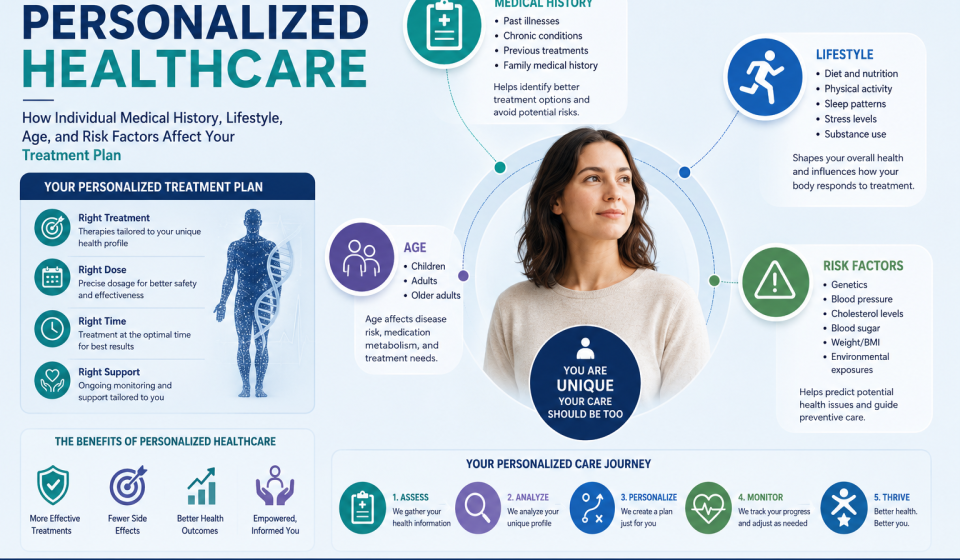
Individualized healthcare aims to provide the right treatment to the right patient at the right time.
Why Personalized Healthcare Is Important
Traditional healthcare often relies on standardized treatment recommendations.
Benefits of Personalization
- More accurate diagnoses
- Better treatment selection
- Reduced side effects
- Improved patient satisfaction
- Enhanced disease prevention
Customized care helps address individual healthcare needs more effectively.
Understanding Individual Medical History
Medical history provides valuable information about a person’s past and current health.
Important Components
- Previous illnesses
- Surgeries
- Hospitalizations
- Chronic diseases
- Allergies
- Medication history
Healthcare providers use this information to make informed decisions.
How Medical History Influences Treatment Plans
Past medical conditions often affect future healthcare choices.
Examples
- Previous heart disease may influence medication selection.
- Kidney disease may affect drug dosages.
- Allergies may limit treatment options.
Understanding medical history helps reduce complications.
The Role of Family Medical History
Family history can reveal inherited health risks.
Common Conditions With Genetic Links
- Diabetes
- Heart disease
- Hypertension
- Cancer
- Thyroid disorders
Healthcare providers use family history to guide screening recommendations and preventive care.
Lifestyle Factors and Healthcare Decisions
Daily habits significantly affect health outcomes.
Important Lifestyle Factors
- Diet
- Physical activity
- Sleep
- Stress levels
- Tobacco use
- Alcohol consumption
Lifestyle information helps create realistic and effective treatment plans.
Nutrition and Personalized Healthcare
Diet affects nearly every aspect of health.
Why Nutrition Matters
- Supports disease prevention
- Improves treatment outcomes
- Helps manage chronic diseases
Nutritional recommendations often vary based on individual needs and health conditions.
Physical Activity and Treatment Planning
Exercise influences overall health and disease risk.
Benefits
- Better cardiovascular health
- Improved blood sugar control
- Weight management
Healthcare providers often consider activity levels when developing treatment strategies.
Sleep and Health Management
Sleep quality affects physical and mental health.
Health Effects of Poor Sleep
- Fatigue
- Reduced immunity
- Increased chronic disease risk
Treatment plans may include sleep improvement strategies.
Stress and Its Impact on Healthcare
Chronic stress can worsen many health conditions.
Potential Effects
- High blood pressure
- Anxiety
- Depression
- Digestive issues
Stress management is often incorporated into comprehensive treatment plans.
How Age Affects Medical Care
Age is one of the most important factors in healthcare decision-making.
Why Age Matters
- Disease risks change over time
- Medication responses vary
- Screening recommendations differ
Healthcare providers adjust treatment approaches according to age-related needs.
Personalized Healthcare for Children
Children require specialized care because their bodies are still developing.
Focus Areas
- Growth monitoring
- Vaccinations
- Developmental assessments
Pediatric healthcare emphasizes prevention and healthy development.
Personalized Healthcare for Teenagers
Adolescence brings unique health challenges.
Considerations
- Mental health
- Nutrition
- Physical development
Individualized care supports healthy transitions into adulthood.
Personalized Healthcare for Adults
Adults often require preventive screenings and chronic disease management.
Common Areas of Focus
- Heart health
- Blood pressure monitoring
- Diabetes screening
Preventive care becomes increasingly important.
Personalized Healthcare for Older Adults
Aging affects healthcare needs significantly.
Key Considerations
- Medication management
- Mobility
- Cognitive health
Healthcare plans often become more comprehensive with age.
Understanding Risk Factors
Risk factors increase the likelihood of developing specific health conditions.
Types of Risk Factors
- Genetic
- Lifestyle-related
- Environmental
- Age-related
Risk assessment helps guide healthcare recommendations.
Genetic Factors in Personalized Medicine
Genetics can influence disease risk and treatment response.
Examples
- Inherited cancer syndromes
- Genetic heart conditions
Genetic information supports more targeted healthcare decisions.
Environmental Influences on Health
The environment affects overall well-being.
Examples
- Air pollution
- Occupational exposures
- Living conditions
Healthcare providers may consider environmental factors when evaluating symptoms.
Chronic Diseases and Personalized Care
Many chronic illnesses require individualized management.
Common Conditions
- Diabetes
- Hypertension
- Heart disease
- Asthma
Treatment plans often vary significantly among patients.
Medication Personalization
Not all medications affect individuals in the same way.
Factors Considered
- Age
- Weight
- Kidney function
- Medical history
Personalized prescribing improves safety and effectiveness.
Preventive Healthcare and Personal Risk Assessment
Preventive healthcare becomes more effective when tailored to individual risks.
Examples
- Cancer screenings
- Cholesterol testing
- Diabetes evaluations
Personalized prevention strategies improve long-term health outcomes.
Importance of Health Screenings
Screenings help detect diseases before symptoms develop.
Common Screenings
- Blood pressure checks
- Mammograms
- Colon cancer screenings
- Blood glucose testing
Recommendations vary according to individual risk factors.
Mental Health and Personalized Treatment
Mental health care also benefits from personalization.
Conditions
- Anxiety
- Depression
- Stress-related disorders
Treatment approaches may include therapy, medication, lifestyle changes, or combinations of these strategies.
Technology and Personalized Healthcare
Modern technology supports individualized healthcare.
Examples
- Wearable devices
- Electronic health records
- Health monitoring apps
Technology provides valuable health insights.
Patient Involvement in Treatment Planning
Patients play an important role in healthcare decisions.
Benefits
- Better understanding
- Improved adherence
- Increased satisfaction
Shared decision-making strengthens healthcare outcomes.
Building a Personalized Wellness Plan
A comprehensive wellness plan considers multiple factors.
Include
- Health goals
- Medical history
- Lifestyle habits
- Screening schedules
Personalized wellness plans promote proactive healthcare management.
The Future of Personalized Healthcare
Healthcare continues to become more individualized.
Emerging Trends
- Precision medicine
- Genetic testing
- Advanced diagnostics
Future innovations may further improve treatment accuracy and effectiveness.
Source Links
https://www.who.int
https://www.cdc.gov
https://www.nih.gov
https://www.mayoclinic.org
Conclusion
Personalized healthcare represents a significant advancement in modern medicine by recognizing that every individual has unique health needs, risk factors, and treatment responses. Medical history, family background, lifestyle habits, age, environmental influences, and personal health goals all contribute to the development of effective treatment plans. By tailoring healthcare strategies to the individual rather than relying solely on generalized approaches, healthcare providers can improve outcomes, enhance patient satisfaction, and support long-term wellness. As technology and medical research continue to evolve, personalized healthcare will play an increasingly important role in disease prevention, diagnosis, and treatment.
FAQ
1.What is personalized healthcare?
Personalized healthcare is a medical approach that tailors prevention, diagnosis, and treatment based on an individual’s unique characteristics and health needs.
2.Why is medical history important in treatment planning?
Medical history helps healthcare providers understand previous illnesses, medications, surgeries, and risks that may affect treatment decisions.
3.How does age affect healthcare recommendations?
Age influences disease risk, medication responses, screening needs, and treatment strategies.
4.Why is family medical history important?
Family history helps identify inherited risks for conditions such as diabetes, heart disease, and cancer.
5.Can lifestyle habits influence treatment plans?
Yes, diet, exercise, sleep, smoking, alcohol use, and stress levels all affect healthcare decisions and outcomes.
6.What role do risk factors play in healthcare?
Risk factors help healthcare providers determine screening schedules, preventive strategies, and treatment recommendations.
7.How does personalized healthcare improve outcomes?
It helps ensure treatments are more appropriate, effective, and safe for individual patients.
8.What is the future of personalized medicine?
Advances in genetics, precision medicine, digital health technology, and data analysis are expected to make healthcare increasingly personalized.