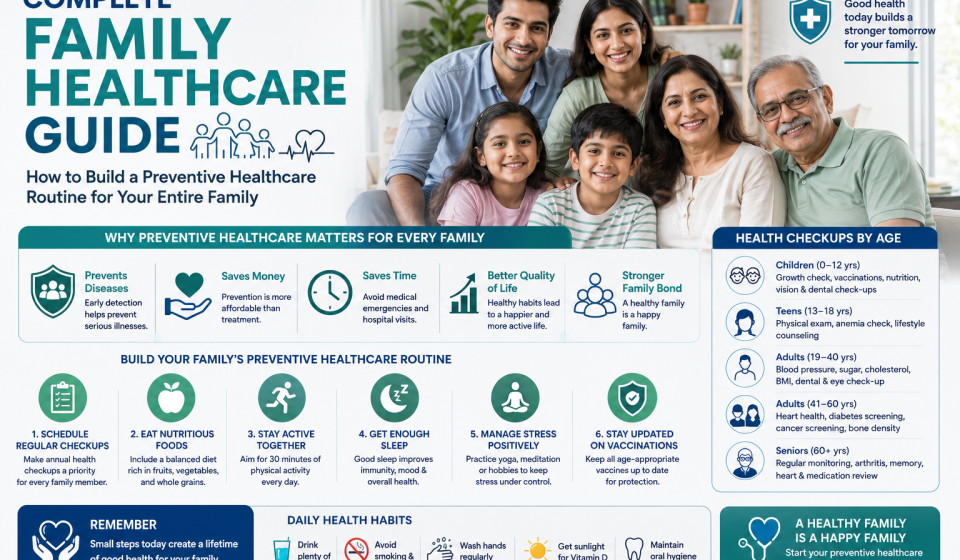
Complete Family Healthcare Guide: How to Build a Preventive Healthcare Routine for Your Entire Family

Maintaining the health and well-being of every family member requires more than treating illnesses when they occur. Preventive healthcare focuses on protecting health before problems develop through regular medical checkups, vaccinations, healthy lifestyle habits, screenings, and early disease detection.
A well-planned preventive healthcare routine can help families reduce health risks, improve quality of life, and avoid costly medical complications in the future. Whether you have young children, teenagers, adults, or senior citizens in your household, preventive care plays an essential role in supporting long-term wellness.Many common health conditions, including diabetes, heart disease, obesity, high blood pressure, and certain cancers, can often be prevented or managed more effectively when detected early. Families that prioritize preventive healthcare benefit from better physical health, stronger emotional well-being, and increased awareness of healthy habits. Building a family healthcare routine may seem overwhelming at first, but with proper planning and consistency, it becomes a valuable investment in lifelong health. This comprehensive guide explains how to create an effective preventive healthcare plan for every member of your family and maintain healthy habits that support wellness across all stages of life.
What Is Preventive Healthcare?
Preventive healthcare includes medical services and lifestyle practices designed to prevent illness and detect health problems early.
Main Goals
- Disease prevention
- Early diagnosis
- Health promotion
- Risk reduction
- Improved quality of life
Preventive care helps families stay healthier and reduce future health complications.
Why Family Preventive Healthcare Matters
Healthcare decisions made today can influence future health outcomes.
Benefits
- Early disease detection
- Lower healthcare costs
- Better treatment outcomes
- Improved life expectancy
- Enhanced family well-being
A preventive approach creates a healthier household environment.
Building a Family Healthcare Plan
Creating a structured healthcare routine helps ensure consistency.
Important Components
- Routine checkups
- Vaccinations
- Health screenings
- Healthy nutrition
- Physical activity
- Mental health support
Each family member should have an individualized plan based on age and health needs.
Schedule Regular Medical Checkups
Routine medical visits are a cornerstone of preventive healthcare.
Benefits
- Monitoring health status
- Detecting problems early
- Updating vaccinations
- Discussing health concerns
Annual checkups are recommended for most individuals.
Maintain a Family Health Record
Organized medical information improves healthcare management.
Include
- Medical history
- Vaccination records
- Test results
- Medications
- Allergies
A centralized record helps healthcare providers make informed decisions.
Importance of Vaccinations
Vaccines protect against many preventable diseases.
Common Vaccinations
- Childhood immunizations
- Influenza vaccine
- COVID-19 vaccine
- Pneumococcal vaccine
- Shingles vaccine
Following recommended schedules provides important protection.
Preventive Healthcare for Children
Children require specialized healthcare monitoring.
Key Areas
- Growth tracking
- Development assessments
- Vision screenings
- Hearing evaluations
- Dental care
Regular pediatric visits support healthy development.
Monitoring Growth and Development
Tracking developmental milestones helps identify concerns early.
Assessments
- Height
- Weight
- Motor skills
- Language development
Early intervention can improve outcomes.
Preventive Care for Teenagers
Adolescence involves significant physical and emotional changes.
Important Focus Areas
- Mental health
- Nutrition
- Physical activity
- Substance abuse prevention
Regular healthcare visits provide valuable guidance.
Adult Preventive Healthcare
Adults should prioritize routine screenings and healthy habits.
Common Screenings
- Blood pressure
- Cholesterol
- Diabetes
- Cancer screenings
Early detection improves treatment success.
Senior Citizen Preventive Care
Older adults often require additional healthcare monitoring.
Recommended Evaluations
- Bone density testing
- Vision exams
- Hearing assessments
- Cognitive health screening
Preventive care helps maintain independence and quality of life.
Healthy Nutrition for the Entire Family
Nutrition significantly affects overall health.
Components of a Balanced Diet
- Fruits
- Vegetables
- Whole grains
- Lean proteins
- Healthy fats
Healthy eating habits should begin early and continue throughout life.
Reducing Processed Foods
Highly processed foods may contribute to chronic disease risk.
Foods to Limit
- Sugary drinks
- Excess sodium
- Refined carbohydrates
- Trans fats
Healthier alternatives support long-term wellness.
Family Meal Planning
Planning meals encourages healthier food choices.
Benefits
- Improved nutrition
- Portion control
- Reduced reliance on fast food
Family meals can also strengthen relationships.
Encouraging Physical Activity
Regular movement supports physical and mental health.
Benefits
- Weight management
- Stronger muscles and bones
- Better heart health
- Improved mood
Exercise should be part of every family member’s routine.
Recommended Family Activities
Examples
- Walking
- Cycling
- Swimming
- Outdoor games
- Hiking
Active families often enjoy better overall health.
Importance of Sleep
Quality sleep supports recovery and overall wellness.
Benefits
- Improved concentration
- Better immunity
- Enhanced emotional health
Consistent sleep schedules are important for all age groups.
Managing Stress as a Family
Stress affects both physical and mental health.
Common Sources
- Work
- School
- Financial concerns
- Health issues
Healthy coping strategies help reduce stress-related health risks.
Supporting Mental Health
Mental wellness is a critical aspect of preventive healthcare.
Helpful Practices
- Open communication
- Emotional support
- Professional counseling when needed
Strong mental health supports overall family well-being.
Routine Dental Care
Oral health affects overall health.
Recommendations
- Daily brushing
- Flossing
- Regular dental checkups
Good oral hygiene prevents many dental problems.
Vision and Hearing Screenings
Regular evaluations help identify sensory issues early.
Benefits
- Better academic performance
- Improved communication
- Enhanced quality of life
Screenings are important across all age groups.
Preventing Chronic Diseases
Many chronic illnesses are influenced by lifestyle habits.
Conditions Often Preventable
- Type 2 diabetes
- Heart disease
- Obesity
- Hypertension
Healthy family routines reduce long-term disease risk.
Understanding Family Medical History
Family history influences health risks.
Conditions to Monitor
- Heart disease
- Diabetes
- Cancer
- Hypertension
Sharing family history with healthcare providers supports personalized care.
Limiting Tobacco and Alcohol Exposure
Smoking and excessive alcohol use increase disease risk.
Benefits of Avoidance
- Improved heart health
- Better lung function
- Reduced cancer risk
Healthy family environments promote healthier choices.
Home Safety and Injury Prevention
Preventing injuries is an important aspect of family healthcare.
Strategies
- Safe storage of medications
- Childproofing
- Fall prevention measures
Safety planning reduces accident risk.
Building Healthy Habits in Children
Children learn by observing adults.
Positive Examples
- Healthy eating
- Regular exercise
- Routine healthcare visits
Early habits often continue into adulthood.
The Role of Preventive Health Screenings
Screenings identify health issues before symptoms appear.
Examples
- Blood pressure checks
- Cholesterol tests
- Cancer screenings
Routine screening supports early intervention.
Creating an Emergency Preparedness Plan
Families should prepare for medical emergencies.
Include
- Emergency contacts
- Medication lists
- First aid supplies
Preparation improves response during emergencies.
Benefits of a Family Healthcare Routine
Physical Benefits
- Better health outcomes
- Reduced disease risk
Emotional Benefits
- Reduced anxiety
- Greater confidence
Financial Benefits
- Lower medical expenses
- Fewer hospitalizations
Consistent preventive care benefits the entire family.
Source Links
https://www.cdc.gov
https://www.nih.gov
https://www.mayoclinic.org
Conclusion
Building a preventive healthcare routine for your entire family is one of the most valuable investments you can make in long-term health and well-being. Through regular medical checkups, vaccinations, healthy nutrition, physical activity, stress management, mental health support, and preventive screenings, families can significantly reduce the risk of chronic diseases and improve quality of life. By creating consistent health-focused habits and encouraging every family member to participate in preventive care, households can enjoy healthier, safer, and more fulfilling lives for years to come.
FAQ
1.What is preventive healthcare?
Preventive healthcare focuses on preventing diseases and detecting health issues early through screenings, vaccinations, and healthy lifestyle practices.
2.Why is family preventive healthcare important?
It helps reduce disease risk, improve health outcomes, and lower healthcare costs.
3.How often should family members have health checkups?
The frequency depends on age, health status, and risk factors, but annual checkups are commonly recommended.
4.What screenings are important for adults?
Blood pressure, cholesterol, diabetes, and cancer screenings are among the most important.
5.Why are vaccinations important?
Vaccines protect against serious infectious diseases and support community health.
6.How can families encourage healthy eating?
Meal planning, healthy food choices, and regular family meals can promote better nutrition.