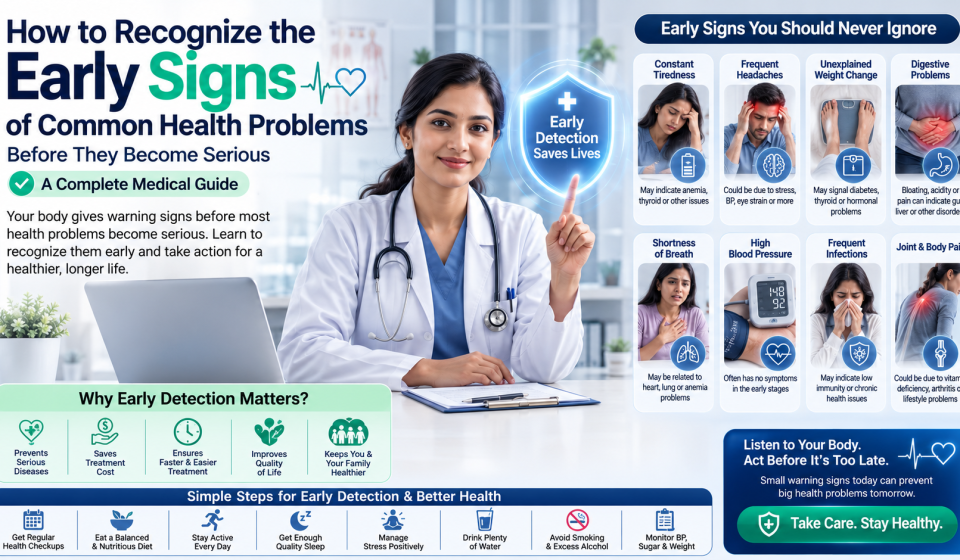
How to Recognize the Early Signs of Common Health Problems Before They Become Serious: A Complete Medical Guide

Many serious health conditions do not appear suddenly. Instead, they often begin with subtle symptoms that are easy to overlook or dismiss as temporary discomfort.
Fatigue, unexplained weight changes, persistent headaches, digestive issues, changes in sleep patterns, and minor breathing difficulties may seem harmless at first, but they can sometimes indicate underlying medical conditions that require attention. Recognizing these early warning signs can help individuals seek timely medical care, receive earlier diagnoses, and improve treatment outcomes. Modern medicine emphasizes prevention and early detection because many diseases are easier to manage when identified in their initial stages. Conditions such as diabetes, heart disease, high blood pressure, cancer, thyroid disorders, kidney disease, and mental health conditions often present warning signs long before complications develop. Understanding these symptoms and knowing when to consult a healthcare professional can significantly reduce health risks and improve long-term well-being. This comprehensive medical guide explains how to identify the early signs of common health problems and why prompt action is important for maintaining overall health.
Why Early Detection Matters
Early detection plays a critical role in preventing disease progression.
Benefits of Early Diagnosis
- Better treatment outcomes
- Reduced complications
- Lower healthcare costs
- Improved quality of life
- Increased survival rates
Recognizing symptoms early allows healthcare providers to intervene before conditions become severe.
Understanding Health Warning Signs
The body often sends signals when something is wrong.
Common Warning Signs
- Persistent fatigue
- Pain
- Unexplained weight changes
- Changes in appetite
- Breathing difficulties
Paying attention to these signals can help identify health issues sooner.
Persistent Fatigue
Feeling tired occasionally is normal, but ongoing fatigue should not be ignored.
Possible Causes
- Anemia
- Diabetes
- Thyroid disorders
- Sleep apnea
- Depression
Medical evaluation is recommended if fatigue persists despite adequate rest.
Unexplained Weight Loss
Unexpected weight loss may indicate an underlying health condition.
Potential Causes
- Diabetes
- Cancer
- Thyroid disease
- Digestive disorders
Significant unexplained weight loss warrants medical attention.
Sudden Weight Gain
Rapid weight gain may signal fluid retention or hormonal imbalances.
Possible Conditions
- Heart disease
- Kidney disease
- Thyroid disorders
Monitoring weight changes can provide valuable health insights.
Frequent Headaches
Most headaches are harmless, but recurring headaches should be evaluated.
Warning Signs
- Increased frequency
- Severe intensity
- Vision changes
- Neurological symptoms
Persistent headaches may require medical investigation.
High Blood Pressure Symptoms
Hypertension is often called a silent condition because symptoms may be absent.
Possible Warning Signs
- Headaches
- Dizziness
- Blurred vision
Regular blood pressure monitoring is essential.
Early Signs of Diabetes
Diabetes often develops gradually.
Common Symptoms
- Frequent urination
- Excessive thirst
- Increased hunger
- Fatigue
- Blurred vision
Early detection helps prevent complications.
Heart Disease Warning Signs
Cardiovascular disease remains a leading cause of death worldwide.
Early Symptoms
- Chest discomfort
- Shortness of breath
- Fatigue
- Swelling in the legs
Prompt evaluation can improve outcomes.
Shortness of Breath
Difficulty breathing should never be ignored.
Possible Causes
- Asthma
- Heart disease
- Lung conditions
- Allergic reactions
Persistent symptoms require medical assessment.
Persistent Cough
A cough lasting several weeks may indicate an underlying condition.
Possible Causes
- Asthma
- Chronic bronchitis
- Lung disease
- Gastroesophageal reflux disease
Professional evaluation may be necessary.
Digestive Problems
Digestive symptoms can sometimes indicate serious health issues.
Symptoms to Monitor
- Chronic constipation
- Persistent diarrhea
- Abdominal pain
- Bloating
Long-lasting symptoms should be discussed with a healthcare provider.
Blood in Stool
Blood in stool should always be evaluated.
Potential Causes
- Hemorrhoids
- Inflammatory bowel disease
- Colon cancer
Medical attention is important for accurate diagnosis.
Changes in Urination
Urinary symptoms often provide clues about health status.
Warning Signs
- Blood in urine
- Frequent urination
- Painful urination
Kidney or urinary tract conditions may be involved.
Kidney Disease Early Symptoms
Kidney disease often progresses silently.
Early Indicators
- Swelling
- Fatigue
- Changes in urination
Routine testing helps identify kidney problems early.
Thyroid Disorder Symptoms
The thyroid gland affects metabolism and energy levels.
Hypothyroidism Symptoms
- Fatigue
- Weight gain
- Dry skin
Hyperthyroidism Symptoms
- Weight loss
- Anxiety
- Rapid heartbeat
Proper diagnosis requires medical evaluation.
Skin Changes
Skin can reveal important health information.
Warning Signs
- Changing moles
- Persistent rashes
- Non-healing wounds
Regular skin checks support early detection.
Vision Changes
Sudden or persistent vision changes should be evaluated.
Examples
- Blurred vision
- Double vision
- Vision loss
Eye problems may indicate broader health issues.
Hearing Changes
Hearing loss may develop gradually.
Early Signs
- Difficulty understanding conversations
- Ringing in the ears
Early intervention may improve outcomes.
Sleep Problems
Sleep disturbances can affect overall health.
Common Issues
- Insomnia
- Excessive daytime sleepiness
- Sleep apnea
Persistent problems should be discussed with a healthcare provider.
Mental Health Warning Signs
Mental health conditions often develop gradually.
Symptoms
- Persistent sadness
- Anxiety
- Irritability
- Loss of interest
Seeking help early can improve recovery.
Memory Problems
Occasional forgetfulness is common, but worsening memory issues require attention.
Possible Causes
- Stress
- Vitamin deficiencies
- Neurological conditions
Medical evaluation can identify underlying causes.
Chronic Pain
Pain lasting longer than expected should be assessed.
Common Areas
- Back
- Joints
- Muscles
Early treatment may prevent worsening symptoms.
Frequent Infections
Repeated infections may indicate immune system problems.
Examples
- Recurrent respiratory infections
- Frequent urinary tract infections
Healthcare evaluation is recommended.
Signs of Cancer
Cancer symptoms vary depending on the type.
Potential Warning Signs
- Unexplained weight loss
- Persistent fatigue
- Lumps
- Unusual bleeding
Early diagnosis significantly improves treatment outcomes.
Monitoring Your Health
Regular self-awareness supports early detection.
Helpful Practices
- Track symptoms
- Monitor blood pressure
- Check blood sugar when appropriate
- Attend routine screenings
Being proactive improves health management.
Importance of Routine Medical Checkups
Preventive healthcare helps identify problems before symptoms develop.
Benefits
- Early disease detection
- Risk assessment
- Health education
Routine checkups remain essential for long-term wellness.
Healthy Lifestyle Habits for Disease Prevention
Prevention reduces the likelihood of many chronic conditions.
Important Habits
- Balanced nutrition
- Regular exercise
- Adequate sleep
- Stress management
- Smoking cessation
Healthy choices support lifelong wellness.
When to Seek Immediate Medical Care
Some symptoms require urgent attention.
Emergency Warning Signs
- Chest pain
- Difficulty breathing
- Stroke symptoms
- Severe allergic reactions
Prompt action can save lives.
Source Links
https://www.who.int
https://www.cdc.gov
https://www.mayoclinic.org
Conclusion
Recognizing the early signs of common health problems is one of the most effective ways to protect long-term health. Symptoms such as persistent fatigue, unexplained weight changes, recurring headaches, digestive disturbances, breathing difficulties, and unusual skin changes should not be ignored, especially when they persist or worsen over time. Early medical evaluation can lead to faster diagnosis, more effective treatment, and reduced risk of complications. By staying informed, monitoring health changes, and participating in regular preventive healthcare, individuals can take an active role in maintaining wellness and preventing serious disease.
FAQ
1.Why is early disease detection important?
Early detection allows for faster treatment, better outcomes, and reduced complications.
2.What are common warning signs of health problems?
Persistent fatigue, unexplained weight changes, breathing difficulties, pain, and digestive issues are common warning signs.
3.Can fatigue indicate a serious medical condition?
Yes, chronic fatigue may be associated with anemia, diabetes, thyroid disorders, sleep problems, or other conditions.
4.When should I see a doctor about weight loss?
You should seek medical evaluation if weight loss occurs without changes in diet or exercise.
5.Are headaches always a sign of serious illness?
Most headaches are harmless, but persistent, severe, or unusual headaches should be assessed by a healthcare provider.
6.What are the early signs of diabetes?
Frequent urination, excessive thirst, fatigue, blurred vision, and increased hunger are common early symptoms.
7.How can routine checkups help?
Routine checkups identify health problems early and support preventive healthcare.
8.What symptoms require emergency medical attention?
Chest pain, difficulty breathing, stroke symptoms, severe allergic reactions, and sudden loss of consciousness require immediate care.