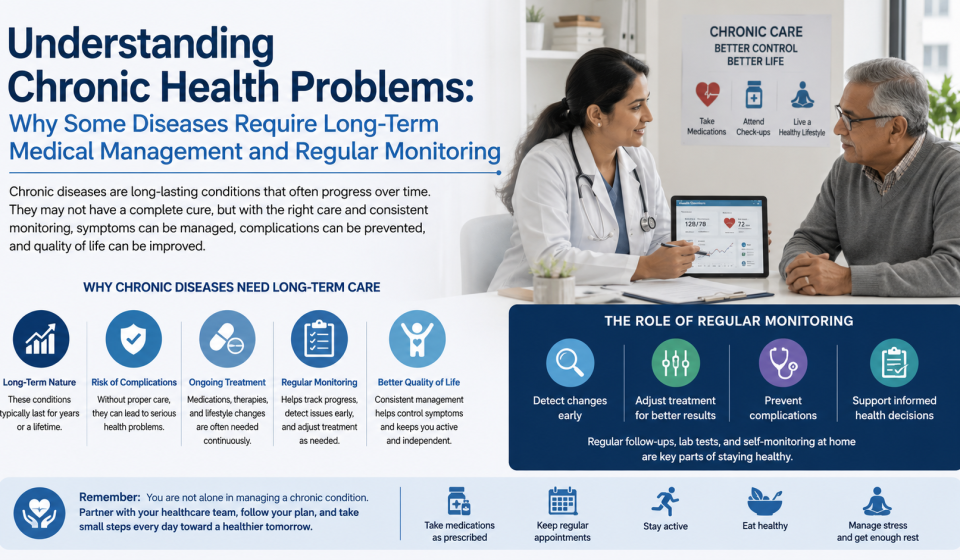
Understanding Chronic Health Problems: Why Some Diseases Require Long-Term Medical Management and Regular Monitoring

Chronic health problems are among the leading causes of illness, disability, and healthcare expenses worldwide. Unlike acute illnesses that develop suddenly and resolve within a short period, chronic diseases often persist for months, years, or even a lifetime.
Conditions such as diabetes, hypertension, heart disease, asthma, arthritis, chronic kidney disease, and certain mental health disorders require ongoing medical attention and lifestyle management to prevent complications and maintain quality of life. As life expectancy increases and lifestyles change, the prevalence of chronic diseases continues to rise across all age groups. Many people mistakenly believe that treatment alone can completely eliminate chronic conditions. However, most chronic diseases require continuous monitoring, regular medical checkups, medication management, lifestyle adjustments, and preventive care. Long-term disease management helps control symptoms, slow disease progression, reduce complications, and improve overall health outcomes. Understanding why chronic health problems require ongoing attention empowers individuals to take a proactive role in their healthcare and make informed decisions that support long-term wellness. This comprehensive guide explains chronic diseases, their causes, management strategies, monitoring requirements, and the importance of lifelong healthcare support.
What Are Chronic Health Problems?
Chronic health problems are medical conditions that persist for an extended period, typically longer than three months.
Characteristics of Chronic Diseases
- Long duration
- Slow progression
- Ongoing treatment needs
- Regular monitoring requirements
- Potential complications
Many chronic conditions can be managed effectively but may not be completely cured.
Difference Between Acute and Chronic Diseases
Understanding the distinction helps clarify why long-term care is necessary.
Acute Diseases
- Develop suddenly
- Short duration
- Often resolve completely
Chronic Diseases
- Develop gradually
- Last months or years
- Require ongoing management
Chronic conditions typically need continuous healthcare involvement.
Why Chronic Diseases Are Increasing
Several factors contribute to the growing prevalence of chronic illnesses.
Common Causes
- Aging populations
- Sedentary lifestyles
- Poor nutrition
- Obesity
- Smoking
- Environmental influences
Lifestyle and demographic changes have significantly increased chronic disease rates.
Common Chronic Health Problems
Many different conditions fall under the category of chronic diseases.
Examples
- Diabetes
- Hypertension
- Heart disease
- Asthma
- Arthritis
- Chronic kidney disease
- Chronic obstructive pulmonary disease (COPD)
- Depression
Each condition requires individualized management strategies.
Understanding Diabetes
Diabetes affects how the body processes glucose.
Why Monitoring Is Necessary
- Blood sugar levels fluctuate
- Complications can develop silently
- Treatment adjustments may be required
Regular monitoring helps prevent long-term complications.
Hypertension and Long-Term Management
High blood pressure often develops without noticeable symptoms.
Risks of Poor Control
- Stroke
- Heart attack
- Kidney damage
- Vision problems
Routine monitoring helps reduce these risks.
Heart Disease and Ongoing Care
Cardiovascular diseases often require lifelong management.
Common Strategies
- Medication adherence
- Lifestyle modifications
- Regular screenings
Ongoing care improves survival and quality of life.
Asthma as a Chronic Condition
Asthma affects the airways and breathing.
Why Monitoring Matters
- Symptoms may fluctuate
- Triggers vary among individuals
- Treatment plans may require adjustment
Proper management reduces attacks and hospitalizations.
Arthritis and Long-Term Symptom Control
Arthritis affects joints and mobility.
Goals of Management
- Pain reduction
- Improved function
- Prevention of joint damage
Regular follow-up supports effective treatment.
Chronic Kidney Disease
Kidney disease often progresses slowly over time.
Importance of Monitoring
- Kidney function testing
- Blood pressure management
- Medication adjustments
Early intervention slows disease progression.
Chronic Obstructive Pulmonary Disease (COPD)
COPD affects breathing and lung function.
Long-Term Care Needs
- Symptom management
- Smoking cessation
- Pulmonary rehabilitation
Regular care improves respiratory health.
Mental Health Disorders as Chronic Conditions
Certain mental health conditions may require long-term management.
Examples
- Depression
- Anxiety disorders
- Bipolar disorder
Ongoing treatment supports emotional well-being.
Why Long-Term Medical Management Is Important
Continuous care helps control disease progression.
Benefits
- Better symptom management
- Reduced complications
- Improved quality of life
- Longer life expectancy
Consistent healthcare involvement is essential.
The Role of Regular Monitoring
Monitoring helps healthcare providers evaluate treatment effectiveness.
Common Monitoring Activities
- Blood tests
- Physical examinations
- Imaging studies
- Vital sign assessments
Regular evaluation supports timely interventions.
Importance of Medication Adherence
Medications play a major role in chronic disease management.
Benefits
- Symptom control
- Reduced disease progression
- Lower complication risk
Taking medications as prescribed improves outcomes.
Lifestyle Changes and Chronic Disease Management
Lifestyle habits significantly influence chronic health conditions.
Key Areas
- Nutrition
- Exercise
- Sleep
- Stress management
Healthy habits support treatment success.
Nutrition and Chronic Illness
Diet affects nearly every aspect of health.
Benefits of Healthy Eating
- Better blood sugar control
- Improved heart health
- Weight management
Nutrition is a cornerstone of chronic disease care.
Physical Activity and Long-Term Health
Regular exercise supports disease management.
Advantages
- Improved cardiovascular fitness
- Better blood pressure control
- Enhanced mental health
Physical activity contributes to overall wellness.
Weight Management
Maintaining a healthy weight reduces disease burden.
Associated Benefits
- Lower diabetes risk
- Improved mobility
- Reduced cardiovascular strain
Healthy weight supports long-term health outcomes.
Stress Management
Stress can worsen many chronic conditions.
Helpful Techniques
- Meditation
- Deep breathing
- Yoga
- Mindfulness
Stress reduction improves both physical and emotional health.
Importance of Preventive Healthcare
Preventive care complements chronic disease management.
Examples
- Vaccinations
- Routine screenings
- Health assessments
Prevention helps reduce complications.
Understanding Disease Progression
Many chronic illnesses evolve over time.
Why Monitoring Matters
Healthcare providers can identify changes early and adjust treatment plans accordingly.
Early intervention often improves outcomes.
Recognizing Warning Signs
Patients should learn to recognize symptoms that require medical attention.
Examples
- Sudden symptom worsening
- New pain
- Difficulty breathing
- Unexplained weight changes
Prompt reporting supports timely care.
Building a Healthcare Team
Comprehensive management often requires multiple healthcare professionals.
Team Members
- Primary care physicians
- Specialists
- Nurses
- Dietitians
- Pharmacists
Collaborative care improves treatment effectiveness.
Emotional Challenges of Chronic Disease
Living with a long-term condition can affect emotional health.
Common Issues
- Anxiety
- Depression
- Frustration
Support systems play an important role.
The Importance of Patient Education
Educated patients often manage their conditions more effectively.
Benefits
- Better decision-making
- Increased confidence
- Improved adherence
Knowledge empowers healthier choices.
Technology and Chronic Disease Monitoring
Modern technology supports healthcare management.
Examples
- Health apps
- Blood glucose monitors
- Blood pressure monitors
- Wearable devices
Technology improves disease tracking and communication.
Financial Impact of Chronic Diseases
Long-term conditions can create ongoing healthcare expenses.
Costs May Include
- Medications
- Medical appointments
- Diagnostic tests
Effective management can help reduce complications and associated costs.
Healthy Aging With Chronic Conditions
Many people successfully manage chronic diseases while maintaining active lifestyles.
Keys to Success
- Consistent healthcare
- Healthy habits
- Regular monitoring
Proactive management supports healthy aging.
Source Links
https://www.who.int
https://www.cdc.gov
https://www.nih.gov
https://www.mayoclinic.org
Conclusion
Chronic health problems require long-term medical management because they often persist for years and can lead to serious complications if left uncontrolled. Conditions such as diabetes, hypertension, heart disease, asthma, arthritis, and chronic kidney disease demand ongoing monitoring, medication adherence, healthy lifestyle choices, and regular healthcare visits. By understanding the nature of chronic diseases and actively participating in their management, individuals can reduce complications, improve quality of life, and maintain better overall health. Consistent care, patient education, and preventive healthcare remain the foundation of successful long-term disease management.
FAQ
1.What is a chronic health condition?
A chronic health condition is a disease or medical problem that lasts for several months, years, or a lifetime.
2.Why do chronic diseases require long-term management?
They often persist over time and require ongoing treatment to prevent complications and control symptoms.
3.Can chronic diseases be cured?
Some chronic diseases can be controlled effectively, but many cannot be completely cured.
4.Why is regular monitoring important?
Monitoring helps detect changes, evaluate treatment effectiveness, and prevent complications.
5.What are the most common chronic diseases?
Diabetes, hypertension, heart disease, asthma, arthritis, and chronic kidney disease are among the most common.
6.How does lifestyle affect chronic disease management?
Healthy eating, exercise, adequate sleep, and stress management can improve outcomes significantly.
7.What happens if chronic diseases are not managed properly?
Poor management can lead to complications, hospitalization, disability, and reduced quality of life.
8.How can patients actively participate in disease management?
By following treatment plans, attending appointments, monitoring symptoms, and maintaining healthy habits.