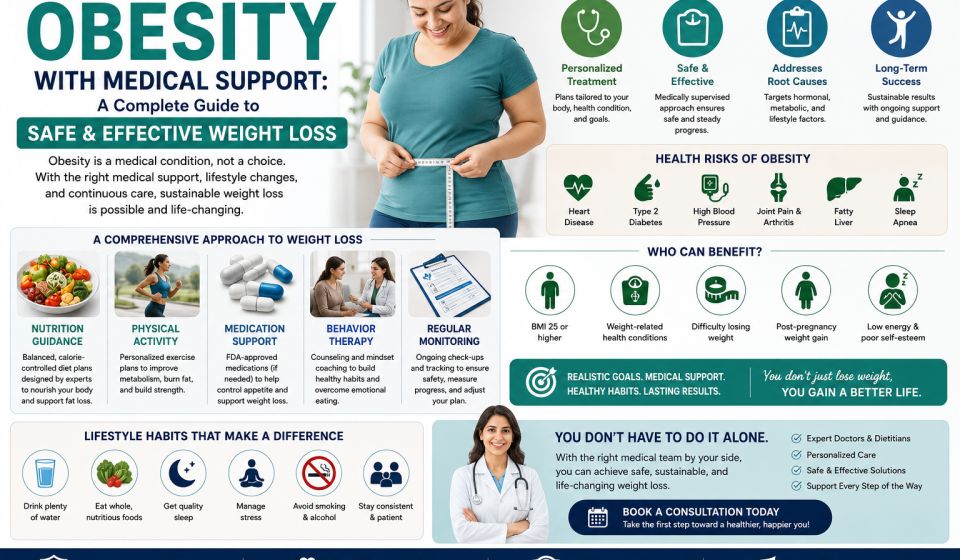

Managing obesity with medical support offers individuals access to professional guidance, personalized treatment plans, evidence-based interventions, and ongoing monitoring.
Obesity has become one of the most significant public health challenges worldwide, affecting millions of adults and children across all age groups. More than simply carrying excess weight, obesity is a complex medical condition that increases the risk of numerous health problems, including heart disease, type 2 diabetes, high blood pressure, sleep apnea, stroke, certain cancers, and joint disorders. While many people attempt to lose weight through diet and exercise alone, obesity often requires a comprehensive and medically guided approach for long-term success.Healthcare professionals can help identify the underlying causes of weight gain, address associated health conditions, and develop strategies that promote sustainable weight loss. This comprehensive guide explains obesity, its causes and health risks, available medical treatment options, lifestyle modifications, medications, surgical interventions, and the importance of professional healthcare support in achieving healthy weight management.
Understanding Obesity
Obesity is a chronic medical condition characterized by excessive body fat accumulation that negatively affects health. It is commonly measured using Body Mass Index (BMI), which compares weight to height.
BMI classifications generally include:
- Underweight: Below 18.5
- Normal weight: 18.5 to 24.9
- Overweight: 25 to 29.9
- Obesity Class I: 30 to 34.9
- Obesity Class II: 35 to 39.9
- Obesity Class III: 40 and above
Although BMI is useful for screening, healthcare providers may also consider waist circumference, body composition, and overall health status when evaluating obesity.
Why Obesity Is a Medical Condition
For many years, obesity was viewed simply as a result of overeating and lack of exercise. Modern medical research shows that obesity is far more complex and involves multiple biological, genetic, environmental, psychological, and social factors.
Factors contributing to obesity may include:
- Genetics
- Hormonal imbalances
- Metabolic disorders
- Sedentary lifestyle
- Poor dietary habits
- Chronic stress
- Sleep disorders
- Certain medications
- Mental health conditions
Because obesity often involves multiple underlying causes, medical support can play a vital role in effective treatment.
Health Risks Associated with Obesity
Excess body weight affects nearly every organ system in the body.
Cardiovascular Disease
Obesity significantly increases the risk of:
- High blood pressure
- Coronary artery disease
- Heart attacks
- Heart failure
- Stroke
Type 2 Diabetes
Excess fat tissue contributes to insulin resistance, making diabetes more likely.
Sleep Apnea
People with obesity are at increased risk of obstructive sleep apnea, which causes interrupted breathing during sleep.
Joint Problems
Carrying extra weight places additional stress on joints, particularly the knees, hips, and lower back.
Fatty Liver Disease
Obesity is one of the leading causes of non-alcoholic fatty liver disease.
Certain Cancers
Research links obesity to increased risks of:
- Breast cancer
- Colon cancer
- Endometrial cancer
- Kidney cancer
- Liver cancer
Mental Health Effects
Obesity can contribute to:
- Depression
- Anxiety
- Low self-esteem
- Social isolation
The Importance of Medical Support for Obesity
Medical supervision provides a structured and personalized approach to weight management.
Benefits include:
- Comprehensive health assessment
- Identification of underlying causes
- Individualized treatment plans
- Monitoring of health conditions
- Access to medications when appropriate
- Long-term support and accountability
Professional guidance can improve both weight loss outcomes and overall health.
Medical Evaluation for Obesity
The first step in obesity management typically involves a detailed medical assessment.
Healthcare providers may evaluate:
- Medical history
- Family history
- Dietary habits
- Physical activity levels
- Medication use
- Mental health status
- Sleep patterns
Additional testing may include:
- Blood glucose levels
- Cholesterol profile
- Thyroid function tests
- Liver function tests
- Hormone evaluations
These assessments help identify contributing factors and guide treatment decisions.
Nutrition Counseling and Dietary Management
Healthy eating remains a cornerstone of obesity treatment.
Registered dietitians can help individuals:
- Understand calorie requirements
- Improve portion control
- Develop meal plans
- Reduce unhealthy food choices
- Establish sustainable eating habits
Key Dietary Recommendations
Healthcare professionals often encourage:
- Increased fruit and vegetable intake
- Whole grains
- Lean protein sources
- Healthy fats
- Reduced sugar consumption
- Reduced processed foods
The goal is long-term lifestyle change rather than short-term dieting.
Physical Activity and Exercise Programs
Exercise supports weight loss and improves overall health.
Benefits include:
- Increased calorie expenditure
- Improved cardiovascular health
- Better insulin sensitivity
- Enhanced mood
- Increased muscle mass
Recommended activities may include:
- Walking
- Cycling
- Swimming
- Strength training
- Aerobic exercise
Medical professionals can tailor exercise programs based on individual fitness levels and health conditions.
Behavioral Therapy for Weight Management
Behavioral changes play a crucial role in obesity treatment.
Behavioral therapy helps individuals:
- Identify unhealthy habits
- Manage emotional eating
- Improve motivation
- Develop coping strategies
- Maintain long-term weight loss
Common techniques include:
- Goal setting
- Self-monitoring
- Stress management
- Cognitive behavioral therapy (CBT)
Obesity Medications
Prescription medications may be appropriate for some individuals struggling with obesity.
Weight-loss medications are typically considered when:
- BMI is 30 or higher
- BMI is 27 or higher with obesity-related health conditions
Medications work through various mechanisms such as:
- Appetite suppression
- Increased satiety
- Reduced calorie absorption
Medical supervision is essential because medications may cause side effects and require ongoing monitoring.
GLP-1 Medications and Modern Obesity Treatment
Recent advances in obesity medicine include GLP-1 receptor agonists.
These medications may:
- Reduce appetite
- Increase fullness
- Improve blood sugar control
- Support significant weight loss
Examples include medications used under healthcare supervision for chronic weight management.
Not all individuals are suitable candidates, making professional evaluation important.
Bariatric Surgery
For individuals with severe obesity, bariatric surgery may be recommended.
Common procedures include:
Gastric Bypass
This procedure reduces stomach size and alters digestion.
Sleeve Gastrectomy
A large portion of the stomach is removed, reducing food intake.
Adjustable Gastric Band
A band is placed around the stomach to limit food consumption.
Bariatric surgery can lead to substantial weight loss and improvement in obesity-related health conditions.
Benefits of Medical Weight Loss Programs
Structured medical weight loss programs offer numerous advantages.
Personalized Care
Treatment plans are tailored to individual needs and goals.
Comprehensive Monitoring
Healthcare providers track progress and adjust strategies when needed.
Improved Safety
Medical supervision helps reduce risks associated with rapid or unhealthy weight loss.
Better Long-Term Results
Research shows that ongoing support increases the likelihood of maintaining weight loss.
Overcoming Common Weight Loss Challenges
Many individuals encounter obstacles during their weight-loss journey.
Weight Loss Plateaus
Temporary stalls are common and often require adjustments to diet and activity levels.
Emotional Eating
Stress, anxiety, and boredom may trigger overeating.
Lack of Motivation
Support groups and professional counseling can help maintain commitment.
Time Constraints
Busy schedules can interfere with healthy eating and exercise routines.
Developing realistic strategies improves long-term success.
The Role of Sleep in Obesity Management
Sleep quality significantly influences body weight.
Poor sleep may:
- Increase hunger hormones
- Reduce energy levels
- Promote weight gain
- Increase cravings for unhealthy foods
Adults should generally aim for seven to nine hours of quality sleep each night.
Preventing Obesity
Prevention remains one of the most effective strategies for reducing obesity rates.
Healthy habits include:
- Balanced nutrition
- Regular physical activity
- Adequate sleep
- Stress management
- Limiting sugary beverages
- Reducing sedentary behavior
Early intervention can help prevent obesity-related complications.
When to Seek Professional Help
Individuals should consider medical support if:
- Weight continues to increase despite lifestyle efforts
- Obesity-related health conditions develop
- Emotional eating becomes problematic
- Daily functioning is affected
- Previous weight loss attempts have been unsuccessful
Seeking help early often improves outcomes.
Source Links
https://www.cdc.gov/obesity
https://www.niddk.nih.gov/health-information/weight-management
https://www.who.int/news-room/fact-sheets/detail/obesity-and-overweight
https://www.mayoclinic.org/diseases-conditions/obesity
Conclusion
Obesity is a complex chronic disease that affects physical, emotional, and overall health. While healthy eating and regular exercise remain essential components of weight management, many individuals benefit significantly from professional medical support. Healthcare providers can identify underlying causes, develop personalized treatment plans, recommend medications when appropriate, and provide ongoing guidance throughout the weight-loss journey. Whether through lifestyle interventions, behavioral therapy, prescription medications, or bariatric surgery, medically supervised obesity management offers a safe and effective path toward improved health. By combining professional support with sustainable lifestyle changes, individuals can achieve meaningful weight loss, reduce health risks, and enhance their quality of life.
FAQ
1. What is obesity?
Obesity is a chronic medical condition characterized by excessive body fat that increases the risk of numerous health problems.
2. When should I seek medical help for obesity?
You should consider medical support if weight loss efforts are unsuccessful, health conditions develop, or obesity affects daily life.
3. Can obesity be treated without surgery?
Yes. Many individuals successfully manage obesity through dietary changes, exercise, behavioral therapy, and medications.
4. What medications are available for obesity treatment?
Several prescription medications may help reduce appetite or improve fullness under healthcare supervision.
5. Is bariatric surgery safe?
Bariatric surgery is generally safe when performed by experienced specialists and can provide significant health benefits for eligible patients.
6. How much weight loss is considered healthy?
Most experts recommend gradual weight loss of approximately 1 to 2 pounds per week.
7. Can obesity increase the risk of diabetes?
Yes. Obesity is a major risk factor for insulin resistance and type 2 diabetes.
8. Why is medical supervision important for weight loss?
Medical supervision ensures safe treatment, monitors health conditions, and provides personalized support for long-term success.