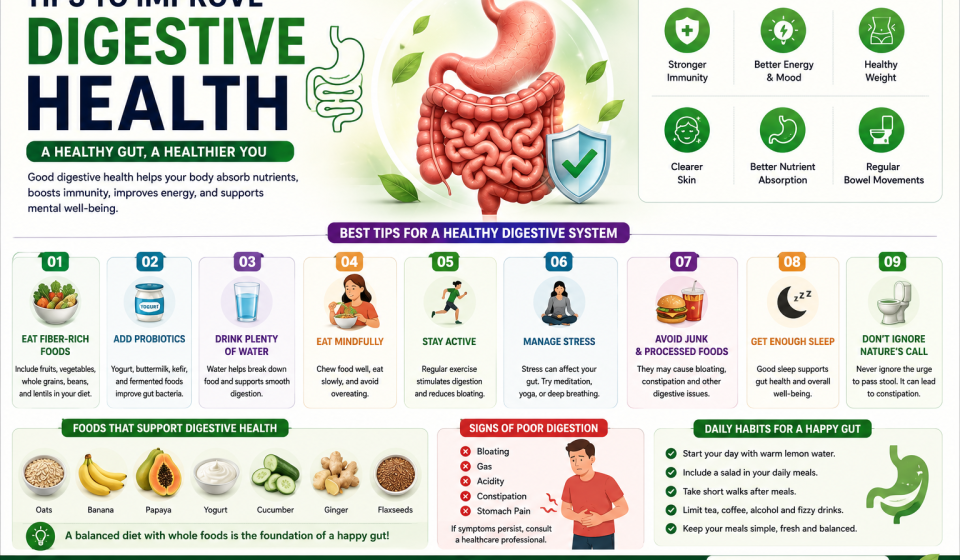
Tips to Improve Digestive Health Naturally: Complete Guide for a Healthy Gut and Better Overall Wellness

Digestive health plays a crucial role in maintaining overall well-being. The digestive system is responsible for breaking down food, absorbing nutrients, eliminating waste, and supporting numerous bodily functions.
When digestion functions properly, the body receives the nutrients it needs for energy, growth, immune support, and cellular repair. However, poor eating habits, stress, dehydration, lack of exercise, and unhealthy lifestyle choices can negatively impact digestive health, leading to issues such as bloating, constipation, indigestion, acid reflux, and irritable bowel syndrome. Understanding how to support digestive wellness can significantly improve quality of life and long-term health.In recent years, researchers have discovered a strong connection between gut health and various aspects of physical and mental well-being. The gut microbiome, which consists of trillions of beneficial microorganisms, influences digestion, immunity, metabolism, mood, and even brain function. Maintaining a healthy digestive system is not only about avoiding stomach discomfort but also about promoting overall wellness. By adopting healthy dietary habits, staying active, managing stress, and making informed lifestyle choices, individuals can improve digestion naturally and reduce the risk of digestive disorders. This comprehensive guide explores practical and effective tips to improve digestive health and maintain a healthy gut.
Why Digestive Health Is Important
The digestive system performs several essential functions that directly affect overall health.
Benefits of good digestive health include:
- Efficient nutrient absorption
- Strong immune system
- Improved energy levels
- Better metabolism
- Healthy weight management
- Reduced digestive discomfort
- Improved mental well-being
- Lower risk of chronic diseases
A healthy digestive system supports both physical and emotional wellness.
Understand How the Digestive System Works
The digestive process begins in the mouth and continues through the esophagus, stomach, small intestine, large intestine, rectum, and anus.
Major digestive functions include:
- Food breakdown
- Nutrient absorption
- Waste elimination
- Microbiome regulation
- Immune system support
Understanding this process helps individuals make healthier choices that support digestive efficiency.
Eat More Fiber-Rich Foods
Dietary fiber is one of the most important nutrients for digestive health.
Benefits of Fiber
- Promotes regular bowel movements
- Prevents constipation
- Supports gut bacteria
- Improves colon health
- Helps control blood sugar levels
High-Fiber Foods
- Fruits
- Vegetables
- Whole grains
- Legumes
- Nuts
- Seeds
Gradually increasing fiber intake can improve digestion significantly.
Stay Properly Hydrated
Water plays a vital role in digestion.
Benefits of Hydration
- Softens stool
- Prevents constipation
- Supports nutrient absorption
- Enhances digestive efficiency
Tips
- Drink water throughout the day
- Increase intake during hot weather
- Limit sugary beverages
Adequate hydration supports healthy digestive function.
Include Probiotic Foods
Probiotics are beneficial bacteria that support gut health.
Popular Probiotic Foods
- Yogurt
- Kefir
- Kimchi
- Sauerkraut
- Tempeh
- Miso
Benefits
- Improved digestion
- Balanced gut microbiome
- Enhanced immune function
- Reduced bloating
Regular probiotic consumption may improve overall digestive wellness.
Eat Prebiotic Foods
Prebiotics serve as food for beneficial gut bacteria.
Sources
- Garlic
- Onions
- Bananas
- Asparagus
- Oats
- Apples
Benefits
Prebiotics help maintain a healthy gut environment and support microbial diversity.
Chew Food Thoroughly
Digestion begins in the mouth.
Why Chewing Matters
- Breaks food into smaller particles
- Improves nutrient absorption
- Reduces digestive strain
- Supports enzyme activity
Eating slowly and chewing thoroughly promotes healthier digestion.
Avoid Overeating
Large meals can overwhelm the digestive system.
Problems Associated with Overeating
- Indigestion
- Bloating
- Acid reflux
- Stomach discomfort
Better Approach
Consume moderate portions and stop eating when comfortably full.
Follow a Balanced Diet
A balanced diet supports digestive health and overall wellness.
Include
- Lean proteins
- Healthy fats
- Whole grains
- Fruits
- Vegetables
Limit
- Excess sugar
- Processed foods
- Refined carbohydrates
Balanced nutrition helps maintain optimal digestive function.
Reduce Processed Food Consumption
Highly processed foods often contain additives and unhealthy ingredients.
Potential Effects
- Gut microbiome imbalance
- Digestive discomfort
- Increased inflammation
Choosing whole, minimally processed foods promotes gut health.
Limit Excessive Sugar Intake
High sugar consumption may negatively affect digestive health.
Risks
- Gut bacteria imbalance
- Increased inflammation
- Digestive disturbances
Reducing added sugars supports a healthier digestive system.
Manage Stress Effectively
Stress has a significant impact on digestion.
Common Effects
- Stomach discomfort
- Bloating
- Diarrhea
- Constipation
Stress Management Techniques
- Meditation
- Deep breathing
- Yoga
- Mindfulness
- Relaxation exercises
Managing stress supports both digestive and mental health.
Exercise Regularly
Physical activity helps maintain healthy digestion.
Benefits
- Stimulates bowel movements
- Reduces constipation
- Supports metabolism
- Improves circulation
Recommended Activities
- Walking
- Jogging
- Cycling
- Swimming
- Yoga
Regular exercise contributes to digestive wellness.
Maintain a Healthy Weight
Excess body weight may increase digestive problems.
Associated Conditions
- Acid reflux
- Heartburn
- Fatty liver disease
Maintaining a healthy weight reduces digestive strain and improves overall health.
Avoid Smoking
Smoking negatively affects digestive function.
Health Risks
- Acid reflux
- Stomach ulcers
- Digestive inflammation
Quitting smoking benefits both digestive and general health.
Limit Alcohol Consumption
Excessive alcohol intake can damage the digestive tract.
Potential Effects
- Gastritis
- Liver damage
- Acid reflux
- Digestive irritation
Moderation helps protect digestive organs.
Get Enough Sleep
Sleep influences digestion and gut health.
Benefits of Quality Sleep
- Supports metabolism
- Regulates digestive hormones
- Reduces inflammation
Aim for consistent, restful sleep each night.
Identify Food Intolerances
Certain foods may trigger digestive symptoms.
Common Intolerances
- Lactose
- Gluten
- Artificial sweeteners
Symptoms
- Bloating
- Gas
- Diarrhea
- Stomach pain
Consult a healthcare professional if food intolerance is suspected.
Practice Mindful Eating
Mindful eating encourages awareness during meals.
Tips
- Eat slowly
- Avoid distractions
- Focus on hunger cues
- Enjoy meals consciously
Mindful eating may improve digestion and prevent overeating.
Support Gut Microbiome Diversity
A diverse gut microbiome contributes to better digestive health.
How to Improve Diversity
- Eat a variety of fruits and vegetables
- Include fermented foods
- Consume fiber-rich foods
Microbial diversity supports overall wellness and disease prevention.
Reduce Consumption of Fried Foods
Fried foods are often difficult to digest.
Potential Problems
- Bloating
- Indigestion
- Acid reflux
Choosing healthier cooking methods supports digestive comfort.
Avoid Excessive Use of Certain Medications
Some medications may affect digestion.
Examples
- Certain pain relievers
- Antibiotics
- Some anti-inflammatory drugs
Always follow medical advice regarding medication use.
Common Digestive Problems
Understanding digestive disorders can encourage early intervention.
Constipation
Characterized by infrequent or difficult bowel movements.
Acid Reflux
Occurs when stomach acid flows back into the esophagus.
Irritable Bowel Syndrome (IBS)
A chronic condition affecting bowel function.
Bloating
Often caused by gas accumulation or digestive disturbances.
Diarrhea
Can result from infections, food sensitivities, or digestive disorders.
When to Seek Medical Advice
Consult a healthcare professional if experiencing:
- Persistent abdominal pain
- Unexplained weight loss
- Blood in stool
- Chronic constipation
- Severe diarrhea
- Ongoing digestive discomfort
Early evaluation helps identify underlying health concerns.
Long-Term Benefits of Good Digestive Health
Maintaining digestive wellness offers numerous advantages.
Benefits
- Better nutrient absorption
- Enhanced immunity
- Improved energy
- Reduced disease risk
- Better mental health
- Higher quality of life
Consistent healthy habits contribute to long-term digestive success.
Source Links
- https://www.niddk.nih.gov
- https://www.mayoclinic.org
- https://www.health.harvard.edu
- https://www.cdc.gov
- https://www.who.int
- https://www.nhs.uk
- https://www.webmd.com
- https://www.medlineplus.gov
- https://www.gastro.org
- https://www.hopkinsmedicine.org
Conclusion
Digestive health is a cornerstone of overall wellness and influences many aspects of physical and mental health. By eating a fiber-rich diet, staying hydrated, consuming probiotics and prebiotics, exercising regularly, managing stress, and maintaining healthy lifestyle habits, individuals can significantly improve digestive function and support a healthy gut microbiome. Preventive measures and mindful daily choices not only reduce digestive discomfort but also contribute to stronger immunity, improved energy levels, and better long-term health outcomes. Investing in digestive health today can lead to a healthier and more comfortable future.
FAQ
1.What are the best foods for digestive health?
Fiber-rich fruits, vegetables, whole grains, legumes, and probiotic foods are among the best choices for digestive wellness.
2.How much water should I drink for healthy digestion?
Water needs vary by individual, but staying consistently hydrated throughout the day supports proper digestion.
3.Do probiotics improve digestion?
Yes, probiotics can help maintain a balanced gut microbiome and improve digestive function.
4.Can stress affect digestion?
Yes, stress can contribute to bloating, constipation, diarrhea, and other digestive issues.
5.What causes frequent bloating?
Bloating may result from overeating, food intolerances, excess gas, or digestive disorders.
6.Is exercise beneficial for digestion?
Yes, regular physical activity helps stimulate bowel movements and supports digestive health.
7.How can I improve gut health naturally?
Eat fiber-rich foods, consume probiotics, stay hydrated, manage stress, and maintain a healthy lifestyle.
8.When should I see a doctor for digestive problems?
Seek medical attention if symptoms are persistent, severe, or accompanied by warning signs such as blood in stool or unexplained weight loss.