Understanding Routine Medical Screenings: A Complete Guide to Preventive Health and Early Disease Detection

Regular health screenings help detect potential health problems before they become severe, allowing individuals to receive timely treatment and improve their chances of successful recovery.
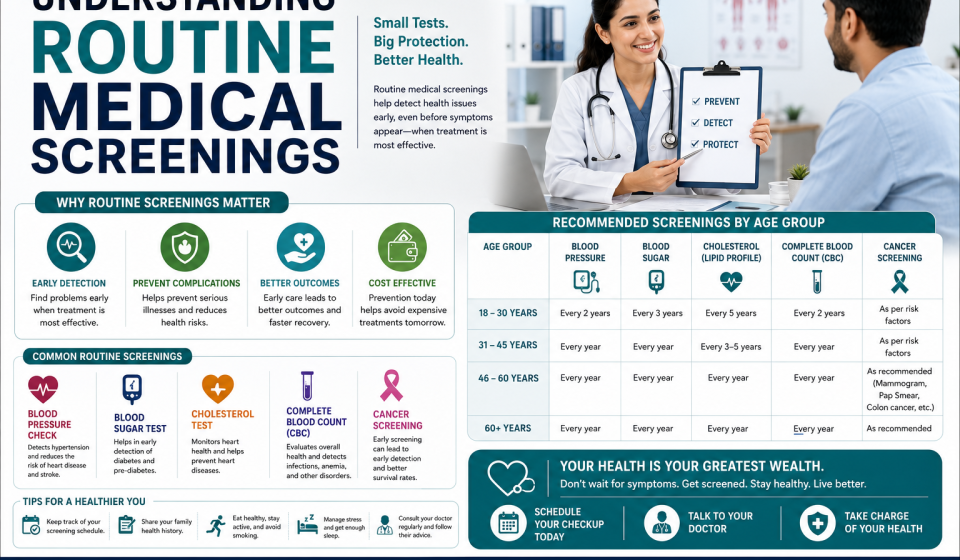
Routine medical screenings play a vital role in maintaining long-term health and preventing serious illnesses. Many diseases such as diabetes, high blood pressure, heart disease, cancer, and osteoporosis can develop silently without noticeable symptoms during their early stages. Preventive healthcare has become increasingly important in today’s fast-paced world, where lifestyle-related diseases are on the rise. Medical screenings are designed to evaluate a person’s health status and identify risk factors that may lead to future health complications. These tests are recommended based on age, gender, family history, lifestyle habits, and overall health condition. Understanding which screenings are necessary and when they should be performed empowers individuals to take proactive control of their health. This comprehensive guide explains the importance of routine medical screenings, common screening tests, recommended schedules, benefits, and practical tips for maintaining optimal health through preventive care.
What Are Routine Medical Screenings?
Routine medical screenings are preventive healthcare tests and examinations performed on individuals who may not have any obvious symptoms of illness. These screenings help healthcare providers identify diseases, risk factors, and health conditions at an early stage.
The primary goals of routine screenings include:
- Early disease detection
- Prevention of serious complications
- Monitoring overall health
- Identifying risk factors
- Improving treatment outcomes
- Reducing healthcare costs
Regular screenings are an essential part of preventive medicine and contribute significantly to overall well-being.
Why Routine Medical Screenings Are Important
Preventive healthcare allows health issues to be identified before symptoms appear.
Early Detection Saves Lives
Many serious diseases can be treated more effectively when diagnosed early.
Lower Healthcare Costs
Early intervention often prevents expensive treatments and hospitalizations later.
Better Quality of Life
Managing health conditions early helps maintain physical and mental well-being.
Increased Life Expectancy
Routine screenings contribute to longer and healthier lives by reducing disease-related complications.
How Medical Screenings Work
Screenings typically involve laboratory tests, physical examinations, imaging studies, or questionnaires designed to assess health risks.
Healthcare providers evaluate:
- Personal health history
- Family medical history
- Lifestyle factors
- Current symptoms
- Age-related health risks
Based on these factors, appropriate screening recommendations are provided.
Blood Pressure Screening
High blood pressure, also known as hypertension, is often called the “silent killer” because it frequently causes no symptoms.
Why It Matters
Uncontrolled hypertension increases the risk of:
- Heart disease
- Stroke
- Kidney disease
- Vision problems
Recommended Frequency
Adults should have their blood pressure checked regularly during routine healthcare visits.
Cholesterol Screening
Cholesterol testing measures lipid levels in the blood.
Components Measured
- Total cholesterol
- LDL cholesterol
- HDL cholesterol
- Triglycerides
Benefits
Early detection of unhealthy cholesterol levels helps reduce cardiovascular disease risk.
Blood Glucose Screening
Diabetes is a growing global health concern.
Common Tests
- Fasting Blood Sugar
- HbA1c Test
- Oral Glucose Tolerance Test
Importance
Early diagnosis allows individuals to manage blood sugar levels and prevent complications.
Body Mass Index (BMI) Assessment
BMI helps evaluate whether a person has a healthy weight.
Health Risks of Obesity
- Diabetes
- Heart disease
- Hypertension
- Sleep apnea
Benefits
Regular monitoring encourages healthier lifestyle choices.
Cancer Screenings
Cancer screening tests aim to identify cancers before symptoms develop.
Breast Cancer Screening
Mammography
Mammograms help detect breast cancer at an early stage.
Benefits
- Improved survival rates
- Earlier treatment options
Cervical Cancer Screening
Pap Smear Test
Pap tests detect abnormal cervical cells.
HPV Testing
Human papillomavirus testing helps identify infection-related risks.
Colorectal Cancer Screening
Common Methods
- Colonoscopy
- Stool-based tests
Importance
Early detection significantly improves treatment outcomes.
Prostate Cancer Screening
Men may discuss prostate-specific antigen testing with their healthcare providers based on risk factors and age.
Skin Cancer Screening
Regular skin examinations help identify suspicious moles and lesions.
Bone Density Screening
Bone density tests evaluate bone strength and osteoporosis risk.
Who Needs It?
- Older adults
- Postmenopausal women
- Individuals with fracture risks
Benefits
Early intervention reduces fracture risk and supports bone health.
Eye Examinations
Routine eye exams detect vision problems and eye diseases.
Conditions Detected
- Glaucoma
- Cataracts
- Diabetic retinopathy
- Macular degeneration
Importance
Vision preservation improves overall quality of life.
Hearing Screenings
Hearing loss can affect communication and daily functioning.
Benefits of Early Detection
- Improved communication
- Better social engagement
- Enhanced quality of life
Dental Checkups
Oral health is closely connected to overall health.
Routine Dental Screening Benefits
- Cavity detection
- Gum disease prevention
- Oral cancer screening
Recommended Frequency
Regular dental visits help maintain optimal oral health.
Thyroid Function Testing
Thyroid disorders are common and often go undiagnosed.
Conditions Detected
- Hypothyroidism
- Hyperthyroidism
Common Tests
- TSH
- T3
- T4
Liver Function Tests
Liver health screenings evaluate organ function and detect potential disease.
Conditions Identified
- Hepatitis
- Fatty liver disease
- Liver inflammation
Importance
Early treatment prevents progression to serious liver conditions.
Kidney Function Tests
Kidney screenings assess filtration and overall kidney performance.
Common Tests
- Creatinine
- Blood Urea Nitrogen
- Urine Analysis
Benefits
Early detection helps prevent chronic kidney disease.
Cardiovascular Health Screening
Heart disease remains one of the leading causes of death worldwide.
Key Assessments
- Blood pressure
- Cholesterol levels
- Blood sugar
- Electrocardiogram (ECG)
Benefits
Comprehensive cardiovascular screening helps reduce heart disease risk.
Mental Health Screening
Mental health is an essential component of overall wellness.
Conditions Assessed
- Depression
- Anxiety
- Stress disorders
Importance
Early intervention improves emotional and psychological health.
Screenings for Women
Women may require specialized screenings throughout different life stages.
Common Women’s Health Screenings
- Breast examinations
- Mammograms
- Pap smears
- Bone density testing
Benefits
Targeted screenings support reproductive and overall health.
Screenings for Men
Men also benefit from age-specific preventive healthcare assessments.
Common Men’s Health Screenings
- Blood pressure checks
- Cholesterol testing
- Prostate evaluations
- Diabetes screening
Screenings for Children and Adolescents
Preventive care begins early in life.
Common Pediatric Screenings
- Growth monitoring
- Vision tests
- Hearing assessments
- Developmental evaluations
Benefits
Early identification of developmental and health concerns improves long-term outcomes.
Lifestyle Factors That Influence Screening Needs
Certain habits and risk factors may increase the need for more frequent screenings.
Examples
- Smoking
- Alcohol consumption
- Obesity
- Family history of disease
- Physical inactivity
Healthcare providers often tailor recommendations based on these factors.
How to Prepare for Medical Screenings
Preparation depends on the type of test.
General Tips
- Follow fasting instructions if required
- Bring medical records
- Discuss medications
- Share family health history
- Ask questions about procedures
Proper preparation helps ensure accurate results.
Benefits of Preventive Healthcare
Routine medical screenings support preventive healthcare goals.
Advantages
- Early diagnosis
- Better treatment outcomes
- Reduced disease burden
- Improved quality of life
- Lower healthcare expenses
Preventive care remains one of the most effective ways to protect long-term health.
Common Myths About Medical Screenings
Myth 1: Screenings Are Only for Older Adults
People of all ages benefit from preventive healthcare.
Myth 2: No Symptoms Means No Health Problems
Many diseases develop without obvious symptoms.
Myth 3: Screenings Are Unnecessary If You Feel Healthy
Routine evaluations help identify hidden health risks.
Source Links
https://www.who.int
https://www.cdc.gov
https://www.nhlbi.nih.gov
https://www.cancer.gov
Conclusion
Routine medical screenings are one of the most effective tools for maintaining long-term health and preventing serious illnesses. By identifying diseases and risk factors early, screenings allow individuals to take proactive steps toward better health outcomes and improved quality of life. Whether monitoring blood pressure, checking cholesterol levels, screening for cancer, or assessing mental health, preventive healthcare empowers people to make informed decisions about their well-being. Regular consultations with healthcare professionals and adherence to recommended screening schedules can significantly reduce health risks and support a healthier future.
FAQ
1.What are routine medical screenings?
Routine medical screenings are preventive tests and examinations used to detect diseases and health risks before symptoms appear.
2.Why are routine screenings important?
They help identify health conditions early, allowing timely treatment and better outcomes.
3.How often should adults undergo health screenings?
The frequency depends on age, gender, family history, lifestyle, and specific health risks.
4.Are medical screenings necessary if I feel healthy?
Yes, many serious conditions can develop without noticeable symptoms.
5.What is the most common health screening?
Blood pressure measurement is one of the most common and important routine screenings.
6.Can screenings prevent diseases?
While screenings do not prevent diseases directly, they help detect problems early and reduce complications.
7.Are cancer screenings important?
Yes, cancer screenings can identify cancer in its early stages when treatment is often more effective.
8.Should younger adults undergo routine screenings?
Yes, preventive healthcare is beneficial at all ages and helps establish healthy habits for the future.