Best Foods for Bone Health: The Complete Nutrition Guide for Stronger Bones and Lifelong Skeletal Health

Many factors influence bone health, including age, genetics, physical activity, hormonal changes, and lifestyle habits. However, diet remains one of the most powerful tools for strengthening bones naturally.
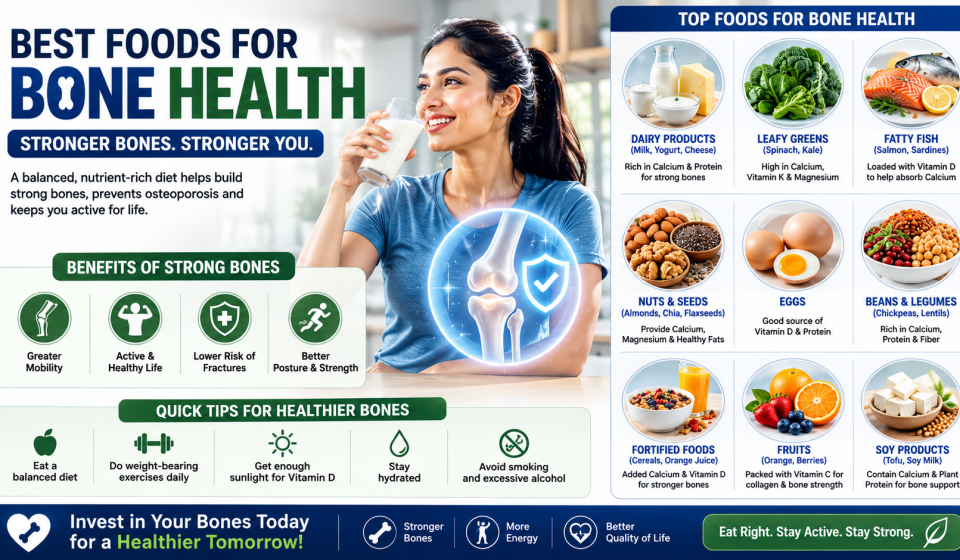
Strong and healthy bones are essential for maintaining mobility, strength, balance, and overall quality of life. Bones provide structure to the body, protect vital organs, store important minerals, and support movement. Although many people focus on bone health only as they grow older, building and maintaining strong bones is a lifelong process. Nutrition plays a crucial role in bone development during childhood, bone maintenance during adulthood, and osteoporosis prevention later in life. Choosing the right foods can help improve bone density, reduce fracture risk, and support long-term skeletal health.Nutrients such as calcium, vitamin D, magnesium, phosphorus, vitamin K, and protein work together to maintain bone strength and support the body’s continuous bone remodeling process. This complete guide explores the best foods for bone health, essential nutrients for strong bones, dietary strategies, and lifestyle habits that can help protect skeletal health throughout life.
Why Bone Health Is Important
Bones are living tissues that constantly undergo breakdown and rebuilding.
Healthy bones are important for:
- Supporting body structure
- Protecting organs
- Enabling movement
- Storing minerals
- Producing blood cells
Maintaining strong bones reduces the risk of fractures, osteoporosis, and mobility limitations.
Understanding Bone Density
Bone density refers to the amount of mineral content present within bones.
Higher bone density generally means:
- Stronger bones
- Lower fracture risk
- Better skeletal health
Bone density naturally declines with age, making proper nutrition increasingly important.
Key Nutrients for Bone Health
Several nutrients are essential for maintaining healthy bones.
Calcium
Calcium is the primary mineral found in bones.
Benefits include:
- Bone strength
- Bone growth
- Skeletal maintenance
Vitamin D
Vitamin D helps the body absorb calcium efficiently.
Without adequate vitamin D, calcium absorption decreases significantly.
Magnesium
Magnesium contributes to bone structure and supports calcium metabolism.
Vitamin K
Vitamin K plays a role in bone mineralization and bone-building processes.
Protein
Protein provides structural support for bones and muscles.
Dairy Products: Excellent Sources of Calcium
Dairy products are among the best foods for bone health.
Milk
Milk provides:
- Calcium
- Protein
- Vitamin D (fortified varieties)
Regular milk consumption supports bone development and maintenance.
Yogurt
Yogurt contains:
- Calcium
- Protein
- Probiotics
These nutrients contribute to both bone and digestive health.
Cheese
Cheese offers concentrated amounts of calcium and protein.
Moderate consumption can support bone strength.
Fatty Fish for Vitamin D and Bone Support
Fatty fish are among the richest dietary sources of vitamin D.
Salmon
Salmon provides:
- Vitamin D
- Protein
- Omega-3 fatty acids
These nutrients support bone and overall health.
Sardines
Sardines contain:
- Calcium
- Vitamin D
- Phosphorus
Because their soft bones are edible, sardines provide exceptional bone-supporting nutrition.
Mackerel
Mackerel offers vitamin D and healthy fats that support skeletal health.
Leafy Green Vegetables
Dark leafy greens provide numerous bone-supporting nutrients.
Kale
Kale contains:
- Calcium
- Vitamin K
- Magnesium
Spinach
Spinach provides:
- Magnesium
- Vitamin K
- Antioxidants
Collard Greens
Collard greens are rich in calcium and contribute to healthy bone maintenance.
Nuts and Seeds
Nuts and seeds contain several nutrients important for skeletal health.
Almonds
Almonds provide:
- Calcium
- Magnesium
- Protein
Chia Seeds
Chia seeds contain:
- Calcium
- Phosphorus
- Magnesium
Sesame Seeds
Sesame seeds are rich in calcium and may support bone density.
Legumes and Beans
Beans and legumes provide plant-based nutrients beneficial for bones.
Examples include:
- Lentils
- Chickpeas
- Black beans
- Kidney beans
These foods offer:
- Protein
- Magnesium
- Phosphorus
Eggs
Eggs provide:
- Protein
- Vitamin D
- Phosphorus
They are a convenient addition to a bone-healthy diet.
Fortified Foods
Many foods are fortified with bone-supporting nutrients.
Examples include:
- Fortified milk alternatives
- Breakfast cereals
- Orange juice
Fortified foods can help meet daily calcium and vitamin D requirements.
Soy Foods
Soy products support bone health, especially for individuals following plant-based diets.
Examples include:
- Tofu
- Tempeh
- Soy milk
These foods provide protein and may contain added calcium.
Fruits That Support Bone Health
Certain fruits provide nutrients beneficial for bones.
Oranges
Oranges contain:
- Vitamin C
- Potassium
Vitamin C supports collagen production within bones.
Prunes
Research suggests prunes may help support bone density in older adults.
Berries
Berries contain antioxidants that help reduce oxidative stress.
Whole Grains
Whole grains provide:
- Magnesium
- Fiber
- B vitamins
Examples include:
- Oats
- Brown rice
- Whole wheat
- Quinoa
These foods contribute to overall nutritional balance.
Foods Rich in Magnesium
Magnesium is essential for healthy bone formation.
Excellent sources include:
- Pumpkin seeds
- Almonds
- Spinach
- Black beans
Adequate magnesium supports calcium utilization.
Foods Rich in Vitamin K
Vitamin K contributes to bone mineralization.
Sources include:
- Kale
- Broccoli
- Brussels sprouts
- Spinach
These vegetables support skeletal strength.
Protein and Bone Health
Protein is critical for maintaining both bone and muscle health.
Healthy protein sources include:
- Fish
- Poultry
- Eggs
- Dairy products
- Legumes
Adequate protein intake supports bone maintenance throughout life.
Foods That May Harm Bone Health
Certain dietary habits may negatively affect bones.
Excess Sodium
High sodium intake may increase calcium loss.
Excessive Sugary Beverages
Frequent consumption of sugary drinks may contribute to poor nutritional balance.
Excessive Alcohol
Heavy alcohol use can weaken bones over time.
Smoking
Smoking negatively affects bone formation and increases fracture risk.
Lifestyle Habits for Strong Bones
Nutrition works best when combined with healthy lifestyle habits.
Exercise Regularly
Weight-bearing exercises help strengthen bones.
Examples include:
- Walking
- Running
- Dancing
- Strength training
Maintain a Healthy Weight
Healthy body weight supports bone strength and mobility.
Get Adequate Sunlight
Sunlight helps the body produce vitamin D naturally.
Bone Health Across Different Life Stages
Children and Adolescents
Bone-building during growth years is essential for future skeletal health.
Adults
Maintaining bone density becomes a primary focus.
Older Adults
Preventing bone loss and fractures becomes increasingly important.
Source Links
https://www.niams.nih.gov/health-topics/bone-health
https://www.iofbonehealth.org
https://www.nof.org/patients/treatment/nutrition
https://www.hsph.harvard.edu/nutritionsource/calcium
Conclusion
Bone health is essential for maintaining strength, mobility, and independence throughout life. Proper nutrition plays a critical role in building strong bones, preserving bone density, and reducing the risk of osteoporosis and fractures. Foods rich in calcium, vitamin D, magnesium, vitamin K, and protein provide the foundation for lifelong skeletal health. Dairy products, fatty fish, leafy greens, nuts, seeds, legumes, fortified foods, and nutrient-rich fruits all contribute to stronger bones. Combined with regular exercise, adequate sunlight exposure, and healthy lifestyle habits, a bone-supportive diet can help individuals maintain strong and healthy bones at every stage of life.
FAQ
1. What are the best foods for bone health?
Milk, yogurt, cheese, salmon, sardines, kale, spinach, almonds, tofu, and fortified foods are among the best foods for bone health.
2. Why is calcium important for bones?
Calcium is the primary mineral found in bones and is essential for bone strength and maintenance.
3. How does vitamin D support bone health?
Vitamin D helps the body absorb calcium efficiently, making it critical for strong bones.
4. Which fruits are good for bones?
Oranges, prunes, and berries contain nutrients that support bone health and bone maintenance.
5. Can exercise improve bone strength?
Yes. Weight-bearing and resistance exercises help increase bone density and strengthen bones.
6. What foods should be limited for better bone health?
Excessive sodium, sugary beverages, and alcohol should be limited because they may negatively affect bone health.
7. Are plant-based foods good for bone health?
Yes. Leafy greens, legumes, tofu, nuts, seeds, and fortified plant-based foods provide important bone-supporting nutrients.
8. How can older adults maintain strong bones?
Older adults can support bone health through proper nutrition, regular exercise, adequate vitamin D, and routine health checkups.