
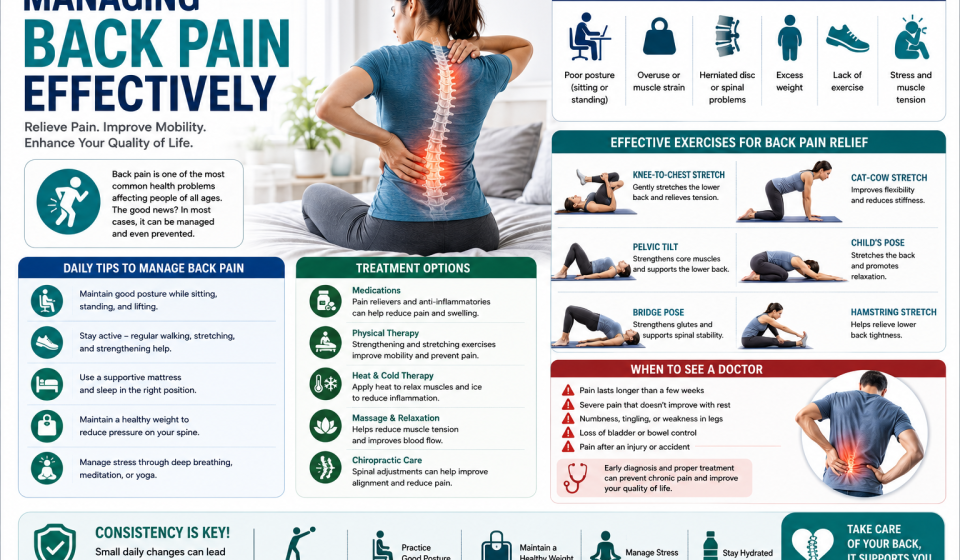
Managing Back Pain Effectively: Complete Guide to Relief, Prevention, and Long-Term Spine Health

Although back pain is extremely common, many cases can be improved through lifestyle changes, exercise, proper posture, and evidence-based treatment approaches.
Back pain is one of the most common health complaints worldwide and affects millions of people every year. It can range from mild discomfort to severe pain that interferes with daily activities, work performance, sleep quality, and overall well-being. Back pain may develop suddenly due to an injury or gradually because of poor posture, aging, repetitive strain, or underlying medical conditions. Regardless of the cause, back pain can significantly impact quality of life if not managed properly. Understanding how to prevent, treat, and manage back pain effectively is essential for maintaining mobility and long-term health.Early intervention often prevents acute pain from becoming a chronic condition. By learning about the causes of back pain and adopting healthy habits that support spinal health, individuals can reduce discomfort, improve physical function, and enhance overall quality of life. This comprehensive guide explains everything you need to know about managing back pain effectively, including common causes, symptoms, treatments, prevention strategies, and long-term management techniques.
Understanding Back Pain
Back pain refers to discomfort that occurs anywhere along the spine, including:
- Neck region
- Upper back
- Middle back
- Lower back
Lower back pain is the most common form and affects people of all ages.
Pain may be:
- Acute (lasting less than six weeks)
- Subacute (lasting six to twelve weeks)
- Chronic (lasting more than three months)
Understanding the type and cause of pain helps determine appropriate treatment.
Why Back Pain Is So Common
The spine supports body weight, movement, flexibility, and posture.
Daily activities such as:
- Sitting
- Standing
- Walking
- Lifting
- Twisting
place stress on spinal structures.
Over time, repetitive strain and age-related changes can contribute to pain and discomfort.
Common Causes of Back Pain
Many factors can contribute to back pain.
Muscle Strain
Muscle or ligament strains commonly occur due to:
- Heavy lifting
- Sudden movements
- Poor body mechanics
Poor Posture
Poor posture places excess pressure on the spine and supporting muscles.
Sedentary Lifestyle
Lack of physical activity weakens muscles that support the spine.
Herniated Disc
A herniated disc occurs when spinal disc material pushes outward and irritates nearby nerves.
Arthritis
Degenerative joint changes may cause pain and stiffness.
Osteoporosis
Reduced bone density increases fracture risk and may contribute to back pain.
Risk Factors for Back Pain
Certain factors increase the likelihood of developing back pain.
These include:
- Aging
- Obesity
- Smoking
- Physical inactivity
- Poor posture
- Repetitive occupational tasks
- Chronic stress
Understanding risk factors can help individuals take preventive measures.
Symptoms of Back Pain
Symptoms vary depending on the cause and severity.
Common symptoms include:
- Muscle aches
- Stiffness
- Sharp pain
- Burning sensations
- Reduced mobility
- Pain radiating into the legs
Persistent symptoms may require medical evaluation.
When to Seek Medical Attention
While many cases improve with self-care, some symptoms require prompt medical attention.
Seek professional care if back pain is associated with:
- Severe weakness
- Loss of bladder control
- Loss of bowel control
- Fever
- Unexplained weight loss
- Significant trauma
These symptoms may indicate a serious underlying condition.
The Importance of Proper Posture
Good posture reduces strain on the spine and surrounding muscles.
Sitting Posture
When sitting:
- Keep feet flat on the floor
- Maintain back support
- Keep shoulders relaxed
Standing Posture
While standing:
- Distribute weight evenly
- Avoid slouching
- Engage core muscles
Postural awareness can significantly reduce discomfort.
Exercise for Back Pain Relief
Regular physical activity is one of the most effective strategies for managing back pain.
Benefits include:
- Improved flexibility
- Stronger muscles
- Better posture
- Reduced stiffness
Stretching Exercises
Stretching helps improve mobility and reduce muscle tension.
Examples include:
- Hamstring stretches
- Hip stretches
- Cat-cow stretches
Strengthening Exercises
Strengthening the core supports spinal stability.
Helpful exercises include:
- Planks
- Bridges
- Pelvic tilts
Walking for Back Health
Walking is a low-impact activity that supports spinal health.
Benefits include:
- Improved circulation
- Better mobility
- Reduced stiffness
- Enhanced overall fitness
Regular walking may help reduce chronic back pain symptoms.
Weight Management and Back Pain
Excess body weight increases stress on the spine.
Maintaining a healthy weight can:
- Reduce pressure on joints
- Improve mobility
- Decrease inflammation
Weight management supports long-term pain relief.
The Role of Physical Therapy
Physical therapists develop personalized programs designed to:
- Improve strength
- Enhance flexibility
- Correct posture
- Reduce pain
Physical therapy is often highly effective for chronic back pain management.
Heat and Cold Therapy
Cold Therapy
Cold packs may help:
- Reduce inflammation
- Decrease swelling
- Relieve acute injuries
Heat Therapy
Heat may:
- Improve blood flow
- Relax muscles
- Reduce stiffness
Alternating heat and cold can be beneficial for some individuals.
Sleep and Back Pain
Poor sleep can worsen pain perception and recovery.
Best Sleep Positions
Helpful sleeping positions include:
- Sleeping on the back with knee support
- Sleeping on the side with a pillow between the knees
A supportive mattress can also improve comfort.
Stress and Back Pain
Stress often contributes to muscle tension and chronic pain.
Stress-management techniques include:
- Meditation
- Deep breathing exercises
- Yoga
- Mindfulness practices
Reducing stress may help decrease pain severity.
Nutrition and Spinal Health
A healthy diet supports overall musculoskeletal health.
Important nutrients include:
- Calcium
- Vitamin D
- Magnesium
- Protein
Proper nutrition supports bones, muscles, and connective tissues.
Ergonomic Workplace Habits
Workplace ergonomics play an important role in back health.
Helpful strategies include:
- Adjusting chair height
- Positioning monitors correctly
- Taking movement breaks
- Using lumbar support
Good ergonomics reduce spinal strain during long work hours.
Lifestyle Changes for Long-Term Relief
Successful back pain management often involves multiple healthy habits.
Examples include:
- Regular exercise
- Weight control
- Proper posture
- Stress reduction
- Healthy sleep habits
Consistency produces the best long-term results.
Medical Treatments for Back Pain
When self-care measures are insufficient, medical treatment may be necessary.
Options may include:
- Medications
- Physical therapy
- Injections
- Specialized rehabilitation programs
Treatment depends on the underlying cause and symptom severity.
Preventing Future Back Pain
Prevention is often easier than treatment.
Strategies include:
- Staying active
- Maintaining flexibility
- Practicing good posture
- Lifting objects properly
- Strengthening core muscles
Healthy habits reduce the risk of recurring pain.
Living Well with Chronic Back Pain
Chronic back pain does not have to prevent individuals from living active and fulfilling lives.
Effective management often combines:
- Exercise
- Education
- Stress management
- Medical guidance
A comprehensive approach helps improve quality of life.
Source Links
https://www.ninds.nih.gov/health-information/disorders/low-back-pain
https://www.mayoclinic.org/diseases-conditions/back-pain
https://www.nhs.uk/conditions/back-pain
https://www.cdc.gov/arthritis/pain-management
Conclusion
Back pain is a common condition that can affect people of all ages, but many cases can be successfully managed through healthy lifestyle changes, exercise, proper posture, and evidence-based treatment strategies. Understanding the causes of back pain and addressing contributing factors such as poor posture, inactivity, excess weight, and stress can significantly reduce discomfort and improve mobility. Regular physical activity, ergonomic adjustments, adequate sleep, and professional guidance when necessary can help prevent recurring pain and support long-term spinal health. By taking a proactive approach, individuals can manage back pain effectively and maintain a healthier, more active lifestyle.
FAQ
1. What is the most common cause of back pain?
Muscle strain, poor posture, inactivity, and age-related spinal changes are among the most common causes of back pain.
2. Can exercise help relieve back pain?
Yes. Regular stretching, strengthening exercises, and walking can improve flexibility, support spinal health, and reduce pain.
3. When should I see a doctor for back pain?
Seek medical attention if pain is severe, persistent, follows an injury, or is accompanied by weakness, numbness, fever, or loss of bladder control.
4. Does poor posture cause back pain?
Yes. Poor posture can place excessive stress on spinal structures and contribute to pain over time.
5. Is walking good for back pain?
Walking is a low-impact activity that can improve circulation, reduce stiffness, and support overall spine health.
6. Can excess weight contribute to back pain?
Yes. Extra body weight places additional stress on the spine and may worsen pain symptoms.
7. What sleeping position is best for back pain?
Sleeping on the back with knee support or on the side with a pillow between the knees may help reduce spinal stress.
8. Can chronic back pain be managed without surgery?
Many cases of chronic back pain improve through exercise, physical therapy, posture correction, stress management, and other non-surgical treatments.