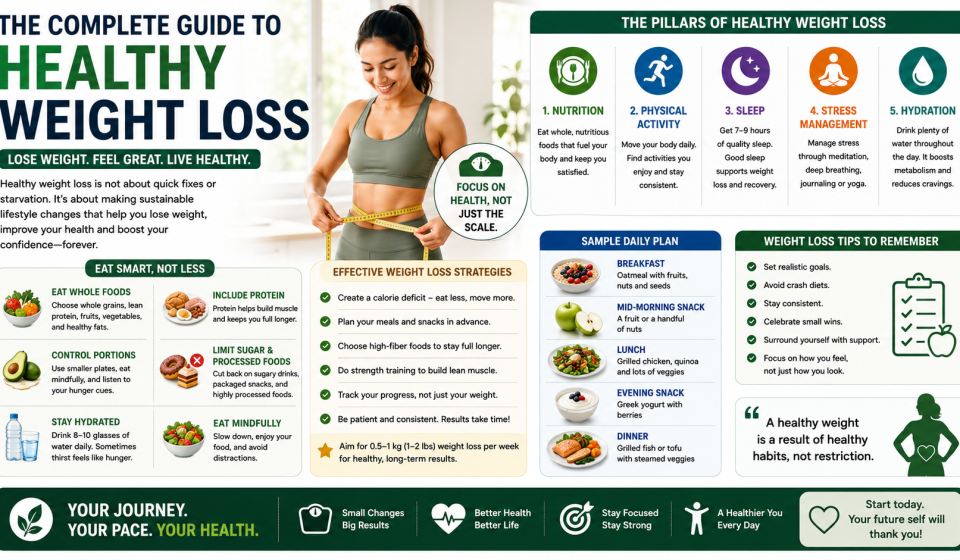
Complete Guide to Healthy Weight Loss: Proven Strategies to Lose Weight Safely and Keep It Off

Healthy weight loss is not about extreme restrictions or drastic measures. Instead, it involves creating habits that support gradual fat loss while preserving muscle mass, maintaining energy levels, and promoting overall well-being.
Achieving and maintaining a healthy weight is one of the most important steps toward improving overall health and reducing the risk of chronic diseases. In today’s fast-paced world, obesity and overweight have become major global health concerns, affecting millions of people across all age groups. While many individuals seek quick fixes and fad diets promising rapid results, sustainable weight loss requires a balanced, long-term approach that focuses on healthy eating, regular physical activity, and lifestyle changes. Understanding the science behind weight loss can help individuals make informed decisions and achieve lasting success. A realistic and sustainable weight loss plan can improve heart health, blood sugar control, mobility, self-confidence, and quality of life. This complete guide explores everything you need to know about healthy weight loss, including nutrition, exercise, behavioral strategies, common mistakes, and practical tips for long-term success.
What Is Healthy Weight Loss?
Healthy weight loss refers to losing body fat gradually through balanced nutrition, physical activity, and sustainable lifestyle modifications.
Most health experts recommend losing approximately:
- 0.5 to 1 kilogram per week
- 1 to 2 pounds per week
Gradual weight loss is generally more sustainable and less likely to result in muscle loss or nutritional deficiencies.
Why Maintaining a Healthy Weight Matters
Excess body weight increases the risk of numerous health conditions.
These include:
- Heart disease
- Type 2 diabetes
- High blood pressure
- Stroke
- Sleep apnea
- Certain cancers
- Joint problems
Maintaining a healthy weight supports overall health and longevity.
Understanding the Science of Weight Loss
Weight loss occurs when the body burns more calories than it consumes.
This is commonly known as a calorie deficit.
A calorie deficit can be achieved through:
- Reducing calorie intake
- Increasing physical activity
- Combining both approaches
Consistent calorie deficits encourage the body to use stored fat for energy.
Common Causes of Weight Gain
Several factors contribute to weight gain.
Poor Dietary Habits
Frequent consumption of:
- Sugary beverages
- Fast food
- Processed snacks
- Large portions
can increase calorie intake significantly.
Physical Inactivity
Sedentary lifestyles reduce energy expenditure and contribute to fat accumulation.
Poor Sleep
Insufficient sleep affects hormones that regulate hunger and appetite.
Stress
Chronic stress may increase cravings and emotional eating behaviors.
Medical Conditions
Certain health conditions and medications may influence body weight.
Set Realistic Weight Loss Goals
Successful weight loss begins with achievable goals.
Examples include:
- Losing 5 to 10 percent of body weight
- Increasing physical activity
- Improving dietary habits
Realistic expectations promote motivation and long-term adherence.
Follow a Balanced and Nutritious Diet
Nutrition plays the most significant role in healthy weight loss.
Eat More Fruits and Vegetables
These foods provide:
- Fiber
- Vitamins
- Minerals
- Antioxidants
They help increase fullness while providing fewer calories.
Choose Whole Grains
Whole grains offer:
- Sustained energy
- Fiber
- Nutrients
Examples include:
- Brown rice
- Oats
- Whole wheat bread
- Quinoa
Include Lean Proteins
Protein supports:
- Muscle maintenance
- Satiety
- Metabolism
Healthy protein sources include:
- Fish
- Chicken
- Eggs
- Beans
- Lentils
- Tofu
Control Portion Sizes
Even healthy foods can contribute to weight gain when consumed excessively.
Helpful strategies include:
- Using smaller plates
- Measuring portions
- Eating slowly
- Avoiding distractions during meals
Mindful eating improves portion control.
Reduce Added Sugars
Excess sugar contributes to weight gain and metabolic health problems.
Common sources include:
- Soft drinks
- Candy
- Pastries
- Sweetened beverages
Reducing added sugar supports healthy weight management.
Limit Highly Processed Foods
Processed foods often contain:
- Excess calories
- Unhealthy fats
- Added sugars
- Excess sodium
Whole, minimally processed foods are generally healthier choices.
Stay Hydrated
Water supports metabolism and overall health.
Benefits include:
- Improved digestion
- Better appetite regulation
- Enhanced exercise performance
Drinking water before meals may also support portion control.
Exercise Regularly
Physical activity is essential for healthy weight loss and maintenance.
Cardiovascular Exercise
Examples include:
- Walking
- Running
- Cycling
- Swimming
Cardio helps burn calories and improve heart health.
Strength Training
Resistance training helps:
- Preserve muscle mass
- Increase metabolism
- Improve body composition
Strength training should be included at least twice weekly.
Increase Daily Movement
Non-exercise activity contributes significantly to calorie expenditure.
Examples include:
- Taking the stairs
- Walking more
- Standing regularly
- Household chores
Small movements accumulate throughout the day.
Improve Sleep Quality
Sleep plays a critical role in weight management.
Poor sleep can:
- Increase hunger
- Reduce energy
- Affect metabolism
Most adults benefit from seven to nine hours of sleep nightly.
Manage Stress Effectively
Stress can influence eating behaviors and weight gain.
Healthy stress-management techniques include:
- Meditation
- Deep breathing
- Exercise
- Journaling
- Social support
Reducing stress supports healthier lifestyle choices.
Avoid Fad Diets
Many fad diets promise rapid results but are difficult to maintain.
Common drawbacks include:
- Nutrient deficiencies
- Muscle loss
- Weight regain
Sustainable lifestyle changes provide more reliable outcomes.
Monitor Your Progress
Tracking progress can improve motivation and accountability.
Methods include:
- Weight measurements
- Body measurements
- Food journals
- Fitness tracking
Progress should be evaluated over time rather than day-to-day fluctuations.
Healthy Weight Loss for Different Age Groups
Young Adults
Focus on building healthy habits and consistent routines.
Middle-Aged Adults
Prioritize muscle preservation and cardiovascular health.
Older Adults
Weight loss should emphasize nutrition, mobility, and maintaining muscle mass.
Common Weight Loss Mistakes
Many individuals unknowingly hinder their progress.
Examples include:
- Skipping meals
- Extremely low-calorie diets
- Overestimating exercise calories
- Inconsistent habits
- Lack of sleep
Recognizing these mistakes can improve outcomes.
Benefits of Healthy Weight Loss
Losing excess weight can provide numerous health benefits.
These include:
- Improved heart health
- Better blood sugar control
- Lower blood pressure
- Increased mobility
- Enhanced confidence
- Better sleep quality
- Reduced disease risk
Even modest weight loss can produce meaningful improvements.
Maintaining Weight Loss Long-Term
Successful maintenance requires ongoing commitment.
Helpful strategies include:
- Continuing healthy eating habits
- Staying physically active
- Monitoring weight regularly
- Managing stress
- Prioritizing sleep
Consistency is the foundation of long-term success.
The Importance of Professional Support
Healthcare professionals can provide personalized guidance.
Support may come from:
- Doctors
- Registered dietitians
- Fitness professionals
- Behavioral counselors
Professional assistance can improve safety and effectiveness.
Source Links
https://www.cdc.gov/healthy-weight-growth/losing-weight
https://www.nhlbi.nih.gov/health/educational/lose_wt
https://www.hsph.harvard.edu/nutritionsource/healthy-weight
https://www.who.int/news-room/fact-sheets/detail/obesity-and-overweight
Conclusion
Healthy weight loss is a gradual and sustainable process that focuses on improving overall health rather than achieving rapid results. By combining balanced nutrition, regular physical activity, adequate sleep, hydration, stress management, and consistent healthy habits, individuals can successfully lose weight and maintain their results long term. Avoiding fad diets and unrealistic expectations is essential for lasting success. Even small reductions in body weight can significantly improve health outcomes, reduce disease risk, and enhance quality of life. With patience, commitment, and evidence-based strategies, achieving and maintaining a healthy weight is possible for individuals at every stage of life.
FAQ
1. What is considered healthy weight loss?
Healthy weight loss typically involves losing approximately 0.5 to 1 kilogram per week through sustainable lifestyle changes.
2. What is the most effective way to lose weight?
Combining a balanced diet, regular exercise, adequate sleep, and consistent healthy habits is the most effective strategy.
3. How important is exercise for weight loss?
Exercise helps burn calories, preserve muscle mass, improve metabolism, and support long-term weight maintenance.
4. Can I lose weight without dieting?
Weight loss can occur through healthier eating habits, portion control, increased physical activity, and lifestyle improvements rather than restrictive dieting.
5. Does drinking water help with weight loss?
Water supports hydration, appetite control, digestion, and exercise performance, which may aid weight management.
6. Why do fad diets often fail?
Many fad diets are difficult to maintain and may lead to nutrient deficiencies, muscle loss, and weight regain.
7. How much sleep is needed for healthy weight management?
Most adults benefit from seven to nine hours of quality sleep each night.
8. How can I maintain weight loss long term?
Long-term success requires consistent healthy eating, regular physical activity, stress management, adequate sleep, and ongoing self-monitoring.