Signs of Dehydration and Prevention: A Complete Guide to Staying Healthy and Properly Hydrated

Many people underestimate the effects of dehydration, assuming that thirst is the only warning sign. However, dehydration can affect multiple systems within the body and may develop gradually.
Water is one of the most essential components of life and plays a critical role in maintaining overall health. Every organ, tissue, and cell in the human body depends on adequate hydration to function properly. Despite its importance, dehydration remains a common health issue affecting people of all ages. Dehydration occurs when the body loses more fluids than it takes in, disrupting normal bodily functions and potentially leading to serious health complications if left untreated. Understanding the signs of dehydration and learning how to prevent it are vital for maintaining physical performance, mental clarity, and long-term well-being.Even mild fluid loss can lead to fatigue, headaches, reduced concentration, and impaired physical performance. Severe dehydration can become a medical emergency, affecting the heart, kidneys, brain, and other vital organs. Fortunately, dehydration is often preventable through healthy hydration habits and awareness of risk factors. This comprehensive guide explains the causes, symptoms, health risks, treatment options, and effective prevention strategies for dehydration.
What Is Dehydration?
Dehydration occurs when the body loses more fluids than it receives.
The body constantly loses water through:
- Sweating
- Urination
- Breathing
- Digestion
When fluid losses are not adequately replaced, dehydration develops and normal bodily functions become impaired.
Why Hydration Is Important
Water performs numerous critical functions in the body.
These functions include:
- Regulating body temperature
- Transporting nutrients
- Delivering oxygen to cells
- Supporting digestion
- Removing waste products
- Lubricating joints
- Maintaining blood volume
- Supporting brain function
Proper hydration is essential for overall health and survival.
Common Causes of Dehydration
Many factors can contribute to fluid loss.
Inadequate Water Intake
Failing to drink enough fluids is one of the most common causes of dehydration.
Excessive Sweating
Heavy sweating during exercise, hot weather, or physical labor can increase fluid loss significantly.
Fever
Elevated body temperature often increases fluid requirements and can contribute to dehydration.
Vomiting and Diarrhea
These conditions can rapidly deplete fluids and electrolytes.
Certain Medications
Some medications increase fluid loss through increased urination.
Examples include:
- Diuretics
- Certain blood pressure medications
Chronic Medical Conditions
Health conditions such as diabetes can increase dehydration risk.
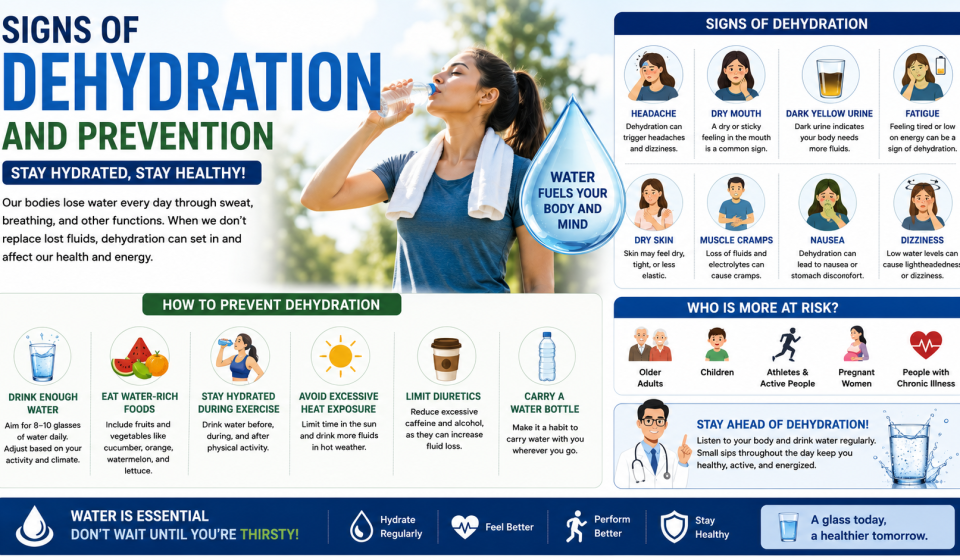
Early Signs of Dehydration
Recognizing dehydration early can help prevent complications.
Increased Thirst
Thirst is often the body’s first signal that additional fluids are needed.
Dry Mouth
Reduced saliva production can cause dryness in the mouth and throat.
Dark Yellow Urine
Urine color is a useful indicator of hydration status.
Dark urine often suggests insufficient fluid intake.
Reduced Urination
Dehydration may cause decreased urine output.
Fatigue
Insufficient hydration can reduce energy levels and increase feelings of tiredness.
Moderate Signs of Dehydration
As dehydration progresses, symptoms become more noticeable.
Headaches
Dehydration commonly contributes to headaches and migraines.
Dizziness
Reduced blood volume may lead to dizziness or lightheadedness.
Muscle Cramps
Fluid and electrolyte imbalances can affect muscle function.
Difficulty Concentrating
Dehydration may impair focus, memory, and mental performance.
Dry Skin
Reduced hydration can affect skin moisture and elasticity.
Severe Signs of Dehydration
Severe dehydration requires immediate medical attention.
Symptoms may include:
- Rapid heartbeat
- Low blood pressure
- Extreme weakness
- Confusion
- Sunken eyes
- Little or no urine output
- Fainting
- Loss of consciousness
These symptoms indicate a potentially serious medical condition.
Dehydration in Children
Children are particularly vulnerable to dehydration because their bodies lose fluids more quickly.
Warning signs may include:
- Dry mouth
- Few tears when crying
- Reduced urination
- Irritability
- Sunken eyes
- Unusual sleepiness
Prompt treatment is important to prevent complications.
Dehydration in Older Adults
Older adults face increased dehydration risk due to:
- Reduced thirst sensation
- Certain medications
- Chronic health conditions
- Mobility limitations
Monitoring hydration is especially important in this age group.
Health Risks Associated with Dehydration
Untreated dehydration can affect multiple body systems.
Kidney Problems
Chronic dehydration may increase the risk of:
- Kidney stones
- Urinary tract infections
- Kidney damage
Heat-Related Illnesses
Dehydration increases susceptibility to:
- Heat cramps
- Heat exhaustion
- Heat stroke
Cardiovascular Stress
Reduced blood volume forces the heart to work harder.
Cognitive Impairment
Dehydration can affect memory, concentration, and mood.
How Dehydration Affects Physical Performance
Athletes and physically active individuals are particularly sensitive to fluid loss.
Effects may include:
- Reduced endurance
- Decreased strength
- Slower reaction times
- Increased fatigue
Proper hydration supports optimal performance and recovery.
Diagnosing Dehydration
Healthcare professionals may assess dehydration using:
- Medical history
- Physical examination
- Blood tests
- Urine tests
These evaluations help determine severity and guide treatment.
Treatment for Dehydration
Treatment depends on the severity of fluid loss.
Mild Dehydration
Mild cases often improve with increased fluid intake.
Recommended options include:
- Water
- Oral rehydration solutions
- Hydrating foods
Moderate Dehydration
Additional fluid replacement may be required to restore balance.
Severe Dehydration
Severe cases may require intravenous fluids and emergency medical care.
Best Fluids for Rehydration
Several beverages can help restore hydration.
Good choices include:
- Water
- Oral rehydration solutions
- Milk
- Electrolyte beverages
- Clear soups
Water remains the preferred choice for most healthy individuals.
Foods That Support Hydration
Many foods contain significant amounts of water.
Examples include:
- Watermelon
- Cucumber
- Strawberries
- Oranges
- Lettuce
- Celery
These foods contribute to overall fluid intake.
How to Prevent Dehydration
Prevention is the most effective strategy for avoiding dehydration-related health problems.
Drink Water Regularly
Do not wait until you feel thirsty before drinking fluids.
Carry a Reusable Water Bottle
Having water available encourages consistent hydration.
Monitor Urine Color
Light yellow urine often indicates adequate hydration.
Increase Fluids During Exercise
Physical activity increases fluid requirements.
Stay Hydrated in Hot Weather
Additional fluids are necessary during high temperatures.
Limit Excessive Alcohol Intake
Alcohol can contribute to fluid loss and dehydration.
Consume Water-Rich Foods
Hydrating fruits and vegetables help maintain fluid balance.
Daily Fluid Requirements
Fluid needs vary depending on:
- Age
- Body size
- Activity level
- Climate
- Health status
Many health organizations recommend approximately:
- 3.7 liters per day for men
- 2.7 liters per day for women
These totals include fluids from foods and beverages.
Special Considerations for Athletes
Athletes often require increased hydration due to sweat losses.
Helpful strategies include:
- Drinking before exercise
- Hydrating during activity
- Replacing fluids after exercise
Proper hydration improves safety and performance.
Building Healthy Hydration Habits
Simple habits can help maintain hydration throughout life.
Examples include:
- Starting the day with water
- Drinking water with meals
- Setting hydration reminders
- Choosing water over sugary drinks
Consistency is key to preventing dehydration.
Source Links
https://www.cdc.gov/healthy-weight-growth/water-healthy-drinks/index.html
https://www.mayoclinic.org/diseases-conditions/dehydration
https://www.nhs.uk/conditions/dehydration
https://www.hsph.harvard.edu/nutritionsource/water
Conclusion
Dehydration is a common but often preventable health condition that can affect people of all ages. Because water is essential for nearly every bodily function, maintaining proper hydration is critical for physical health, mental performance, and overall well-being. Recognizing the early signs of dehydration—such as thirst, fatigue, dry mouth, dark urine, and headaches—can help individuals take prompt action before complications develop. By drinking enough fluids, consuming water-rich foods, increasing hydration during exercise and hot weather, and adopting healthy hydration habits, individuals can significantly reduce their risk of dehydration. Prioritizing hydration every day supports better health, improved energy levels, and enhanced quality of life.
FAQ
1. What are the first signs of dehydration?
Early signs include thirst, dry mouth, dark urine, reduced urination, fatigue, and mild headaches.
2. What causes dehydration?
Common causes include inadequate fluid intake, excessive sweating, fever, vomiting, diarrhea, certain medications, and chronic health conditions.
3. How much water should I drink daily?
Fluid needs vary, but many adults benefit from approximately 2.7 to 3.7 liters of fluids daily from beverages and foods.
4. Can dehydration cause headaches?
Yes. Dehydration is a common trigger for headaches and may worsen migraine symptoms.
5. Who is most at risk for dehydration?
Children, older adults, athletes, and individuals with chronic illnesses face higher dehydration risks.
6. What foods help prevent dehydration?
Water-rich foods such as watermelon, cucumber, oranges, strawberries, and lettuce support hydration.
7. When should dehydration be considered a medical emergency?
Severe symptoms such as confusion, fainting, rapid heartbeat, very low urine output, or loss of consciousness require immediate medical attention.
8. What is the best way to prevent dehydration?
Regular fluid intake, monitoring hydration status, consuming hydrating foods, and increasing fluids during exercise and hot weather are effective prevention strategies.