Managing Anxiety Through Healthy Habits: A Complete Guide to Improving Mental Well-Being Naturally

Although professional treatment may be necessary for some individuals, healthy lifestyle habits can play a powerful role in managing anxiety and supporting emotional well-being.
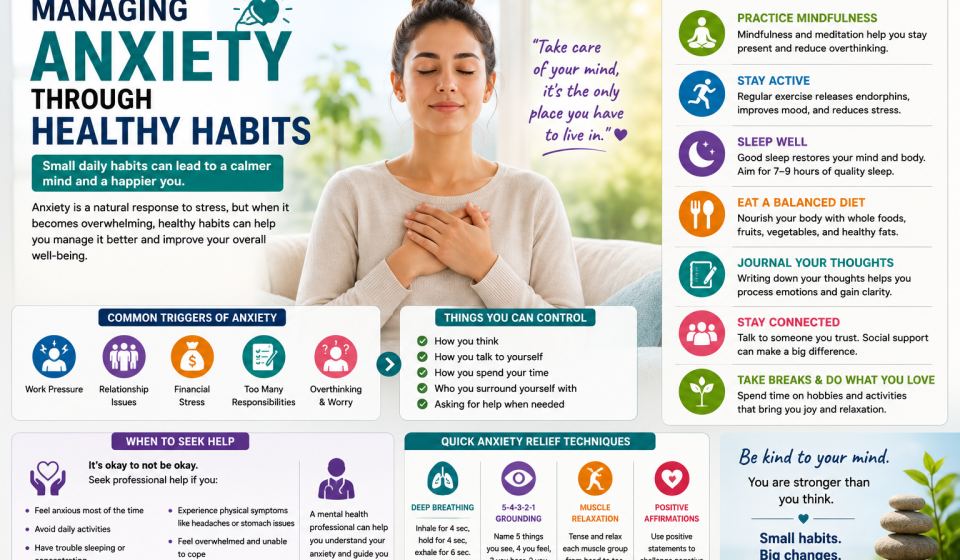
Anxiety is one of the most common mental health challenges affecting people across all age groups. While occasional anxiety is a normal response to stressful situations, persistent anxiety can interfere with daily activities, relationships, work performance, and overall quality of life. Modern lifestyles often expose individuals to constant pressures, including financial concerns, workplace demands, academic responsibilities, social expectations, and digital overload. These factors can contribute to heightened stress levels and increase the likelihood of experiencing anxiety-related symptoms.Daily choices related to sleep, nutrition, physical activity, stress management, and social connections can significantly influence mental health. By adopting positive routines and developing healthy coping strategies, individuals can reduce anxiety symptoms, improve resilience, and enjoy a more balanced life. This comprehensive guide explores how healthy habits can help manage anxiety naturally and support long-term mental wellness.
Understanding Anxiety
Anxiety is the body’s natural response to perceived threats, uncertainty, or stressful situations. It involves emotional, physical, and psychological reactions designed to help individuals respond to challenges.
Occasional anxiety is normal and can even be beneficial in certain situations. However, when anxiety becomes excessive, persistent, or difficult to control, it may affect overall functioning and well-being.
Common symptoms of anxiety include:
- Excessive worrying
- Restlessness
- Nervousness
- Rapid heartbeat
- Muscle tension
- Difficulty concentrating
- Irritability
- Sleep disturbances
- Fatigue
Recognizing these symptoms is an important first step toward effective management.
Why Healthy Habits Matter for Anxiety Management
Mental health is closely connected to physical health. Lifestyle choices influence brain chemistry, hormone regulation, stress responses, and emotional resilience.
Healthy habits can help:
- Reduce stress hormones
- Improve mood
- Increase energy levels
- Support emotional stability
- Enhance sleep quality
- Strengthen coping abilities
Consistent healthy behaviors often provide long-term benefits for anxiety management.
Prioritize Quality Sleep
Sleep and anxiety share a strong relationship.
Poor sleep may:
- Increase stress levels
- Intensify anxious thoughts
- Reduce emotional regulation
- Impair concentration
Adults generally benefit from seven to nine hours of quality sleep each night.
Healthy Sleep Habits
Improve sleep quality by:
- Maintaining a consistent bedtime
- Limiting screen time before sleep
- Creating a relaxing bedtime routine
- Keeping the bedroom cool and quiet
- Avoiding caffeine late in the day
Better sleep often leads to improved emotional well-being.
Exercise Regularly
Physical activity is one of the most effective natural strategies for reducing anxiety.
Exercise promotes the release of:
- Endorphins
- Serotonin
- Dopamine
These chemicals support positive mood and stress reduction.
Benefits of Exercise for Anxiety
Regular exercise may:
- Reduce stress hormones
- Improve sleep quality
- Increase self-confidence
- Enhance emotional resilience
- Promote relaxation
Helpful activities include:
- Walking
- Running
- Swimming
- Cycling
- Yoga
- Strength training
Even short periods of movement can provide mental health benefits.
Practice Mindfulness and Meditation
Mindfulness involves focusing attention on the present moment without judgment.
Benefits may include:
- Reduced worrying
- Improved emotional awareness
- Better stress management
- Increased relaxation
Meditation Techniques
Popular approaches include:
- Deep breathing meditation
- Guided meditation
- Body scan meditation
- Mindful breathing exercises
Regular mindfulness practice can help calm an overactive mind.
Develop Healthy Eating Habits
Nutrition affects both physical and mental health.
A balanced diet supports:
- Brain function
- Mood regulation
- Energy production
- Hormonal balance
Foods That Support Mental Wellness
Healthy choices include:
- Fruits
- Vegetables
- Whole grains
- Lean proteins
- Nuts
- Seeds
- Fatty fish
Limit Highly Processed Foods
Excessive intake of:
- Sugary foods
- Processed snacks
- Artificial ingredients
may contribute to mood fluctuations and reduced energy levels.
Stay Hydrated
Proper hydration supports overall health and cognitive function.
Even mild dehydration may contribute to:
- Fatigue
- Irritability
- Reduced concentration
Drinking sufficient water throughout the day helps support mental clarity and emotional balance.
Manage Stress Effectively
Chronic stress often contributes to anxiety.
Developing healthy stress-management techniques can improve resilience.
Helpful strategies include:
- Deep breathing
- Journaling
- Relaxation exercises
- Time management
- Spending time outdoors
Managing stress proactively helps reduce anxiety symptoms.
Limit Caffeine Intake
Caffeine stimulates the nervous system and may worsen anxiety in some individuals.
Excessive caffeine consumption can contribute to:
- Nervousness
- Rapid heartbeat
- Restlessness
- Sleep disturbances
Reducing caffeine intake may help improve anxiety management.
Reduce Alcohol Consumption
Some people use alcohol to cope with stress or anxiety.
However, excessive alcohol use may:
- Worsen anxiety symptoms
- Disrupt sleep
- Affect mood regulation
Moderation supports better mental health outcomes.
Practice Deep Breathing Exercises
Deep breathing activates the body’s relaxation response.
Simple breathing exercises may:
- Slow heart rate
- Reduce muscle tension
- Promote calmness
- Improve focus
One common method involves slowly inhaling, holding the breath briefly, and exhaling gradually.
Build Strong Social Connections
Healthy relationships provide emotional support during stressful times.
Benefits include:
- Reduced feelings of isolation
- Improved coping abilities
- Greater emotional resilience
- Enhanced sense of belonging
Maintaining meaningful social connections contributes to mental wellness.
Spend Time in Nature
Exposure to natural environments can have calming effects on the mind.
Benefits may include:
- Reduced stress
- Improved mood
- Better concentration
- Increased relaxation
Activities such as walking in parks or spending time outdoors can support anxiety management.
Establish a Healthy Daily Routine
Predictable routines can provide structure and stability.
Helpful routine elements include:
- Consistent sleep schedules
- Regular meals
- Exercise sessions
- Relaxation time
- Work-life balance
Structure often helps reduce uncertainty and stress.
Limit Excessive Screen Time
Constant exposure to digital devices and social media may increase stress and anxiety.
Strategies include:
- Taking regular breaks
- Limiting social media use
- Creating screen-free periods
- Prioritizing real-life interactions
Balanced technology use supports emotional well-being.
Practice Gratitude
Gratitude encourages focus on positive experiences rather than worries.
Simple gratitude practices include:
- Keeping a gratitude journal
- Reflecting on positive events
- Expressing appreciation to others
These habits may improve mood and emotional resilience.
Learn Healthy Coping Skills
Developing effective coping mechanisms is essential for managing anxiety.
Healthy coping strategies include:
- Problem-solving
- Seeking support
- Relaxation techniques
- Physical activity
- Creative hobbies
Healthy coping helps reduce reliance on harmful behaviors.
Set Realistic Goals
Unrealistic expectations often increase stress and anxiety.
Setting achievable goals helps:
- Improve motivation
- Build confidence
- Reduce overwhelm
Breaking larger tasks into smaller steps can make challenges feel more manageable.
When Professional Help Is Needed
Healthy habits can significantly support anxiety management, but professional assistance may be necessary if symptoms:
- Persist for extended periods
- Interfere with daily functioning
- Affect relationships
- Cause severe distress
Mental health professionals can provide therapy, counseling, and additional treatment options when needed.
Long-Term Benefits of Healthy Anxiety Management
Consistently practicing healthy habits may result in:
- Reduced anxiety symptoms
- Better emotional stability
- Improved sleep quality
- Enhanced physical health
- Greater resilience
- Better quality of life
Small daily improvements often create meaningful long-term results.
Source Links
https://www.nimh.nih.gov/health/topics/anxiety-disorders
https://www.who.int/news-room/fact-sheets/detail/mental-disorders
https://www.cdc.gov/mentalhealth
https://www.mayoclinic.org/diseases-conditions/anxiety
Conclusion
Managing anxiety through healthy habits is a powerful and sustainable approach to improving mental well-being. While anxiety is a normal part of life, chronic anxiety can affect physical health, emotional balance, and daily functioning. Prioritizing quality sleep, engaging in regular exercise, maintaining a nutritious diet, practicing mindfulness, managing stress effectively, and nurturing supportive relationships can significantly reduce anxiety symptoms and strengthen emotional resilience. Although professional help may be necessary in some cases, healthy lifestyle habits provide a strong foundation for long-term mental wellness. By making small, consistent changes each day, individuals can build healthier coping mechanisms, improve their quality of life, and achieve greater emotional balance.
FAQ
1. What are healthy habits that help reduce anxiety?
Healthy habits include regular exercise, quality sleep, balanced nutrition, mindfulness practices, hydration, and effective stress management.
2. Can exercise really help with anxiety?
Yes. Physical activity promotes the release of mood-enhancing chemicals that help reduce stress and anxiety symptoms.
3. How does sleep affect anxiety?
Poor sleep can worsen anxiety, while adequate rest supports emotional regulation and mental resilience.
4. Does diet influence anxiety levels?
Yes. Nutritious foods support brain function and mood regulation, while excessive sugar and processed foods may negatively affect mental well-being.
5. Can caffeine make anxiety worse?
For some individuals, excessive caffeine intake may increase nervousness, restlessness, and anxiety symptoms.
6. What is mindfulness and how does it help anxiety?
Mindfulness involves focusing on the present moment and can help reduce excessive worrying and stress.
7. When should I seek professional help for anxiety?
Professional help is recommended if anxiety becomes persistent, severe, or interferes with daily life and relationships.
8. Can healthy habits completely cure anxiety?
Healthy habits can significantly improve anxiety management, but some individuals may also require professional treatment depending on symptom severity.