Common Allergies and Their Treatment: A Complete Guide to Understanding, Managing, and Preventing Allergic Reactions

The prevalence of allergies has increased significantly over recent decades due to a combination of genetic, environmental, and lifestyle factors. Allergic conditions can affect various parts of the body, including the skin, respiratory system, digestive system, and eyes.
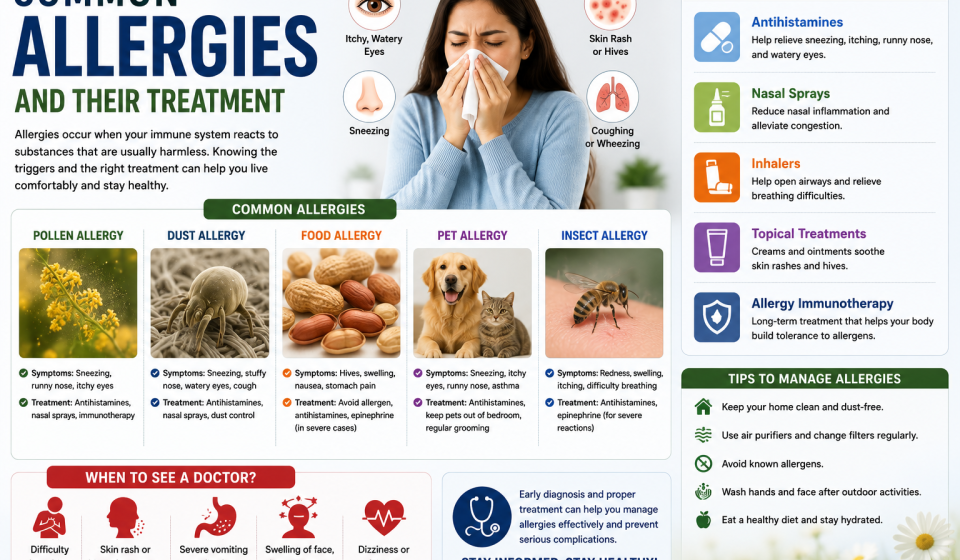
Allergies are among the most common health conditions worldwide, affecting millions of people of all ages. An allergy occurs when the immune system mistakenly identifies a normally harmless substance as a threat and reacts against it. These substances, known as allergens, can include pollen, dust mites, pet dander, certain foods, insect stings, medications, and mold. While some allergic reactions cause mild discomfort, others can be severe and potentially life-threatening. Understanding common allergies and their treatment options is essential for maintaining health, reducing symptoms, and preventing serious complications.Symptoms may range from sneezing and itching to breathing difficulties and anaphylaxis. Fortunately, advances in allergy diagnosis, treatment, and prevention have made it possible for many individuals to successfully manage their symptoms and enjoy a better quality of life. This comprehensive guide explains common allergies, their causes, symptoms, treatment options, and practical prevention strategies.
What Is an Allergy?
An allergy is an exaggerated immune system response to a substance that is generally harmless to most people.
When an allergic individual encounters an allergen, the immune system releases chemicals such as histamine, triggering symptoms that can affect different organs and tissues.
Common allergic reactions include:
- Sneezing
- Runny nose
- Itchy eyes
- Skin rashes
- Swelling
- Breathing difficulties
The severity of reactions varies from person to person.
How Allergies Develop
Allergies develop when the immune system becomes sensitized to a particular allergen.
The process typically involves:
- Initial exposure to an allergen
- Immune system recognition
- Antibody production
- Release of inflammatory chemicals during future exposures
Once sensitization occurs, repeated exposure may trigger allergic symptoms.
Common Types of Allergies
Several different allergens can trigger immune reactions.
Seasonal Allergies (Hay Fever)
Seasonal allergies are among the most common allergic conditions.
They are usually triggered by:
- Tree pollen
- Grass pollen
- Weed pollen
Symptoms include:
- Sneezing
- Nasal congestion
- Runny nose
- Itchy eyes
- Watery eyes
Symptoms often worsen during specific seasons when pollen levels are high.
Dust Mite Allergies
Dust mites are microscopic organisms commonly found in household dust.
Common symptoms include:
- Sneezing
- Nasal congestion
- Coughing
- Itchy eyes
- Asthma symptoms
Dust mite allergies often occur year-round.
Pet Allergies
Proteins found in pet skin cells, saliva, and urine can trigger allergic reactions.
Symptoms may include:
- Sneezing
- Runny nose
- Itchy eyes
- Skin rashes
- Wheezing
Cats and dogs are among the most common pet allergy triggers.
Mold Allergies
Mold spores can become airborne and trigger allergic symptoms.
Common symptoms include:
- Sneezing
- Nasal congestion
- Eye irritation
- Coughing
Mold thrives in damp environments such as bathrooms, basements, and poorly ventilated spaces.
Food Allergies
Food allergies occur when the immune system reacts to specific foods.
Common food allergens include:
- Peanuts
- Tree nuts
- Milk
- Eggs
- Fish
- Shellfish
- Soy
- Wheat
Symptoms may involve:
- Hives
- Swelling
- Nausea
- Vomiting
- Breathing difficulties
Severe food allergies may cause anaphylaxis.
Skin Allergies
Skin allergies often result from contact with allergens or irritants.
Contact Dermatitis
Contact dermatitis occurs when the skin reacts to substances such as:
- Soaps
- Cosmetics
- Metals
- Chemicals
- Plants
Symptoms include:
- Redness
- Itching
- Rash
- Blistering
Eczema (Atopic Dermatitis)
Eczema is a chronic inflammatory skin condition associated with allergies.
Symptoms include:
- Dry skin
- Itching
- Red patches
- Cracked skin
Insect Sting Allergies
Some individuals experience allergic reactions to insect stings.
Common triggers include:
- Bees
- Wasps
- Hornets
- Fire ants
Symptoms may range from localized swelling to severe anaphylaxis.
Medication Allergies
Certain medications can trigger allergic reactions.
Common examples include:
- Penicillin
- Antibiotics
- Aspirin
- Anti-inflammatory drugs
Symptoms may include:
- Rash
- Hives
- Swelling
- Difficulty breathing
Medical evaluation is essential for suspected medication allergies.
Latex Allergies
Latex allergies result from sensitivity to natural rubber latex.
Common sources include:
- Medical gloves
- Balloons
- Certain medical devices
Symptoms may range from skin irritation to severe allergic reactions.
Understanding Anaphylaxis
Anaphylaxis is a severe and potentially life-threatening allergic reaction.
Symptoms may include:
- Difficulty breathing
- Swelling of the throat
- Rapid heartbeat
- Dizziness
- Loss of consciousness
- Severe hives
Anaphylaxis requires immediate emergency medical treatment.
Risk Factors for Allergies
Several factors increase allergy risk.
Family History
Allergies often run in families.
Asthma
People with asthma frequently experience allergic conditions.
Environmental Exposure
Repeated exposure to allergens may increase sensitization.
Age
Many allergies develop during childhood, although adults can also develop allergies.
How Allergies Are Diagnosed
Healthcare providers use various methods to diagnose allergies.
Medical History
Doctors review symptoms, triggers, and family history.
Physical Examination
A physical exam helps identify signs of allergic disease.
Skin Prick Testing
Small amounts of allergens are introduced into the skin to evaluate reactions.
Blood Tests
Blood tests can measure allergy-related antibodies.
Elimination Diets
For suspected food allergies, temporary removal of foods may help identify triggers.
Treatment Options for Allergies
Treatment depends on the type and severity of the allergy.
Avoiding Allergens
Avoidance remains one of the most effective management strategies.
Examples include:
- Keeping windows closed during high pollen seasons
- Using air purifiers
- Avoiding trigger foods
- Reducing dust exposure
Antihistamines
Antihistamines block histamine and help relieve:
- Sneezing
- Itching
- Runny nose
- Hives
Nasal Sprays
Prescription and over-the-counter nasal sprays may reduce inflammation and congestion.
Decongestants
Decongestants can temporarily relieve nasal blockage.
Eye Drops
Allergy eye drops help reduce itching and irritation.
Allergy Immunotherapy
Immunotherapy gradually exposes the immune system to allergens over time.
Options include:
- Allergy shots
- Sublingual tablets
Immunotherapy may reduce symptom severity and improve long-term control.
Emergency Treatment for Severe Allergies
Individuals at risk for anaphylaxis may require emergency medications prescribed by healthcare professionals.
Prompt emergency medical attention is critical for severe allergic reactions.
Preventing Allergic Reactions
Several preventive strategies can reduce allergy symptoms.
Maintain a Clean Environment
Regular cleaning helps reduce allergen exposure.
Monitor Pollen Levels
Checking local pollen forecasts can help individuals plan outdoor activities.
Read Food Labels Carefully
People with food allergies should carefully review ingredient labels.
Manage Indoor Humidity
Reducing moisture helps prevent mold growth.
Follow Medical Advice
Consistent treatment and follow-up care improve symptom control.
Living Well with Allergies
Although allergies can be challenging, effective management allows most individuals to maintain a healthy and active lifestyle.
Important steps include:
- Identifying triggers
- Following treatment plans
- Attending regular medical appointments
- Staying informed about allergy management
Education and prevention remain key components of successful allergy control.
Source Links
https://www.aaaai.org
https://www.cdc.gov/allergies
https://www.niaid.nih.gov/diseases-conditions/allergic-diseases
https://www.mayoclinic.org/diseases-conditions/allergies
Conclusion
Allergies are common immune system disorders that can affect the respiratory system, skin, digestive system, and overall well-being. From seasonal allergies and food sensitivities to insect sting reactions and medication allergies, allergic conditions vary widely in severity and impact. Understanding common allergy triggers, recognizing symptoms early, and seeking appropriate treatment can greatly improve quality of life and reduce the risk of complications. Through allergen avoidance, medical treatment, lifestyle modifications, and preventive strategies, most individuals can successfully manage their allergies and maintain optimal health. Regular consultation with healthcare professionals ensures accurate diagnosis, personalized treatment, and long-term symptom control.
FAQ
1. What are the most common allergies?
Common allergies include seasonal pollen allergies, dust mite allergies, pet allergies, food allergies, mold allergies, and skin allergies.
2. What causes allergies?
Allergies occur when the immune system mistakenly reacts to harmless substances known as allergens.
3. How are allergies diagnosed?
Doctors may use medical history, physical examinations, skin prick tests, blood tests, and elimination diets to diagnose allergies.
4. What is the best treatment for allergies?
Treatment depends on the allergy type but often includes allergen avoidance, antihistamines, nasal sprays, and immunotherapy.
5. Can allergies be cured?
Most allergies cannot be completely cured, but symptoms can often be effectively managed through treatment and prevention.
6. What is anaphylaxis?
Anaphylaxis is a severe allergic reaction that can cause breathing difficulties, swelling, and life-threatening complications requiring emergency treatment.
7. Can adults develop allergies later in life?
Yes. Allergies can develop at any age, even in individuals who previously had no allergic reactions.
8. How can I reduce allergy symptoms naturally?
Reducing exposure to allergens, maintaining a clean environment, monitoring pollen levels, and following medical recommendations can help minimize symptoms.