
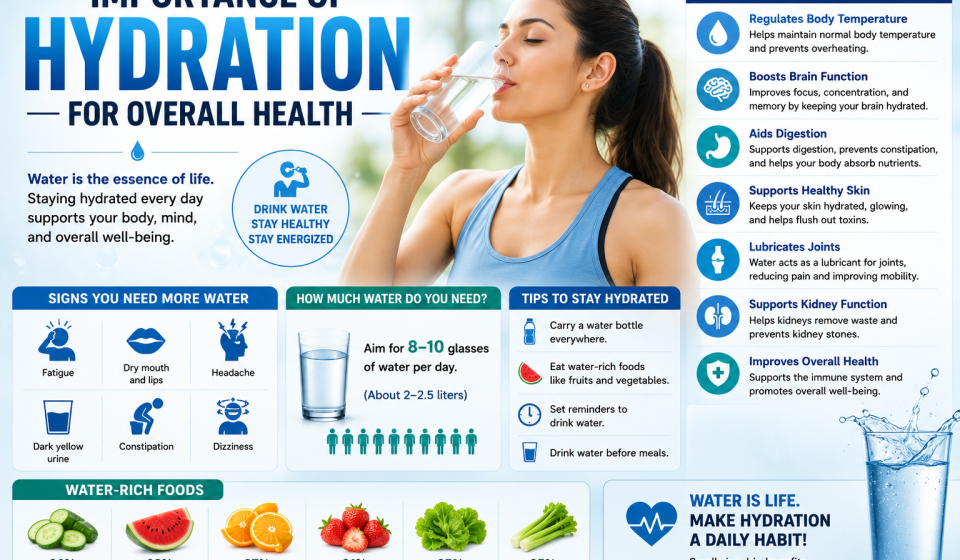
Importance of Hydration for Overall Health: Why Drinking Enough Water Is Essential for a Healthy Life

The human body is composed of approximately 60 percent water, highlighting the essential role hydration plays in supporting biological processes.
Water is one of the most important substances required for human survival and overall well-being. Every cell, tissue, and organ in the body depends on water to function properly. Despite its critical role in maintaining health, hydration is often overlooked in daily life. Many people focus on nutrition, exercise, and sleep while underestimating the importance of drinking enough water. Even mild dehydration can affect energy levels, concentration, mood, and physical performance, making proper hydration a fundamental component of a healthy lifestyle.Water helps regulate body temperature, transport nutrients, remove waste products, lubricate joints, protect organs, and support countless chemical reactions necessary for life. Understanding the importance of hydration and developing healthy drinking habits can significantly improve overall health, prevent dehydration-related complications, and enhance both physical and mental performance. This comprehensive guide explores the many benefits of hydration, the risks of dehydration, daily water requirements, and practical tips for staying properly hydrated.
What Is Hydration?
Hydration refers to maintaining the body’s optimal fluid balance. This balance is achieved when fluid intake matches fluid losses through:
- Sweating
- Urination
- Breathing
- Digestion
The body constantly loses water throughout the day, making regular fluid replacement necessary for maintaining normal physiological functions.
Why Water Is Essential for Life
Water is involved in nearly every process that occurs within the body.
Key functions of water include:
- Regulating body temperature
- Transporting nutrients
- Delivering oxygen to cells
- Supporting digestion
- Eliminating waste products
- Lubricating joints
- Protecting organs
- Maintaining blood volume
- Supporting brain function
Without adequate hydration, these essential functions become impaired.
How Hydration Supports Overall Health
Proper hydration contributes to virtually every aspect of health and wellness.
Supports Cellular Function
Every cell in the body requires water to perform its functions effectively.
Water helps:
- Transport nutrients into cells
- Remove waste products
- Support metabolic reactions
- Maintain cellular structure
Healthy cells depend on proper hydration to function optimally.
Regulates Body Temperature
The body maintains temperature through sweating and evaporation.
When body temperature rises:
- Sweat glands release moisture
- Sweat evaporates from the skin
- Heat is removed from the body
Adequate hydration is essential for effective temperature regulation, particularly during exercise and hot weather.
Hydration and Brain Function
The brain is highly sensitive to changes in hydration status.
Even mild dehydration may affect:
- Concentration
- Memory
- Alertness
- Mood
- Cognitive performance
Studies have shown that dehydration can contribute to mental fatigue, headaches, and reduced productivity.
Improves Focus and Concentration
Proper hydration supports efficient communication between brain cells.
People who stay hydrated often experience:
- Better concentration
- Improved attention span
- Enhanced problem-solving abilities
This is particularly important for students and professionals.
Supports Emotional Well-Being
Dehydration may negatively affect mood and increase feelings of:
- Irritability
- Anxiety
- Fatigue
Maintaining hydration can contribute to improved emotional balance and mental wellness.
Hydration and Physical Performance
Water plays a crucial role in physical activity and exercise performance.
Improves Endurance
Proper hydration helps maintain:
- Blood circulation
- Oxygen delivery
- Muscle function
Dehydration can reduce endurance and increase fatigue during exercise.
Supports Muscle Function
Muscles require adequate fluid balance to function efficiently.
Insufficient hydration may lead to:
- Muscle cramps
- Weakness
- Reduced strength
- Slower recovery
Prevents Heat-Related Illness
Hydration is especially important during physical activity in warm environments.
Adequate fluid intake reduces the risk of:
- Heat exhaustion
- Heat cramps
- Heat stroke
Hydration and Heart Health
The cardiovascular system depends on proper fluid balance.
When hydration levels are adequate:
- Blood volume remains stable
- The heart pumps more efficiently
- Circulation improves
Dehydration can force the heart to work harder and may contribute to cardiovascular stress.
Hydration and Digestive Health
Water supports healthy digestion throughout the gastrointestinal system.
Helps Break Down Food
Water assists in the digestion and absorption of nutrients.
It helps:
- Dissolve nutrients
- Facilitate enzyme activity
- Support nutrient transport
Prevents Constipation
Adequate hydration softens stool and promotes regular bowel movements.
Dehydration is a common cause of constipation and digestive discomfort.
Hydration and Kidney Function
The kidneys play a vital role in filtering waste products from the blood.
Water supports kidney function by:
- Facilitating waste removal
- Maintaining urine production
- Reducing kidney stone risk
Chronic dehydration may increase the likelihood of kidney-related problems.
Hydration and Skin Health
Healthy hydration contributes to skin appearance and function.
Benefits may include:
- Improved skin elasticity
- Better moisture balance
- Reduced dryness
- Healthier complexion
While hydration alone is not a cure for skin conditions, it supports overall skin health.
Hydration and Joint Health
Joints contain fluid that helps reduce friction and support movement.
Adequate hydration:
- Lubricates joints
- Supports cartilage health
- Reduces joint discomfort
Proper fluid intake contributes to mobility and physical comfort.
Hydration and Weight Management
Water may assist with healthy weight management.
Potential benefits include:
- Increased feelings of fullness
- Reduced calorie intake
- Support for metabolic processes
Replacing sugary beverages with water can significantly reduce overall calorie consumption.
Signs and Symptoms of Dehydration
Recognizing dehydration early is important for preventing complications.
Common symptoms include:
- Thirst
- Dry mouth
- Fatigue
- Headache
- Dizziness
- Dark urine
- Reduced urine output
- Difficulty concentrating
Severe dehydration may require medical attention.
Causes of Dehydration
Dehydration occurs when fluid losses exceed fluid intake.
Common causes include:
- Inadequate water consumption
- Excessive sweating
- Fever
- Diarrhea
- Vomiting
- Intense exercise
- Hot weather
- Certain medications
Understanding risk factors helps individuals take preventive measures.
Who Is Most at Risk of Dehydration?
Certain groups are more vulnerable to dehydration.
These include:
Older Adults
Aging may reduce thirst sensation and fluid intake.
Infants and Young Children
Children lose fluids more rapidly and may become dehydrated quickly.
Athletes
Physical activity increases fluid loss through sweat.
Individuals with Chronic Illnesses
Certain medical conditions can increase dehydration risk.
How Much Water Should You Drink Daily?
Individual hydration needs vary based on factors such as:
- Age
- Body size
- Activity level
- Climate
- Health status
Many health experts suggest approximately:
- 3.7 liters daily for men
- 2.7 liters daily for women
These recommendations include fluids obtained from beverages and foods.
Best Sources of Hydration
While water remains the best hydration source, fluids can also come from:
- Milk
- Herbal tea
- Soups
- Fruits
- Vegetables
Hydrating foods include:
- Watermelon
- Cucumber
- Oranges
- Strawberries
- Lettuce
These foods contribute to overall fluid intake.
Practical Tips for Staying Hydrated
Developing healthy hydration habits can make adequate fluid intake easier.
Carry a Water Bottle
Keeping water readily available encourages regular drinking.
Set Hydration Reminders
Phone reminders can help maintain consistent intake throughout the day.
Drink Water Before Meals
This habit supports hydration and may help control appetite.
Monitor Urine Color
Light yellow urine often indicates adequate hydration.
Increase Fluids During Exercise
Additional hydration is necessary during physical activity.
Can You Drink Too Much Water?
Although uncommon, excessive water intake can lead to water intoxication or hyponatremia.
Symptoms may include:
- Nausea
- Headache
- Confusion
- Swelling
Most healthy individuals can safely regulate fluid intake by drinking according to thirst and activity needs.
The Long-Term Benefits of Proper Hydration
Consistent hydration supports:
- Better energy levels
- Improved concentration
- Healthier digestion
- Stronger physical performance
- Better kidney function
- Enhanced overall wellness
Small daily hydration habits can contribute to significant long-term health improvements.
Source Links
https://www.cdc.gov/healthy-weight-growth/water-healthy-drinks/index.html
ttps://www.hsph.harvard.edu/nutritionsource/water
https://www.nhs.uk/live-well/eat-well/food-guidelines-and-food-labels/water-drinks-nutrition
https://www.mayoclinic.org/healthy-lifestyle/nutrition-and-healthy-eating/in-depth/water/art-20044256
Conclusion
Hydration is one of the simplest yet most powerful ways to support overall health. Water is essential for regulating body temperature, transporting nutrients, supporting brain function, promoting healthy digestion, protecting organs, and maintaining physical performance. Even mild dehydration can negatively affect energy, concentration, mood, and well-being. By making hydration a daily priority and developing healthy drinking habits, individuals can improve their quality of life, reduce health risks, and support long-term wellness. Whether through water, hydrating foods, or other healthy beverages, maintaining proper hydration remains a cornerstone of a healthy lifestyle.
FAQ
1. Why is hydration important for overall health?
Hydration supports essential bodily functions including temperature regulation, digestion, circulation, brain function, and waste removal.
2. How much water should I drink each day?
Hydration needs vary, but many adults benefit from approximately 2.7 to 3.7 liters of fluids daily, depending on activity levels and environmental conditions.
3. What are the first signs of dehydration?
Common early signs include thirst, dry mouth, fatigue, headache, dark urine, and reduced concentration.
4. Can hydration improve energy levels?
Yes. Proper hydration helps maintain circulation, nutrient delivery, and cellular function, supporting energy production.
5. Does drinking water help with weight loss?
Water may help promote fullness and reduce calorie intake when it replaces sugary beverages.
6. Are coffee and tea hydrating?
Yes. Moderate amounts of coffee and tea contribute to overall fluid intake.
7. Which foods help with hydration?
Water-rich foods such as watermelon, cucumber, oranges, strawberries, and lettuce can support hydration.
8. Can drinking too much water be harmful?
Although rare, excessive water intake can lead to electrolyte imbalances and a condition called hyponatremia.