Best Nutrition Tips for Busy Professionals: A Complete Guide to Healthy Eating and Peak Productivity

Good nutrition is not just about weight management; it plays a critical role in supporting physical health, mental performance, immune function, and overall well-being.
Maintaining a healthy diet can be challenging for busy professionals who spend long hours at work, attend frequent meetings, manage tight deadlines, and juggle personal responsibilities. In today’s fast-paced world, many working individuals rely on convenience foods, skip meals, eat at irregular times, or consume excessive amounts of caffeine and processed snacks. While these habits may seem harmless in the short term, they can negatively affect energy levels, concentration, productivity, and long-term health.A balanced diet provides the nutrients needed to stay focused, maintain energy throughout the day, and reduce the risk of chronic diseases. Fortunately, healthy eating does not have to be complicated or time-consuming. With proper planning and smart food choices, busy professionals can develop sustainable eating habits that support both career success and personal health. This comprehensive guide explores the best nutrition tips for busy professionals and provides practical strategies for maintaining a healthy lifestyle despite a demanding schedule.
Why Nutrition Matters for Busy Professionals
Food serves as the body’s primary source of energy. The quality of nutrition directly influences:
- Energy levels
- Concentration
- Memory
- Mood
- Productivity
- Immune function
- Weight management
Poor eating habits may lead to fatigue, reduced work performance, increased stress, and a higher risk of chronic health conditions.
A healthy diet helps professionals remain energized, focused, and resilient throughout demanding workdays.
Common Nutrition Challenges Faced by Busy Professionals
Many professionals encounter obstacles that make healthy eating difficult.
Common challenges include:
- Lack of time for meal preparation
- Skipping breakfast
- Frequent dining out
- Dependence on fast food
- Long work hours
- Stress-related eating
- Excessive caffeine consumption
- Irregular meal schedules
Recognizing these challenges is the first step toward creating healthier habits.
Start Your Day with a Nutritious Breakfast
Breakfast provides the body with energy after an overnight fast.
Skipping breakfast can contribute to:
- Low energy
- Poor concentration
- Increased hunger later in the day
- Overeating
Healthy breakfast options include:
- Oatmeal with fruit
- Greek yogurt with nuts
- Whole-grain toast with eggs
- Smoothies with protein and vegetables
- Overnight oats
A nutritious breakfast supports productivity and stable energy levels throughout the morning.
Prioritize Protein at Every Meal
Protein helps maintain muscle mass, supports satiety, and stabilizes blood sugar levels.
Healthy protein sources include:
- Eggs
- Fish
- Chicken
- Turkey
- Lean beef
- Beans
- Lentils
- Tofu
- Greek yogurt
Including protein in meals can reduce cravings and improve energy balance.
Never Skip Lunch
Busy work schedules often cause professionals to delay or skip lunch.
Doing so may result in:
- Energy crashes
- Reduced concentration
- Increased afternoon hunger
- Poor food choices later in the day
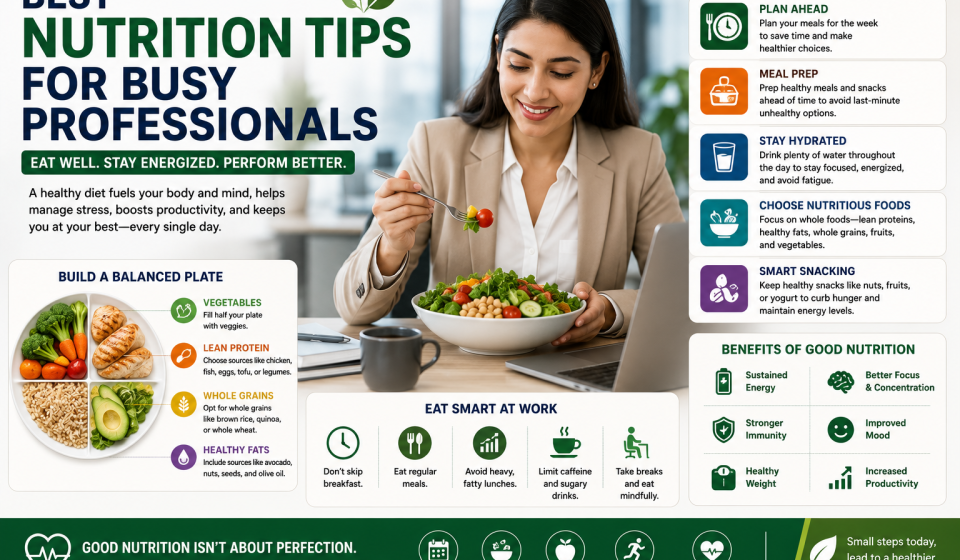
Balanced lunches should include:
- Lean protein
- Whole grains
- Vegetables
- Healthy fats
Examples include:
- Grilled chicken salad
- Brown rice with vegetables
- Whole-grain wraps
- Quinoa bowls
Plan Meals in Advance
Meal planning reduces stress and improves dietary consistency.
Benefits include:
- Better portion control
- Reduced reliance on fast food
- Cost savings
- Improved nutritional quality
Many professionals find success by preparing meals on weekends for the upcoming workweek.
Practice Smart Meal Prepping
Meal preparation saves time and promotes healthier eating habits.
Helpful strategies include:
- Batch cooking proteins
- Chopping vegetables in advance
- Preparing healthy snacks
- Portioning meals into containers
Meal prepping makes nutritious choices more convenient during busy days.
Keep Healthy Snacks Available
Healthy snacks help prevent excessive hunger and support consistent energy levels.
Good snack options include:
- Nuts
- Seeds
- Fresh fruit
- Greek yogurt
- Cottage cheese
- Protein bars
- Hummus with vegetables
Avoid highly processed snacks that are rich in sugar and unhealthy fats.
Stay Hydrated Throughout the Day
Dehydration can negatively affect concentration, mood, and productivity.
Signs of dehydration include:
- Fatigue
- Headaches
- Dizziness
- Difficulty concentrating
Tips for staying hydrated:
- Carry a reusable water bottle
- Set hydration reminders
- Drink water before meals
- Limit sugary beverages
Adequate hydration supports overall health and workplace performance.
Reduce Excessive Caffeine Consumption
Many professionals rely heavily on coffee and energy drinks.
While moderate caffeine intake may improve alertness, excessive consumption can cause:
- Anxiety
- Sleep disturbances
- Increased heart rate
- Dehydration
Aim to consume caffeine in moderation and avoid late-day intake.
Choose Complex Carbohydrates
Carbohydrates provide energy for daily activities.
Healthy complex carbohydrates include:
- Whole grains
- Brown rice
- Oats
- Sweet potatoes
- Quinoa
- Whole-wheat bread
These foods provide sustained energy and help prevent blood sugar fluctuations.
Include Healthy Fats
Healthy fats support brain function and heart health.
Sources include:
- Avocados
- Nuts
- Seeds
- Olive oil
- Fatty fish
Balanced fat intake contributes to satiety and overall wellness.
Avoid Mindless Eating
Many professionals eat while working, attending meetings, or using electronic devices.
Mindless eating can lead to:
- Overeating
- Poor digestion
- Reduced satisfaction
Practicing mindful eating encourages better food choices and portion control.
Learn to Manage Stress Eating
Workplace stress often triggers unhealthy eating behaviors.
Common stress foods include:
- Chips
- Candy
- Fast food
- Sugary beverages
Alternative stress-management techniques include:
- Walking
- Deep breathing
- Meditation
- Stretching
- Physical activity
Addressing stress directly can improve nutritional habits.
Make Healthier Restaurant Choices
Dining out is common among professionals.
Healthier options include:
- Grilled foods
- Salads
- Vegetable-based dishes
- Lean proteins
- Water instead of sugary drinks
Limiting fried foods and oversized portions can significantly improve dietary quality.
Control Portion Sizes
Even healthy foods can contribute to excess calorie intake if consumed in large amounts.
Portion-control strategies include:
- Using smaller plates
- Measuring servings
- Avoiding eating directly from packages
- Paying attention to hunger signals
Balanced portions support weight management goals.
Don’t Ignore Micronutrients
Vitamins and minerals play vital roles in energy production and overall health.
Important nutrients include:
- Iron
- Vitamin D
- Vitamin B12
- Magnesium
- Calcium
Consuming a variety of nutrient-rich foods helps prevent deficiencies.
Improve Workplace Nutrition
Creating a healthy work environment supports better eating habits.
Strategies include:
- Keeping healthy snacks at work
- Bringing homemade meals
- Drinking water regularly
- Avoiding vending machine temptations
Small changes can have a significant impact over time.
Balance Nutrition with Physical Activity
Regular exercise complements healthy eating.
Benefits include:
- Improved energy
- Better mood
- Weight management
- Reduced stress
Even short periods of movement during the workday can be beneficial.
Create Sustainable Habits
Long-term success depends on consistency rather than perfection.
Helpful approaches include:
- Setting realistic goals
- Making gradual improvements
- Tracking progress
- Celebrating small achievements
Sustainable habits are more effective than restrictive diets.
The Connection Between Nutrition and Productivity
Healthy eating supports:
- Mental clarity
- Decision-making
- Memory
- Focus
- Workplace performance
Professionals who maintain balanced nutrition often experience greater productivity and reduced fatigue.
Source Links
https://www.eatright.org
https://www.cdc.gov/nutrition
https://www.hsph.harvard.edu/nutritionsource
https://www.who.int/news-room/fact-sheets/detail/healthy-diet
Conclusion
Busy schedules should not become a barrier to healthy eating. Proper nutrition is essential for maintaining energy, supporting mental performance, improving productivity, and protecting long-term health. By prioritizing balanced meals, planning ahead, choosing nutrient-dense foods, staying hydrated, and managing stress effectively, busy professionals can develop sustainable habits that fit even the most demanding lifestyles. Small daily improvements often lead to significant long-term health benefits. Investing in nutrition is ultimately an investment in career success, personal well-being, and overall quality of life.
FAQ
1. Why is nutrition important for busy professionals?
Proper nutrition supports energy levels, concentration, productivity, immune function, and overall health.
2. What is the best breakfast for busy professionals?
A balanced breakfast containing protein, fiber, and healthy fats such as oatmeal, eggs, or Greek yogurt is an excellent choice.
3. How can I eat healthy with a busy schedule?
Meal planning, meal prepping, keeping healthy snacks available, and making smart food choices can help maintain a healthy diet.
4. What are healthy snacks for office workers?
Nuts, fruit, yogurt, vegetables with hummus, and protein-rich snacks are excellent options.
5. How much water should professionals drink daily?
Hydration needs vary, but many adults benefit from drinking several glasses of water throughout the day and adjusting intake based on activity levels.
6. Can poor nutrition affect work performance?
Yes. Poor dietary habits can reduce energy, concentration, memory, and productivity.
7. Is caffeine bad for busy professionals?
Moderate caffeine consumption is generally safe, but excessive intake may cause anxiety, sleep problems, and dehydration.
8. What is the most important nutrition tip for busy professionals?
Planning meals in advance and consistently choosing balanced, nutrient-rich foods is one of the most effective strategies for maintaining health and productivity.