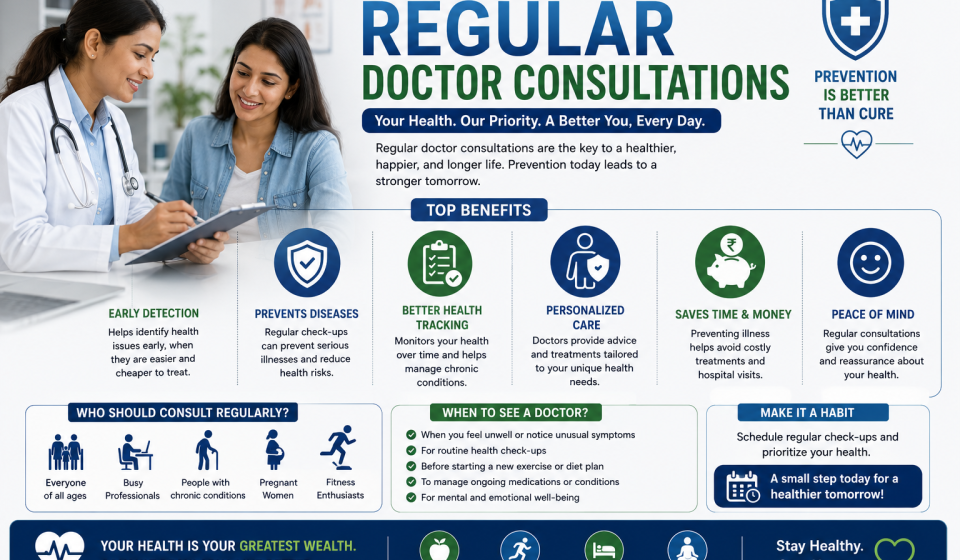
Benefits of Regular Doctor Consultations: Why Routine Medical Checkups Are Essential for Long-Term Health

Regular consultations create opportunities for health screenings, lifestyle counseling, vaccination updates, and chronic disease management.
Maintaining good health requires more than simply seeking medical care when symptoms appear. Many serious health conditions develop gradually and may not show noticeable symptoms until significant damage has already occurred. This is why regular doctor consultations play a critical role in preventive healthcare. Routine medical visits allow healthcare professionals to monitor overall health, identify risk factors, detect diseases early, and provide guidance that supports long-term wellness. Regular consultations can help individuals stay informed about their health status and make proactive decisions that improve quality of life.In today’s busy world, many people postpone doctor visits until they feel unwell. However, preventive healthcare focuses on preventing illness before it becomes serious. Whether you are young, middle-aged, or older, scheduling routine medical appointments can significantly contribute to better health outcomes. This comprehensive guide explores the benefits of regular doctor consultations, their role in disease prevention, recommended checkups, and how routine healthcare visits support overall well-being.
What Are Regular Doctor Consultations?
Regular doctor consultations refer to scheduled medical appointments that occur even when a person is not experiencing obvious symptoms.
These visits may include:
- Annual physical examinations
- Preventive health screenings
- Chronic disease monitoring
- Vaccination reviews
- Lifestyle counseling
- Medication evaluations
The goal is to maintain health, identify concerns early, and reduce the risk of future complications.
Why Preventive Healthcare Matters
Preventive healthcare focuses on avoiding illness rather than treating disease after it develops.
Key goals include:
- Early disease detection
- Risk factor identification
- Health promotion
- Disease prevention
- Improved quality of life
Preventive care often leads to better outcomes and lower healthcare costs over time.
Early Detection of Diseases
One of the most important benefits of regular doctor consultations is the early detection of medical conditions.
Many diseases develop silently, including:
- High blood pressure
- Diabetes
- High cholesterol
- Kidney disease
- Liver disease
- Certain cancers
Early diagnosis often allows for more effective treatment and improved long-term outcomes.
Detecting High Blood Pressure
High blood pressure frequently causes no symptoms.
Regular medical visits help identify elevated blood pressure before it contributes to:
- Heart disease
- Stroke
- Kidney damage
Identifying Diabetes Early
Routine blood testing can detect abnormal blood sugar levels before complications occur.
Early diabetes management helps reduce risks of:
- Vision loss
- Kidney disease
- Nerve damage
- Cardiovascular disease
Monitoring Overall Health
Regular consultations provide a comprehensive assessment of physical health.
Doctors may evaluate:
- Weight
- Blood pressure
- Heart rate
- Respiratory function
- Laboratory results
- Lifestyle habits
Tracking these measurements over time helps identify trends and potential concerns.
Personalized Health Advice
Healthcare professionals can provide individualized recommendations based on personal health needs.
Topics may include:
- Nutrition
- Exercise
- Weight management
- Stress reduction
- Sleep habits
- Smoking cessation
Personalized guidance often improves the effectiveness of health improvement efforts.
Managing Chronic Conditions
Individuals with chronic medical conditions benefit greatly from routine medical follow-up.
Common chronic diseases include:
- Diabetes
- Hypertension
- Asthma
- Heart disease
- Arthritis
- Thyroid disorders
Regular monitoring helps ensure treatment plans remain effective and complications are minimized.
Improved Medication Management
Many people take prescription medications for ongoing health conditions.
Doctor consultations help:
- Review medication effectiveness
- Adjust dosages
- Monitor side effects
- Prevent drug interactions
Safe medication management is an essential component of quality healthcare.
Access to Preventive Screenings
Preventive screenings are an important part of routine medical care.
Common screenings include:
Blood Pressure Screening
Detects hypertension and cardiovascular risk.
Cholesterol Testing
Evaluates heart disease risk factors.
Blood Sugar Testing
Helps identify diabetes and prediabetes.
Cancer Screenings
Depending on age and risk factors, doctors may recommend:
- Breast cancer screening
- Cervical cancer screening
- Colon cancer screening
- Prostate cancer screening
Early detection improves treatment success rates.
Vaccination Updates
Vaccinations protect against infectious diseases throughout life.
Regular doctor visits help ensure immunizations remain current.
Examples include:
- Influenza vaccines
- Tetanus boosters
- Shingles vaccines
- Pneumonia vaccines
- COVID-19 vaccines
Vaccination remains one of the most effective preventive healthcare measures.
Supporting Heart Health
Cardiovascular disease remains a leading cause of death worldwide.
Routine consultations help identify risk factors such as:
- High blood pressure
- High cholesterol
- Obesity
- Smoking
- Diabetes
Early intervention can significantly reduce cardiovascular risks.
Improving Mental Health Awareness
Mental health is a critical component of overall wellness.
Doctor consultations create opportunities to discuss:
- Stress
- Anxiety
- Depression
- Sleep disturbances
- Emotional well-being
Early support can improve mental health outcomes and quality of life.
Encouraging Healthy Lifestyle Habits
Healthcare professionals often play an important role in motivating healthy behavior changes.
Topics frequently discussed include:
- Healthy eating
- Physical activity
- Weight control
- Alcohol consumption
- Tobacco use
Small lifestyle improvements can have significant long-term benefits.
Building a Strong Doctor-Patient Relationship
Regular consultations help establish trust between patients and healthcare providers.
Benefits include:
- Better communication
- Increased comfort discussing health concerns
- Improved treatment adherence
- More personalized care
Strong healthcare relationships often lead to better outcomes.
Detecting Silent Health Problems
Many serious conditions progress without obvious symptoms.
Examples include:
- Osteoporosis
- Kidney disease
- High cholesterol
- Certain cancers
Routine medical evaluations can identify these conditions before complications develop.
Monitoring Family Health Risks
Family history plays an important role in disease risk.
Doctors may assess risks for:
- Heart disease
- Diabetes
- Cancer
- Genetic disorders
This information helps guide preventive strategies and screening recommendations.
Benefits for Older Adults
Regular medical consultations become increasingly important with age.
Older adults may benefit from:
- Fall prevention assessments
- Medication reviews
- Cognitive evaluations
- Bone health monitoring
- Chronic disease management
Preventive care helps maintain independence and quality of life.
Benefits for Children and Adolescents
Routine pediatric visits support healthy growth and development.
Healthcare providers monitor:
- Growth milestones
- Vaccinations
- Nutrition
- Behavioral health
- Developmental progress
Early intervention can address concerns before they become significant problems.
How Often Should You See a Doctor?
The frequency of consultations depends on:
- Age
- Health status
- Medical history
- Existing conditions
- Risk factors
Many healthy adults benefit from annual wellness examinations, while individuals with chronic illnesses may require more frequent visits.
Overcoming Common Barriers to Medical Care
Some individuals avoid doctor visits due to:
- Busy schedules
- Fear of diagnoses
- Financial concerns
- Lack of symptoms
Understanding the value of preventive care can help overcome these barriers and encourage proactive healthcare management.
The Economic Benefits of Preventive Healthcare
Regular doctor consultations may reduce long-term healthcare expenses by:
- Preventing disease progression
- Reducing hospitalizations
- Avoiding costly complications
- Supporting early treatment
Investing in preventive care often results in substantial long-term savings.
Source Links
https://www.cdc.gov/prevention
https://www.who.int/health-topics/primary-health-care
https://www.mayoclinic.org/healthy-lifestyle/adult-health
https://medlineplus.gov/healthcheckup.html
Conclusion
Regular doctor consultations are one of the most effective tools for maintaining health and preventing disease. These routine visits provide opportunities for early detection, preventive screenings, chronic disease management, vaccination updates, and personalized health guidance. By monitoring important health indicators and addressing potential concerns before they become serious, healthcare professionals help individuals achieve better long-term outcomes. Whether you are managing an existing condition or simply striving to stay healthy, regular medical consultations are a valuable investment in your overall well-being. Prioritizing preventive healthcare today can lead to a healthier, more active, and more fulfilling future.
FAQ
1. Why are regular doctor consultations important?
Regular consultations help detect diseases early, monitor health, provide preventive care, and support long-term wellness.
2. How often should healthy adults visit a doctor?
Many healthy adults benefit from an annual wellness examination, although recommendations may vary based on individual needs.
3. What happens during a routine medical checkup?
Doctors may review medical history, perform a physical examination, assess vital signs, order screenings, and provide health advice.
4. Can regular doctor visits prevent disease?
They can help identify risk factors early and support preventive measures that reduce disease risk.
5. Are doctor consultations important even if I feel healthy?
Yes. Many serious health conditions develop without symptoms and can be detected through routine evaluations.
6. What screenings are commonly performed during regular checkups?
Common screenings include blood pressure measurements, cholesterol testing, blood sugar testing, and age-appropriate cancer screenings.
7. How do doctor consultations help manage chronic diseases?
Regular visits allow healthcare providers to monitor conditions, adjust treatments, and reduce complications.
8. Do regular doctor visits improve life expectancy?
Preventive healthcare and early disease detection can contribute to better health outcomes and potentially longer life expectancy.