
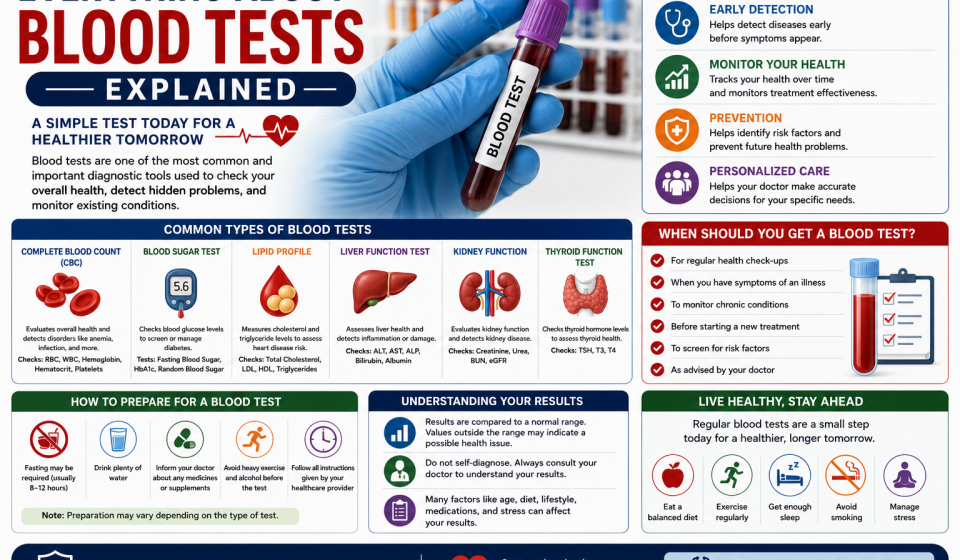
Everything About Blood Tests Explained: A Complete Guide to Understanding Your Health Through Blood Work

Many people receive blood test results but struggle to understand what the numbers actually mean. Terms such as CBC, lipid profile, liver function test, kidney function test, and glucose levels can seem confusing without proper explanation.
Blood tests are among the most common and valuable tools used in modern healthcare. From routine health checkups to diagnosing serious medical conditions, blood tests provide healthcare professionals with critical information about how the body is functioning. A simple blood sample can reveal important details about organ health, nutritional status, immune function, hormone levels, blood sugar control, cholesterol levels, and much more. Because many diseases develop silently without obvious symptoms, blood testing often plays a crucial role in early detection and prevention.Understanding the purpose of different blood tests can help individuals become more informed about their health and actively participate in healthcare decisions. This comprehensive guide explains everything about blood tests, including how they work, common types, preparation requirements, result interpretation, benefits, limitations, and frequently asked questions.
What Are Blood Tests?
Blood tests are laboratory examinations performed on a blood sample to evaluate various aspects of health. They help healthcare providers:
- Detect diseases
- Monitor chronic conditions
- Evaluate organ function
- Identify infections
- Assess nutritional deficiencies
- Monitor treatment effectiveness
- Screen for risk factors
Blood tests are commonly ordered during routine physical examinations and when symptoms suggest an underlying medical issue.
Why Are Blood Tests Important?
Blood circulates throughout the body and carries oxygen, nutrients, hormones, and waste products. Because blood interacts with every organ system, it can provide valuable clues about overall health.
Blood tests help:
- Identify diseases early
- Monitor ongoing medical conditions
- Detect infections
- Evaluate medication effects
- Assess risk factors for chronic diseases
- Support preventive healthcare
Early detection often leads to more successful treatment outcomes.
How Blood Tests Are Performed
Most blood tests involve drawing blood from a vein in the arm.
The procedure usually includes:
- Cleaning the skin
- Applying a tourniquet
- Inserting a sterile needle
- Collecting blood into tubes
- Removing the needle
- Applying pressure and a bandage
The process typically takes only a few minutes and is generally safe and well tolerated.
Common Types of Blood Tests
Healthcare providers order different blood tests depending on the patient’s symptoms, medical history, and health goals.
Complete Blood Count (CBC)
A CBC is one of the most frequently ordered blood tests.
It evaluates:
- Red blood cells
- White blood cells
- Hemoglobin
- Hematocrit
- Platelets
A CBC helps diagnose:
- Anemia
- Infections
- Blood disorders
- Inflammation
Lipid Profile
A lipid profile measures fats in the blood.
It typically includes:
- Total cholesterol
- LDL cholesterol
- HDL cholesterol
- Triglycerides
This test helps assess cardiovascular disease risk.
Blood Glucose Test
Blood glucose testing measures blood sugar levels.
It helps diagnose and monitor:
- Prediabetes
- Type 1 diabetes
- Type 2 diabetes
Common glucose-related tests include:
- Fasting blood sugar
- Random blood sugar
- Oral glucose tolerance test
Hemoglobin A1C Test
A1C testing measures average blood sugar levels over the previous two to three months.
It is commonly used to:
- Diagnose diabetes
- Monitor diabetes management
- Assess long-term glucose control
Liver Function Tests (LFTs)
The liver performs many critical functions within the body.
Liver function tests commonly measure:
- ALT
- AST
- ALP
- Bilirubin
- Albumin
Abnormal results may indicate:
- Hepatitis
- Fatty liver disease
- Cirrhosis
- Liver injury
Kidney Function Tests
Kidneys filter waste products from the blood.
Important kidney tests include:
- Creatinine
- Blood Urea Nitrogen (BUN)
- Estimated Glomerular Filtration Rate (eGFR)
These tests help identify:
- Kidney disease
- Kidney failure
- Dehydration
Thyroid Function Tests
The thyroid gland regulates metabolism.
Common thyroid tests include:
- TSH
- T3
- T4
These tests help diagnose:
- Hypothyroidism
- Hyperthyroidism
- Thyroid disorders
Electrolyte Tests
Electrolytes help regulate fluid balance, nerve function, and muscle activity.
Common electrolytes include:
- Sodium
- Potassium
- Chloride
- Bicarbonate
- Calcium
Abnormal levels may indicate dehydration, kidney disease, or hormonal disorders.
Inflammatory Marker Tests
Inflammation is associated with numerous diseases.
Common inflammatory tests include:
C-Reactive Protein (CRP)
CRP levels increase during inflammation and infection.
Erythrocyte Sedimentation Rate (ESR)
ESR helps detect inflammation in the body.
These tests may assist in diagnosing autoimmune diseases and infections.
Vitamin and Mineral Testing
Blood tests can evaluate nutritional status.
Common tests include:
- Vitamin D
- Vitamin B12
- Iron
- Ferritin
- Folate
- Magnesium
Deficiencies may cause fatigue, weakness, and various health problems.
Hormone Blood Tests
Hormones regulate many body functions.
Hormone tests may evaluate:
- Testosterone
- Estrogen
- Progesterone
- Cortisol
- Insulin
These tests help identify hormonal imbalances.
Blood Tests for Heart Health
Several blood tests help assess cardiovascular risk.
Cholesterol Testing
Measures various blood fats linked to heart disease.
High-Sensitivity CRP
Assesses inflammation associated with cardiovascular disease.
Cardiac Troponin
Used to diagnose heart attacks.
Blood Tests for Infections
Blood tests can identify viral, bacterial, fungal, and parasitic infections.
Examples include:
- HIV testing
- Hepatitis screening
- Blood cultures
- COVID-19 antibody testing
Early diagnosis supports timely treatment.
Blood Tests for Cancer Detection
Certain blood tests may assist in cancer screening and monitoring.
Examples include:
- PSA for prostate cancer
- CA-125 for ovarian cancer
- CEA tumor marker
Blood tests alone rarely confirm cancer but may support diagnosis.
Fasting vs Non-Fasting Blood Tests
Some blood tests require fasting before sample collection.
Common fasting tests include:
- Lipid profile
- Fasting glucose
- Certain metabolic tests
Fasting usually involves avoiding food for 8 to 12 hours while drinking water remains allowed.
Always follow your healthcare provider’s instructions.
Understanding Blood Test Results
Laboratory reports typically include:
- Test name
- Result value
- Reference range
- Units of measurement
Reference ranges represent expected values for healthy individuals.
Results outside the normal range do not automatically indicate disease. Interpretation depends on:
- Age
- Sex
- Medical history
- Symptoms
- Other test findings
Healthcare professionals should evaluate blood test results within the broader clinical context.
Factors That Can Affect Blood Test Results
Several factors may influence laboratory values.
These include:
- Recent meals
- Dehydration
- Medications
- Exercise
- Stress
- Smoking
- Alcohol consumption
- Pregnancy
Providing accurate medical information improves result interpretation.
Benefits of Regular Blood Testing
Routine blood tests offer numerous advantages.
Early Disease Detection
Many conditions can be identified before symptoms appear.
Better Disease Management
Blood tests help monitor treatment effectiveness.
Preventive Healthcare
Regular screening helps identify risk factors for future illness.
Personalized Health Decisions
Test results provide valuable information for individualized healthcare planning.
Risks of Blood Tests
Blood tests are generally safe.
Minor risks may include:
- Bruising
- Temporary discomfort
- Dizziness
- Rare infection at the needle site
Serious complications are uncommon.
How Often Should You Get Blood Tests?
Testing frequency depends on individual health needs.
Generally:
- Healthy adults may benefit from annual screening
- People with chronic diseases may require more frequent monitoring
- Older adults often need additional evaluations
Healthcare providers can recommend appropriate testing schedules.
Source Links
https://medlineplus.gov/lab-tests
https://www.cdc.gov
https://www.nhs.uk/conditions/blood-tests
https://www.mayoclinic.org/tests-procedures
Conclusion
Blood tests are among the most powerful tools available for evaluating health, detecting disease, and monitoring treatment progress. They provide valuable information about organ function, blood cells, hormones, nutritional status, infections, and chronic disease risk factors. Understanding the purpose and meaning of common blood tests empowers individuals to take a more active role in their healthcare journey. While laboratory results can sometimes seem confusing, regular communication with healthcare professionals ensures accurate interpretation and appropriate medical decisions. Routine blood testing remains an essential component of preventive healthcare and long-term wellness management.
FAQ
1. What is the most common blood test?
The Complete Blood Count (CBC) is one of the most commonly ordered blood tests and evaluates red blood cells, white blood cells, hemoglobin, and platelets.
2. Do all blood tests require fasting?
No. Only certain tests such as fasting glucose and some cholesterol tests require fasting beforehand.
3. What can blood tests detect?
Blood tests can detect infections, diabetes, anemia, kidney disease, liver disease, nutritional deficiencies, hormone imbalances, and many other health conditions.
4. How long does it take to get blood test results?
Some results are available within hours, while specialized tests may take several days.
5. Can blood tests detect cancer?
Some blood tests can help identify markers associated with cancer, but additional testing is usually needed for confirmation.
6. Why are blood tests important during routine checkups?
They help detect hidden health problems early, even before symptoms develop.
7. What should I do if my blood test results are abnormal?
Discuss the results with your healthcare provider, who can interpret them based on your medical history and symptoms.
8. How often should adults have blood tests?
Many adults benefit from annual blood testing, although frequency depends on age, health status, and risk factors.