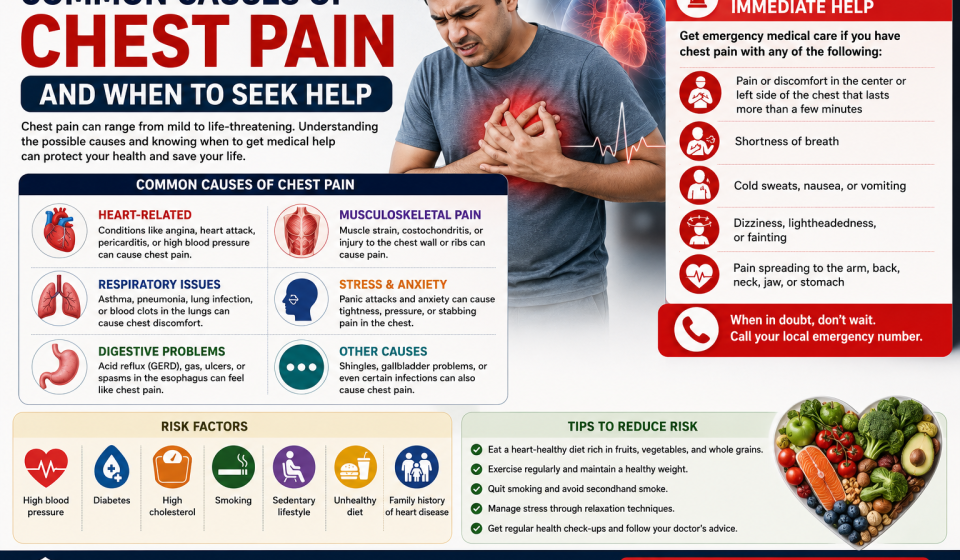

Many people automatically associate chest pain with heart disease, but not all chest pain originates from the heart. The pain may arise from the lungs, digestive system, muscles, bones, nerves, or even psychological conditions such as anxiety.
Chest pain is one of the most common reasons people seek emergency medical care. While chest pain can sometimes result from minor issues such as muscle strain or indigestion, it may also signal a serious medical emergency such as a heart attack, pulmonary embolism, or other life-threatening condition. Because chest pain can have many different causes, understanding its symptoms and knowing when to seek medical help is crucial for protecting your health and potentially saving your life. Identifying the possible causes and recognizing warning signs that require immediate medical attention can help ensure timely diagnosis and treatment. This article explores the common causes of chest pain, associated symptoms, risk factors, diagnosis, treatment options, and situations where emergency care is necessary.
Understanding Chest Pain
Chest pain refers to discomfort, pressure, tightness, burning, aching, or sharp pain occurring anywhere in the chest area. It may last for a few seconds, several minutes, or even longer and can range from mild to severe.
Chest pain may be felt:
- In the center of the chest
- On the left side of the chest
- On the right side of the chest
- Under the breastbone
- Radiating to the shoulders, neck, jaw, back, or arms
The location and characteristics of chest pain often provide clues about its underlying cause.
Heart-Related Causes of Chest Pain
Heart-related chest pain should always be taken seriously because it may indicate a potentially life-threatening condition.
Heart Attack
A heart attack occurs when blood flow to part of the heart muscle becomes blocked.
Common symptoms include:
- Pressure or squeezing sensation in the chest
- Pain spreading to the jaw, neck, shoulder, or arm
- Shortness of breath
- Nausea
- Sweating
- Dizziness
- Fatigue
Heart attack symptoms can vary between individuals and may be more subtle in women, older adults, and people with diabetes.
Angina
Angina occurs when the heart muscle does not receive enough oxygen-rich blood.
Symptoms may include:
- Chest pressure
- Tightness
- Burning sensation
- Pain during physical activity
- Relief with rest
Angina is often a warning sign of underlying coronary artery disease.
Pericarditis
Pericarditis is inflammation of the sac surrounding the heart.
Symptoms include:
- Sharp chest pain
- Pain worsening when lying down
- Pain improving when sitting forward
- Fever
- Fatigue
Myocarditis
Myocarditis involves inflammation of the heart muscle.
Possible symptoms include:
- Chest pain
- Shortness of breath
- Fatigue
- Irregular heartbeat
- Fever
Aortic Dissection
Aortic dissection is a medical emergency involving a tear in the aorta.
Symptoms include:
- Sudden severe chest pain
- Tearing sensation in the chest
- Back pain
- Loss of consciousness
- Weakness
Immediate emergency treatment is essential.
Lung-Related Causes of Chest Pain
Several respiratory conditions can cause chest discomfort.
Pulmonary Embolism
A pulmonary embolism occurs when a blood clot blocks an artery in the lungs.
Symptoms include:
- Sudden chest pain
- Shortness of breath
- Rapid heartbeat
- Coughing
- Coughing up blood
This condition requires immediate medical attention.
Pneumonia
Pneumonia is an infection affecting the lungs.
Symptoms may include:
- Chest pain during breathing
- Fever
- Cough
- Chills
- Fatigue
Pleurisy
Pleurisy occurs when the lining around the lungs becomes inflamed.
Symptoms include:
- Sharp chest pain
- Pain worsening with deep breaths
- Cough
- Shortness of breath
Pneumothorax
A collapsed lung can cause sudden chest pain and breathing difficulties.
Symptoms include:
- Sudden sharp chest pain
- Rapid breathing
- Shortness of breath
Emergency treatment may be required.
Digestive Causes of Chest Pain
The digestive system can frequently produce symptoms that mimic heart-related chest pain.
Acid Reflux (GERD)
Gastroesophageal reflux disease occurs when stomach acid flows back into the esophagus.
Symptoms include:
- Burning chest pain
- Sour taste in the mouth
- Difficulty swallowing
- Symptoms worsening after meals
Esophageal Spasms
Abnormal contractions of the esophagus can cause intense chest pain.
Symptoms often resemble heart attack symptoms and may require evaluation.
Gallbladder Disease
Gallstones and gallbladder inflammation may cause pain that radiates into the chest.
Additional symptoms include:
- Upper abdominal pain
- Nausea
- Vomiting
Peptic Ulcers
Ulcers in the stomach or upper intestine can sometimes cause chest discomfort.
Symptoms include:
- Burning pain
- Bloating
- Indigestion
- Nausea
Musculoskeletal Causes of Chest Pain
Problems involving muscles, bones, and joints often contribute to chest pain.
Muscle Strain
Heavy lifting, exercise, or injury can strain chest muscles.
Symptoms include:
- Localized pain
- Tenderness
- Pain worsening with movement
Costochondritis
Costochondritis involves inflammation of cartilage connecting ribs to the breastbone.
Symptoms include:
- Sharp chest pain
- Tenderness when pressing the chest
- Pain worsening with movement
Rib Injuries
Broken or bruised ribs can cause severe chest pain.
Symptoms include:
- Pain with breathing
- Tenderness
- Swelling
Anxiety and Stress-Related Chest Pain
Mental health conditions can trigger chest pain that feels similar to cardiac pain.
Panic Attacks
Panic attacks often cause:
- Chest tightness
- Rapid heartbeat
- Sweating
- Shortness of breath
- Dizziness
Although panic attacks are not usually life-threatening, they should be evaluated if symptoms are new or severe.
Chronic Stress
Long-term stress can contribute to:
- Muscle tension
- Elevated blood pressure
- Increased heart rate
- Chest discomfort
Managing stress is important for overall health.
Symptoms That Require Immediate Medical Attention
Seek emergency care immediately if chest pain is accompanied by:
- Shortness of breath
- Pain spreading to the arm, neck, jaw, or back
- Severe sweating
- Dizziness
- Fainting
- Nausea or vomiting
- Rapid or irregular heartbeat
- Blue lips or skin
- Coughing up blood
- Sudden severe pain
These symptoms may indicate a serious medical emergency.
Risk Factors for Serious Chest Pain
Several factors increase the likelihood of dangerous causes of chest pain.
Smoking
Smoking damages blood vessels and increases heart disease risk.
High Blood Pressure
Hypertension contributes to cardiovascular complications.
High Cholesterol
Elevated cholesterol increases plaque buildup in arteries.
Diabetes
People with diabetes have a higher risk of heart disease.
Obesity
Excess weight places additional strain on the heart and lungs.
Family History
A family history of cardiovascular disease increases risk.
Physical Inactivity
Sedentary lifestyles contribute to poor heart health.
How Doctors Diagnose Chest Pain
Healthcare providers use several tools to identify the cause of chest pain.
Medical History
Doctors assess symptoms, risk factors, and family history.
Physical Examination
A physical exam helps identify signs of heart, lung, or musculoskeletal problems.
Electrocardiogram (ECG)
An ECG evaluates heart rhythm and detects signs of heart attacks.
Blood Tests
Blood tests may identify heart muscle damage and infections.
Chest X-Ray
Chest imaging helps evaluate the lungs, heart, and chest structures.
CT Scan
CT scans provide detailed images of blood vessels and internal organs.
Stress Testing
Stress tests assess heart function during physical activity.
Treatment for Chest Pain
Treatment depends on the underlying cause.
Possible treatments include:
- Medications
- Lifestyle modifications
- Physical therapy
- Antibiotics
- Acid-reducing medications
- Blood thinners
- Surgical procedures
Prompt diagnosis helps ensure appropriate treatment.
Preventing Chest Pain
While not all causes can be prevented, healthy habits reduce the risk of serious conditions.
Eat a Heart-Healthy Diet
Choose:
- Fruits
- Vegetables
- Whole grains
- Lean proteins
Exercise Regularly
Physical activity supports cardiovascular and respiratory health.
Avoid Smoking
Quitting smoking significantly lowers heart and lung disease risk.
Manage Stress
Relaxation techniques can reduce anxiety-related chest pain.
Attend Regular Health Checkups
Routine screenings help identify risk factors early.
Source Links
https://www.heart.org
https://www.nhlbi.nih.gov
https://www.mayoclinic.org
https://medlineplus.gov/chestpain.html
Conclusion
Chest pain can result from a wide variety of conditions ranging from minor muscle strain and acid reflux to life-threatening emergencies such as heart attacks and pulmonary embolisms. Because chest pain symptoms often overlap, it is important not to ignore persistent, severe, or unexplained discomfort. Understanding the common causes, recognizing warning signs, and seeking prompt medical attention when necessary can greatly improve outcomes. Maintaining a healthy lifestyle, managing risk factors, and staying informed about cardiovascular and respiratory health are essential steps toward reducing the risk of serious chest pain-related conditions and protecting overall well-being.
FAQ
1. What is the most common cause of chest pain?
Chest pain can result from heart disease, acid reflux, muscle strain, anxiety, lung conditions, and several other medical issues.
2. When should I go to the emergency room for chest pain?
Seek emergency care if chest pain is accompanied by shortness of breath, sweating, dizziness, fainting, or pain spreading to the arm, neck, jaw, or back.
3. Can anxiety cause chest pain?
Yes. Anxiety and panic attacks can cause chest tightness, rapid heartbeat, and discomfort that may resemble heart-related chest pain.
4. Is all chest pain related to the heart?
No. Chest pain can originate from the digestive system, lungs, muscles, bones, nerves, or psychological conditions.
5. Can acid reflux cause chest pain?
Yes. Acid reflux often causes a burning sensation in the chest that can sometimes mimic heart pain.
6. What does heart attack chest pain feel like?
Many people describe it as pressure, squeezing, heaviness, or tightness in the chest that may spread to other areas.
7. Can chest pain go away on its own?
Some minor causes may resolve without treatment, but recurring or severe chest pain should always be evaluated by a healthcare professional.
8. How can I reduce my risk of serious chest pain?
Maintain a healthy weight, exercise regularly, avoid smoking, manage stress, control blood pressure and cholesterol, and attend routine medical checkups.