The Hidden Damage of Smoking: How Smoking Affects Your Heart and Lungs and Why Quitting Matters

Understanding how smoking affects your heart and lungs is essential for making informed health decisions. Whether you are a current smoker, a former smoker, or someone exposed to secondhand smoke, knowing the long-term consequences can motivate healthier lifestyle choices.
Smoking remains one of the leading causes of preventable diseases and deaths worldwide. Despite increased awareness about its dangers, millions of people continue to smoke cigarettes, cigars, and other tobacco products. Tobacco smoke contains thousands of chemicals, many of which are toxic and harmful to nearly every organ in the body. Among the organs most severely affected are the heart and lungs. Smoking not only damages lung tissue but also places tremendous stress on the cardiovascular system, significantly increasing the risk of serious health conditions.In this comprehensive guide, we will explore the effects of smoking on the respiratory and cardiovascular systems, the diseases it can cause, warning signs to watch for, and the benefits of quitting smoking.
What Happens When You Smoke?
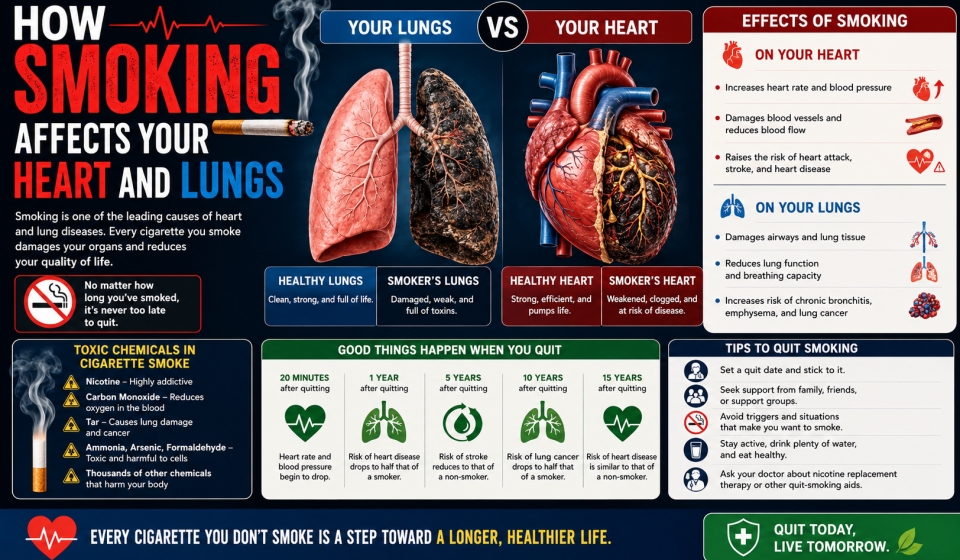
Every time a person inhales cigarette smoke, thousands of chemicals enter the body through the lungs. These chemicals quickly pass into the bloodstream and travel throughout the body. Some of the most harmful substances found in tobacco smoke include:
- Nicotine
- Carbon monoxide
- Tar
- Formaldehyde
- Ammonia
- Benzene
- Arsenic
- Hydrogen cyanide
These substances damage tissues, reduce oxygen delivery, increase inflammation, and contribute to chronic disease development.
How Smoking Affects the Lungs
The lungs are directly exposed to tobacco smoke, making them one of the most vulnerable organs in the body.
Damage to Air Passages
Healthy lungs contain airways that allow oxygen to enter and carbon dioxide to leave the body. Smoking irritates and inflames these airways, causing swelling and narrowing that make breathing more difficult.
Repeated exposure to smoke can permanently damage airway structures and reduce lung function over time.
Destruction of Lung Tissue
Inside the lungs are tiny air sacs called alveoli. These structures are responsible for exchanging oxygen and carbon dioxide. Smoking damages and destroys alveoli, reducing the lungs’ ability to supply oxygen to the bloodstream.
Once alveoli are destroyed, they cannot regenerate, making the damage permanent.
Increased Mucus Production
Smoking stimulates excessive mucus production in the lungs. Thick mucus can clog airways and create an environment where bacteria and viruses thrive.
As a result, smokers often experience:
- Persistent coughing
- Frequent throat clearing
- Increased respiratory infections
- Shortness of breath
Damage to Cilia
Tiny hair-like structures called cilia line the airways and help remove toxins, dust, and mucus from the lungs.
Smoking paralyzes and destroys cilia, reducing the lungs’ natural cleaning mechanism. This allows harmful substances to remain trapped inside the respiratory system.
Smoking and Chronic Obstructive Pulmonary Disease (COPD)
COPD is one of the most common smoking-related lung diseases.
COPD includes:
- Chronic bronchitis
- Emphysema
Chronic Bronchitis
Chronic bronchitis occurs when the airways become inflamed and produce excessive mucus.
Symptoms include:
- Persistent cough
- Excess mucus
- Wheezing
- Chest discomfort
- Shortness of breath
Emphysema
Emphysema develops when smoking destroys alveoli and reduces lung elasticity.
Symptoms include:
- Difficulty breathing
- Reduced exercise tolerance
- Chronic fatigue
- Severe shortness of breath
COPD is progressive and often worsens over time if smoking continues.
Smoking and Lung Cancer
Smoking is the leading cause of lung cancer worldwide.
Tobacco smoke contains numerous cancer-causing chemicals that damage DNA within lung cells. Over time, these genetic changes can trigger uncontrolled cell growth and tumor formation.
Common symptoms of lung cancer include:
- Persistent cough
- Coughing up blood
- Chest pain
- Hoarseness
- Weight loss
- Fatigue
- Recurring lung infections
The risk of lung cancer increases with both the duration and intensity of smoking.
Smoking and Respiratory Infections
Smokers are more susceptible to infections because smoking weakens the immune defenses of the lungs.
Common infections include:
- Pneumonia
- Influenza
- Bronchitis
- Tuberculosis
Smoking also increases the severity of respiratory illnesses and prolongs recovery times.
Effects of Secondhand Smoke on the Lungs
Even non-smokers can experience lung damage from exposure to secondhand smoke.
Children exposed to secondhand smoke are at greater risk for:
- Asthma
- Ear infections
- Bronchitis
- Pneumonia
- Sudden Infant Death Syndrome (SIDS)
Adults exposed to secondhand smoke have increased risks of lung disease and lung cancer.
How Smoking Affects the Heart
While many people associate smoking with lung disease, its impact on the heart can be equally devastating.
Smoking damages blood vessels, increases blood pressure, and reduces oxygen delivery throughout the body.
Increased Heart Rate
Nicotine stimulates the nervous system, causing the heart to beat faster. This places additional stress on the cardiovascular system.
Over time, increased heart workload can contribute to heart disease.
Reduced Oxygen Supply
Carbon monoxide from cigarette smoke binds to red blood cells more easily than oxygen.
As a result:
- Less oxygen reaches tissues
- The heart must work harder
- Vital organs receive inadequate oxygen
This increases cardiovascular strain and disease risk.
Damage to Blood Vessel Walls
Smoking injures the inner lining of blood vessels, known as the endothelium.
Damaged blood vessels become:
- Less flexible
- More inflamed
- More likely to develop plaque buildup
This process significantly increases the risk of atherosclerosis.
Smoking and High Blood Pressure
Smoking temporarily raises blood pressure after each cigarette.
Repeated exposure can lead to:
- Chronic hypertension
- Increased artery stiffness
- Greater strain on the heart
High blood pressure is a major risk factor for heart attacks and strokes.
Smoking and Atherosclerosis
Atherosclerosis occurs when fatty deposits accumulate inside arteries.
Smoking accelerates this process by:
- Increasing inflammation
- Damaging artery walls
- Raising bad cholesterol levels
- Promoting blood clot formation
Narrowed arteries reduce blood flow and increase cardiovascular risks.
Smoking and Coronary Artery Disease
Coronary artery disease develops when arteries supplying the heart become narrowed or blocked.
Symptoms may include:
- Chest pain
- Shortness of breath
- Fatigue
- Heart palpitations
Smoking is one of the strongest risk factors for coronary artery disease.
Smoking and Heart Attacks
Smokers are significantly more likely to suffer heart attacks than non-smokers.
Smoking contributes to heart attacks by:
- Increasing blood clot formation
- Narrowing coronary arteries
- Reducing oxygen delivery
- Increasing heart workload
Even young smokers face elevated risks of cardiovascular events.
Smoking and Stroke
A stroke occurs when blood flow to the brain is interrupted.
Smoking increases stroke risk through:
- Blood vessel damage
- High blood pressure
- Blood clot formation
- Reduced oxygen delivery
Both ischemic and hemorrhagic strokes are more common among smokers.
Smoking and Peripheral Artery Disease (PAD)
Peripheral artery disease affects blood flow to the arms and legs.
Symptoms include:
- Leg pain during walking
- Cold feet
- Slow wound healing
- Numbness
- Muscle weakness
Smoking is one of the primary causes of PAD.
The Link Between Smoking and Inflammation
Smoking triggers chronic inflammation throughout the body.
Long-term inflammation contributes to:
- Heart disease
- Lung disease
- Diabetes
- Cancer
- Autoimmune disorders
Reducing inflammation is one of the major benefits of quitting smoking.
Warning Signs of Smoking-Related Heart and Lung Damage
Seek medical attention if you experience:
- Persistent cough
- Wheezing
- Shortness of breath
- Chest pain
- Rapid heartbeat
- Fatigue
- Swollen legs
- Frequent respiratory infections
- Dizziness
- Coughing up blood
Early diagnosis can improve treatment outcomes.
Benefits of Quitting Smoking
The body begins healing almost immediately after smoking cessation.
Within 20 Minutes
- Heart rate begins returning to normal
- Blood pressure starts decreasing
Within 24 Hours
- Carbon monoxide levels drop significantly
- Oxygen levels improve
Within Weeks
- Circulation improves
- Lung function begins recovering
Within Months
- Coughing decreases
- Breathing becomes easier
- Energy levels increase
Within One Year
- Heart disease risk drops substantially
Within Several Years
- Stroke risk decreases
- Lung cancer risk begins declining
- Overall life expectancy improves
Tips for Quitting Smoking
Successful smoking cessation often requires planning and support.
Helpful strategies include:
- Setting a quit date
- Identifying triggers
- Using nicotine replacement therapy
- Seeking counseling
- Joining support groups
- Exercising regularly
- Managing stress effectively
- Avoiding smoking environments
Healthcare professionals can provide personalized quit-smoking programs.
Source Links
https://www.cdc.gov/tobacco
https://www.who.int/news-room/fact-sheets/detail/tobacco
https://www.nhlbi.nih.gov/health-topics/smoking-and-your-heart
https://www.lung.org/quit-smoking/smoking-facts
Conclusion
Smoking has devastating effects on both the heart and lungs, making it one of the most significant preventable causes of disease and premature death worldwide. The harmful chemicals in tobacco smoke damage lung tissue, impair breathing, increase cancer risk, and weaken the body’s natural defenses. At the same time, smoking harms blood vessels, raises blood pressure, promotes plaque buildup, and significantly increases the risk of heart attacks and strokes. The good news is that quitting smoking can dramatically improve health at any age. The body begins repairing itself within hours of the last cigarette, and the benefits continue to grow over time. Choosing to quit smoking is one of the most powerful steps anyone can take to protect their heart, lungs, and overall well-being.
FAQ
1. How does smoking affect the lungs?
Smoking damages airways, destroys alveoli, increases mucus production, and raises the risk of COPD, lung cancer, and respiratory infections.
2. How does smoking affect the heart?
Smoking increases blood pressure, damages blood vessels, reduces oxygen supply, and significantly raises the risk of heart disease and heart attacks.
3. Can smoking cause lung cancer?
Yes. Smoking is the leading cause of lung cancer and is responsible for most lung cancer cases worldwide.
4. Is secondhand smoke harmful?
Yes. Secondhand smoke can cause heart disease, lung disease, asthma, and lung cancer in non-smokers.
5. What happens after quitting smoking?
Blood pressure improves, circulation increases, lung function recovers, and the risks of heart disease and cancer gradually decline.
6. Can lung damage from smoking be reversed?
Some lung function can improve after quitting, but severe damage such as emphysema is usually permanent.
7. How quickly does the heart benefit after quitting smoking?
Heart rate and blood pressure begin improving within minutes, while long-term heart disease risk decreases significantly within a year.
8. What is the best way to quit smoking?
Combining counseling, nicotine replacement therapy, support groups, and healthy lifestyle changes often provides the highest success rates.