How Sleep Affects Overall Health and Recovery: The Complete Guide to Better Sleep, Faster Healing, and Long-Term Wellness

Modern lifestyles have contributed to a growing epidemic of sleep deprivation. Long work hours, excessive screen time, stress, irregular schedules, and poor sleep habits prevent millions of people from getting sufficient rest.
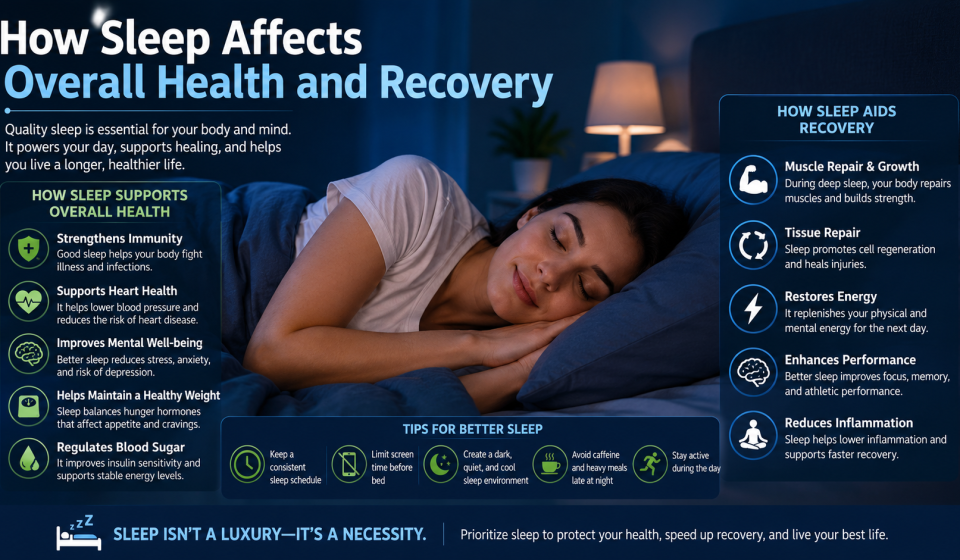
Sleep is one of the most essential biological functions required for maintaining physical health, mental well-being, and overall quality of life. While many people focus on nutrition and exercise as the foundation of a healthy lifestyle, sleep is equally important and often overlooked. During sleep, the body undergoes numerous restorative processes that support healing, tissue repair, immune function, memory consolidation, hormone regulation, and energy restoration. Without adequate sleep, the body cannot perform these critical functions efficiently, increasing the risk of various health problems and slowing recovery from illness, injury, and daily physical stress. Chronic sleep deficiency has been linked to heart disease, obesity, diabetes, weakened immunity, mental health disorders, reduced productivity, and impaired cognitive performance. Understanding how sleep affects overall health and recovery can help individuals make informed lifestyle choices that promote better sleep quality, faster healing, and improved long-term wellness. This comprehensive guide explores the science of sleep, its role in recovery, and practical strategies for improving sleep health.
What Is Sleep?
Sleep is a natural physiological state during which the body and brain undergo essential restorative processes.
Sleep supports:
- Physical recovery
- Mental restoration
- Memory formation
- Hormonal regulation
Quality sleep is necessary for optimal health and performance.
Why Sleep Is Important
Sleep affects nearly every system in the body.
Its benefits include:
- Improved immune function
- Better brain performance
- Enhanced recovery
- Emotional balance
- Disease prevention
Consistent sleep is essential for maintaining overall wellness.
Understanding the Sleep Cycle
Sleep occurs in multiple stages that repeat throughout the night.
These stages include:
- Light sleep
- Deep sleep
- Rapid Eye Movement (REM) sleep
Each stage contributes to different aspects of health and recovery.
Deep Sleep and Physical Recovery
Deep sleep is particularly important for physical restoration.
During deep sleep:
- Tissues repair
- Muscles recover
- Growth hormones are released
- Energy stores are replenished
This stage plays a major role in healing and recovery.
REM Sleep and Brain Function
REM sleep supports:
- Learning
- Memory consolidation
- Emotional processing
- Cognitive performance
Adequate REM sleep contributes to mental sharpness and emotional well-being.
Sleep and Immune System Health
The immune system relies heavily on quality sleep.
Benefits include:
- Improved infection resistance
- Better immune response
- Faster recovery from illness
Sleep helps the body defend itself against harmful pathogens.
How Sleep Supports Healing
During sleep, the body focuses on repair and regeneration.
Important recovery processes include:
- Tissue repair
- Cellular regeneration
- Protein synthesis
- Inflammation regulation
Healing is often less effective when sleep is inadequate.
Sleep and Physical Recovery After Exercise
Athletes and physically active individuals benefit significantly from proper sleep.
Sleep supports:
- Muscle repair
- Performance improvement
- Injury prevention
- Recovery from training
Rest is a critical component of fitness and athletic success.
Sleep and Hormone Regulation
Sleep helps regulate numerous hormones.
Examples include:
- Growth hormone
- Cortisol
- Insulin
- Leptin
- Ghrelin
Balanced hormones support overall health and metabolism.
Sleep and Weight Management
Insufficient sleep may contribute to:
- Increased hunger
- Weight gain
- Poor food choices
- Reduced metabolic efficiency
Healthy sleep habits support weight management efforts.
Sleep and Blood Sugar Control
Sleep affects insulin sensitivity and glucose metabolism.
Poor sleep may increase the risk of:
- Insulin resistance
- Prediabetes
- Type 2 diabetes
Adequate rest supports healthy blood sugar regulation.
Sleep and Heart Health
Cardiovascular health is closely linked to sleep quality.
Healthy sleep may help:
- Regulate blood pressure
- Support circulation
- Reduce cardiovascular risk
Sleep is an important component of heart disease prevention.
Sleep and Blood Pressure
During sleep, blood pressure naturally decreases.
Chronic sleep deprivation may contribute to:
- Hypertension
- Increased cardiovascular strain
Healthy sleep supports cardiovascular wellness.
Sleep and Brain Health
The brain performs essential maintenance during sleep.
Benefits include:
- Memory processing
- Information storage
- Cognitive restoration
Adequate sleep enhances mental performance.
Sleep and Memory
Memory formation depends on healthy sleep cycles.
Sleep helps:
- Retain information
- Improve learning
- Enhance concentration
Students and professionals benefit from quality sleep.
Sleep and Mental Health
Sleep and mental health are closely connected.
Poor sleep may contribute to:
- Anxiety
- Depression
- Mood disorders
- Emotional instability
Good sleep supports emotional resilience.
Sleep and Stress Management
Quality sleep helps regulate the body’s stress response.
Benefits include:
- Reduced stress hormone levels
- Improved coping abilities
- Better emotional balance
Sleep promotes mental recovery.
Sleep and Energy Levels
Sleep restores physical and mental energy.
Benefits include:
- Improved alertness
- Better productivity
- Reduced fatigue
Rested individuals often perform more effectively throughout the day.
Effects of Sleep Deprivation
Sleep deprivation can affect nearly every aspect of health.
Potential consequences include:
- Fatigue
- Poor concentration
- Mood changes
- Reduced immunity
Long-term deprivation may contribute to chronic disease.
Chronic Sleep Deficiency
Persistent lack of sleep has been associated with:
- Heart disease
- Obesity
- Diabetes
- Mental health disorders
Addressing sleep issues is important for disease prevention.
Sleep and Aging
Healthy sleep supports healthy aging.
Benefits include:
- Better cognitive function
- Improved mobility
- Enhanced quality of life
Sleep remains important throughout every stage of life.
Common Causes of Poor Sleep
Factors that may interfere with sleep include:
- Stress
- Anxiety
- Irregular schedules
- Excessive screen time
- Poor sleep environment
Identifying causes can help improve sleep quality.
Sleep Disorders
Certain medical conditions affect sleep quality.
Examples include:
- Insomnia
- Sleep apnea
- Restless leg syndrome
Professional evaluation may be necessary when symptoms persist.
Creating a Healthy Sleep Routine
Consistent sleep habits support better rest.
Helpful practices include:
- Maintaining regular sleep schedules
- Limiting screen exposure before bed
- Creating a comfortable sleeping environment
Consistency is key.
Importance of Sleep Environment
A supportive sleep environment should be:
- Quiet
- Comfortable
- Dark
- Relaxing
Environmental factors influence sleep quality.
Nutrition and Sleep Quality
Healthy nutrition can support sleep health.
Helpful habits include:
- Balanced meals
- Limiting caffeine before bedtime
- Avoiding heavy late-night meals
Diet and sleep are closely connected.
Exercise and Better Sleep
Regular physical activity often improves sleep quality.
Benefits include:
- Faster sleep onset
- Deeper sleep
- Better overall rest
Exercise supports long-term sleep health.
Limiting Screen Time Before Bed
Electronic devices may interfere with natural sleep patterns.
Reducing screen use before bedtime may improve sleep quality.
When to Seek Medical Help
Medical evaluation may be necessary if symptoms include:
- Chronic insomnia
- Loud snoring
- Excessive daytime sleepiness
- Difficulty staying asleep
Professional care can identify underlying causes.
Long-Term Benefits of Healthy Sleep
Consistent quality sleep supports:
- Better immunity
- Improved recovery
- Enhanced mental health
- Reduced disease risk
Healthy sleep contributes to lifelong wellness.
Source Links
https://www.cdc.gov/sleep
https://www.nhlbi.nih.gov
https://www.who.int
https://www.ncbi.nlm.nih.gov
Conclusion
Sleep is one of the most powerful tools for maintaining overall health, promoting recovery, and preventing chronic disease. It supports physical healing, strengthens the immune system, regulates hormones, improves brain function, enhances emotional well-being, and contributes to cardiovascular and metabolic health. Despite its importance, many people do not prioritize adequate sleep, exposing themselves to unnecessary health risks. By developing healthy sleep habits, creating a supportive sleep environment, managing stress, maintaining a balanced lifestyle, and seeking medical help when necessary, individuals can significantly improve both their quality of life and long-term health outcomes. Quality sleep is not a luxury—it is a fundamental requirement for optimal health and recovery.
FAQ
1- Why is sleep important for overall health?
Sleep supports physical recovery, immune function, mental health, brain performance, and disease prevention.
2- How many hours of sleep do adults generally need?
Most adults benefit from consistent, sufficient sleep to support health and daily functioning.
3- How does sleep help recovery?
Sleep promotes tissue repair, muscle recovery, hormone regulation, and cellular regeneration.
4- Can poor sleep affect the immune system?
Yes, inadequate sleep may weaken immune defenses and increase susceptibility to infections.
5- How does sleep influence mental health?
Quality sleep supports emotional regulation and may reduce the risk of anxiety and depression.
6- Can sleep deprivation lead to weight gain?
Poor sleep can affect appetite-regulating hormones and contribute to unhealthy eating patterns.
7- What is REM sleep?
REM sleep is a stage associated with memory processing, learning, and emotional regulation.
8- Does exercise improve sleep quality?
Yes, regular physical activity often promotes deeper and more restorative sleep.
9- What are common signs of a sleep disorder?
Symptoms may include insomnia, excessive daytime sleepiness, loud snoring, and frequent nighttime awakenings.
10- When should I consult a healthcare professional about sleep problems?
Medical evaluation is recommended when sleep difficulties are persistent, severe, or affecting daily life.