
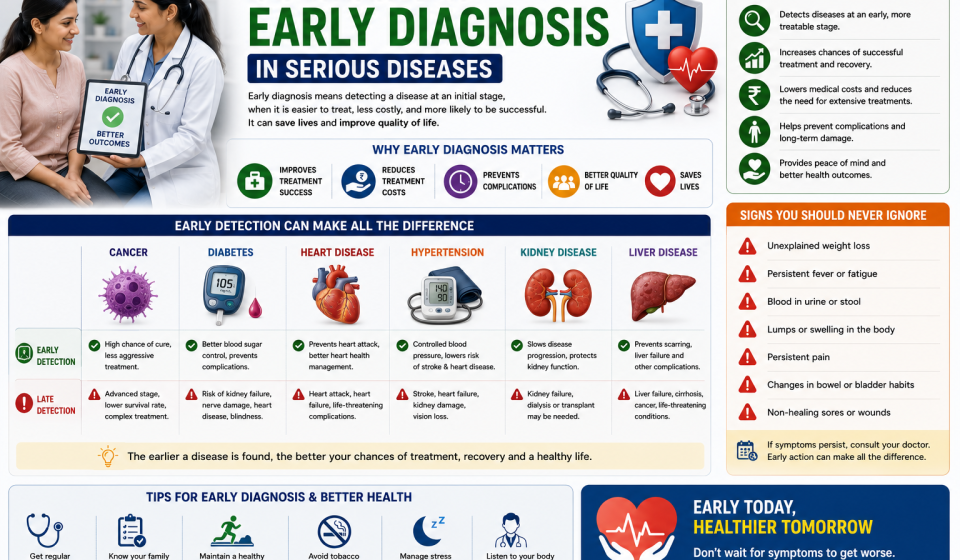
Importance of Early Diagnosis in Serious Diseases: How Timely Detection Can Save Lives and Improve Health Outcomes

Advancements in medical technology, diagnostic tools, and preventive healthcare have made it possible to identify many diseases earlier than ever before.
Early diagnosis is one of the most important aspects of modern healthcare and plays a crucial role in preventing complications, improving treatment success rates, and saving lives. Many serious diseases such as cancer, heart disease, diabetes, kidney disorders, neurological conditions, and chronic respiratory illnesses often develop gradually and may not cause noticeable symptoms during their early stages. As a result, individuals may remain unaware of underlying health problems until the disease has progressed significantly. Early detection through routine health screenings, medical evaluations, and awareness of warning signs allows healthcare providers to begin treatment sooner, often leading to better outcomes and a higher quality of life.Blood tests, imaging studies, genetic screenings, laboratory evaluations, and routine health checkups can reveal potential health concerns before serious complications occur. In many cases, early diagnosis not only increases the likelihood of successful treatment but also reduces healthcare costs, shortens recovery times, and minimizes the physical and emotional burden on patients and families. Understanding the importance of early diagnosis empowers individuals to take proactive steps toward protecting their health and improving long-term wellness.
What Is Early Diagnosis?
Early diagnosis refers to identifying a disease or medical condition at its initial stage before significant symptoms or complications develop.
The primary goals include:
- Detecting disease early
- Beginning treatment promptly
- Preventing progression
- Improving outcomes
Timely diagnosis is a key component of preventive healthcare.
Why Early Diagnosis Matters
Many serious illnesses progress silently.
Early diagnosis helps:
- Improve survival rates
- Increase treatment effectiveness
- Reduce complications
- Enhance quality of life
The sooner a condition is identified, the greater the opportunities for successful management.
The Link Between Early Detection and Better Outcomes
Medical research consistently shows that early intervention often leads to better results.
Benefits include:
- Faster recovery
- Less aggressive treatment
- Reduced healthcare expenses
- Lower disease burden
Early action can make a significant difference in patient outcomes.
Early Diagnosis and Cancer
Cancer is one of the most important areas where early diagnosis can save lives.
Many cancers can be treated more effectively when detected at an early stage.
Examples include:
- Breast cancer
- Cervical cancer
- Colorectal cancer
- Prostate cancer
Routine screenings play a critical role in cancer detection.
How Early Cancer Detection Helps
Early-stage cancer treatment often offers:
- Higher survival rates
- More treatment options
- Reduced risk of spread
- Better quality of life
Regular screenings are important for at-risk individuals.
Heart Disease and Early Diagnosis
Heart disease remains one of the leading causes of death worldwide.
Early identification of cardiovascular risk factors can help prevent serious events.
Common assessments include:
- Blood pressure monitoring
- Cholesterol testing
- Cardiac evaluations
Preventive care supports long-term heart health.
Preventing Heart Attacks and Stroke
Early diagnosis may identify:
- Hypertension
- High cholesterol
- Circulatory problems
Addressing these issues early can reduce the risk of heart attacks and strokes.
Diabetes and Early Detection
Diabetes often develops gradually.
Many individuals have prediabetes or early diabetes without obvious symptoms.
Screening helps identify:
- Elevated blood sugar
- Insulin resistance
- Metabolic abnormalities
Early intervention can prevent complications.
Benefits of Early Diabetes Diagnosis
Timely diagnosis allows individuals to:
- Improve diet
- Increase physical activity
- Manage blood sugar effectively
Early management supports long-term health.
Kidney Disease and Early Screening
Kidney disease frequently develops without symptoms in its early stages.
Routine testing may include:
- Blood tests
- Urine analysis
- Kidney function assessments
Early diagnosis helps preserve kidney function.
Chronic Respiratory Diseases
Conditions such as asthma and chronic obstructive pulmonary disease can benefit from early identification.
Benefits include:
- Better symptom control
- Reduced complications
- Improved lung function
Prompt treatment supports respiratory health.
Neurological Disorders
Early diagnosis is important for many neurological conditions.
Examples include:
- Parkinson’s disease
- Alzheimer’s disease
- Multiple sclerosis
Early intervention may improve symptom management and planning.
Autoimmune Diseases
Autoimmune disorders often present with vague symptoms.
Examples include:
- Rheumatoid arthritis
- Lupus
- Psoriatic arthritis
Early diagnosis can reduce long-term organ and joint damage.
Infectious Diseases
Prompt diagnosis of infections helps:
- Reduce transmission
- Improve recovery
- Prevent complications
Timely medical care is essential for effective treatment.
Mental Health Conditions
Mental health disorders can significantly affect quality of life.
Early diagnosis may help identify:
- Depression
- Anxiety disorders
- Stress-related conditions
Early support can improve long-term outcomes.
The Role of Routine Health Checkups
Regular medical evaluations are critical for early disease detection.
Checkups may include:
- Physical examinations
- Blood tests
- Health screenings
Routine monitoring helps identify concerns before symptoms develop.
Importance of Blood Tests
Blood tests provide valuable information about overall health.
They can help detect:
- Diabetes
- Cholesterol abnormalities
- Infections
- Organ dysfunction
Laboratory testing supports accurate diagnosis.
Imaging and Diagnostic Technology
Modern diagnostic tools improve early detection capabilities.
Examples include:
- X-rays
- Ultrasound
- CT scans
- MRI scans
Advanced imaging can reveal hidden health problems.
Genetic Testing and Risk Assessment
Genetic testing may help identify inherited health risks.
Benefits include:
- Personalized healthcare planning
- Early monitoring
- Preventive strategies
Understanding risk factors supports proactive care.
Recognizing Early Warning Signs
Many diseases present subtle symptoms before becoming severe.
Examples may include:
- Unexplained fatigue
- Weight changes
- Persistent pain
- Changes in appetite
Awareness encourages timely medical evaluation.
Reducing Disease Complications
Early diagnosis can help prevent:
- Organ damage
- Disability
- Hospitalization
- Disease progression
Prevention is often more effective than treating advanced illness.
Improving Treatment Success
Many treatments are most effective when started early.
Benefits include:
- Better response rates
- Reduced treatment intensity
- Improved outcomes
Timely care often improves recovery.
Lowering Healthcare Costs
Advanced diseases frequently require more intensive treatment.
Early diagnosis may help reduce:
- Hospital admissions
- Emergency care
- Long-term treatment expenses
Preventive healthcare can be cost-effective.
Enhancing Quality of Life
Early diagnosis supports:
- Better symptom management
- Greater independence
- Improved physical function
Patients often experience better overall well-being.
Importance of Preventive Healthcare
Preventive healthcare focuses on maintaining health before problems become serious.
Key components include:
- Health screenings
- Vaccinations
- Lifestyle counseling
- Routine evaluations
Prevention supports lifelong wellness.
Lifestyle Factors and Disease Prevention
Healthy habits can complement early diagnosis efforts.
Examples include:
- Balanced nutrition
- Exercise
- Adequate sleep
- Stress management
Healthy lifestyles reduce disease risk.
Overcoming Barriers to Early Diagnosis
Some individuals delay medical care due to:
- Fear
- Lack of awareness
- Busy schedules
Education and access to healthcare can encourage timely evaluation.
The Role of Healthcare Professionals
Healthcare providers play a vital role in:
- Identifying risk factors
- Performing screenings
- Educating patients
- Coordinating treatment
Professional guidance supports better health outcomes.
Building a Proactive Approach to Health
Individuals can improve health outcomes by:
- Attending regular checkups
- Monitoring symptoms
- Following medical advice
- Maintaining healthy habits
Proactive healthcare supports long-term wellness.
Source Links
https://www.who.int
https://www.cdc.gov
https://www.nih.gov
https://www.nhlbi.nih.gov
https://www.ncbi.nlm.nih.gov
Conclusion
Early diagnosis is one of the most powerful tools in modern healthcare and plays a critical role in improving patient outcomes, reducing complications, and saving lives. Serious diseases such as cancer, heart disease, diabetes, kidney disorders, respiratory illnesses, autoimmune conditions, and neurological disorders often respond more effectively to treatment when detected in their early stages. Through routine health screenings, regular medical checkups, awareness of warning signs, and preventive healthcare practices, individuals can identify health concerns before they become severe. By prioritizing early diagnosis and proactive healthcare, people can improve their quality of life, reduce healthcare costs, and achieve better long-term health outcomes.
FAQ
1- What is early diagnosis?
Early diagnosis is the identification of a disease or medical condition before it progresses to an advanced stage.
2- Why is early diagnosis important?
Early diagnosis improves treatment effectiveness, reduces complications, and increases survival rates for many diseases.
3- Which diseases benefit most from early detection?
Cancer, heart disease, diabetes, kidney disease, respiratory illnesses, and many other serious conditions benefit from early diagnosis.
4- How can routine health checkups help?
Regular checkups can identify health problems before symptoms appear and support preventive healthcare.
5- What role do blood tests play in early diagnosis?
Blood tests help detect infections, diabetes, cholesterol abnormalities, organ dysfunction, and other health conditions.
6- Can early diagnosis reduce healthcare costs?
Yes, treating diseases early is often less expensive than managing advanced-stage illnesses.
7- Why are cancer screenings important?
Cancer screenings can identify cancer at earlier stages when treatment is often more successful.
8- How does early diagnosis improve quality of life?
It allows for earlier treatment, better symptom control, and reduced disease-related complications.
9- What are common early warning signs of disease?
Unexplained fatigue, persistent pain, unusual weight changes, and ongoing symptoms may require medical evaluation.
10- How can individuals support early disease detection?
By attending regular health screenings, monitoring symptoms, maintaining healthy habits, and seeking medical care when needed.