Common Skin Problems and Their Medical Solutions: Complete Guide to Healthy Skin and Effective Treatments

The skin is the largest organ of the human body and serves as the first line of defense against environmental pollutants, bacteria, viruses, and harmful ultraviolet radiation.
Healthy skin plays a crucial role in protecting the body, regulating temperature, and maintaining overall well-being. However, people of all ages experience various skin problems that can affect appearance, comfort, confidence, and quality of life. From acne and eczema to fungal infections and pigmentation disorders, skin conditions are among the most common reasons individuals seek medical care. While some skin concerns are temporary and mild, others may require professional diagnosis and long-term treatment. Skin problems can occur due to numerous factors, including genetics, hormonal changes, allergies, infections, environmental exposure, lifestyle habits, stress, and underlying medical conditions. Early recognition of symptoms and timely medical intervention can help prevent complications and improve treatment outcomes. Modern dermatology offers a wide range of solutions, including medications, topical treatments, laser therapies, lifestyle modifications, and preventive skincare practices. This comprehensive guide explores common skin problems, their causes, symptoms, diagnosis, and effective medical solutions for maintaining healthy skin.
Understanding Skin Health
Healthy skin performs several important functions.
These include:
- Protection against infections
- Temperature regulation
- Sensory perception
- Prevention of moisture loss
Proper skincare and medical attention support long-term skin health.
Why Skin Problems Occur
Many factors can contribute to skin disorders.
Common causes include:
- Hormonal changes
- Allergies
- Genetics
- Infections
- Environmental exposure
- Stress
- Poor skincare habits
Identifying the underlying cause is essential for effective treatment.
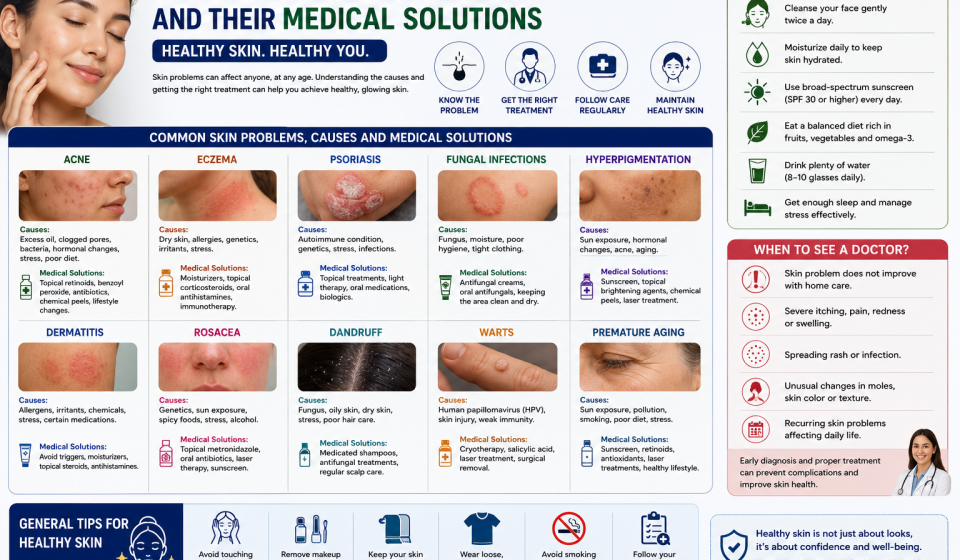
Acne
Acne is one of the most common skin conditions worldwide.
It occurs when hair follicles become clogged with oil and dead skin cells.
Symptoms
- Pimples
- Blackheads
- Whiteheads
- Cysts
- Skin inflammation
Medical Solutions
Treatment options may include:
- Topical medications
- Prescription treatments
- Chemical peels
- Laser therapies
Early treatment can help reduce scarring.
Eczema
Eczema is a chronic inflammatory skin condition.
Symptoms
- Dry skin
- Itching
- Redness
- Skin irritation
Medical Solutions
Management may involve:
- Moisturizers
- Prescription creams
- Trigger avoidance
- Medical supervision
Proper skin hydration is essential.
Psoriasis
Psoriasis is an autoimmune skin condition that causes rapid skin cell growth.
Symptoms
- Thick skin plaques
- Red patches
- Scaling
- Itching
Medical Solutions
Treatment may include:
- Topical medications
- Light therapy
- Prescription medications
Individualized care is often necessary.
Rosacea
Rosacea commonly affects the face.
Symptoms
- Facial redness
- Visible blood vessels
- Bumps resembling acne
- Skin sensitivity
Medical Solutions
Treatment plans may include:
- Prescription creams
- Oral medications
- Laser treatments
Avoiding triggers can help reduce flare-ups.
Hyperpigmentation
Hyperpigmentation causes darker areas of skin due to increased melanin production.
Common Types
- Melasma
- Post-inflammatory pigmentation
- Sun-related pigmentation
Medical Solutions
Treatment options may include:
- Topical lightening agents
- Chemical peels
- Laser therapy
- Sun protection
Consistent treatment often improves results.
Melasma
Melasma commonly appears on the face.
Causes
- Hormonal changes
- Sun exposure
- Genetic factors
Treatment Options
- Medical creams
- Chemical peels
- Sun avoidance measures
Long-term management may be required.
Dry Skin
Dry skin is a frequent complaint affecting individuals of all ages.
Symptoms
- Rough texture
- Flaking
- Tightness
- Itching
Medical Solutions
Treatment may include:
- Moisturizing products
- Gentle skincare routines
- Treatment of underlying conditions
Hydration supports skin health.
Fungal Skin Infections
Fungal infections occur when fungi grow on the skin.
Examples
- Ringworm
- Athlete’s foot
- Yeast infections
Symptoms
- Itching
- Redness
- Scaling
Medical Solutions
Antifungal medications are commonly used.
Bacterial Skin Infections
Bacteria can cause various skin conditions.
Symptoms
- Redness
- Swelling
- Pain
- Pus formation
Medical Solutions
Medical treatment may involve antibiotics and proper wound care.
Viral Skin Conditions
Certain viruses can affect the skin.
Examples include:
- Warts
- Cold sores
Treatment depends on the specific condition and severity.
Contact Dermatitis
Contact dermatitis occurs when the skin reacts to irritants or allergens.
Symptoms
- Rash
- Redness
- Itching
- Swelling
Medical Solutions
Avoiding triggers and using prescribed treatments often helps control symptoms.
Hives (Urticaria)
Hives are raised, itchy welts that may develop suddenly.
Possible Triggers
- Allergies
- Infections
- Medications
Medical Solutions
Treatment focuses on identifying triggers and managing symptoms.
Skin Allergies
Allergic skin reactions can occur after exposure to certain substances.
Common triggers include:
- Cosmetics
- Fragrances
- Foods
- Environmental allergens
Medical evaluation may help determine the cause.
Sun Damage
Excessive sun exposure can harm the skin.
Effects
- Premature aging
- Pigmentation
- Increased skin cancer risk
Prevention
- Sunscreen use
- Protective clothing
- Shade exposure
Sun protection is essential for skin health.
Premature Skin Aging
Factors contributing to early aging include:
- UV exposure
- Smoking
- Stress
- Poor nutrition
Healthy habits help support youthful skin.
Hair and Scalp Conditions
Scalp disorders often accompany skin concerns.
Common examples include:
- Dandruff
- Scalp dermatitis
- Hair loss
Professional evaluation can help identify appropriate treatment.
Skin Tags and Benign Growths
Noncancerous skin growths are common in adults.
Medical assessment helps determine whether treatment is necessary.
Skin Cancer Awareness
Skin cancer is one of the most common cancers worldwide.
Warning signs may include:
- Changing moles
- New skin growths
- Persistent skin lesions
Early diagnosis improves treatment outcomes.
Importance of Dermatological Evaluation
Professional skin examinations help:
- Confirm diagnosis
- Identify underlying causes
- Develop treatment plans
Expert care often improves results.
Diagnostic Methods for Skin Conditions
Healthcare providers may use:
- Physical examination
- Medical history
- Skin testing
- Laboratory analysis
Accurate diagnosis supports effective treatment.
Medical Treatments for Skin Problems
Treatment options vary depending on the condition.
Common approaches include:
- Topical medications
- Oral medications
- Laser procedures
- Chemical peels
- Medical therapies
Personalized treatment plans often provide the best outcomes.
The Role of Skincare in Prevention
Proper skincare helps maintain healthy skin.
Important habits include:
- Gentle cleansing
- Moisturizing
- Sun protection
- Avoiding harsh products
Consistency supports long-term skin health.
Nutrition and Skin Health
A balanced diet supports healthy skin function.
Nutritious foods provide:
- Vitamins
- Minerals
- Antioxidants
Healthy eating complements skincare routines.
Hydration and Healthy Skin
Adequate hydration supports:
- Skin elasticity
- Moisture balance
- Overall wellness
Water plays an important role in skin health.
Stress and Skin Conditions
Stress can worsen certain skin disorders.
Examples include:
- Acne
- Eczema
- Psoriasis
Stress-management techniques may help improve symptoms.
Preventive Healthcare for Skin Wellness
Routine skin evaluations help identify problems early.
Benefits include:
- Early treatment
- Better outcomes
- Reduced complications
Preventive care supports lifelong skin health.
Source Links
https://www.aad.org
https://www.niams.nih.gov
https://www.nhs.uk
https://www.who.int
https://www.ncbi.nlm.nih.gov
Conclusion
Skin problems are extremely common and can affect individuals of all ages. Conditions such as acne, eczema, psoriasis, fungal infections, pigmentation disorders, rosacea, allergies, and sun damage may impact both physical comfort and emotional well-being. Fortunately, advances in dermatology provide a wide range of effective medical solutions, including topical medications, prescription treatments, laser therapies, chemical peels, and preventive skincare strategies. Early diagnosis, proper medical care, healthy lifestyle habits, and consistent skincare practices play an important role in maintaining healthy skin and preventing complications. By understanding common skin problems and seeking appropriate treatment when needed, individuals can achieve healthier, more comfortable, and more confident skin.
FAQ
1- What is the most common skin problem?
Acne is one of the most common skin conditions affecting people of all ages.
2- What causes hyperpigmentation?
Hyperpigmentation may result from sun exposure, hormonal changes, inflammation, or skin injuries.
3- Can eczema be cured permanently?
Eczema is generally a chronic condition, but symptoms can often be managed effectively with treatment and skincare.
4- How are fungal skin infections treated?
Fungal infections are commonly treated with antifungal medications prescribed by healthcare professionals.
5- What are common symptoms of psoriasis?
Symptoms may include red patches, scaling, itching, and thickened skin plaques.
6- Why is sunscreen important?
Sunscreen helps protect the skin from harmful ultraviolet radiation, premature aging, and skin cancer risk.
7- Can stress worsen skin conditions?
Yes, stress may trigger or worsen conditions such as acne, eczema, and psoriasis.
8- When should I see a dermatologist?
Professional evaluation is recommended for persistent, worsening, painful, or unexplained skin problems.
9- Can diet affect skin health?
Yes, a balanced diet rich in nutrients supports healthy skin and overall wellness.
10- Are skin problems preventable?
Many skin conditions can be reduced or managed through proper skincare, healthy habits, sun protection, and early medical care.