Causes and Treatment of Joint Pain in Adults: Complete Guide to Symptoms, Prevention, and Effective Management

The causes of joint pain vary widely, ranging from temporary conditions to chronic diseases. Aging, arthritis, injuries, autoimmune disorders, infections, obesity, and repetitive movements are among the most common contributing factors.
Joint pain is one of the most common health complaints among adults and can affect people of all ages. Joints are the connections between bones that allow movement and provide support to the body. When joints become inflamed, injured, or damaged, they can cause pain, stiffness, swelling, and reduced mobility. Joint pain may occur in a single joint, such as the knee or shoulder, or it may affect multiple joints throughout the body. While occasional discomfort may result from overuse or minor injuries, persistent joint pain can significantly impact daily activities, work performance, physical fitness, and overall quality of life. Early identification of the underlying cause is essential for effective treatment and long-term management. Fortunately, many cases of joint pain can be improved through lifestyle modifications, physical therapy, medications, exercise, and preventive healthcare. This comprehensive guide explains the causes, symptoms, diagnosis, treatment options, and prevention strategies for joint pain in adults.
What Is Joint Pain?
Joint pain refers to discomfort, soreness, stiffness, or inflammation affecting one or more joints.
Commonly affected joints include:
- Knees
- Hips
- Shoulders
- Ankles
- Wrists
- Elbows
- Fingers
The severity of symptoms can range from mild discomfort to debilitating pain.
Why Healthy Joints Are Important
Healthy joints allow the body to:
- Move efficiently
- Maintain balance
- Perform daily activities
- Participate in physical exercise
Joint health is essential for mobility and independence.
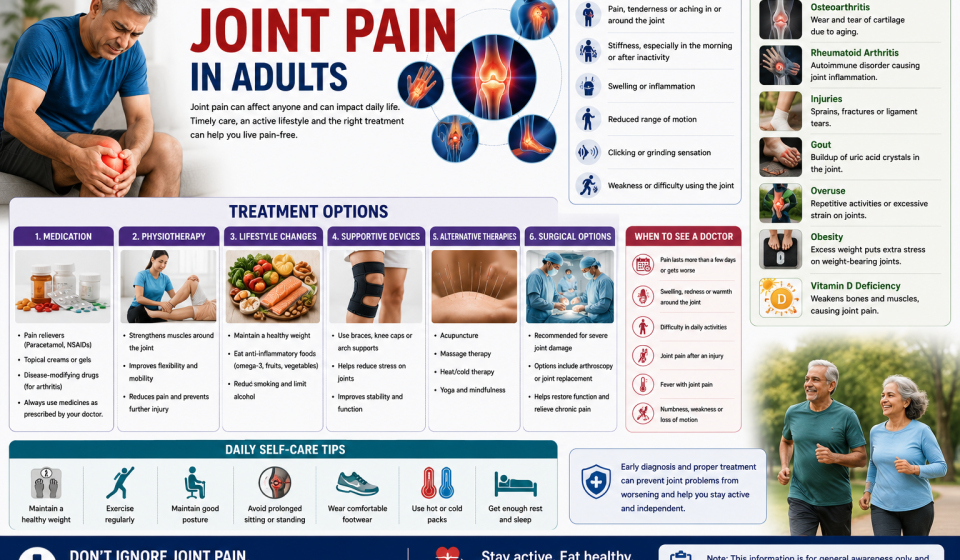
Common Symptoms of Joint Pain
Joint pain may present with various symptoms.
Common signs include:
- Pain during movement
- Joint stiffness
- Swelling
- Redness
- Tenderness
- Reduced flexibility
Symptoms may worsen with activity or prolonged inactivity.
Osteoarthritis
Osteoarthritis is one of the most common causes of joint pain in adults.
It occurs when the protective cartilage within joints gradually wears down.
Symptoms
- Joint stiffness
- Pain during movement
- Reduced range of motion
- Joint tenderness
Osteoarthritis commonly affects weight-bearing joints.
Rheumatoid Arthritis
Rheumatoid arthritis is an autoimmune disease that causes chronic joint inflammation.
Symptoms
- Joint swelling
- Morning stiffness
- Fatigue
- Pain in multiple joints
Early treatment may help reduce long-term joint damage.
Age-Related Joint Degeneration
Natural aging can contribute to changes in joint structure and function.
Age-related factors include:
- Cartilage wear
- Reduced joint lubrication
- Decreased flexibility
These changes may increase susceptibility to discomfort.
Joint Injuries
Injuries are a common cause of acute joint pain.
Examples include:
- Sprains
- Strains
- Ligament injuries
- Fractures
Proper treatment promotes healing and recovery.
Repetitive Stress Injuries
Repeated movements can place excessive stress on joints.
Common examples include:
- Occupational overuse
- Sports-related stress
- Repetitive lifting
Preventive measures help reduce injury risk.
Obesity and Joint Pain
Excess body weight places additional stress on joints.
Weight-related effects include:
- Increased joint wear
- Reduced mobility
- Higher risk of osteoarthritis
Healthy weight management supports joint health.
Gout
Gout is a type of inflammatory arthritis caused by uric acid crystal buildup.
Symptoms
- Sudden severe pain
- Swelling
- Redness
- Warmth around affected joints
The condition commonly affects the big toe.
Autoimmune Disorders
Several autoimmune diseases may contribute to joint pain.
Examples include:
- Rheumatoid arthritis
- Lupus
- Psoriatic arthritis
These conditions often require specialized medical care.
Infections Affecting the Joints
Certain infections can lead to joint inflammation.
Symptoms may include:
- Pain
- Swelling
- Fever
- Limited mobility
Prompt medical evaluation is important.
Bursitis
Bursitis occurs when fluid-filled sacs called bursae become inflamed.
Commonly affected areas include:
- Shoulder
- Hip
- Elbow
- Knee
Rest and treatment often improve symptoms.
Tendinitis
Tendinitis involves inflammation of tendons surrounding joints.
Common causes include:
- Overuse
- Repetitive movement
- Sports injuries
Proper rehabilitation supports recovery.
Joint Pain and Physical Inactivity
Lack of physical activity may contribute to joint stiffness and weakness.
Regular movement helps:
- Improve flexibility
- Maintain muscle strength
- Support joint function
An active lifestyle promotes long-term mobility.
Diagnosing Joint Pain
Healthcare providers may use:
- Medical history
- Physical examination
- Blood tests
- Imaging studies
Accurate diagnosis helps guide treatment decisions.
X-Rays and Imaging Tests
Imaging studies may help identify:
- Arthritis
- Joint damage
- Structural abnormalities
Diagnostic imaging provides valuable information about joint health.
Blood Tests for Joint Disorders
Blood testing may assist in diagnosing:
- Autoimmune diseases
- Inflammatory conditions
- Infections
Laboratory evaluations complement clinical assessment.
Treatment Goals for Joint Pain
Treatment aims to:
- Reduce pain
- Improve mobility
- Decrease inflammation
- Enhance quality of life
Approaches vary depending on the underlying cause.
Medications for Joint Pain
Healthcare providers may recommend medications to help manage symptoms.
Treatment plans are individualized based on diagnosis and severity.
Physical Therapy
Physical therapy is often an important part of treatment.
Benefits include:
- Improved strength
- Better flexibility
- Increased joint stability
Professional guidance helps maximize results.
Exercise and Joint Health
Appropriate exercise supports healthy joints.
Recommended activities include:
- Walking
- Swimming
- Cycling
- Stretching
Low-impact activities are often well tolerated.
Strength Training Benefits
Strong muscles help support and protect joints.
Benefits include:
- Better joint stability
- Reduced injury risk
- Improved mobility
Strength training should be performed safely and consistently.
Weight Management for Joint Pain Relief
Maintaining a healthy weight can significantly reduce pressure on joints.
Benefits include:
- Reduced pain
- Improved mobility
- Lower arthritis risk
Weight management is particularly beneficial for knee and hip joints.
Importance of Healthy Nutrition
A balanced diet supports joint health and overall wellness.
Nutritious foods provide:
- Essential vitamins
- Minerals
- Antioxidants
Healthy eating complements medical treatment.
Stay Hydrated
Adequate hydration supports joint lubrication and overall health.
Water plays an important role in maintaining body function.
Heat and Cold Therapy
Heat and cold applications may help manage discomfort.
Potential benefits include:
- Reduced stiffness
- Temporary pain relief
- Improved comfort
Appropriate use depends on the condition being treated.
Lifestyle Changes That Support Joint Health
Healthy habits include:
- Regular exercise
- Weight control
- Proper posture
- Injury prevention
Long-term consistency supports better outcomes.
Preventing Joint Pain
Preventive measures may include:
- Maintaining physical fitness
- Avoiding repetitive strain
- Using proper body mechanics
- Staying active
Prevention helps preserve mobility and function.
When to Seek Medical Attention
Medical evaluation is recommended when symptoms include:
- Persistent pain
- Severe swelling
- Joint deformity
- Limited movement
- Fever with joint pain
Early diagnosis often improves treatment outcomes.
The Role of Preventive Healthcare
Routine health assessments help identify risk factors for joint disorders.
Preventive care supports:
- Early diagnosis
- Better management
- Improved quality of life
Regular monitoring contributes to long-term wellness.
Long-Term Outlook for Joint Pain
Many individuals can successfully manage joint pain through:
- Medical care
- Exercise
- Lifestyle modifications
- Preventive strategies
Early intervention improves long-term outcomes.
Source Links
https://www.cdc.gov/arthritis
https://www.niams.nih.gov
https://www.nhs.uk
https://www.who.int
https://www.ncbi.nlm.nih.gov
Conclusion
Joint pain is a common condition that can significantly affect mobility, comfort, and overall quality of life. It may result from arthritis, injuries, autoimmune diseases, obesity, aging, infections, or repetitive stress on the joints. Understanding the underlying cause is essential for selecting the most effective treatment approach. Through proper diagnosis, medical care, regular exercise, healthy nutrition, weight management, physical therapy, and preventive healthcare, many individuals can successfully manage joint pain and maintain an active lifestyle. Taking proactive steps to protect joint health can reduce complications, improve mobility, and support long-term wellness.
FAQ
1- What are the most common causes of joint pain in adults?
Common causes include osteoarthritis, rheumatoid arthritis, injuries, obesity, gout, autoimmune disorders, and repetitive stress injuries.
2- Can aging cause joint pain?
Yes, aging can contribute to cartilage wear, reduced joint flexibility, and increased risk of arthritis.
3- What is osteoarthritis?
Osteoarthritis is a condition in which joint cartilage gradually wears down, causing pain, stiffness, and reduced mobility.
4- How is joint pain diagnosed?
Diagnosis may involve medical history, physical examination, blood tests, X-rays, and other imaging studies.
5- Can exercise help reduce joint pain?
Yes, appropriate exercise can improve flexibility, strengthen muscles, and support joint function.
6- Does weight loss help with joint pain?
Yes, maintaining a healthy weight reduces pressure on joints and may improve symptoms, especially in the knees and hips.
7- What are signs of rheumatoid arthritis?
Common symptoms include joint swelling, stiffness, fatigue, and pain affecting multiple joints.
8- When should I see a doctor for joint pain?
Medical evaluation is recommended for persistent pain, severe swelling, limited movement, or joint pain accompanied by fever.
9- Can nutrition affect joint health?
Yes, a balanced diet provides nutrients that support overall joint function and wellness.
10- Is joint pain preventable?
Many causes of joint pain can be reduced through healthy lifestyle habits, injury prevention, weight management, and regular physical activity.