Best Medical Tests Every Adult Should Consider: Essential Health Screenings for Early Detection and Long-Term Wellness

Preventive healthcare not only helps reduce the burden of disease but also improves quality of life and lowers healthcare costs over time.
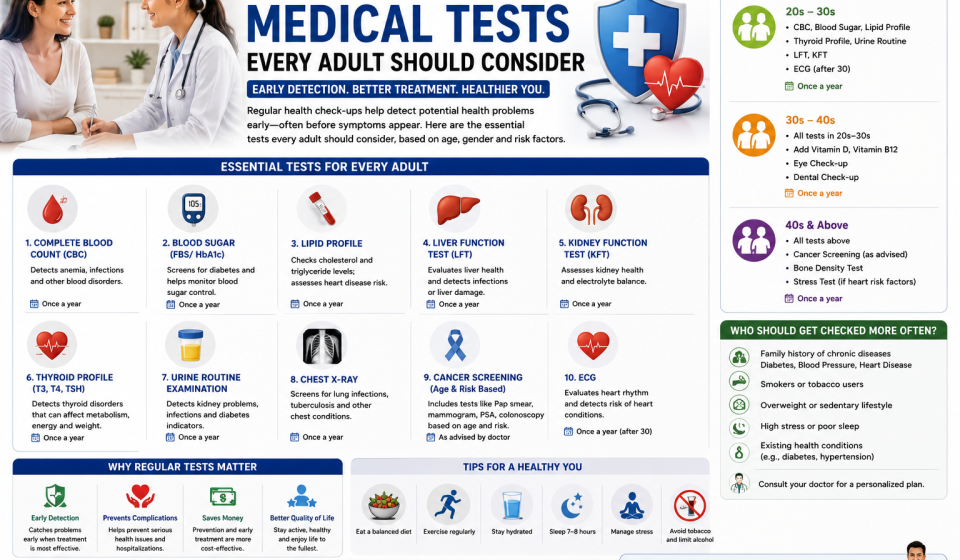
Regular medical testing is one of the most effective ways to maintain good health and detect potential health problems before they become serious. Many chronic diseases, including diabetes, high blood pressure, heart disease, kidney disorders, and certain cancers, can develop silently without noticeable symptoms in their early stages. By undergoing routine medical screenings and diagnostic tests, adults can identify risk factors, receive timely treatment, and significantly improve their chances of maintaining long-term health.As people age, their health needs change, making regular medical evaluations increasingly important. Lifestyle factors such as diet, physical activity, stress levels, smoking, alcohol consumption, family history, and existing medical conditions can all influence an individual’s risk of developing health problems. Understanding which medical tests are most beneficial and when they should be performed can help adults make informed decisions about their healthcare. This comprehensive guide explores the best medical tests every adult should consider, their importance, recommended frequency, and how they contribute to overall wellness and disease prevention.
Why Regular Medical Tests Matter
Health screenings help identify diseases before symptoms appear.
Benefits include:
- Early diagnosis
- Better treatment outcomes
- Reduced healthcare costs
- Prevention of complications
- Improved quality of life
Routine testing is a cornerstone of preventive healthcare.
Understanding Preventive Health Screenings
Preventive screenings are medical evaluations designed to detect health conditions early.
They may identify:
- Risk factors
- Developing diseases
- Hidden health problems
Early intervention often leads to better long-term outcomes.
Blood Pressure Test
Blood pressure measurement is one of the most important health screenings.
It helps detect:
- Hypertension
- Cardiovascular risk
- Circulatory problems
High blood pressure often develops without symptoms, making regular monitoring essential.
Why Blood Pressure Testing Is Important
Uncontrolled hypertension can increase the risk of:
- Heart attack
- Stroke
- Kidney disease
- Heart failure
Routine monitoring supports cardiovascular health.
Blood Sugar Test
Blood sugar testing helps evaluate glucose levels and identify diabetes risk.
Common tests include:
- Fasting blood sugar
- Random blood sugar
- HbA1c test
Early detection supports effective management.
Importance of Diabetes Screening
Diabetes can damage:
- Blood vessels
- Kidneys
- Eyes
- Nerves
Regular screening helps prevent serious complications.
Lipid Profile Test
A lipid profile evaluates cholesterol and triglyceride levels.
It measures:
- Total cholesterol
- LDL cholesterol
- HDL cholesterol
- Triglycerides
Healthy cholesterol levels support heart health.
Why Cholesterol Testing Matters
High cholesterol can contribute to plaque buildup inside arteries.
This increases the risk of:
- Heart disease
- Stroke
- Peripheral artery disease
Routine monitoring helps reduce cardiovascular risk.
Complete Blood Count (CBC)
A CBC evaluates various components of blood.
It can help identify:
- Anemia
- Infections
- Blood disorders
This common test provides valuable health information.
Liver Function Test
The liver performs many important functions.
Liver function testing helps assess:
- Liver health
- Inflammation
- Possible liver disease
Early detection supports effective treatment.
Kidney Function Test
Kidney function tests help evaluate how well the kidneys are working.
Common measurements include:
- Creatinine
- Blood urea nitrogen
- Estimated kidney filtration rate
Healthy kidneys are essential for overall wellness.
Thyroid Function Test
The thyroid gland regulates metabolism and energy production.
Testing may help identify:
- Hypothyroidism
- Hyperthyroidism
- Hormonal imbalances
Proper thyroid function supports overall health.
Vitamin D Test
Vitamin D plays a role in:
- Bone health
- Immune function
- Muscle strength
Testing can help identify deficiency and guide treatment.
Vitamin B12 Test
Vitamin B12 is important for:
- Nerve function
- Red blood cell production
- Brain health
Deficiency may contribute to fatigue and neurological symptoms.
Urine Analysis
Urinalysis provides important information about overall health.
It may help detect:
- Kidney problems
- Urinary tract infections
- Diabetes-related changes
This simple test is commonly included in routine evaluations.
Body Mass Index Assessment
BMI helps evaluate body weight relative to height.
It may assist in identifying:
- Underweight
- Overweight
- Obesity
Healthy weight management supports disease prevention.
Electrocardiogram (ECG)
An ECG evaluates the electrical activity of the heart.
It can help identify:
- Irregular heart rhythms
- Heart-related abnormalities
Heart screening becomes increasingly important with age.
Cardiac Risk Assessment
Cardiovascular evaluations may include:
- Blood pressure testing
- Cholesterol testing
- ECG examinations
Comprehensive assessment helps identify risk factors early.
Eye Examination
Routine eye exams support vision health.
They may detect:
- Vision problems
- Eye diseases
- Diabetes-related eye complications
Regular evaluations are important throughout adulthood.
Dental Checkups
Oral health is closely linked to overall health.
Regular dental examinations help prevent:
- Tooth decay
- Gum disease
- Oral infections
Preventive dental care supports wellness.
Hearing Assessment
Hearing loss may develop gradually.
Routine screening can identify:
- Hearing impairment
- Age-related hearing changes
Early intervention improves quality of life.
Bone Density Test
Bone density testing helps evaluate bone strength.
It may identify:
- Osteopenia
- Osteoporosis
Strong bones reduce fracture risk.
Cancer Screening Tests
Certain cancer screenings are recommended based on age, sex, family history, and risk factors.
Examples include:
- Breast cancer screening
- Cervical cancer screening
- Colorectal cancer screening
- Prostate evaluation
Early detection significantly improves outcomes.
Breast Health Screening
Breast examinations and imaging tests help detect abnormalities early.
Regular screening is an important part of preventive healthcare.
Cervical Health Screening
Cervical screening can identify abnormal cellular changes before they become serious.
Routine screening supports women’s health.
Colorectal Cancer Screening
Colon health screening may detect:
- Polyps
- Early-stage colorectal cancer
Timely detection improves treatment success.
Skin Examination
Skin checks help identify:
- Suspicious moles
- Skin abnormalities
- Early signs of skin cancer
Monitoring skin changes is important for overall health.
Mental Health Screening
Mental well-being is an important component of health.
Screening may help identify:
- Depression
- Anxiety
- Stress-related concerns
Early support can improve outcomes.
Sleep Health Assessment
Sleep evaluations may identify:
- Sleep apnea
- Insomnia
- Sleep-related disorders
Quality sleep supports physical and mental health.
Vaccination Review
Preventive healthcare includes staying current with recommended immunizations.
Vaccination supports protection against preventable diseases.
Family Medical History Assessment
Family history provides valuable insight into health risks.
Conditions commonly influenced by family history include:
- Heart disease
- Diabetes
- Certain cancers
Understanding risk supports preventive planning.
How Often Should Medical Tests Be Performed?
Testing frequency depends on:
- Age
- Health status
- Family history
- Lifestyle factors
Healthcare providers can recommend personalized screening schedules.
Benefits of Early Disease Detection
Early detection may:
- Improve treatment outcomes
- Reduce complications
- Lower healthcare costs
- Improve quality of life
Preventive care remains one of the most effective healthcare strategies.
Building a Personalized Health Screening Plan
Every adult has unique healthcare needs.
A personalized screening plan should consider:
- Medical history
- Lifestyle habits
- Existing health conditions
- Risk factors
Regular consultations help optimize preventive care.
Source Links
Conclusion
Routine medical testing is essential for maintaining good health, detecting diseases early, and preventing serious complications. From blood pressure and cholesterol testing to diabetes screening, kidney and liver evaluations, cancer screenings, and mental health assessments, preventive health tests provide valuable information that can guide treatment and lifestyle decisions. Because many health conditions develop silently, regular screenings offer an opportunity to identify risks before symptoms appear. By working closely with healthcare professionals and following recommended screening schedules, adults can take proactive steps toward better health, improved longevity, and a higher quality of life.
FAQ
1- Why are regular medical tests important?
Regular medical tests help detect diseases early, monitor health conditions, and prevent complications.
2- Which medical test is most important for adults?
Blood pressure, blood sugar, cholesterol, and routine blood tests are among the most important screenings for adults.
3- How often should adults have a health checkup?
The frequency depends on age, medical history, and risk factors, but regular preventive evaluations are recommended.
4- What does a lipid profile test measure?
A lipid profile measures total cholesterol, LDL cholesterol, HDL cholesterol, and triglycerides.
5- Why is blood sugar testing necessary?
Blood sugar testing helps identify diabetes and monitor glucose control.
6- What can a complete blood count detect?
A CBC may help identify anemia, infections, and certain blood disorders.
7- Are cancer screenings necessary even without symptoms?
Yes, many cancers can be detected early through routine screening before symptoms develop.
8- Why should adults have thyroid testing?
Thyroid testing helps identify hormonal imbalances that may affect metabolism, energy, and overall health.
9- What is the purpose of kidney function testing?
Kidney function tests evaluate how effectively the kidneys filter waste and maintain body balance.
10- Can preventive screenings improve long-term health?
Yes, preventive screenings support early diagnosis, timely treatment, and better overall health outcomes.