Everything About Seasonal Illnesses and Prevention Tips: A Complete Guide to Staying Healthy Throughout the Year

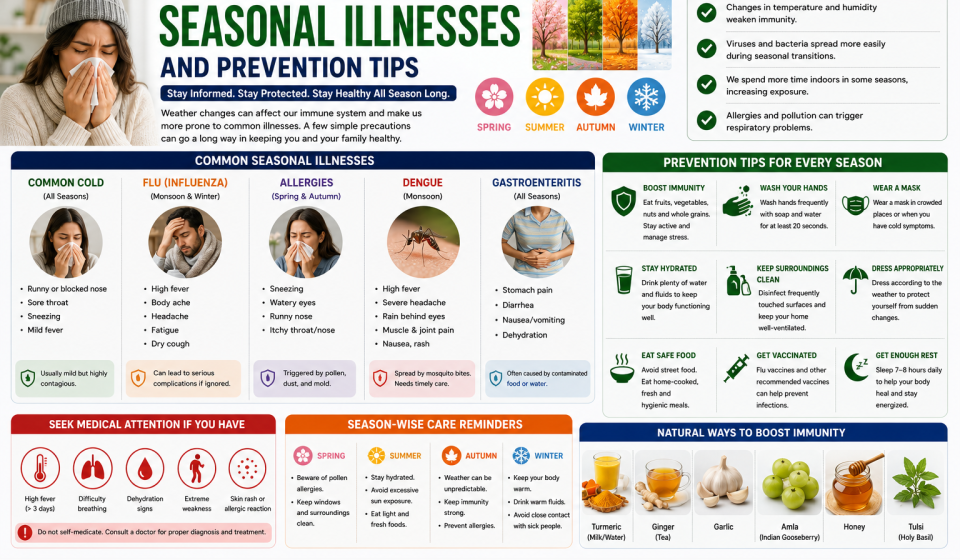
Seasonal illnesses are health conditions that occur more frequently during specific times of the year due to changes in weather, temperature, humidity, environmental conditions, and patterns of human activity. These illnesses can affect people of all ages and range from mild infections such as the common cold to more serious conditions like influenza, seasonal allergies, respiratory infections, and heat-related illnesses. As seasons change, the body may become more vulnerable to infections and environmental triggers, making it important to understand common seasonal health risks and effective prevention strategies. Awareness of seasonal health challenges helps individuals take proactive measures to protect themselves and their families. Whether dealing with winter flu outbreaks, spring allergies, monsoon-related infections, or summer heat exhaustion, understanding how seasonal illnesses develop and how to prevent them can significantly improve overall health and quality of life. This comprehensive guide covers common seasonal illnesses, their symptoms, causes, risk factors, prevention strategies, and practical health tips for every season.
What Are Seasonal Illnesses?
Seasonal illnesses are diseases and health conditions that become more common during particular seasons.
Factors contributing to seasonal illnesses include:
- Temperature changes
- Humidity variations
- Air quality changes
- Increased exposure to allergens
- Changes in social interactions
These conditions may affect respiratory health, immunity, digestion, and overall well-being.
Why Seasonal Illnesses Occur
Seasonal changes influence the environment and human behavior.
Factors include:
- Indoor crowding during colder months
- Increased pollen levels in spring
- Higher temperatures during summer
- Mosquito breeding during rainy seasons
These conditions may increase exposure to disease-causing organisms and environmental triggers.
Common Winter Illnesses
Winter is often associated with increased respiratory infections.
Common examples include:
- Common cold
- Influenza
- Bronchitis
- Sinus infections
Cold weather may contribute to increased indoor gatherings, facilitating the spread of infections.
The Common Cold
The common cold is one of the most frequent seasonal illnesses.
Symptoms include:
- Runny nose
- Sneezing
- Sore throat
- Mild cough
- Nasal congestion
Most cases improve with rest and supportive care.
Influenza (Flu)
Influenza is a contagious viral infection affecting the respiratory system.
Common symptoms include:
- Fever
- Body aches
- Fatigue
- Cough
- Headache
Flu prevention often includes vaccination and good hygiene practices.
Respiratory Infections
Respiratory illnesses tend to increase during colder months.
Examples include:
- Bronchitis
- Pneumonia
- Viral respiratory infections
Prompt medical attention may be necessary for severe symptoms.
Spring Seasonal Illnesses
Spring brings warmer temperatures and increased outdoor activity.
Common spring-related conditions include:
- Seasonal allergies
- Asthma flare-ups
- Eye irritation
Environmental allergens are often responsible.
Seasonal Allergies
Allergic reactions commonly occur during spring due to pollen exposure.
Symptoms include:
- Sneezing
- Itchy eyes
- Runny nose
- Nasal congestion
Avoiding triggers may help reduce symptoms.
Asthma and Seasonal Triggers
Seasonal allergens may worsen asthma symptoms.
Possible symptoms include:
- Wheezing
- Shortness of breath
- Chest tightness
- Persistent cough
Proper management helps reduce complications.
Summer Seasonal Illnesses
Summer introduces unique health challenges.
Common concerns include:
- Heat exhaustion
- Heatstroke
- Food poisoning
- Dehydration
Hot weather requires additional precautions.
Heat Exhaustion
Heat exhaustion occurs when the body struggles to cool itself.
Symptoms include:
- Excessive sweating
- Weakness
- Dizziness
- Nausea
Early intervention can prevent more serious complications.
Heatstroke
Heatstroke is a medical emergency.
Symptoms may include:
- High body temperature
- Confusion
- Rapid heartbeat
- Loss of consciousness
Immediate medical attention is necessary.
Dehydration
Hot weather increases fluid loss through sweating.
Symptoms include:
- Thirst
- Dry mouth
- Fatigue
- Headache
Adequate hydration is essential during warm months.
Foodborne Illnesses in Summer
Warm temperatures can encourage bacterial growth in food.
Common symptoms include:
- Nausea
- Vomiting
- Diarrhea
- Abdominal pain
Safe food handling practices reduce risk.
Monsoon and Rainy Season Illnesses
Rainy seasons often increase the risk of infectious diseases.
Examples include:
- Viral fevers
- Mosquito-borne illnesses
- Gastrointestinal infections
Environmental conditions contribute to disease transmission.
Mosquito-Borne Diseases
Standing water provides breeding grounds for mosquitoes.
Examples include:
- Dengue fever
- Malaria
- Chikungunya
Preventive measures help reduce exposure.
Gastrointestinal Infections
Contaminated food and water may contribute to digestive illnesses.
Symptoms may include:
- Diarrhea
- Vomiting
- Stomach cramps
- Fever
Maintaining food and water hygiene is important.
Risk Factors for Seasonal Illnesses
Certain individuals face higher risk.
These may include:
- Older adults
- Young children
- Individuals with chronic diseases
- People with weakened immune systems
Extra precautions may be necessary.
Importance of a Strong Immune System
A healthy immune system helps the body fight infections.
Healthy habits that support immunity include:
- Balanced nutrition
- Regular exercise
- Quality sleep
- Stress management
Strong immunity contributes to better overall health.
Nutrition and Seasonal Illness Prevention
Healthy eating supports immune function.
Important nutrients include:
- Vitamin C
- Vitamin D
- Zinc
- Protein
A varied and balanced diet helps maintain health year-round.
Stay Hydrated
Hydration is essential in every season.
Benefits include:
- Supporting circulation
- Maintaining body temperature
- Promoting overall wellness
Water remains the best source of hydration.
Practice Good Hand Hygiene
Handwashing is one of the most effective preventive measures.
Wash hands:
- Before eating
- After using the restroom
- After touching public surfaces
Proper hygiene reduces the spread of infections.
Vaccination and Disease Prevention
Vaccinations help protect against several seasonal illnesses.
Benefits include:
- Reduced infection risk
- Lower complication rates
- Improved community health
Vaccines play a critical role in preventive healthcare.
Maintain Regular Physical Activity
Exercise supports:
- Immune function
- Cardiovascular health
- Weight management
- Stress reduction
Consistent activity contributes to long-term wellness.
Get Adequate Sleep
Sleep is essential for immune system performance.
Poor sleep may increase susceptibility to illness.
Healthy sleep habits support recovery and disease prevention.
Manage Stress Effectively
Chronic stress may weaken immune defenses.
Helpful strategies include:
- Meditation
- Deep breathing
- Yoga
- Relaxation techniques
Managing stress supports overall well-being.
Improve Indoor Air Quality
Clean indoor environments may reduce exposure to allergens and airborne irritants.
Helpful measures include:
- Ventilation
- Air filtration
- Regular cleaning
Healthy indoor spaces support respiratory health.
Safe Travel During Seasonal Outbreaks
When traveling during periods of increased illness activity:
- Practice good hygiene
- Stay hydrated
- Follow local health recommendations
Preparedness reduces health risks.
Recognizing When to Seek Medical Care
Medical attention may be necessary when symptoms include:
- High fever
- Breathing difficulties
- Severe dehydration
- Persistent symptoms
Early intervention can prevent complications.
Preventive Healthcare and Seasonal Wellness
Routine health checkups support:
- Early diagnosis
- Risk assessment
- Health education
- Disease prevention
Preventive healthcare is valuable throughout the year.
Long-Term Benefits of Seasonal Illness Prevention
Effective prevention strategies help:
- Reduce infection risk
- Improve quality of life
- Lower healthcare costs
- Support overall wellness
Healthy habits provide lasting protection.
Creating a Year-Round Health Plan
A comprehensive wellness plan may include:
- Balanced nutrition
- Regular exercise
- Adequate sleep
- Hydration
- Vaccination
- Routine health screenings
Consistency is key to long-term health success.
Source Links
https://www.who.int
https://www.cdc.gov
https://www.niaid.nih.gov
https://www.nhs.uk
https://www.ncbi.nlm.nih.gov
Conclusion
Seasonal illnesses are a common part of life, but many can be prevented through proactive health measures and informed lifestyle choices. Understanding the causes, symptoms, and risk factors associated with seasonal conditions allows individuals to take appropriate preventive actions throughout the year. Maintaining a strong immune system through proper nutrition, regular exercise, adequate hydration, quality sleep, stress management, vaccination, and good hygiene can significantly reduce the likelihood of illness. By adopting healthy habits and seeking timely medical care when needed, individuals can protect themselves and their families from seasonal health challenges while enjoying better overall wellness and quality of life.
FAQ
1- What are seasonal illnesses?
Seasonal illnesses are health conditions that occur more frequently during certain times of the year due to weather, environmental, and behavioral factors.
2- Why do respiratory infections increase during winter?
Cold weather often leads to more indoor gatherings, which can increase the spread of respiratory viruses.
3- What causes seasonal allergies?
Seasonal allergies are commonly triggered by airborne allergens such as pollen, mold spores, and grasses.
4- How can I prevent seasonal illnesses?
Healthy habits such as handwashing, vaccination, proper nutrition, exercise, hydration, and adequate sleep can help prevent illness.
5- What are common symptoms of influenza?
Influenza symptoms may include fever, body aches, fatigue, cough, headache, and respiratory discomfort.
6- How can dehydration be prevented during summer?
Drinking enough water, avoiding excessive heat exposure, and replacing fluids lost through sweating can help prevent dehydration.
7- Why are mosquito-borne diseases more common during rainy seasons?
Standing water created by rainfall provides breeding environments for mosquitoes.
8- How does sleep affect immunity?
Quality sleep supports immune function and helps the body fight infections more effectively.
9- When should I see a doctor for a seasonal illness?
Medical attention is recommended for severe symptoms, breathing difficulties, high fever, severe dehydration, or persistent illness.
10- Can seasonal illnesses be completely prevented?
While not all illnesses can be prevented, healthy lifestyle habits and preventive healthcare measures can significantly reduce risk.