Complete Guide to Managing Cholesterol Levels Naturally: Proven Ways to Improve Heart Health Without Complications

Many people believe that medication is the only solution for high cholesterol, but lifestyle changes can significantly improve cholesterol levels naturally.
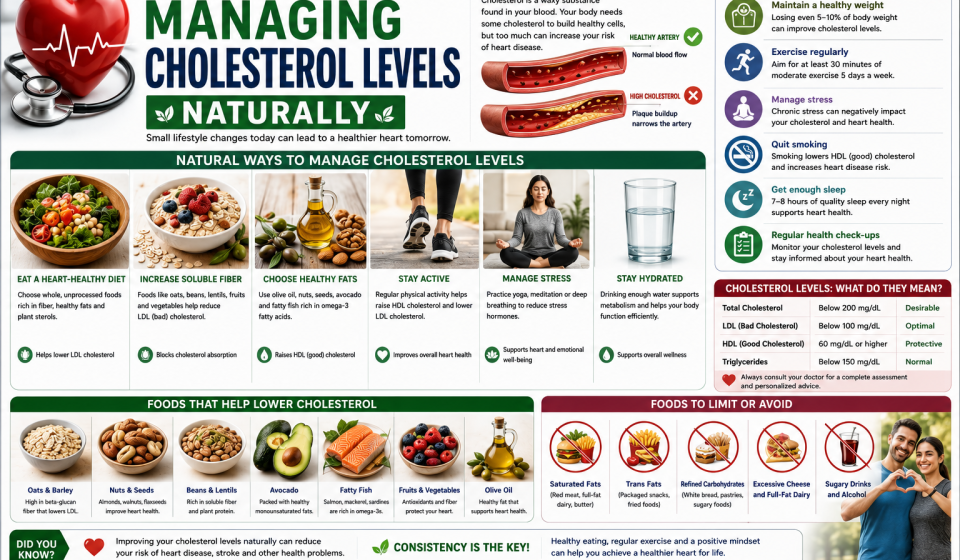
Cholesterol is a waxy, fat-like substance found in every cell of the body and plays an essential role in producing hormones, vitamin D, and substances that help digest food. Although cholesterol is necessary for normal bodily functions, having too much cholesterol in the blood can increase the risk of serious health problems, including heart disease, stroke, and peripheral artery disease. High cholesterol often develops silently without noticeable symptoms, making regular monitoring and preventive measures extremely important for maintaining long-term cardiovascular health. Healthy eating habits, regular physical activity, weight management, stress reduction, and avoiding harmful lifestyle behaviors can positively influence cholesterol balance and support overall heart health. While medical treatment may still be necessary for some individuals, natural cholesterol management remains one of the most effective strategies for reducing cardiovascular risk. This comprehensive guide explains cholesterol, its impact on health, and practical ways to manage cholesterol levels naturally for a healthier and longer life.
What Is Cholesterol?
Cholesterol is a fatty substance that circulates in the bloodstream.
The body uses cholesterol to:
- Build cell membranes
- Produce hormones
- Create vitamin D
- Support digestion
Although cholesterol is essential, excessive amounts can be harmful.
Types of Cholesterol
Understanding cholesterol types is important for effective management.
Low-Density Lipoprotein (LDL)
LDL is often called “bad cholesterol.”
High LDL levels can contribute to plaque buildup inside arteries.
High-Density Lipoprotein (HDL)
HDL is known as “good cholesterol.”
It helps remove excess cholesterol from the bloodstream.
Triglycerides
Triglycerides are another type of fat in the blood.
Elevated triglyceride levels may increase cardiovascular risk.
Why High Cholesterol Is Dangerous
Excess cholesterol can accumulate within artery walls.
Over time, this may lead to:
- Narrowed arteries
- Reduced blood flow
- Heart attack
- Stroke
- Peripheral artery disease
Managing cholesterol is essential for cardiovascular wellness.
Common Causes of High Cholesterol
Several factors contribute to elevated cholesterol levels.
Common causes include:
- Unhealthy diet
- Physical inactivity
- Obesity
- Smoking
- Excess alcohol consumption
- Diabetes
- Genetics
Understanding risk factors supports prevention and treatment.
Risk Factors for High Cholesterol
Individuals may face increased risk due to:
- Family history
- Aging
- Poor dietary habits
- Sedentary lifestyle
- High blood pressure
Regular health screenings are important for early detection.
Symptoms of High Cholesterol
High cholesterol typically causes no obvious symptoms.
Many people discover elevated levels during routine blood tests.
Because symptoms are often absent, preventive screening is essential.
Importance of Cholesterol Testing
Blood tests help evaluate cholesterol levels.
Common measurements include:
- Total cholesterol
- LDL cholesterol
- HDL cholesterol
- Triglycerides
Regular monitoring helps identify risks before complications occur.
Eat More Soluble Fiber
Soluble fiber can help reduce LDL cholesterol naturally.
Good sources include:
- Oats
- Barley
- Apples
- Beans
- Lentils
Fiber helps remove excess cholesterol from the body.
Increase Fruit and Vegetable Consumption
Fruits and vegetables contain important nutrients and antioxidants.
Benefits include:
- Reduced inflammation
- Improved heart health
- Better cholesterol balance
Aim for a variety of colorful produce daily.
Choose Whole Grains
Whole grains contain fiber and beneficial nutrients.
Healthy options include:
- Brown rice
- Whole wheat
- Oats
- Quinoa
Replacing refined grains with whole grains supports cholesterol management.
Include Healthy Fats
Healthy fats can improve cholesterol profiles.
Good sources include:
- Olive oil
- Avocados
- Nuts
- Seeds
These foods may help increase HDL cholesterol while supporting heart health.
Eat Fatty Fish Regularly
Fatty fish provide omega-3 fatty acids.
Examples include:
- Salmon
- Sardines
- Mackerel
- Tuna
Omega-3 fats support cardiovascular wellness and healthy triglyceride levels.
Limit Saturated Fat Intake
Excess saturated fat may contribute to elevated LDL cholesterol.
Foods to reduce include:
- Fatty meats
- Processed meats
- Full-fat dairy products
- Fried foods
Moderation supports healthier cholesterol levels.
Avoid Trans Fats
Trans fats can negatively affect cholesterol balance.
They may:
- Increase LDL cholesterol
- Reduce HDL cholesterol
Avoiding trans fats supports cardiovascular health.
Reduce Added Sugar Consumption
High sugar intake may contribute to elevated triglycerides and weight gain.
Common sources include:
- Sugary drinks
- Sweets
- Processed snacks
Reducing added sugars benefits heart health.
Maintain a Healthy Weight
Excess body weight can negatively affect cholesterol levels.
Weight management helps:
- Lower LDL cholesterol
- Improve HDL cholesterol
- Reduce cardiovascular risk
Even modest weight loss may produce significant health benefits.
Stay Physically Active
Regular exercise improves cholesterol levels and cardiovascular fitness.
Benefits include:
- Increased HDL cholesterol
- Better circulation
- Weight control
- Improved heart function
Physical activity is a key component of natural cholesterol management.
Aerobic Exercise for Cholesterol Control
Examples of aerobic activities include:
- Walking
- Running
- Cycling
- Swimming
Consistent exercise supports long-term cardiovascular health.
Strength Training Benefits
Resistance training contributes to overall wellness.
Benefits include:
- Improved metabolism
- Better weight management
- Enhanced cardiovascular health
Combining strength and aerobic exercise provides optimal results.
Quit Smoking
Smoking negatively affects blood vessels and cholesterol balance.
Benefits of quitting include:
- Improved HDL cholesterol
- Better circulation
- Reduced heart disease risk
Smoking cessation is one of the most effective heart-health interventions.
Limit Alcohol Consumption
Excessive alcohol intake may contribute to:
- Elevated triglycerides
- Weight gain
- Cardiovascular complications
Moderation supports overall wellness.
Manage Stress Effectively
Chronic stress may indirectly affect cholesterol levels through unhealthy lifestyle habits.
Stress-management techniques include:
- Meditation
- Yoga
- Deep breathing
- Relaxation exercises
Reducing stress supports cardiovascular health.
Get Quality Sleep
Sleep plays an important role in metabolic and cardiovascular health.
Poor sleep may contribute to:
- Weight gain
- Elevated cholesterol
- Increased cardiovascular risk
Consistent sleep habits support overall wellness.
Stay Hydrated
Proper hydration supports circulation and overall health.
Water helps maintain normal bodily functions and complements healthy lifestyle habits.
The Role of Plant-Based Foods
Plant-based foods provide fiber, antioxidants, and beneficial nutrients.
Examples include:
- Legumes
- Vegetables
- Fruits
- Whole grains
- Nuts
These foods support healthy cholesterol levels naturally.
Foods That May Help Lower Cholesterol
Several foods are particularly beneficial.
Examples include:
- Oats
- Beans
- Almonds
- Walnuts
- Apples
- Avocados
Incorporating these foods regularly may improve cholesterol balance.
Managing Cholesterol Alongside Medical Treatment
Some individuals may require medication in addition to lifestyle changes.
Natural approaches remain important because they:
- Enhance treatment effectiveness
- Improve overall health
- Reduce cardiovascular risk factors
Always follow healthcare provider recommendations.
Importance of Routine Health Checkups
Regular medical evaluations help monitor:
- Cholesterol levels
- Blood pressure
- Blood sugar
- Weight
Preventive healthcare supports long-term heart health.
Long-Term Benefits of Healthy Cholesterol Levels
Maintaining healthy cholesterol provides numerous benefits.
These include:
- Reduced heart disease risk
- Improved circulation
- Better cardiovascular function
- Increased longevity
Consistent healthy habits lead to lasting improvements.
Creating a Cholesterol-Friendly Lifestyle Plan
Successful cholesterol management involves:
- Healthy eating
- Regular exercise
- Weight control
- Stress management
- Medical monitoring
Small daily improvements often produce significant long-term results.
Source Links
https://www.heart.org
https://www.cdc.gov/cholesterol
https://www.nhlbi.nih.gov
https://www.who.int
https://www.ncbi.nlm.nih.gov
Conclusion
Managing cholesterol levels naturally is one of the most effective ways to protect heart health and reduce the risk of cardiovascular disease. By adopting a balanced diet rich in fiber, fruits, vegetables, whole grains, healthy fats, and omega-3-rich foods, individuals can improve cholesterol balance and support overall wellness. Regular physical activity, maintaining a healthy weight, avoiding smoking, limiting alcohol intake, managing stress, and getting quality sleep further contribute to healthy cholesterol levels. While some individuals may require medical treatment, combining professional care with healthy lifestyle habits offers the best opportunity for long-term cardiovascular health and disease prevention.
FAQ
1- What is cholesterol?
Cholesterol is a waxy substance found in the blood that helps build cells, produce hormones, and support essential bodily functions.
2- What is the difference between LDL and HDL cholesterol?
LDL is often called bad cholesterol because high levels can contribute to artery plaque buildup, while HDL helps remove excess cholesterol from the bloodstream.
3- Can high cholesterol cause symptoms?
High cholesterol usually causes no noticeable symptoms and is often detected through blood testing.
4- What foods help lower cholesterol naturally?
Foods such as oats, beans, fruits, vegetables, nuts, seeds, and fatty fish may help improve cholesterol levels.
5- Does exercise help lower cholesterol?
Yes, regular physical activity can improve HDL cholesterol and support overall cardiovascular health.
6- Can weight loss improve cholesterol levels?
Yes, maintaining a healthy weight can help lower LDL cholesterol and improve heart health.
7- Is high cholesterol dangerous?
High cholesterol increases the risk of heart disease, stroke, and other cardiovascular complications.
8- How often should cholesterol be checked?
Screening frequency depends on age, health status, and risk factors, but regular testing is recommended.
9- Can stress affect cholesterol levels?
Chronic stress may indirectly influence cholesterol through lifestyle behaviors and metabolic effects.
10- Can cholesterol be controlled without medication?
Many people can improve cholesterol through lifestyle changes, although some individuals may also require medical treatment.