Benefits of Regular Exercise for Long-Term Health: The Complete Guide to Living a Stronger, Healthier, and Longer Life

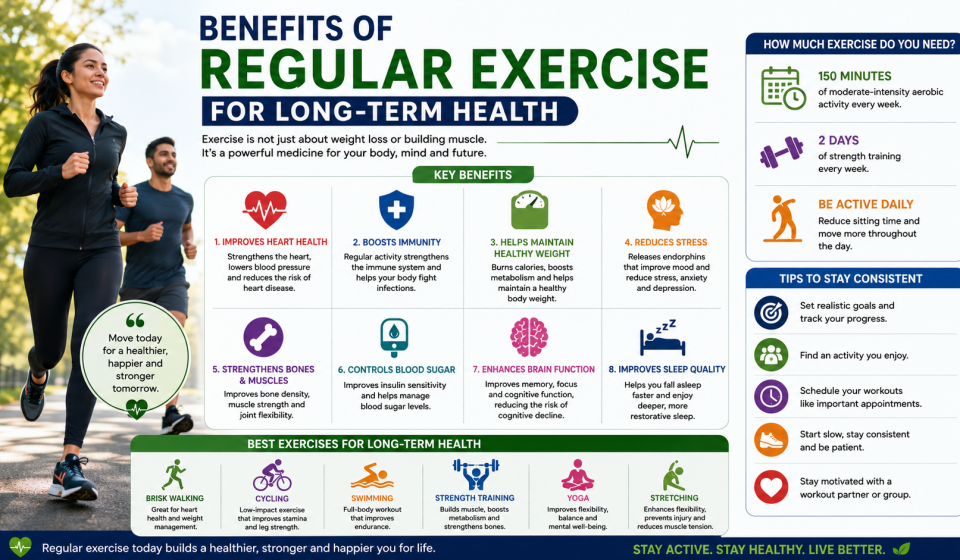
The benefits of exercise extend far beyond weight management. Consistent physical activity helps strengthen the heart, improve circulation, maintain healthy bones and muscles, enhance brain function, boost energy levels, and improve sleep quality.
Regular exercise is one of the most powerful tools for maintaining good health and preventing chronic diseases. In today’s fast-paced world, many people spend long hours sitting at desks, using digital devices, and engaging in activities that require little physical movement. This sedentary lifestyle has contributed to rising rates of obesity, diabetes, heart disease, and other health problems. Fortunately, incorporating regular physical activity into daily life can significantly improve overall well-being and reduce the risk of many serious medical conditions. Exercise is not only beneficial for physical fitness but also plays a crucial role in supporting mental, emotional, and social health. It can also reduce stress, anxiety, and depression while increasing confidence and quality of life. Whether through walking, jogging, cycling, swimming, strength training, yoga, or recreational sports, regular exercise provides long-term advantages that contribute to healthy aging and longevity. This comprehensive guide explores the numerous benefits of exercise and explains why staying active is essential for lifelong health.
What Is Regular Exercise?
Regular exercise refers to planned physical activity performed consistently to improve or maintain health and fitness.
Exercise can include:
- Walking
- Running
- Cycling
- Swimming
- Strength training
- Yoga
- Sports activities
Any movement that increases physical activity levels can contribute to better health.
Why Exercise Is Important
The human body is designed for movement.
Physical activity helps:
- Strengthen muscles
- Improve circulation
- Maintain flexibility
- Support organ function
- Promote mental well-being
Regular movement is essential for overall wellness.
Improves Cardiovascular Health
One of the greatest benefits of exercise is improved heart health.
Regular physical activity helps:
- Strengthen the heart muscle
- Improve blood circulation
- Lower blood pressure
- Improve cholesterol levels
These benefits reduce the risk of cardiovascular disease.
Reduces Risk of Heart Disease
Heart disease remains a leading cause of death worldwide.
Exercise helps lower risk factors such as:
- High blood pressure
- High cholesterol
- Obesity
- Diabetes
An active lifestyle supports long-term cardiovascular wellness.
Helps Maintain Healthy Weight
Exercise increases calorie expenditure and supports weight management.
Benefits include:
- Reduced body fat
- Improved metabolism
- Better energy balance
Combining exercise with healthy eating produces the best results.
Supports Blood Sugar Control
Physical activity improves insulin sensitivity.
Benefits include:
- Better glucose utilization
- Reduced diabetes risk
- Improved metabolic health
Exercise plays a major role in diabetes prevention and management.
Strengthens Muscles
Regular exercise promotes muscle growth and maintenance.
Benefits include:
- Increased strength
- Better physical performance
- Improved posture
Strong muscles support daily activities and reduce injury risk.
Improves Bone Health
Weight-bearing exercises help maintain bone density.
Examples include:
- Walking
- Running
- Strength training
Strong bones reduce the risk of fractures and osteoporosis.
Enhances Joint Function
Appropriate exercise helps maintain joint flexibility and mobility.
Benefits include:
- Improved range of motion
- Reduced stiffness
- Better movement efficiency
Active lifestyles support healthy aging.
Boosts Immune Function
Moderate exercise supports the immune system.
Potential benefits include:
- Improved circulation of immune cells
- Better resistance to illness
- Faster recovery
A healthy immune system contributes to overall wellness.
Improves Mental Health
Exercise has a powerful impact on emotional well-being.
Benefits include:
- Reduced stress
- Improved mood
- Enhanced emotional resilience
Physical activity is often associated with better mental health outcomes.
Reduces Anxiety
Exercise helps regulate stress hormones and promote relaxation.
Activities such as:
- Walking
- Yoga
- Cycling
can help reduce anxiety symptoms and improve emotional balance.
Helps Manage Depression
Regular physical activity may help improve symptoms of depression.
Exercise promotes the release of chemicals that support positive mood and mental wellness.
Improves Brain Function
Exercise supports cognitive health and brain performance.
Benefits include:
- Better concentration
- Improved memory
- Enhanced learning ability
Physical activity promotes healthy blood flow to the brain.
Supports Healthy Aging
Exercise contributes to healthy aging by preserving physical and mental function.
Benefits include:
- Better mobility
- Greater independence
- Reduced disease risk
Active individuals often maintain a higher quality of life as they age.
Increases Energy Levels
Contrary to common belief, exercise often increases energy rather than depleting it.
Benefits include:
- Improved endurance
- Better circulation
- Enhanced oxygen delivery
Regular activity helps reduce feelings of fatigue.
Improves Sleep Quality
Exercise supports healthy sleep patterns.
Benefits include:
- Faster sleep onset
- Improved sleep quality
- Better sleep duration
Adequate sleep contributes to overall health and recovery.
Supports Digestive Health
Physical activity may promote healthy digestion.
Benefits include:
- Improved gut motility
- Better metabolic function
- Enhanced digestive wellness
Combined with proper nutrition, exercise supports gastrointestinal health.
Strengthens the Respiratory System
Regular exercise improves lung function and breathing efficiency.
Benefits include:
- Increased oxygen utilization
- Better endurance
- Improved physical performance
Healthy lungs contribute to overall fitness.
Improves Flexibility and Balance
Activities such as stretching and yoga improve flexibility.
Benefits include:
- Better posture
- Reduced injury risk
- Improved mobility
Balance exercises are particularly beneficial for older adults.
Helps Lower Blood Pressure
Exercise supports healthy blood pressure regulation.
Regular activity may help:
- Improve circulation
- Reduce arterial stiffness
- Enhance heart efficiency
Healthy blood pressure reduces cardiovascular risk.
Supports Healthy Cholesterol Levels
Exercise can positively influence cholesterol balance.
Benefits include:
- Increased HDL cholesterol
- Reduced LDL cholesterol
- Improved cardiovascular health
Physical activity complements heart-healthy nutrition.
Reduces Risk of Certain Cancers
Research suggests that regular exercise may reduce the risk of some cancers.
Potential benefits are linked to:
- Weight management
- Reduced inflammation
- Improved immune function
Healthy lifestyle habits contribute to disease prevention.
Enhances Self-Confidence
Achieving fitness goals often improves self-esteem.
Benefits include:
- Increased confidence
- Better body image
- Enhanced motivation
Positive self-perception contributes to mental wellness.
Improves Social Well-Being
Many forms of exercise involve social interaction.
Examples include:
- Group fitness classes
- Team sports
- Walking groups
Social engagement supports emotional health and motivation.
Supports Longevity
Studies consistently show that physically active individuals often live longer.
Exercise contributes to longevity by:
- Reducing disease risk
- Supporting healthy body function
- Improving overall quality of life
Regular movement remains one of the most effective health investments.
Recommended Types of Exercise
A balanced exercise routine may include:
Aerobic Exercise
Examples:
- Walking
- Running
- Cycling
- Swimming
Strength Training
Examples:
- Weight lifting
- Resistance bands
- Bodyweight exercises
Flexibility Training
Examples:
- Stretching
- Yoga
Balance Exercises
Examples:
- Tai Chi
- Stability training
Combining different exercise types provides comprehensive health benefits.
How Much Exercise Is Recommended?
Health organizations generally recommend regular physical activity throughout the week.
Consistency is more important than perfection.
Even small increases in daily movement can produce meaningful health improvements.
Tips for Staying Active
Simple strategies include:
- Taking regular walks
- Using stairs
- Exercising with friends
- Setting realistic goals
- Choosing enjoyable activities
Sustainable habits lead to long-term success.
Common Barriers to Exercise
Challenges may include:
- Lack of time
- Low motivation
- Busy schedules
Finding activities that fit individual lifestyles can improve adherence.
Creating a Long-Term Exercise Plan
Successful fitness plans should be:
- Realistic
- Enjoyable
- Consistent
- Adaptable
Long-term commitment provides the greatest health rewards.
Source Links
https://www.who.int
https://www.cdc.gov/physicalactivity
https://www.heart.org
https://www.nhlbi.nih.gov
https://www.ncbi.nlm.nih.gov
Conclusion
Regular exercise is one of the most effective ways to improve long-term health and overall quality of life. From strengthening the heart and muscles to supporting mental well-being, improving sleep, enhancing brain function, and reducing the risk of chronic diseases, physical activity offers countless benefits for people of all ages. Exercise supports healthy aging, promotes longevity, and helps individuals maintain independence and vitality throughout life. By making physical activity a consistent part of daily routines, individuals can build a stronger body, a healthier mind, and a more fulfilling future.
FAQ
1- Why is regular exercise important for health?
Regular exercise supports cardiovascular health, muscle strength, mental well-being, weight management, and disease prevention.
2- How does exercise benefit heart health?
Exercise strengthens the heart, improves circulation, lowers blood pressure, and supports healthy cholesterol levels.
3- Can exercise help prevent chronic diseases?
Yes, regular physical activity can reduce the risk of heart disease, diabetes, obesity, and several other chronic conditions.
4- Does exercise improve mental health?
Yes, exercise can reduce stress, anxiety, and depression while improving mood and emotional well-being.
5- How does exercise help with weight management?
Exercise increases calorie expenditure, supports metabolism, and helps maintain a healthy body weight.
6- Can exercise improve sleep quality?
Yes, regular physical activity is associated with better sleep duration and improved sleep quality.
7- What types of exercise are best for overall health?
A combination of aerobic exercise, strength training, flexibility exercises, and balance training provides comprehensive benefits.
8- Does exercise help strengthen bones?
Yes, weight-bearing exercises help maintain bone density and reduce the risk of osteoporosis.
9- Can older adults benefit from regular exercise?
Absolutely. Exercise supports mobility, balance, independence, and healthy aging.
10- How can I stay motivated to exercise regularly?
Choosing enjoyable activities, setting realistic goals, exercising with friends, and creating a consistent routine can help maintain motivation.