How to Improve Heart Health Through Lifestyle Changes: A Complete Guide to a Stronger and Healthier Heart

The good news is that many heart-related conditions can be prevented or managed through simple and sustainable lifestyle changes.
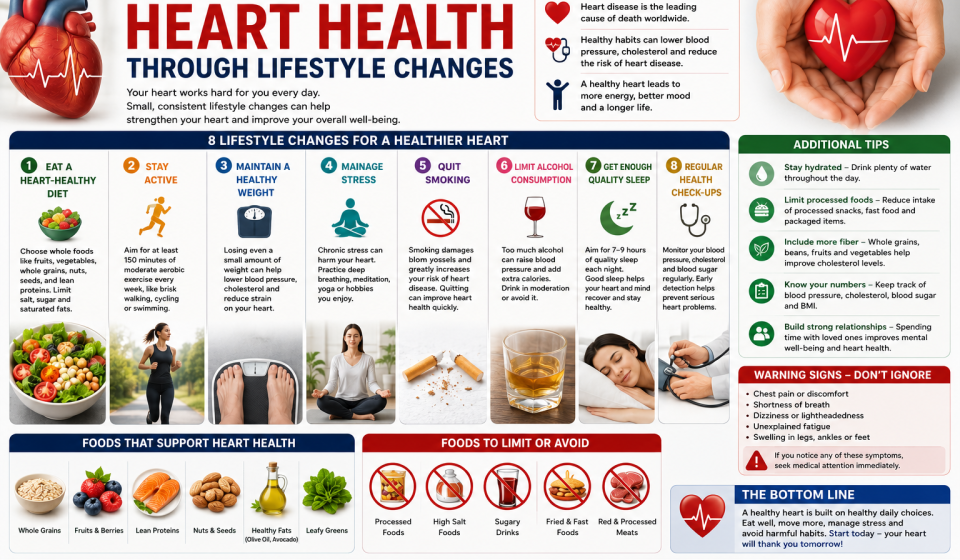
Heart health is one of the most important aspects of overall well-being, yet cardiovascular diseases remain one of the leading causes of illness and death worldwide. The heart works continuously throughout life, pumping oxygen-rich blood to every part of the body and supporting the function of vital organs. However, unhealthy lifestyle habits such as poor diet, physical inactivity, smoking, excessive alcohol consumption, chronic stress, and inadequate sleep can gradually damage the cardiovascular system and increase the risk of heart disease.Improving heart health does not require drastic measures or complicated routines. Small daily choices can have a significant impact on cardiovascular wellness over time. Eating nutritious foods, engaging in regular physical activity, maintaining a healthy weight, managing stress, getting quality sleep, and attending routine medical checkups are among the most effective ways to support heart function. By understanding the factors that influence cardiovascular health and adopting healthier habits, individuals can reduce their risk of heart disease, improve quality of life, and enjoy long-term wellness. This comprehensive guide explores practical lifestyle changes that can help strengthen the heart and protect against cardiovascular disease.
Understanding Heart Health
The heart is a muscular organ responsible for circulating blood throughout the body.
Healthy heart function ensures:
- Efficient oxygen delivery
- Nutrient transportation
- Waste removal
- Proper organ function
Protecting heart health is essential for overall wellness and longevity.
Why Heart Health Matters
Cardiovascular diseases affect millions of people worldwide.
Common heart-related conditions include:
- Coronary artery disease
- Heart attack
- Stroke
- Heart failure
- Hypertension
Healthy lifestyle choices can significantly reduce these risks.
Common Risk Factors for Heart Disease
Several factors increase the likelihood of cardiovascular problems.
Major risk factors include:
- High blood pressure
- High cholesterol
- Diabetes
- Obesity
- Smoking
- Physical inactivity
- Chronic stress
Addressing these factors can improve long-term heart health.
Eat a Heart-Healthy Diet
Nutrition plays a crucial role in cardiovascular wellness.
A heart-friendly diet helps:
- Control cholesterol
- Manage blood pressure
- Reduce inflammation
- Support healthy weight
Healthy eating is one of the most powerful tools for preventing heart disease.
Increase Fruit and Vegetable Intake
Fruits and vegetables provide essential nutrients and antioxidants.
Benefits include:
- Improved heart function
- Better blood pressure control
- Reduced inflammation
- Increased fiber intake
Aim to include a variety of colorful produce in daily meals.
Choose Whole Grains
Whole grains contain more fiber and nutrients than refined grains.
Healthy options include:
- Oats
- Brown rice
- Whole wheat
- Quinoa
- Barley
Whole grains support healthy cholesterol and blood sugar levels.
Include Healthy Fats
Not all fats are harmful.
Heart-healthy fats include:
- Olive oil
- Avocados
- Nuts
- Seeds
- Fatty fish
Replacing unhealthy fats with healthier options supports cardiovascular health.
Limit Saturated and Trans Fats
Excessive saturated and trans fat intake may contribute to elevated cholesterol levels.
Foods to limit include:
- Processed snacks
- Fried foods
- Certain baked goods
- Fatty processed meats
Reducing unhealthy fats helps protect blood vessels and heart function.
Reduce Sodium Intake
Excess sodium can contribute to high blood pressure.
Strategies for reducing sodium include:
- Choosing fresh foods
- Reading food labels
- Limiting processed meals
- Reducing added salt
Lower sodium intake supports healthy blood pressure levels.
Increase Fiber Consumption
Dietary fiber provides several cardiovascular benefits.
Fiber helps:
- Lower cholesterol
- Improve digestion
- Support healthy weight management
- Stabilize blood sugar levels
Fiber-rich foods include fruits, vegetables, legumes, and whole grains.
Stay Physically Active
Regular physical activity strengthens the heart and improves circulation.
Benefits include:
- Lower blood pressure
- Better cholesterol levels
- Improved endurance
- Weight management
Exercise is a cornerstone of cardiovascular wellness.
Recommended Exercise Guidelines
Adults should aim for regular physical activity throughout the week.
Examples include:
- Walking
- Cycling
- Swimming
- Jogging
- Dancing
Consistency is more important than intensity for long-term success.
Strength Training and Heart Health
Resistance exercises support overall fitness and cardiovascular wellness.
Benefits include:
- Increased muscle mass
- Improved metabolism
- Better weight control
Strength training complements aerobic exercise programs.
Maintain a Healthy Weight
Excess body weight increases strain on the heart.
Healthy weight management helps:
- Lower blood pressure
- Improve cholesterol levels
- Reduce diabetes risk
Sustainable lifestyle habits support long-term weight control.
Manage Blood Pressure
High blood pressure is a major risk factor for heart disease.
Ways to support healthy blood pressure include:
- Healthy eating
- Physical activity
- Weight management
- Stress reduction
Regular monitoring is important for early detection.
Control Cholesterol Levels
High cholesterol can contribute to plaque buildup in arteries.
Strategies for maintaining healthy cholesterol include:
- Eating fiber-rich foods
- Choosing healthy fats
- Exercising regularly
- Avoiding tobacco products
Managing cholesterol reduces cardiovascular risk.
Prevent and Manage Diabetes
Diabetes significantly increases the risk of heart disease.
Healthy habits that support blood sugar control include:
- Balanced nutrition
- Physical activity
- Weight management
- Routine medical monitoring
Effective diabetes management protects cardiovascular health.
Quit Smoking
Smoking damages blood vessels and increases cardiovascular risk.
Benefits of quitting include:
- Improved circulation
- Lower blood pressure
- Better lung function
- Reduced heart disease risk
Smoking cessation is one of the most important steps toward better heart health.
Limit Alcohol Consumption
Excessive alcohol intake may negatively affect the cardiovascular system.
Moderation helps support:
- Healthy blood pressure
- Weight management
- Liver health
Responsible consumption supports overall wellness.
Manage Stress Effectively
Chronic stress can contribute to cardiovascular problems.
Stress may increase:
- Blood pressure
- Heart rate
- Inflammation
Healthy stress-management techniques support heart health.
Practice Relaxation Techniques
Helpful methods include:
- Meditation
- Deep breathing
- Yoga
- Mindfulness exercises
Regular relaxation practices may reduce stress-related health risks.
Prioritize Quality Sleep
Sleep is essential for cardiovascular wellness.
Poor sleep may contribute to:
- High blood pressure
- Obesity
- Diabetes
- Increased cardiovascular risk
Adults should aim for consistent, restorative sleep.
Stay Hydrated
Adequate hydration supports healthy circulation and overall body function.
Benefits include:
- Improved blood flow
- Better physical performance
- Enhanced organ function
Water should be the primary source of hydration.
Build Strong Social Connections
Healthy relationships contribute to emotional and physical well-being.
Social support may:
- Reduce stress
- Encourage healthy behaviors
- Improve mental health
Strong social networks support long-term wellness.
Regular Health Screenings
Routine medical evaluations help identify risk factors early.
Important screenings include:
- Blood pressure checks
- Cholesterol testing
- Blood sugar monitoring
- Weight assessments
Early detection supports timely intervention.
Know the Warning Signs of Heart Disease
Common symptoms may include:
- Chest discomfort
- Shortness of breath
- Fatigue
- Dizziness
- Irregular heartbeat
Prompt medical attention is important when symptoms occur.
The Role of Preventive Healthcare
Preventive healthcare helps reduce the risk of cardiovascular disease.
Preventive strategies include:
- Healthy lifestyle habits
- Routine screenings
- Health education
- Risk factor management
Prevention remains one of the most effective approaches to heart health.
Creating a Personalized Heart Health Plan
Every individual has unique health needs.
A personalized plan may consider:
- Age
- Family history
- Existing health conditions
- Lifestyle habits
Healthcare professionals can provide tailored recommendations.
Long-Term Benefits of Heart-Healthy Living
Consistent lifestyle improvements can lead to:
- Reduced heart disease risk
- Improved energy levels
- Better quality of life
- Increased longevity
Healthy habits provide lasting cardiovascular benefits.
Source Links
https://www.heart.org
https://www.cdc.gov/heartdisease
https://www.who.int
https://www.nhlbi.nih.gov
https://www.ncbi.nlm.nih.gov
Conclusion
Improving heart health through lifestyle changes is one of the most effective ways to reduce the risk of cardiovascular disease and promote long-term wellness. Healthy eating, regular physical activity, maintaining a healthy weight, managing blood pressure and cholesterol, controlling diabetes, quitting smoking, limiting alcohol intake, reducing stress, prioritizing sleep, and attending routine health screenings all contribute to a stronger and healthier heart. While no single change guarantees perfect cardiovascular health, the combination of consistent healthy habits can significantly improve heart function, enhance quality of life, and increase longevity. Taking proactive steps today can lead to a healthier future and better overall well-being.
FAQ
1- What is the best way to improve heart health naturally?
A combination of healthy eating, regular exercise, stress management, quality sleep, and avoiding tobacco products supports heart health naturally.
2- Which foods are best for heart health?
Fruits, vegetables, whole grains, nuts, seeds, legumes, and fatty fish are excellent choices for cardiovascular wellness.
3- How much exercise is recommended for heart health?
Regular physical activity throughout the week, including aerobic and strength-training exercises, supports cardiovascular health.
4- Can losing weight improve heart health?
Yes, maintaining a healthy weight can lower blood pressure, improve cholesterol levels, and reduce heart disease risk.
5- Why is high blood pressure dangerous?
High blood pressure increases strain on the heart and blood vessels, raising the risk of heart attack, stroke, and other complications.
6- Does stress affect the heart?
Yes, chronic stress can contribute to elevated blood pressure, inflammation, and other cardiovascular risk factors.
7- How does smoking affect heart health?
Smoking damages blood vessels, reduces oxygen delivery, and significantly increases the risk of heart disease.
8- Why is sleep important for cardiovascular health?
Quality sleep supports healthy blood pressure, hormone balance, and overall heart function.
9- How often should heart health screenings be performed?
Screening frequency depends on age, health status, and risk factors, but regular checkups are recommended.
10- Can heart disease be prevented?
Many cases of heart disease can be prevented or significantly reduced through healthy lifestyle choices and preventive healthcare.