What Causes Frequent Headaches and When to Visit a Doctor: A Complete Guide to Understanding, Managing, and Preventing Chronic Head Pain

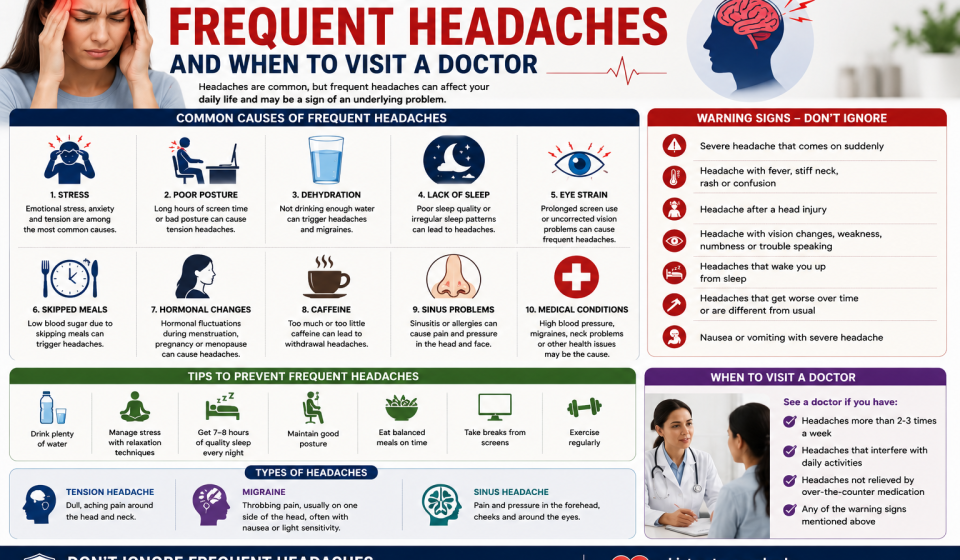
Frequent headaches can be associated with lifestyle factors, neurological conditions, infections, hormonal changes, vision problems, medication overuse, and other health concerns.
Headaches are among the most common health complaints experienced by people of all ages. While occasional headaches are usually harmless and often result from temporary factors such as stress, lack of sleep, dehydration, or hunger, frequent headaches can significantly affect daily life, productivity, and overall well-being. Many individuals experience recurring headaches without understanding the underlying cause, which may lead to unnecessary discomfort and delayed medical attention. Understanding why headaches occur and identifying potential triggers is an important step toward effective management and improved quality of life.
Although most headaches are not serious, some may indicate an underlying medical condition that requires professional evaluation.Recognizing warning signs and knowing when to seek medical advice can help prevent complications and ensure timely treatment. This comprehensive guide explores the common causes of frequent headaches, symptoms to watch for, treatment options, prevention strategies, and situations that require immediate medical attention.
What Is a Headache?
A headache is pain or discomfort occurring in the head, scalp, face, or neck region.
Headaches can vary in:
- Intensity
- Frequency
- Duration
- Location
Some headaches last only a few minutes, while others may persist for hours or even days.
How Common Are Frequent Headaches?
Millions of people experience headaches regularly.
Frequent headaches can affect:
- Work performance
- School activities
- Family life
- Mental health
- Sleep quality
Understanding the cause is essential for effective treatment.
Types of Headaches
Headaches are generally categorized into two main groups:
Primary Headaches
Primary headaches are not caused by another medical condition.
Common examples include:
- Tension headaches
- Migraines
- Cluster headaches
Secondary Headaches
Secondary headaches result from an underlying health issue.
Examples include:
- Infections
- Sinus problems
- High blood pressure
- Head injuries
Identifying the type of headache helps guide treatment.
Tension Headaches
Tension headaches are among the most common headache types.
Symptoms
- Dull aching pain
- Tightness around the forehead
- Neck and shoulder tension
- Mild to moderate discomfort
Common Causes
- Stress
- Anxiety
- Poor posture
- Muscle tension
- Fatigue
Managing triggers often helps reduce frequency.
Migraines
Migraines are more severe than typical headaches and may involve neurological symptoms.
Symptoms
- Throbbing pain
- Nausea
- Vomiting
- Sensitivity to light
- Sensitivity to sound
Common Triggers
- Stress
- Hormonal changes
- Certain foods
- Sleep disturbances
- Environmental factors
Migraine management often requires a combination of lifestyle and medical approaches.
Cluster Headaches
Cluster headaches are less common but extremely painful.
Symptoms
- Severe pain around one eye
- Facial sweating
- Eye redness
- Nasal congestion
These headaches often occur in cycles or clusters.
Stress and Frequent Headaches
Stress is one of the leading causes of recurrent headaches.
Stress can lead to:
- Muscle tension
- Sleep disturbances
- Increased pain sensitivity
Effective stress management may reduce headache frequency.
Lack of Sleep
Poor sleep habits are strongly associated with headaches.
Sleep-related factors include:
- Insomnia
- Irregular sleep schedules
- Sleep deprivation
Adequate sleep is important for neurological health and headache prevention.
Dehydration
Even mild dehydration can trigger headaches.
Symptoms of dehydration may include:
- Thirst
- Dizziness
- Fatigue
- Head pain
Drinking enough water throughout the day helps support overall health.
Eye Strain and Digital Device Use
Extended screen time can contribute to headaches.
Common causes include:
- Computer use
- Smartphone use
- Poor lighting
- Uncorrected vision problems
Regular breaks and proper eye care can help reduce symptoms.
Poor Posture
Improper posture may strain muscles in the neck, shoulders, and upper back.
This tension can contribute to:
- Tension headaches
- Neck pain
- Chronic discomfort
Maintaining ergonomic habits supports headache prevention.
Hunger and Skipped Meals
Low blood sugar levels can trigger headaches in some individuals.
Skipping meals may cause:
- Fatigue
- Irritability
- Head pain
Regular balanced meals help maintain stable energy levels.
Caffeine and Headaches
Caffeine can both relieve and trigger headaches.
Possible factors include:
- Excessive caffeine intake
- Caffeine withdrawal
Moderation is often important for headache management.
Hormonal Changes
Hormonal fluctuations can contribute to headaches, particularly in women.
Triggers may include:
- Menstrual cycles
- Pregnancy
- Menopause
- Hormonal medications
Understanding hormonal patterns may help identify headache triggers.
Sinus Problems
Sinus inflammation and infections may cause facial pressure and headaches.
Common symptoms include:
- Nasal congestion
- Facial pain
- Pressure around the eyes
Treating the underlying sinus condition often improves symptoms.
High Blood Pressure
Severely elevated blood pressure may contribute to headaches.
Routine blood pressure monitoring is important, especially for individuals at risk of hypertension.
Medication Overuse Headaches
Frequent use of certain pain-relief medications may actually worsen headaches.
This condition is known as medication overuse headache.
Medical guidance is often necessary for proper management.
Headaches and Mental Health
Anxiety and depression can influence headache frequency and severity.
Mental health factors may contribute to:
- Increased muscle tension
- Sleep disturbances
- Pain sensitivity
Addressing emotional well-being may help reduce headaches.
Infections and Headaches
Various infections can cause headaches.
Examples include:
- Influenza
- Viral illnesses
- Sinus infections
- Meningitis
Persistent or severe headaches associated with infection require medical attention.
Neurological Conditions
Certain neurological disorders may cause recurrent headaches.
Examples include:
- Migraines
- Brain injuries
- Rare neurological conditions
Specialized evaluation may be required when neurological symptoms occur.
Common Symptoms Associated with Frequent Headaches
Headaches may occur with:
- Nausea
- Dizziness
- Blurred vision
- Light sensitivity
- Neck pain
- Fatigue
Tracking symptoms can help healthcare providers determine the cause.
Diagnosing Frequent Headaches
Healthcare professionals may use:
- Medical history
- Physical examination
- Neurological assessment
- Vision testing
- Blood tests
- Imaging studies when necessary
Accurate diagnosis is essential for effective treatment.
Treatment Options for Frequent Headaches
Treatment depends on the underlying cause.
Common approaches include:
- Lifestyle modifications
- Hydration
- Stress management
- Sleep improvement
- Medical treatment when appropriate
Individualized care often produces the best results.
Lifestyle Changes That May Help
Healthy habits can significantly reduce headache frequency.
Important strategies include:
- Staying hydrated
- Maintaining regular sleep schedules
- Exercising regularly
- Managing stress
- Eating balanced meals
Consistency is important for long-term results.
Importance of a Headache Diary
A headache diary can help identify patterns and triggers.
Information to record includes:
- Date and time
- Duration
- Symptoms
- Food intake
- Stress levels
- Sleep habits
Tracking headaches can support diagnosis and treatment planning.
When to Visit a Doctor
Medical evaluation is recommended when headaches:
- Become frequent
- Interfere with daily activities
- Change in pattern
- Do not improve with self-care
Professional assessment helps identify underlying causes.
Warning Signs Requiring Immediate Medical Attention
Seek urgent medical care if headaches occur with:
- Sudden severe pain
- Confusion
- Weakness
- Difficulty speaking
- Vision loss
- Seizures
- High fever
- Head injury
These symptoms may indicate a serious medical condition.
Preventing Frequent Headaches
Preventive measures include:
- Healthy nutrition
- Adequate hydration
- Regular exercise
- Stress reduction
- Quality sleep
- Routine medical care
Prevention often reduces both frequency and severity.
Long-Term Outlook
Most headaches can be effectively managed once the underlying cause is identified.
Early intervention and healthy lifestyle habits can significantly improve quality of life and reduce headache-related complications.
Source Links
https://www.ninds.nih.gov
https://www.mayoclinic.org
https://www.cdc.gov
https://www.who.int
https://www.ncbi.nlm.nih.gov
Conclusion
Frequent headaches can result from a wide range of factors, including stress, sleep deprivation, dehydration, migraines, hormonal changes, vision problems, medication overuse, infections, and underlying medical conditions. While many headaches can be managed through healthy lifestyle changes and preventive strategies, persistent or severe headaches should never be ignored. Understanding triggers, maintaining healthy habits, and seeking medical evaluation when necessary can help individuals achieve better symptom control and improve overall quality of life. Recognizing warning signs and obtaining timely medical care are essential for ensuring optimal neurological and physical health.
FAQ
1- What causes frequent headaches?
Frequent headaches may be caused by stress, migraines, dehydration, poor sleep, eye strain, hormonal changes, infections, or underlying medical conditions.
2- Are frequent headaches normal?
Occasional headaches are common, but frequent headaches should be evaluated if they occur regularly or affect daily activities.
3- Can dehydration cause headaches?
Yes, dehydration is a common trigger and can lead to headaches, fatigue, and dizziness.
4- How does stress contribute to headaches?
Stress can increase muscle tension, disrupt sleep, and heighten pain sensitivity, leading to headaches.
5- Can lack of sleep cause headaches?
Yes, insufficient or poor-quality sleep is a common headache trigger.
6- When should I see a doctor for headaches?
You should consult a healthcare professional if headaches become frequent, severe, persistent, or change in pattern.
7- What are migraine headaches?
Migraines are neurological headaches often associated with throbbing pain, nausea, and sensitivity to light and sound.
8- Can screen time cause headaches?
Yes, prolonged use of digital devices may contribute to eye strain and headache symptoms.
9- What symptoms require emergency medical attention?
Sudden severe headaches, confusion, weakness, speech difficulties, seizures, vision loss, or headaches following head injury require immediate medical care.
10- How can headaches be prevented?
Healthy sleep habits, hydration, balanced nutrition, stress management, regular exercise, and routine medical care can help reduce headache frequency.