How Stress Affects Your Physical and Mental Health: The Complete Guide to Understanding, Managing, and Preventing Stress-Related Problems

However, when stress becomes chronic or overwhelming, it can have serious consequences for both physical and mental health.
Stress is a natural response that helps the body react to challenges, demands, and potentially threatening situations. In small amounts, stress can be beneficial by improving focus, motivation, and performance. Modern lifestyles often expose people to ongoing stress from work responsibilities, financial concerns, family obligations, health issues, and social pressures. Over time, persistent stress can affect nearly every system in the body, increasing the risk of various health problems and reducing overall quality of life.
Understanding how stress impacts health is essential for recognizing warning signs and developing effective coping strategies. Chronic stress can contribute to cardiovascular disease, weakened immunity, digestive disorders, sleep problems, anxiety, depression, and many other conditions. Because the effects of stress can accumulate gradually, many individuals may not realize how significantly it is affecting their well-being until symptoms become severe. By learning about the physical and psychological consequences of stress, individuals can take proactive steps to improve resilience, protect their health, and maintain emotional balance in daily life.
What Is Stress?
Stress is the body’s response to physical, emotional, or psychological demands.
When faced with a challenge, the body activates a complex stress response involving hormones and nervous system activity.
Common sources of stress include:
- Work pressure
- Financial difficulties
- Relationship problems
- Health concerns
- Major life changes
- Academic responsibilities
Stress affects everyone differently depending on individual circumstances and coping abilities.
Understanding the Stress Response
When stress occurs, the body releases hormones such as:
- Adrenaline
- Cortisol
These hormones prepare the body for a “fight-or-flight” response.
Immediate effects may include:
- Increased heart rate
- Faster breathing
- Elevated blood pressure
- Increased alertness
While helpful in short-term situations, prolonged activation can negatively affect health.
Types of Stress
Acute Stress
Acute stress is short-term stress triggered by immediate challenges.
Examples include:
- Job interviews
- Public speaking
- Examinations
- Unexpected events
Chronic Stress
Chronic stress persists for extended periods and may result from ongoing life difficulties.
Examples include:
- Long-term financial problems
- Workplace stress
- Chronic illness
- Family conflicts
Chronic stress is more likely to cause significant health problems.
How Stress Affects Physical Health
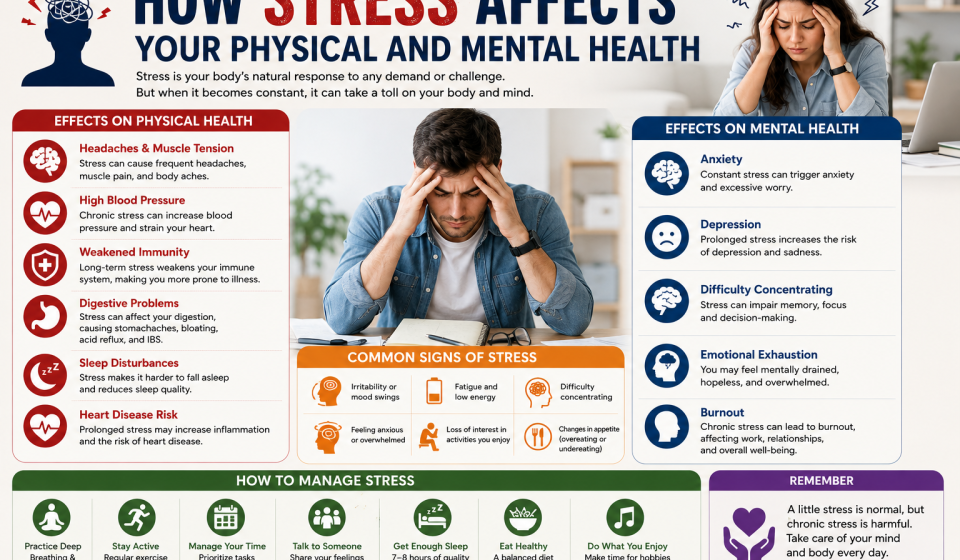
Stress can influence nearly every organ system in the body.
Long-term exposure may contribute to:
- Heart disease
- Digestive disorders
- Immune dysfunction
- Sleep disturbances
- Chronic pain
The physical effects often develop gradually over time.
Impact on the Cardiovascular System
Chronic stress places additional strain on the heart and blood vessels.
Potential effects include:
- Elevated blood pressure
- Increased heart rate
- Greater risk of heart disease
- Higher stroke risk
Persistent stress may contribute to long-term cardiovascular complications.
Stress and High Blood Pressure
During stressful situations, blood pressure temporarily rises.
When stress becomes chronic, repeated increases may contribute to hypertension.
Managing stress is an important part of maintaining heart health.
Effects on the Immune System
The immune system helps protect the body from infections and disease.
Chronic stress may:
- Weaken immune defenses
- Increase susceptibility to illness
- Slow recovery from infections
- Increase inflammation
Reduced immune function can affect overall health and wellness.
Digestive Problems Caused by Stress
Stress can significantly impact digestive health.
Common digestive symptoms include:
- Stomach discomfort
- Nausea
- Indigestion
- Diarrhea
- Constipation
Long-term stress may worsen digestive disorders in some individuals.
Stress and Weight Changes
Stress can influence eating habits and metabolism.
Possible outcomes include:
- Increased appetite
- Emotional eating
- Weight gain
- Reduced appetite
- Unintentional weight loss
Hormonal changes associated with stress often affect food choices and eating behavior.
Sleep Disturbances
Sleep and stress are closely connected.
Stress may contribute to:
- Difficulty falling asleep
- Frequent awakenings
- Poor sleep quality
- Insomnia
Insufficient sleep can further worsen stress levels, creating a cycle that is difficult to break.
Muscle Tension and Pain
Stress often causes muscles to tighten.
This may lead to:
- Neck pain
- Shoulder tension
- Back pain
- Headaches
Chronic muscle tension can affect physical comfort and daily functioning.
Stress and Headaches
Many people experience headaches during stressful periods.
Stress-related headaches may include:
- Tension headaches
- Migraine triggers
- Neck-related discomfort
Managing stress can help reduce headache frequency in some individuals.
How Stress Affects Mental Health
Mental health is particularly vulnerable to prolonged stress.
Chronic stress may contribute to:
- Anxiety
- Depression
- Irritability
- Emotional exhaustion
- Difficulty concentrating
Psychological effects often impact personal and professional life.
Anxiety and Chronic Stress
Stress and anxiety frequently occur together.
Symptoms may include:
- Excessive worry
- Restlessness
- Racing thoughts
- Difficulty relaxing
Persistent anxiety can interfere with daily activities and relationships.
Depression and Emotional Well-Being
Long-term stress may increase the risk of depression.
Possible symptoms include:
- Persistent sadness
- Loss of motivation
- Fatigue
- Feelings of hopelessness
Early recognition and support are important for maintaining mental wellness.
Cognitive Effects of Stress
Stress can affect brain function and cognitive performance.
Potential effects include:
- Memory problems
- Reduced concentration
- Poor decision-making
- Mental fatigue
Chronic stress may make routine tasks more challenging.
Stress and Workplace Performance
Work-related stress can affect productivity and job satisfaction.
Possible consequences include:
- Reduced focus
- Increased errors
- Burnout
- Lower motivation
Managing workplace stress supports both professional success and well-being.
Relationship Challenges
Stress can influence communication and emotional interactions.
Effects may include:
- Irritability
- Reduced patience
- Increased conflict
- Emotional withdrawal
Healthy coping strategies can improve relationship quality.
Stress and Hormonal Balance
Stress affects multiple hormones throughout the body.
Hormonal changes may influence:
- Mood
- Energy levels
- Sleep
- Appetite
- Reproductive health
Maintaining balance is important for overall wellness.
Long-Term Health Risks of Chronic Stress
Persistent stress has been associated with:
- Cardiovascular disease
- Diabetes
- Obesity
- Mental health disorders
- Sleep disorders
Reducing chronic stress may help lower these health risks.
Recognizing Signs of Excessive Stress
Common warning signs include:
- Constant fatigue
- Irritability
- Sleep problems
- Frequent headaches
- Difficulty concentrating
- Changes in appetite
Recognizing symptoms early allows individuals to take action before complications develop.
Healthy Ways to Manage Stress
Effective stress management strategies include:
- Regular exercise
- Healthy eating
- Adequate sleep
- Relaxation techniques
- Social support
- Time management
Healthy habits help improve resilience and emotional well-being.
The Benefits of Physical Activity
Exercise is one of the most effective stress-management tools.
Benefits include:
- Reduced stress hormones
- Improved mood
- Better sleep
- Increased energy
Regular activity supports both physical and mental health.
Mindfulness and Meditation
Mindfulness practices encourage present-moment awareness.
Benefits may include:
- Reduced anxiety
- Improved emotional regulation
- Better focus
- Increased relaxation
Consistent practice can support long-term stress reduction.
Importance of Social Support
Strong social connections help people cope with stressful situations.
Support may come from:
- Family
- Friends
- Community groups
- Healthcare professionals
Social support contributes to emotional resilience.
When to Seek Professional Help
Professional support may be beneficial when stress:
- Persists for long periods
- Interferes with daily functioning
- Causes significant emotional distress
- Contributes to anxiety or depression
Early intervention can improve outcomes and overall well-being.
Building Long-Term Resilience
Resilience refers to the ability to adapt to challenges and recover from difficulties.
Strategies for building resilience include:
- Positive coping skills
- Healthy relationships
- Self-care
- Emotional awareness
- Problem-solving skills
Resilience helps individuals manage stress more effectively over time.
Source Links
https://www.who.int
https://www.cdc.gov
https://www.nih.gov
https://www.mayoclinic.org
https://www.ncbi.nlm.nih.gov
Conclusion
Stress is a normal part of life, but chronic stress can have significant effects on both physical and mental health. From increasing the risk of heart disease and digestive problems to contributing to anxiety, depression, sleep disturbances, and cognitive difficulties, prolonged stress affects nearly every aspect of well-being. Understanding how stress impacts the body and mind is the first step toward developing healthier coping mechanisms. Through regular exercise, proper sleep, balanced nutrition, mindfulness practices, social support, and professional guidance when necessary, individuals can effectively manage stress and improve their overall quality of life. Prioritizing stress management is an essential component of long-term health and wellness.
FAQ
1- What is stress?
Stress is the body’s natural response to physical, emotional, or psychological challenges and demands.
2- How does chronic stress affect physical health?
Chronic stress may contribute to heart disease, high blood pressure, digestive problems, weakened immunity, and sleep disorders.
3- Can stress affect mental health?
Yes, prolonged stress can increase the risk of anxiety, depression, emotional exhaustion, and other mental health concerns.
4- Why does stress cause sleep problems?
Stress can make it difficult to relax, leading to trouble falling asleep and poor sleep quality.
5- Can stress cause headaches?
Yes, stress is a common trigger for tension headaches and may contribute to migraines in some individuals.
6- How does exercise help reduce stress?
Physical activity helps lower stress hormones, improve mood, and promote better sleep.
7- What are common signs of excessive stress?
Symptoms may include fatigue, irritability, headaches, sleep disturbances, difficulty concentrating, and appetite changes.
8- Can stress affect the immune system?
Yes, chronic stress may weaken immune function and increase susceptibility to illness.
9- When should I seek professional help for stress?
Professional support is recommended when stress becomes overwhelming or significantly affects daily life and well-being.
10- What is the best way to manage stress?
A combination of healthy lifestyle habits, relaxation techniques, social support, and professional guidance can help manage stress effectively.