Best Diet Plan for Patients with Diabetes and High Blood Pressure: Complete Nutrition Guide for Better Blood Sugar and Heart Health

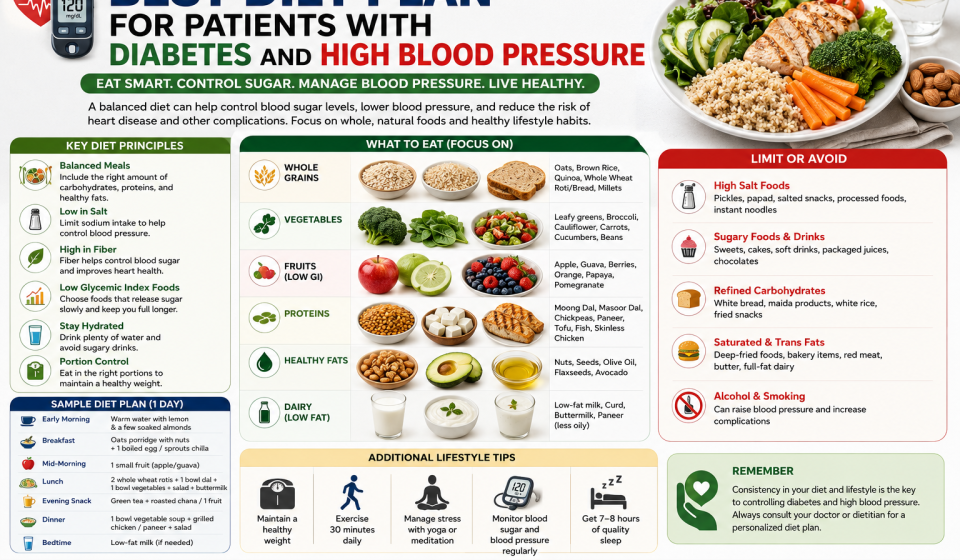
A well-balanced diet for people with diabetes and hypertension focuses on nutrient-rich foods, portion control, healthy fats, lean proteins, high-fiber carbohydrates, and reduced sodium intake.
Managing diabetes and high blood pressure at the same time can be challenging, but the right diet plays a crucial role in controlling both conditions. Diabetes affects the body’s ability to regulate blood sugar levels, while high blood pressure places extra strain on the heart and blood vessels. When these two conditions occur together, the risk of serious health complications such as heart disease, stroke, kidney disease, and vision problems increases significantly. Fortunately, healthy eating habits can help improve blood sugar control, lower blood pressure, maintain a healthy weight, and support overall wellness.The goal is not only to manage symptoms but also to prevent long-term complications and improve quality of life. By understanding which foods to include and which foods to limit, patients can create a sustainable eating plan that supports both metabolic and cardiovascular health. This comprehensive guide explains the best diet plan for individuals living with diabetes and high blood pressure and provides practical tips for maintaining long-term health.
Understanding the Connection Between Diabetes and High Blood Pressure
Diabetes and hypertension frequently occur together because they share many common risk factors.
These include:
- Obesity
- Physical inactivity
- Poor dietary habits
- Insulin resistance
- Chronic inflammation
When both conditions are present, blood vessels can become damaged more quickly, increasing the likelihood of serious complications.
Why Diet Matters
Nutrition is one of the most powerful tools for managing both diabetes and hypertension.
A proper diet can help:
- Stabilize blood sugar levels
- Lower blood pressure
- Improve cholesterol levels
- Support weight management
- Protect heart health
- Reduce inflammation
Consistent healthy eating habits provide long-term benefits for overall health.
Key Principles of a Diabetes and Blood Pressure-Friendly Diet
A healthy diet should focus on:
- High-fiber foods
- Lean protein sources
- Healthy fats
- Whole grains
- Fresh fruits and vegetables
- Low-sodium choices
The goal is to create balanced meals that support both glucose control and cardiovascular health.
Focus on Non-Starchy Vegetables
Non-starchy vegetables are rich in nutrients and low in calories.
Excellent choices include:
- Spinach
- Broccoli
- Cauliflower
- Cabbage
- Cucumbers
- Bell peppers
- Green beans
- Lettuce
These vegetables provide fiber and essential vitamins while helping control blood sugar levels.
Include High-Fiber Foods
Fiber slows digestion and helps prevent sudden spikes in blood sugar.
Benefits of fiber include:
- Improved glucose control
- Better digestive health
- Increased satiety
- Lower cholesterol levels
Good sources include:
- Oats
- Beans
- Lentils
- Chia seeds
- Whole grains
- Vegetables
Choose Healthy Carbohydrates
Carbohydrates should come from nutrient-rich sources rather than refined foods.
Recommended options include:
- Brown rice
- Quinoa
- Oats
- Whole wheat products
- Sweet potatoes
- Millets
These foods provide steady energy and support blood sugar stability.
Lean Protein Sources
Protein helps maintain muscle mass and promotes fullness.
Healthy protein options include:
- Fish
- Skinless poultry
- Eggs
- Tofu
- Lentils
- Beans
- Low-fat dairy products
Including protein with meals may help reduce blood sugar fluctuations.
Healthy Fats for Heart Health
Healthy fats support cardiovascular wellness and may improve cholesterol levels.
Good sources include:
- Olive oil
- Avocados
- Almonds
- Walnuts
- Flaxseeds
- Chia seeds
- Fatty fish
Healthy fats should replace saturated and trans fats whenever possible.
The Importance of Portion Control
Even healthy foods can affect blood sugar and weight when consumed in excessive amounts.
Portion control helps:
- Maintain healthy blood sugar levels
- Support weight management
- Reduce overeating
- Improve meal balance
Mindful eating can make a significant difference in long-term health outcomes.
Limit Sodium Intake
Reducing sodium is essential for controlling high blood pressure.
Ways to lower sodium intake include:
- Avoiding processed foods
- Limiting packaged snacks
- Choosing fresh ingredients
- Reading nutrition labels
- Reducing added salt during cooking
Lower sodium intake supports healthier blood pressure levels.
Foods to Avoid or Limit
Certain foods can negatively affect both diabetes and hypertension.
Examples include:
- Sugary beverages
- Refined carbohydrates
- Processed meats
- Fast food
- Excessive sweets
- Salty snacks
- Deep-fried foods
Limiting these foods helps improve overall health.
The DASH Diet and Diabetes
The DASH diet, which stands for Dietary Approaches to Stop Hypertension, is often recommended for blood pressure management.
Key components include:
- Fruits
- Vegetables
- Whole grains
- Lean proteins
- Low-fat dairy
Many DASH diet principles also support diabetes management.
Sample Healthy Breakfast Options
Balanced breakfast ideas include:
- Oatmeal with nuts and seeds
- Vegetable omelet
- Whole grain toast with avocado
- Greek yogurt with berries
A nutritious breakfast helps support stable energy levels throughout the day.
Sample Healthy Lunch Options
Healthy lunch choices may include:
- Grilled chicken salad
- Lentil soup with vegetables
- Brown rice with mixed vegetables
- Quinoa bowl with lean protein
Balanced meals support blood sugar control and satiety.
Sample Healthy Dinner Options
Nutritious dinner ideas include:
- Grilled fish with vegetables
- Stir-fried tofu and vegetables
- Whole grain chapati with lentils
- Baked chicken with salad
Dinner should be balanced and moderate in portion size.
Healthy Snack Choices
Healthy snacks can help prevent excessive hunger and blood sugar fluctuations.
Good options include:
- Unsalted nuts
- Fresh vegetables
- Low-fat yogurt
- Apple slices
- Roasted chickpeas
Smart snacking supports better overall nutrition.
Hydration and Its Importance
Adequate hydration supports many bodily functions.
Benefits include:
- Better kidney function
- Improved circulation
- Enhanced metabolism
- Support for blood sugar management
Water should be the primary beverage choice.
Weight Management and Disease Control
Maintaining a healthy weight can significantly improve both diabetes and hypertension.
Benefits include:
- Better insulin sensitivity
- Lower blood pressure
- Improved cholesterol levels
- Reduced cardiovascular risk
Healthy eating and regular activity support sustainable weight management.
The Role of Physical Activity
Exercise complements healthy eating and contributes to:
- Improved blood sugar control
- Lower blood pressure
- Better heart health
- Increased energy levels
Combining nutrition and physical activity often produces the best results.
Meal Planning Tips
Successful meal planning involves:
- Preparing meals in advance
- Reading food labels
- Choosing fresh foods
- Monitoring portion sizes
- Maintaining consistent meal schedules
Planning ahead can make healthy eating easier and more sustainable.
Monitoring Blood Sugar and Blood Pressure
Regular monitoring helps individuals understand how dietary choices affect their health.
Benefits include:
- Better disease management
- Early identification of problems
- Improved treatment adjustments
Monitoring provides valuable information for healthcare providers and patients alike.
Long-Term Benefits of Healthy Eating
Consistent healthy eating habits can help:
- Reduce disease complications
- Improve quality of life
- Protect heart health
- Support kidney function
- Increase longevity
Long-term dietary improvements contribute significantly to overall wellness.
Source Links
https://www.diabetes.org
https://www.cdc.gov/diabetes
https://www.heart.org
https://www.nhlbi.nih.gov
https://www.who.int
Conclusion
A carefully planned diet is one of the most effective ways to manage both diabetes and high blood pressure. By focusing on nutrient-dense foods, increasing fiber intake, choosing healthy carbohydrates, limiting sodium, controlling portions, and maintaining a healthy weight, individuals can improve blood sugar regulation and support cardiovascular health. Combining healthy nutrition with regular physical activity, proper hydration, routine monitoring, and medical guidance creates a strong foundation for long-term wellness. Consistency remains the key to achieving better health outcomes and reducing the risk of complications associated with diabetes and hypertension.
FAQ
1- What is the best diet for people with diabetes and high blood pressure?
A balanced diet rich in vegetables, whole grains, lean proteins, healthy fats, and low-sodium foods is generally recommended.
2- Why is sodium restriction important for hypertension?
Excess sodium can contribute to elevated blood pressure by increasing fluid retention.
3- Can fiber help control blood sugar?
Yes, fiber slows digestion and helps stabilize blood glucose levels.
4- Are fruits safe for people with diabetes?
Many fruits can be included in moderation as part of a balanced meal plan.
5- Which carbohydrates are best for diabetes management?
Whole grains, oats, quinoa, sweet potatoes, and other high-fiber carbohydrates are generally preferred.
6- Can weight loss improve diabetes and blood pressure?
Yes, maintaining a healthy weight can improve insulin sensitivity and lower blood pressure.
7- Is the DASH diet suitable for people with diabetes?
Many DASH diet principles support both blood pressure management and healthy blood sugar control.
8- What drinks are best for people with diabetes and hypertension?
Water is the preferred beverage because it supports hydration without added sugar or sodium.
9- How often should meals be eaten?
Meal timing varies by individual needs, but consistent eating patterns often support better glucose control.
10- Should patients consult a healthcare professional before changing their diet?
Yes, personalized medical and nutritional guidance is important for safe and effective disease management.