Common Causes of Chronic Fatigue and How to Treat Them: A Complete Guide to Restoring Energy and Improving Health

This comprehensive guide explores the most common causes of chronic fatigue, available treatment options, preventive measures, and practical strategies for improving energy, wellness, and long-term health.
Feeling tired after a long day of work, physical activity, or lack of sleep is normal. However, when exhaustion persists for weeks or months despite adequate rest, it may indicate a condition known as chronic fatigue. Chronic fatigue is more than ordinary tiredness. It can interfere with daily activities, reduce productivity, affect mental well-being, and significantly impact overall quality of life. Many people struggle with ongoing fatigue without realizing that it may be linked to an underlying medical condition, lifestyle factor, or psychological issue that requires attention.
Understanding the causes of chronic fatigue is the first step toward finding effective treatment and restoring energy levels. Chronic fatigue can result from poor sleep habits, nutritional deficiencies, stress, chronic illnesses, hormonal imbalances, infections, and many other factors. Identifying the root cause is essential because treatment approaches vary depending on the underlying issue.
What Is Chronic Fatigue?
Chronic fatigue refers to persistent tiredness or lack of energy that lasts for an extended period and is not relieved by rest alone.
Unlike temporary fatigue, chronic fatigue can affect:
- Physical performance
- Mental focus
- Emotional well-being
- Daily productivity
- Social activities
Persistent fatigue should not be ignored, especially when it interferes with normal functioning.
Why Chronic Fatigue Occurs
Fatigue can develop when the body’s systems are under stress or not functioning optimally.
Common contributing factors include:
- Medical conditions
- Sleep disturbances
- Nutritional deficiencies
- Mental health concerns
- Lifestyle habits
- Hormonal imbalances
Proper evaluation is important to identify the specific cause.
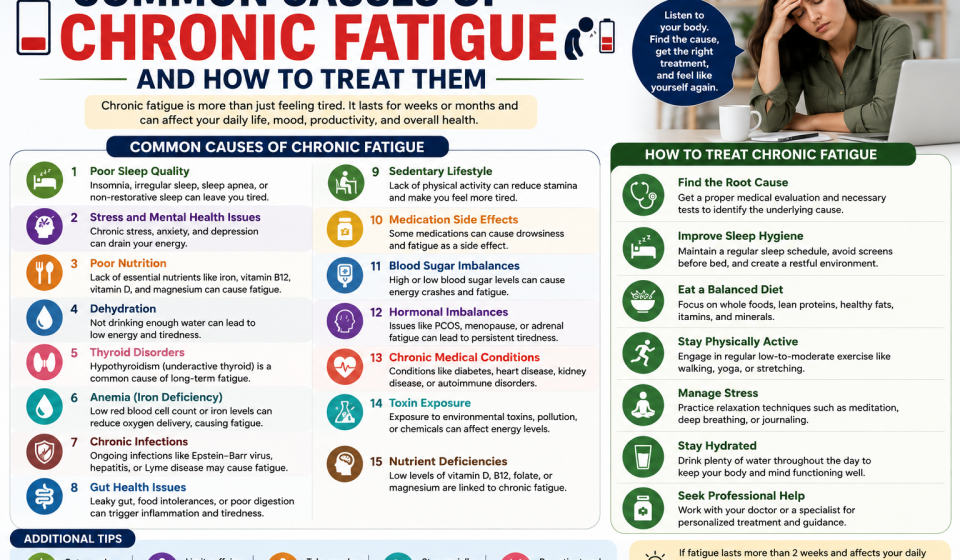
1. Poor Sleep Quality
One of the most common causes of chronic fatigue is inadequate or poor-quality sleep.
Sleep problems may include:
- Insomnia
- Frequent nighttime awakenings
- Irregular sleep schedules
- Sleep deprivation
Without sufficient restorative sleep, the body cannot fully recover and recharge.
Treatment
- Maintain a consistent sleep schedule
- Create a comfortable sleep environment
- Limit caffeine before bedtime
- Reduce screen exposure at night
- Practice healthy sleep hygiene
2. Sleep Apnea
Sleep apnea is a condition in which breathing repeatedly stops and starts during sleep.
Symptoms may include:
- Loud snoring
- Daytime sleepiness
- Morning headaches
- Poor concentration
Because sleep becomes fragmented, individuals often feel exhausted despite spending enough time in bed.
Treatment
- Medical evaluation
- Weight management
- Continuous positive airway pressure (CPAP) therapy when recommended
- Lifestyle modifications
3. Iron Deficiency and Anemia
Iron deficiency reduces the body’s ability to produce healthy red blood cells.
As a result, tissues receive less oxygen, leading to fatigue.
Symptoms may include:
- Weakness
- Dizziness
- Pale skin
- Shortness of breath
Treatment
- Iron-rich foods
- Medical evaluation
- Appropriate supplementation when recommended
- Treatment of underlying causes
4. Chronic Stress
Long-term stress can significantly affect energy levels.
Stress triggers hormonal responses that may contribute to:
- Fatigue
- Sleep disturbances
- Muscle tension
- Reduced concentration
Treatment
- Stress management techniques
- Meditation
- Mindfulness practices
- Physical activity
- Counseling when needed
5. Depression
Depression affects both emotional and physical health.
Common symptoms include:
- Persistent sadness
- Loss of interest
- Low motivation
- Chronic tiredness
Fatigue associated with depression may occur even after adequate rest.
Treatment
- Professional mental health support
- Counseling
- Lifestyle improvements
- Medical treatment when appropriate
6. Anxiety Disorders
Anxiety can keep the body in a constant state of alertness.
This prolonged activation may contribute to:
- Mental exhaustion
- Physical fatigue
- Sleep disruption
- Reduced concentration
Treatment
- Stress reduction techniques
- Cognitive behavioral therapy
- Exercise
- Professional mental health care
7. Thyroid Disorders
The thyroid gland plays an important role in regulating metabolism.
Hypothyroidism, or underactive thyroid function, often causes:
- Fatigue
- Weight gain
- Dry skin
- Sensitivity to cold
Treatment
- Thyroid evaluation
- Medical management
- Ongoing monitoring
8. Diabetes
Uncontrolled blood sugar levels can contribute to chronic fatigue.
Common symptoms include:
- Increased thirst
- Frequent urination
- Blurred vision
- Persistent tiredness
Treatment
- Blood sugar management
- Healthy eating
- Regular exercise
- Medical treatment as recommended
9. Nutritional Deficiencies
Several nutrient deficiencies may contribute to fatigue.
Important nutrients include:
- Iron
- Vitamin B12
- Vitamin D
- Folate
- Magnesium
Treatment
- Balanced nutrition
- Professional assessment
- Appropriate supplementation when necessary
10. Dehydration
Even mild dehydration can affect physical and mental performance.
Symptoms may include:
- Fatigue
- Headaches
- Dizziness
- Reduced concentration
Treatment
- Increase water intake
- Maintain proper hydration throughout the day
11. Chronic Fatigue Syndrome
Chronic Fatigue Syndrome (CFS), also known as Myalgic Encephalomyelitis, is a complex condition characterized by severe, persistent fatigue.
Symptoms may include:
- Profound exhaustion
- Cognitive difficulties
- Sleep disturbances
- Post-exertional malaise
Treatment
- Symptom management
- Activity pacing
- Medical supervision
- Supportive therapies
12. Heart Disease
Cardiovascular conditions can reduce the body’s ability to deliver oxygen-rich blood effectively.
Symptoms may include:
- Fatigue
- Shortness of breath
- Chest discomfort
- Reduced exercise tolerance
Treatment
- Cardiovascular evaluation
- Lifestyle modifications
- Medical treatment as prescribed
13. Chronic Kidney Disease
Kidney disease may lead to fatigue due to toxin buildup and anemia.
Other symptoms may include:
- Swelling
- Changes in urination
- High blood pressure
Treatment
- Medical management
- Monitoring kidney function
- Lifestyle changes
14. Chronic Infections
Certain infections can contribute to long-term fatigue.
Examples include:
- Viral infections
- Hepatitis
- Mononucleosis
- Other chronic illnesses
Treatment
- Appropriate medical evaluation
- Targeted treatment
- Rest and recovery support
15. Poor Diet and Unhealthy Eating Habits
Diet plays a major role in energy production.
Poor eating habits may result in:
- Blood sugar fluctuations
- Nutrient deficiencies
- Reduced energy levels
Treatment
- Balanced meals
- Whole foods
- Adequate protein intake
- Increased fruits and vegetables
The Importance of Physical Activity
Although fatigue may make exercise challenging, regular physical activity often improves energy levels.
Benefits include:
- Improved circulation
- Better sleep
- Enhanced mood
- Increased stamina
Moderate exercise can be an effective part of fatigue management.
Managing Fatigue Through Better Sleep
Sleep remains one of the most important factors in maintaining energy.
Healthy sleep habits include:
- Going to bed at consistent times
- Limiting caffeine
- Avoiding heavy meals before sleep
- Creating a quiet sleeping environment
Improved sleep often leads to better overall wellness.
The Role of Mental Health
Mental health and physical health are closely connected.
Addressing emotional well-being can help reduce fatigue caused by:
- Stress
- Anxiety
- Depression
Seeking support when needed is an important step toward recovery.
When to Seek Medical Attention
Professional evaluation is recommended if fatigue:
- Persists for several weeks
- Worsens over time
- Interferes with daily life
- Occurs with other concerning symptoms
Early diagnosis can help identify underlying conditions and improve outcomes.
Preventing Chronic Fatigue
Preventive strategies include:
- Healthy nutrition
- Regular exercise
- Adequate hydration
- Quality sleep
- Stress management
- Routine health checkups
These habits support long-term energy and overall wellness.
Building a Sustainable Energy Plan
Long-term energy management requires a comprehensive approach.
Key components include:
- Balanced lifestyle habits
- Medical care when necessary
- Consistent routines
- Healthy coping strategies
Sustainable improvements often produce the best long-term results.
Source Links
https://www.cdc.gov
https://www.nih.gov
https://www.who.int
https://www.mayoclinic.org
https://www.ncbi.nlm.nih.gov
Conclusion
Chronic fatigue is a common but often misunderstood condition that can significantly affect physical health, mental well-being, and daily functioning. While occasional tiredness is normal, persistent fatigue may indicate underlying issues such as sleep disorders, nutritional deficiencies, stress, anxiety, depression, thyroid problems, diabetes, heart disease, or other medical conditions. Identifying the root cause is essential for effective treatment and long-term recovery. Through proper medical evaluation, healthy lifestyle habits, balanced nutrition, quality sleep, stress management, and regular physical activity, many individuals can improve their energy levels and overall quality of life. Taking chronic fatigue seriously and seeking timely care can help prevent complications and support lasting wellness.
FAQ
1- What is chronic fatigue?
Chronic fatigue is persistent tiredness or lack of energy that lasts for an extended period and is not relieved by rest.
2- What are the most common causes of chronic fatigue?
Common causes include poor sleep, stress, anemia, thyroid disorders, diabetes, depression, anxiety, and nutritional deficiencies.
3- Can lack of sleep cause chronic fatigue?
Yes, inadequate or poor-quality sleep is one of the leading causes of persistent fatigue.
4- How does stress contribute to fatigue?
Chronic stress affects hormone levels, sleep quality, and overall physical health, leading to exhaustion.
5- Can vitamin deficiencies cause fatigue?
Yes, deficiencies in iron, vitamin B12, vitamin D, folate, and other nutrients can contribute to fatigue.
6- When should I see a doctor for fatigue?
You should seek medical evaluation if fatigue persists for several weeks, worsens, or affects daily activities.
7- Can exercise help reduce fatigue?
Yes, regular moderate exercise can improve energy levels, sleep quality, and overall wellness.
8- Is chronic fatigue syndrome the same as ordinary tiredness?
No, Chronic Fatigue Syndrome involves severe, long-lasting fatigue and additional symptoms that significantly affect daily life.
9- Can dehydration make you feel tired?
Yes, even mild dehydration can reduce energy levels and impair physical and mental performance.
10- How can I prevent chronic fatigue?
Healthy sleep habits, balanced nutrition, hydration, stress management, regular exercise, and routine health checkups can help prevent chronic fatigue.