Top 15 Symptoms You Should Never Ignore in Your Daily Life: Early Warning Signs That Could Protect Your Health

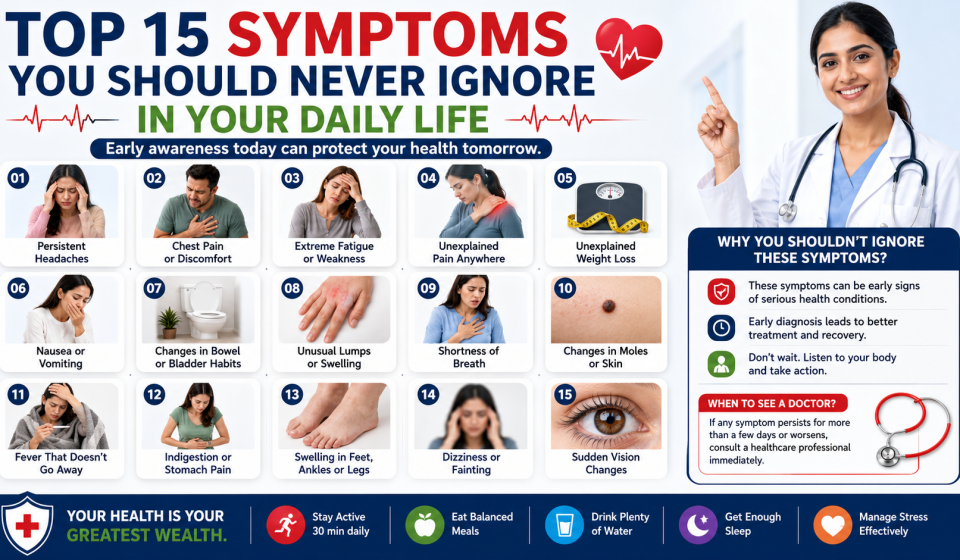
This guide explores 15 important symptoms that should never be ignored and explains why prompt medical evaluation may be essential.
Our bodies constantly communicate with us through various signs and symptoms. While some symptoms may be temporary and harmless, others can indicate underlying health conditions that require medical attention. Unfortunately, many people ignore warning signs, assuming they are caused by stress, aging, lack of sleep, or minor illnesses. Delaying medical evaluation can sometimes allow serious conditions to progress, making treatment more difficult and increasing the risk of complications. Understanding which symptoms should never be ignored can help individuals seek timely care and protect their long-term health.
Early recognition of unusual physical changes plays a vital role in preventive healthcare. Symptoms such as chest pain, unexplained weight loss, persistent fatigue, shortness of breath, and severe headaches can sometimes signal potentially serious medical problems. Paying attention to these warning signs and consulting a healthcare professional when necessary can lead to earlier diagnosis, more effective treatment, and better health outcomes.
Why Paying Attention to Symptoms Matters
Symptoms are often the body’s way of signaling that something may not be functioning properly.
Ignoring warning signs can result in:
- Delayed diagnosis
- Disease progression
- Increased treatment complexity
- Greater risk of complications
Recognizing symptoms early allows healthcare providers to identify and address potential issues before they become more serious.
1. Chest Pain or Chest Discomfort
Chest pain is one of the most important symptoms that should never be ignored.
Possible causes include:
- Heart disease
- Heart attack
- Angina
- Lung conditions
- Digestive disorders
Chest discomfort may feel like pressure, tightness, squeezing, burning, or heaviness.
Immediate medical evaluation is recommended for unexplained chest pain.
2. Shortness of Breath
Difficulty breathing can indicate various health concerns.
Possible causes include:
- Heart disease
- Asthma
- Chronic lung disease
- Pneumonia
- Blood clots
Shortness of breath during rest or minimal activity should be evaluated promptly.
3. Unexplained Weight Loss
Unexpected weight loss without changes in diet or exercise may signal an underlying medical issue.
Potential causes include:
- Diabetes
- Thyroid disorders
- Digestive diseases
- Cancer
- Chronic infections
Significant unexplained weight loss warrants professional medical assessment.
4. Persistent Fatigue
Occasional tiredness is normal, but persistent fatigue may indicate a health problem.
Possible causes include:
- Anemia
- Diabetes
- Thyroid disease
- Sleep disorders
- Heart disease
Long-lasting fatigue that interferes with daily activities should not be ignored.
5. Severe or Frequent Headaches
Headaches are common, but certain headache patterns may require medical attention.
Warning signs include:
- Sudden severe headache
- Frequent headaches
- Headaches accompanied by vision changes
- Neurological symptoms
Underlying causes can range from migraines to more serious neurological conditions.
6. Changes in Vision
Vision changes can occur for various reasons and may indicate significant health issues.
Examples include:
- Blurred vision
- Double vision
- Sudden vision loss
- Difficulty focusing
Potential causes include diabetes, eye disorders, stroke, or neurological conditions.
7. Persistent Cough
A cough lasting several weeks should be evaluated by a healthcare provider.
Possible causes include:
- Respiratory infections
- Asthma
- Chronic lung disease
- Acid reflux
- Lung cancer
Persistent coughing should never be dismissed without proper assessment.
8. Dizziness or Fainting
Feeling dizzy, lightheaded, or experiencing fainting episodes may indicate underlying medical concerns.
Possible causes include:
- Low blood pressure
- Heart rhythm disorders
- Dehydration
- Neurological conditions
Recurring dizziness deserves professional evaluation.
9. Blood in Stool or Urine
The presence of blood in stool or urine should always be taken seriously.
Potential causes include:
- Infections
- Kidney disorders
- Digestive diseases
- Cancer
Early evaluation can help identify the underlying cause and guide treatment.
10. Persistent Abdominal Pain
Ongoing abdominal discomfort may indicate digestive or systemic health issues.
Possible causes include:
- Gallbladder disease
- Appendicitis
- Ulcers
- Kidney stones
- Digestive disorders
Persistent or severe abdominal pain requires medical attention.
11. Swelling in the Legs, Feet, or Ankles
Unexplained swelling may be related to fluid retention or circulation problems.
Potential causes include:
- Heart failure
- Kidney disease
- Liver disease
- Venous insufficiency
Persistent swelling should be investigated by a healthcare professional.
12. Changes in Skin or Moles
The skin often provides important clues about overall health.
Warning signs include:
- New moles
- Changes in existing moles
- Non-healing sores
- Unusual skin discoloration
Early evaluation may help identify skin cancer or other dermatological conditions.
13. Persistent Fever
A fever that continues without an obvious cause may indicate infection or other health concerns.
Potential causes include:
- Bacterial infections
- Viral infections
- Autoimmune disorders
- Certain cancers
Persistent fever requires medical assessment.
14. Difficulty Swallowing
Trouble swallowing can affect nutrition and quality of life.
Possible causes include:
- Acid reflux
- Esophageal disorders
- Neurological conditions
- Growths or tumors
Ongoing swallowing difficulties should be evaluated promptly.
15. Irregular Heartbeat or Palpitations
An abnormal heartbeat may indicate cardiovascular concerns.
Symptoms may include:
- Racing heart
- Fluttering sensations
- Skipped beats
- Rapid pulse
While some palpitations are harmless, recurring symptoms should be discussed with a healthcare provider.
Understanding the Importance of Early Diagnosis
Many serious illnesses begin with subtle symptoms.
Early diagnosis can:
- Improve treatment success
- Reduce complications
- Lower healthcare costs
- Improve quality of life
Prompt medical evaluation often leads to better health outcomes.
Risk Factors That Increase Health Concerns
Certain factors increase the likelihood that symptoms may indicate a serious condition.
Common risk factors include:
- Smoking
- Obesity
- Diabetes
- High blood pressure
- Family medical history
- Sedentary lifestyle
Individuals with risk factors should be particularly attentive to warning signs.
The Role of Preventive Healthcare
Preventive healthcare helps identify problems before symptoms become severe.
Important preventive measures include:
- Routine health checkups
- Blood pressure monitoring
- Cholesterol screening
- Diabetes testing
- Cancer screenings
Regular evaluations support early detection and disease prevention.
When to Seek Emergency Medical Attention
Some symptoms require immediate medical care.
Seek emergency assistance for:
- Severe chest pain
- Sudden difficulty breathing
- Signs of stroke
- Loss of consciousness
- Severe allergic reactions
Prompt action can be life-saving.
Building Healthy Habits to Reduce Risk
Healthy lifestyle choices can reduce the likelihood of many serious illnesses.
Important habits include:
- Balanced nutrition
- Regular exercise
- Adequate sleep
- Stress management
- Avoiding tobacco
- Limiting alcohol
Prevention remains one of the most effective healthcare strategies.
The Value of Listening to Your Body
Your body often provides early clues when something is wrong.
Ignoring symptoms may allow health conditions to worsen.
Being proactive about unusual symptoms can help:
- Protect long-term health
- Improve outcomes
- Reduce complications
- Promote wellness
Awareness and timely action are essential components of preventive healthcare.
Source Links
https://www.who.int
https://www.cdc.gov
https://www.nih.gov
https://www.mayoclinic.org
https://www.ncbi.nlm.nih.gov
Conclusion
Recognizing and responding to warning signs is one of the most important steps individuals can take to protect their health. Symptoms such as chest pain, shortness of breath, unexplained weight loss, persistent fatigue, severe headaches, vision changes, and abnormal bleeding should never be ignored. While not every symptom indicates a serious illness, timely medical evaluation can help identify underlying causes, support early treatment, and prevent complications. By staying attentive to physical changes, maintaining regular health checkups, and seeking professional care when needed, individuals can improve their chances of maintaining long-term wellness and preventing serious health conditions.
FAQ
1- Why should I pay attention to unusual symptoms?
Symptoms can be early warning signs of underlying health conditions that may require medical attention.
2- Is chest pain always related to heart disease?
Not always, but chest pain should be evaluated because it can indicate serious cardiovascular conditions.
3- When should unexplained weight loss be concerning?
Weight loss without intentional changes in diet or exercise should be discussed with a healthcare professional.
4- Can persistent fatigue indicate a medical problem?
Yes, fatigue may be associated with conditions such as anemia, diabetes, thyroid disorders, or heart disease.
5- Why are vision changes important?
Sudden or persistent vision changes can signal eye disorders, diabetes, neurological problems, or stroke.
6- How long should a cough last before seeking medical advice?
A cough lasting several weeks or accompanied by other symptoms should be evaluated by a healthcare provider.
7- Is dizziness a serious symptom?
Recurring dizziness or fainting may indicate cardiovascular, neurological, or metabolic conditions.
8- Why should blood in stool or urine never be ignored?
It can indicate infections, digestive disorders, kidney problems, or more serious medical conditions.
9- When should I seek emergency medical care?
Emergency care is necessary for severe chest pain, difficulty breathing, stroke symptoms, or loss of consciousness.
10- How can preventive healthcare help?
Routine screenings and health evaluations help detect diseases early and reduce the risk of serious complications.