Viral Fever vs Bacterial Infection: Complete Guide to Understanding the Key Differences, Symptoms, Causes, and Treatment

Misunderstanding the difference can lead to improper medication use, antibiotic resistance, delayed recovery, and unnecessary healthcare expenses.
Fever is one of the most common symptoms experienced by people of all ages and is often the body’s natural response to infections. However, not all fevers are the same. Two of the most common causes of fever are viral infections and bacterial infections. While both conditions may present with similar symptoms such as elevated body temperature, fatigue, weakness, and body aches, their causes, treatment approaches, and potential complications can differ significantly. Understanding the distinction between viral fever and bacterial infection is essential for receiving appropriate treatment and avoiding unnecessary medications.
Many people assume that every fever requires antibiotics, but this is not always true. Viral infections are caused by viruses and usually resolve on their own with supportive care, whereas bacterial infections are caused by harmful bacteria and may require antibiotic treatment.This comprehensive guide explains the key differences between viral fever and bacterial infection, helping individuals make informed decisions about their health and seek timely medical attention when necessary.
What Is Viral Fever?
Viral fever refers to an increase in body temperature caused by a viral infection.
Viruses are microscopic organisms that invade healthy cells and multiply within the body.
Common viral illnesses include:
- Influenza (flu)
- Common cold
- Dengue fever
- COVID-19
- Viral gastroenteritis
- Chickenpox
- Measles
When the immune system responds to these infections, fever often develops as part of the body’s defense mechanism.
What Is a Bacterial Infection?
A bacterial infection occurs when harmful bacteria enter the body and multiply.
Bacteria are single-celled microorganisms that can affect different organs and tissues.
Common bacterial infections include:
- Strep throat
- Urinary tract infections
- Tuberculosis
- Pneumonia caused by bacteria
- Bacterial skin infections
- Food poisoning caused by certain bacteria
Many bacterial infections require medical treatment to prevent complications.
Understanding the Immune Response
The body’s immune system works to identify and eliminate harmful microorganisms.
When viruses or bacteria enter the body:
- Immune cells become activated
- Inflammatory responses occur
- Body temperature may rise
- Symptoms develop as the immune system fights infection
Although fever is common in both conditions, the underlying causes differ.
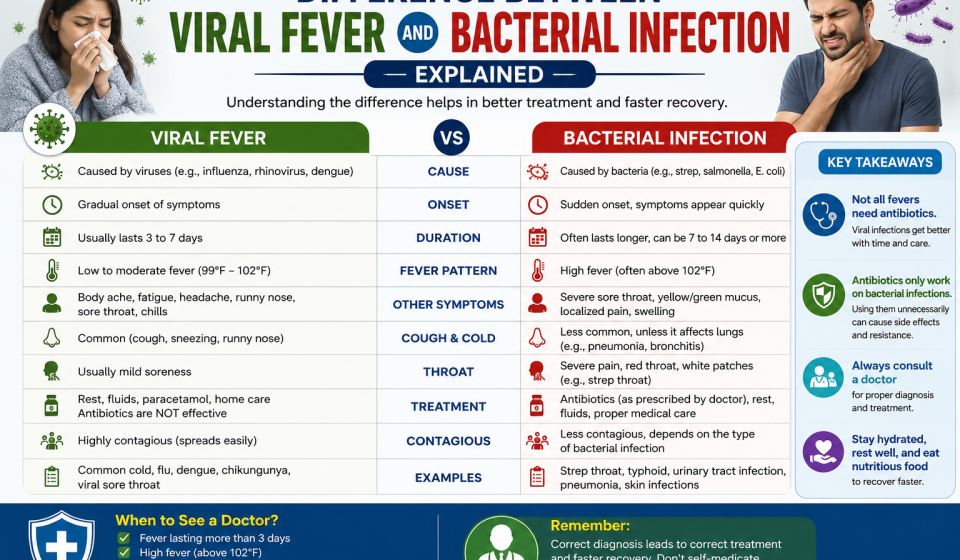
Main Differences Between Viral Fever and Bacterial Infection
Cause
Viral fever is caused by viruses, while bacterial infections are caused by bacteria.
Treatment
Viral infections generally improve with supportive care, whereas bacterial infections may require antibiotics.
Duration
Viral illnesses often resolve within several days to two weeks.
Bacterial infections may persist or worsen without appropriate treatment.
Contagiousness
Both viral and bacterial infections can spread, but transmission methods vary depending on the specific illness.
Severity
Both conditions can range from mild to severe depending on the organism involved and the individual’s overall health.
Common Symptoms of Viral Fever
Symptoms often include:
- Fever
- Body aches
- Fatigue
- Headache
- Runny nose
- Sore throat
- Cough
- Chills
Symptoms usually develop gradually and improve as the immune system clears the virus.
Common Symptoms of Bacterial Infection
Symptoms may include:
- Fever
- Localized pain
- Swelling
- Redness
- Pus formation
- Persistent cough
- Painful urination
- Swollen lymph nodes
Bacterial infections often affect specific body areas more prominently.
Fever Patterns in Viral and Bacterial Illnesses
Viral fevers may fluctuate and are often accompanied by generalized symptoms.
Bacterial infections may produce:
- Persistent fever
- High-grade fever
- Localized signs of infection
However, fever patterns alone cannot reliably distinguish between the two conditions.
Respiratory Viral Infections
Common respiratory viral illnesses include:
- Common cold
- Influenza
- COVID-19
- Respiratory syncytial virus (RSV)
Symptoms frequently include cough, congestion, sore throat, and fever.
Common Bacterial Respiratory Infections
Examples include:
- Bacterial pneumonia
- Bacterial sinusitis
- Strep throat
These conditions may require medical treatment and antibiotic therapy.
How Doctors Diagnose Viral and Bacterial Infections
Healthcare providers use several methods to determine the cause of illness.
Diagnostic tools may include:
- Medical history
- Physical examination
- Blood tests
- Throat swabs
- Urine tests
- Imaging studies
- Laboratory cultures
Accurate diagnosis helps guide appropriate treatment decisions.
Why Antibiotics Do Not Treat Viral Fever
Antibiotics are designed to target bacteria.
They do not kill viruses or shorten the duration of viral illnesses.
Using antibiotics unnecessarily can contribute to:
- Antibiotic resistance
- Medication side effects
- Increased healthcare costs
Proper diagnosis helps prevent inappropriate antibiotic use.
Antibiotic Resistance: A Growing Concern
Antibiotic resistance occurs when bacteria evolve and become less responsive to medications.
Contributing factors include:
- Overuse of antibiotics
- Incorrect prescriptions
- Failure to complete treatment courses
Responsible antibiotic use is essential for protecting public health.
Supportive Care for Viral Fever
Most viral illnesses improve with supportive measures such as:
- Adequate rest
- Hydration
- Nutritious foods
- Fever management
- Symptom relief medications
Recovery depends on the immune system’s ability to eliminate the virus.
Treatment for Bacterial Infections
Treatment depends on the type and severity of infection.
Healthcare providers may recommend:
- Antibiotics
- Pain management
- Hydration
- Follow-up evaluations
Completing prescribed treatment is important for successful recovery.
Importance of Hydration
Hydration is beneficial for both viral and bacterial illnesses.
Proper fluid intake helps:
- Regulate body temperature
- Support immune function
- Prevent dehydration
- Promote recovery
Water, oral rehydration solutions, and clear fluids are often recommended.
Nutrition During Illness
A balanced diet supports immune function and recovery.
Helpful foods may include:
- Fruits
- Vegetables
- Lean proteins
- Soups
- Whole grains
Good nutrition provides essential nutrients needed during illness.
Preventing Viral Infections
Preventive measures include:
- Hand hygiene
- Vaccination
- Avoiding close contact with sick individuals
- Covering coughs and sneezes
- Maintaining overall health
Prevention remains one of the most effective strategies for reducing infection risk.
Preventing Bacterial Infections
Prevention strategies include:
- Proper hygiene
- Safe food handling
- Wound care
- Vaccinations
- Medical follow-up when needed
Healthy habits reduce exposure to harmful bacteria.
When to Seek Medical Attention
Medical evaluation is recommended if symptoms include:
- Persistent high fever
- Difficulty breathing
- Severe dehydration
- Chest pain
- Confusion
- Worsening symptoms
Prompt medical care can prevent complications.
Potential Complications of Untreated Infections
Ignoring serious infections can lead to:
- Organ damage
- Severe dehydration
- Pneumonia
- Bloodstream infections
- Long-term health problems
Early diagnosis and treatment improve outcomes.
Special Considerations for Children and Older Adults
Young children and older adults may be more vulnerable to complications.
Additional monitoring may be necessary when symptoms include:
- High fever
- Reduced fluid intake
- Difficulty breathing
- Changes in behavior
Prompt medical assessment is often recommended for high-risk individuals.
The Role of Vaccination
Vaccines help prevent many viral and bacterial diseases.
Examples include:
- Influenza vaccines
- COVID-19 vaccines
- Pneumococcal vaccines
- Childhood immunizations
Vaccination remains an important component of preventive healthcare.
Source Links
https://www.who.int
https://www.cdc.gov
https://www.nih.gov
https://www.mayoclinic.org
https://www.ncbi.nlm.nih.gov
Conclusion
Understanding the difference between viral fever and bacterial infection is essential for proper healthcare management. While both conditions may cause similar symptoms such as fever, fatigue, and weakness, their underlying causes and treatment approaches differ significantly. Viral infections are caused by viruses and usually improve with supportive care, whereas bacterial infections are caused by bacteria and may require antibiotics. Accurate diagnosis, responsible medication use, adequate hydration, good nutrition, and timely medical attention are key to successful recovery. By recognizing symptoms and understanding the distinctions between these conditions, individuals can make informed healthcare decisions and reduce the risk of complications.
FAQ
1- What is the main difference between viral fever and bacterial infection?
Viral fever is caused by viruses, while bacterial infections are caused by bacteria.
2- Do antibiotics work for viral fever?
No, antibiotics are effective against bacteria and do not treat viral infections.
3- How long does viral fever usually last?
Most viral fevers improve within a few days to two weeks, depending on the infection.
4- Can bacterial infections cause fever?
Yes, fever is a common symptom of many bacterial infections.
5- How do doctors determine whether an infection is viral or bacterial?
Diagnosis may involve physical examinations, laboratory tests, cultures, and medical history evaluation.
6- Why is antibiotic resistance a concern?
Overuse and misuse of antibiotics can make bacteria resistant to treatment, reducing medication effectiveness.
7- Can viral infections become serious?
Yes, some viral illnesses can lead to complications, especially in vulnerable individuals.
8- What are common symptoms of viral fever?
Symptoms often include fever, body aches, fatigue, headache, cough, and sore throat.
9- When should I seek medical care for a fever?
Medical attention is recommended for persistent high fever, breathing difficulties, severe dehydration, or worsening symptoms.
10- Can vaccinations help prevent infections?
Yes, vaccines can reduce the risk of many viral and bacterial diseases and support overall public health.