Best Ways to Control High Blood Pressure Without Complications: A Complete Guide to Long-Term Heart Health

The good news is that high blood pressure can often be controlled successfully through a combination of healthy lifestyle habits, regular monitoring, medical guidance, and preventive healthcare practices.
High blood pressure, also known as hypertension, is one of the most common health conditions affecting millions of people worldwide. Often referred to as the “silent killer,” high blood pressure can develop without noticeable symptoms while gradually damaging the heart, blood vessels, kidneys, brain, and other vital organs. Many individuals are unaware they have hypertension until it is discovered during a routine health screening or after a serious health complication occurs. Because of its silent nature, understanding how to manage blood pressure effectively is essential for protecting long-term health and preventing life-threatening conditions. By making informed choices regarding nutrition, physical activity, stress management, sleep, and medication adherence when necessary, individuals can significantly reduce their risk of complications. This comprehensive guide explores the best ways to control high blood pressure safely and effectively while promoting overall wellness and cardiovascular health.
Understanding High Blood Pressure
Blood pressure is the force of blood pushing against the walls of the arteries as the heart pumps blood throughout the body.
Blood pressure readings consist of two numbers:
- Systolic pressure (top number)
- Diastolic pressure (bottom number)
When blood pressure remains consistently elevated, it places additional strain on the cardiovascular system and increases the risk of serious health problems.
Why High Blood Pressure Is Dangerous
Uncontrolled hypertension can damage blood vessels and organs over time.
Potential complications include:
- Heart disease
- Stroke
- Kidney disease
- Heart failure
- Vision problems
- Cognitive decline
- Peripheral artery disease
Early detection and proper management are essential for reducing these risks.
Know Your Blood Pressure Numbers
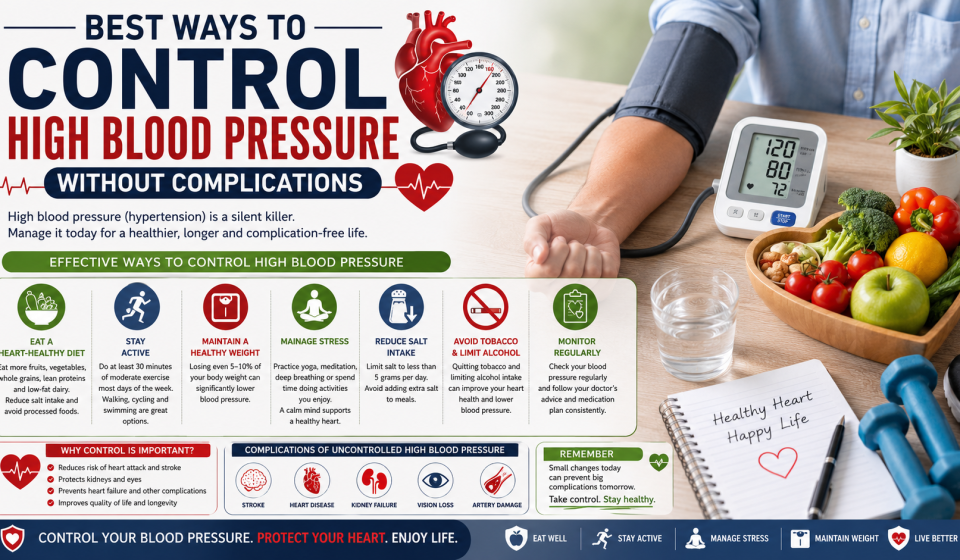
Monitoring blood pressure regularly is one of the most important steps in controlling hypertension.
Regular measurements help:
- Track progress
- Identify trends
- Evaluate treatment effectiveness
- Detect changes early
Home blood pressure monitors can complement routine healthcare visits and provide valuable information about daily blood pressure patterns.
Follow a Heart-Healthy Diet
Nutrition plays a central role in blood pressure management.
A heart-healthy eating plan focuses on nutrient-rich foods that support cardiovascular health.
Healthy dietary habits include:
- Eating more fruits and vegetables
- Choosing whole grains
- Consuming lean proteins
- Limiting processed foods
- Reducing unhealthy fats
Consistent healthy eating can help lower blood pressure naturally.
Reduce Sodium Intake
Excess sodium can contribute to elevated blood pressure by increasing fluid retention.
Strategies to reduce sodium include:
- Reading nutrition labels
- Avoiding highly processed foods
- Choosing fresh ingredients
- Limiting salty snacks
- Preparing meals at home
Reducing sodium intake is one of the most effective dietary strategies for managing hypertension.
Increase Potassium-Rich Foods
Potassium helps balance sodium levels and supports healthy blood pressure regulation.
Potassium-rich foods include:
- Bananas
- Spinach
- Sweet potatoes
- Beans
- Avocados
- Oranges
A balanced diet containing adequate potassium may help support cardiovascular health.
Maintain a Healthy Weight
Excess body weight places additional strain on the heart and blood vessels.
Weight management can:
- Lower blood pressure
- Improve heart function
- Reduce cardiovascular risk
- Enhance overall wellness
Even modest weight loss can produce meaningful improvements in blood pressure control.
Stay Physically Active
Regular exercise strengthens the heart and improves circulation.
Benefits of physical activity include:
- Lower blood pressure
- Better weight management
- Improved cholesterol levels
- Enhanced cardiovascular fitness
Consistent movement supports long-term heart health.
Recommended Exercises for Hypertension
Walking
Walking is a simple and effective way to improve cardiovascular health.
Cycling
Cycling supports heart function while promoting physical fitness.
Swimming
Swimming provides a low-impact exercise option that benefits the entire body.
Strength Training
Resistance exercises help maintain muscle mass and support metabolic health.
Yoga
Yoga combines movement, breathing techniques, and relaxation, which may contribute to healthier blood pressure levels.
Manage Stress Effectively
Chronic stress can contribute to elevated blood pressure.
Stress may affect:
- Heart rate
- Hormone levels
- Sleep quality
- Lifestyle behaviors
Healthy stress management techniques include:
- Meditation
- Deep breathing exercises
- Mindfulness
- Physical activity
- Relaxation practices
Reducing stress can positively influence overall cardiovascular health.
Prioritize Quality Sleep
Sleep plays an important role in blood pressure regulation.
Poor sleep may contribute to:
- Increased blood pressure
- Weight gain
- Hormonal imbalances
- Reduced cardiovascular health
Healthy sleep habits include:
- Maintaining a regular sleep schedule
- Creating a comfortable sleep environment
- Limiting screen time before bed
- Avoiding excessive caffeine late in the day
Quality sleep supports overall wellness and heart health.
Limit Alcohol Consumption
Excessive alcohol intake can raise blood pressure and increase cardiovascular risk.
Moderate alcohol consumption may help support healthier blood pressure levels and reduce long-term complications.
Avoid Tobacco Products
Smoking damages blood vessels and significantly increases cardiovascular risk.
Benefits of quitting smoking include:
- Improved circulation
- Lower blood pressure
- Reduced heart disease risk
- Better lung function
Tobacco cessation is one of the most effective ways to improve overall cardiovascular health.
Stay Hydrated
Proper hydration supports healthy circulation and overall body function.
Water helps:
- Maintain blood volume
- Support kidney function
- Promote cardiovascular efficiency
Choosing water instead of sugary beverages can contribute to better health outcomes.
Monitor Cholesterol Levels
High cholesterol often occurs alongside hypertension and increases cardiovascular risk.
Managing cholesterol through healthy lifestyle choices supports:
- Heart health
- Blood vessel function
- Reduced plaque buildup
Routine cholesterol testing remains an important aspect of preventive healthcare.
Manage Diabetes Effectively
Diabetes and high blood pressure frequently occur together.
Proper diabetes management can help:
- Protect blood vessels
- Reduce cardiovascular risk
- Improve overall health outcomes
Blood sugar control is an important part of comprehensive cardiovascular care.
Take Prescribed Medications as Directed
For some individuals, lifestyle changes alone may not be sufficient.
Healthcare providers may prescribe medications to:
- Lower blood pressure
- Protect the heart
- Reduce complication risks
Medication adherence is essential for effective blood pressure management.
Never discontinue medications without professional medical advice.
Schedule Regular Health Checkups
Routine healthcare visits provide opportunities to:
- Monitor blood pressure
- Assess treatment effectiveness
- Identify risk factors
- Adjust care plans when needed
Preventive healthcare plays a key role in long-term hypertension management.
Understand Risk Factors
Several factors can increase the likelihood of developing hypertension.
Common risk factors include:
- Age
- Family history
- Obesity
- Physical inactivity
- Poor diet
- Smoking
- Excessive alcohol use
- Chronic stress
Understanding risk factors can help guide prevention efforts.
Recognize Warning Signs of Complications
Although high blood pressure often causes no symptoms, complications may produce warning signs such as:
- Severe headaches
- Chest pain
- Shortness of breath
- Vision changes
- Dizziness
Immediate medical attention may be necessary if these symptoms occur.
The Importance of Consistency
Controlling high blood pressure requires ongoing commitment.
Long-term success depends on:
- Healthy eating
- Regular exercise
- Stress management
- Medication adherence
- Routine monitoring
Small daily habits can produce significant improvements over time.
Building a Personalized Blood Pressure Management Plan
Every individual has unique healthcare needs.
An effective management plan may include:
- Dietary modifications
- Physical activity goals
- Weight management strategies
- Stress reduction techniques
- Medical treatment when necessary
Working closely with healthcare professionals can help create a personalized and sustainable approach.
Preventing Future Complications
Controlling blood pressure reduces the risk of:
- Heart attack
- Stroke
- Kidney disease
- Heart failure
- Vision loss
Preventive action today can help protect long-term health and quality of life.
Living Well with Hypertension
Many people successfully manage hypertension and maintain active, healthy lifestyles.
The key is combining:
- Healthy habits
- Preventive care
- Medical guidance
- Consistent monitoring
With the right approach, individuals can effectively control blood pressure and reduce the likelihood of serious complications.
Source Links
https://www.heart.org
https://www.cdc.gov/bloodpressure
https://www.nhlbi.nih.gov
https://www.who.int
https://www.ncbi.nlm.nih.gov
Conclusion
High blood pressure is a serious but manageable condition that requires a proactive and consistent approach. Through healthy nutrition, reduced sodium intake, regular physical activity, weight management, quality sleep, stress reduction, tobacco avoidance, and routine health monitoring, individuals can significantly improve blood pressure control and lower their risk of complications. For those requiring medical treatment, following prescribed therapies and maintaining regular communication with healthcare providers is essential. By taking preventive measures and making heart-healthy lifestyle choices, individuals can protect their cardiovascular system, improve overall wellness, and enjoy a healthier future free from many of the complications associated with uncontrolled hypertension.
FAQ
1- What is considered high blood pressure?
High blood pressure occurs when blood pressure readings remain consistently above the recommended healthy range.
2- Why is high blood pressure called the silent killer?
Hypertension often develops without noticeable symptoms while causing damage to organs and blood vessels over time.
3- Can diet help lower blood pressure naturally?
Yes, a healthy diet rich in fruits, vegetables, whole grains, and low-sodium foods can support blood pressure control.
4- How does exercise help manage hypertension?
Regular physical activity strengthens the heart, improves circulation, and can lower blood pressure.
5- Does stress affect blood pressure?
Yes, chronic stress may contribute to elevated blood pressure and unhealthy lifestyle behaviors.
6- How important is weight loss for hypertension?
Maintaining a healthy weight can significantly improve blood pressure and reduce cardiovascular risk.
7- Can smoking increase blood pressure?
Yes, smoking damages blood vessels and increases the risk of hypertension and heart disease.
8- Should people with high blood pressure avoid salt?
Reducing sodium intake is often recommended because excess salt can contribute to elevated blood pressure.
9- Why are regular health checkups important?
Routine checkups help monitor blood pressure, assess treatment effectiveness, and identify potential complications early.
10- Can high blood pressure complications be prevented?
Yes, proper management through healthy habits, medical care, and regular monitoring can significantly reduce the risk of complications.