Early Warning Signs of Heart Disease Everyone Should Know: A Complete Guide to Protecting Your Heart Health

Understanding heart disease and its warning signals empowers individuals to take proactive steps toward better cardiovascular health.
Heart disease remains one of the leading causes of death worldwide, affecting millions of people every year. While many individuals associate heart disease with sudden heart attacks or severe chest pain, the reality is that cardiovascular problems often develop gradually over time. In many cases, the body provides warning signs long before a serious cardiac event occurs. Unfortunately, these symptoms are sometimes ignored, misunderstood, or attributed to less serious conditions, delaying diagnosis and treatment. Recognizing the early signs of heart disease can play a crucial role in preventing complications and improving long-term health outcomes.Early detection, lifestyle modifications, routine health screenings, and timely medical care can significantly reduce the risk of severe complications. Whether you have existing risk factors such as high blood pressure, diabetes, obesity, smoking, or a family history of heart disease, being aware of the symptoms and warning signs can help you seek medical attention sooner and protect your overall well-being.
What Is Heart Disease?
Heart disease is a broad term used to describe various conditions that affect the heart and blood vessels.
Common forms of heart disease include:
- Coronary artery disease
- Heart failure
- Arrhythmias
- Heart valve disorders
- Congenital heart defects
- Cardiomyopathy
Most heart conditions develop over time and are influenced by lifestyle factors, genetics, and underlying health conditions.
Why Early Detection Matters
Many heart diseases progress silently in their early stages.
Identifying symptoms early can help:
- Prevent serious complications
- Reduce hospitalization risks
- Improve treatment outcomes
- Enhance quality of life
- Increase survival rates
The sooner cardiovascular issues are detected, the more treatment options may be available.
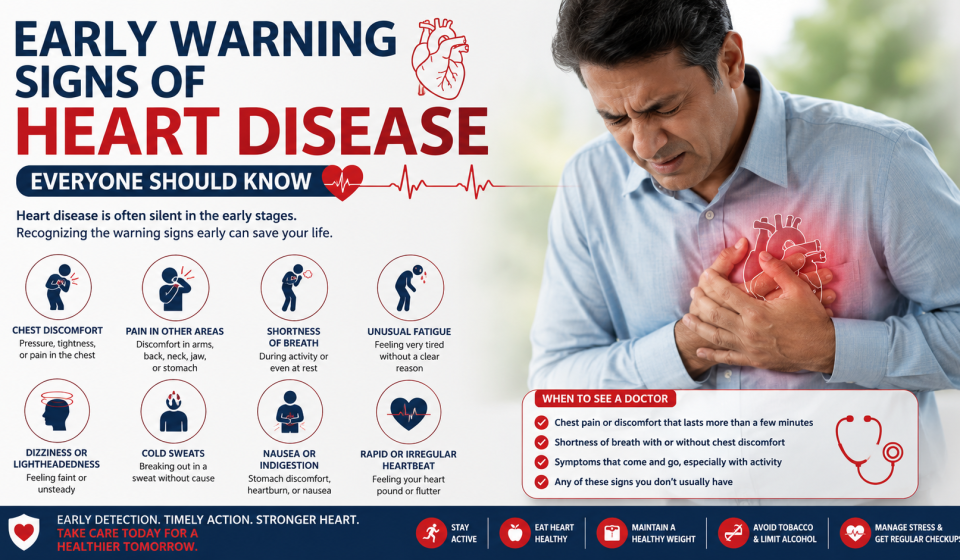
Chest Pain or Discomfort
One of the most recognized warning signs of heart disease is chest pain.
This discomfort may feel like:
- Pressure
- Tightness
- Squeezing
- Fullness
- Burning sensation
Chest discomfort may occur during physical activity, emotional stress, or even while resting.
Although not all chest pain indicates heart disease, persistent or unexplained chest discomfort should never be ignored.
Shortness of Breath
Difficulty breathing can be an early sign of cardiovascular problems.
Individuals may notice:
- Breathlessness during activity
- Difficulty climbing stairs
- Shortness of breath while lying down
- Unexplained breathing difficulties
When the heart cannot pump blood efficiently, fluid may accumulate in the lungs, contributing to breathing problems.
Unusual Fatigue
Persistent fatigue is a commonly overlooked symptom of heart disease.
Warning signs include:
- Extreme tiredness
- Reduced energy levels
- Fatigue during routine activities
- Difficulty completing normal tasks
Women, in particular, may experience unusual fatigue before a cardiac event.
Pain in the Arms, Neck, Jaw, or Back
Heart-related pain is not always limited to the chest.
Discomfort may radiate to:
- Left arm
- Right arm
- Neck
- Jaw
- Shoulders
- Upper back
These symptoms occur because nerves carrying pain signals from the heart share pathways with other areas of the body.
Dizziness or Lightheadedness
Feeling dizzy or faint may indicate reduced blood flow caused by heart problems.
Possible symptoms include:
- Lightheadedness
- Fainting
- Balance problems
- Sudden weakness
Persistent dizziness should be evaluated by a healthcare professional.
Irregular Heartbeat
An abnormal heart rhythm may indicate underlying cardiovascular issues.
Symptoms may include:
- Palpitations
- Racing heartbeat
- Fluttering sensations
- Skipped beats
Occasional irregular heartbeats can be harmless, but persistent symptoms warrant medical evaluation.
Swelling in the Legs, Ankles, and Feet
Poor circulation and heart failure can cause fluid retention.
Signs may include:
- Swollen ankles
- Swollen feet
- Leg swelling
- Tight shoes
- Unexplained weight gain
Swelling occurs when the heart struggles to pump blood effectively.
Persistent Cough
A chronic cough can sometimes be associated with heart disease.
Warning signs include:
- Long-lasting cough
- Wheezing
- Pink or white mucus production
Fluid accumulation in the lungs may contribute to these symptoms.
Excessive Sweating
Unexpected sweating without physical exertion may indicate a heart problem.
Symptoms may include:
- Cold sweats
- Excessive perspiration
- Sweating during rest
Sudden sweating combined with chest discomfort requires immediate medical attention.
Nausea and Digestive Symptoms
Heart disease can sometimes cause symptoms that resemble digestive problems.
Possible signs include:
- Nausea
- Indigestion
- Stomach discomfort
- Loss of appetite
Women may experience these symptoms more frequently than men.
Sleep Disturbances
Certain heart conditions may affect sleep quality.
Warning signs include:
- Difficulty sleeping
- Frequent nighttime awakenings
- Shortness of breath during sleep
- Sleep apnea symptoms
Poor sleep can both contribute to and result from cardiovascular issues.
Reduced Exercise Tolerance
If routine physical activities suddenly become more difficult, it could indicate heart-related concerns.
Examples include:
- Difficulty walking
- Reduced stamina
- Faster exhaustion
- Increased breathlessness
Changes in exercise capacity should be discussed with a healthcare provider.
High Blood Pressure: A Silent Warning Sign
High blood pressure often develops without noticeable symptoms.
However, it remains one of the most significant risk factors for heart disease.
Regular monitoring helps identify hypertension before complications develop.
High Cholesterol and Heart Disease
High cholesterol contributes to plaque buildup within arteries.
This process can increase the risk of:
- Heart attacks
- Stroke
- Coronary artery disease
Routine cholesterol testing is an important preventive measure.
Diabetes and Cardiovascular Risk
People with diabetes face an increased risk of heart disease.
High blood sugar levels can damage blood vessels and contribute to cardiovascular complications.
Proper diabetes management supports heart health.
Obesity and Heart Disease
Excess body weight places additional strain on the cardiovascular system.
Obesity is associated with:
- High blood pressure
- Diabetes
- Elevated cholesterol
- Heart disease
Weight management can significantly reduce cardiovascular risk.
Smoking and Heart Health
Smoking damages blood vessels and increases the risk of heart disease.
Benefits of quitting smoking include:
- Improved circulation
- Lower blood pressure
- Reduced heart attack risk
- Better lung function
Smoking cessation remains one of the most effective ways to improve heart health.
Family History and Genetic Risk
Genetics can influence cardiovascular risk.
Individuals with close relatives who have experienced heart disease may benefit from earlier screening and preventive measures.
Knowing family medical history can help guide healthcare decisions.
Preventive Strategies for Heart Disease
Protecting heart health involves adopting healthy lifestyle habits.
Important strategies include:
- Eating a balanced diet
- Exercising regularly
- Maintaining a healthy weight
- Managing stress
- Avoiding tobacco
- Limiting alcohol consumption
- Monitoring blood pressure
- Controlling cholesterol levels
Prevention remains one of the most effective approaches to cardiovascular health.
Importance of Routine Health Screenings
Regular health evaluations help identify cardiovascular risks before symptoms develop.
Routine screenings may include:
- Blood pressure checks
- Cholesterol testing
- Blood sugar monitoring
- Weight assessments
- Cardiovascular evaluations
Preventive healthcare plays a crucial role in reducing heart disease risk.
When to Seek Immediate Medical Attention
Emergency medical care should be sought if symptoms include:
- Severe chest pain
- Difficulty breathing
- Sudden weakness
- Fainting
- Pain spreading to the arm or jaw
- Cold sweats
Prompt treatment can be life-saving during cardiac emergencies.
Living a Heart-Healthy Lifestyle
A heart-healthy lifestyle supports long-term wellness and reduces disease risk.
Daily habits that benefit heart health include:
- Nutritious eating
- Regular physical activity
- Stress management
- Adequate sleep
- Preventive healthcare
Small lifestyle changes can have a significant impact on cardiovascular well-being.
Source Links
https://www.heart.org
https://www.cdc.gov/heartdisease
https://www.nhlbi.nih.gov
https://www.who.int
https://www.ncbi.nlm.nih.gov
Conclusion
Heart disease often develops gradually, making it essential to recognize early warning signs before serious complications occur. Symptoms such as chest discomfort, shortness of breath, unusual fatigue, dizziness, swelling, irregular heartbeats, and unexplained sweating should never be ignored. Understanding risk factors like high blood pressure, diabetes, obesity, smoking, high cholesterol, and family history can help individuals take preventive action. Through regular health screenings, healthy lifestyle choices, and timely medical attention, many cardiovascular conditions can be managed effectively or prevented altogether. Being aware of the early signs of heart disease empowers individuals to protect their heart health and improve their long-term quality of life.
FAQ
1- What is the most common early sign of heart disease?
Chest pain or discomfort is one of the most common warning signs, although symptoms can vary from person to person.
2- Can heart disease develop without symptoms?
Yes, many cardiovascular conditions can develop silently before noticeable symptoms appear.
3- Why is shortness of breath associated with heart disease?
Heart problems can affect blood circulation and lead to fluid buildup in the lungs, causing breathing difficulties.
4- Is fatigue a symptom of heart disease?
Yes, persistent or unusual fatigue can be an early warning sign, especially in women.
5- Can pain in the jaw or arm indicate a heart problem?
Yes, heart-related pain may radiate to the arms, neck, jaw, shoulders, or back.
6- How does high blood pressure affect heart health?
High blood pressure places extra strain on the heart and blood vessels, increasing cardiovascular risk.
7- Does diabetes increase the risk of heart disease?
Yes, diabetes can damage blood vessels and significantly increase cardiovascular risk.
8- What lifestyle changes help prevent heart disease?
Healthy eating, exercise, stress management, smoking cessation, and routine health screenings can reduce risk.
9- When should I seek emergency medical care?
Immediate medical attention is necessary for severe chest pain, difficulty breathing, fainting, or symptoms suggesting a heart attack.
10- How often should I have heart health screenings?
Screening frequency depends on age, risk factors, and medical history. A healthcare professional can provide personalized recommendations.