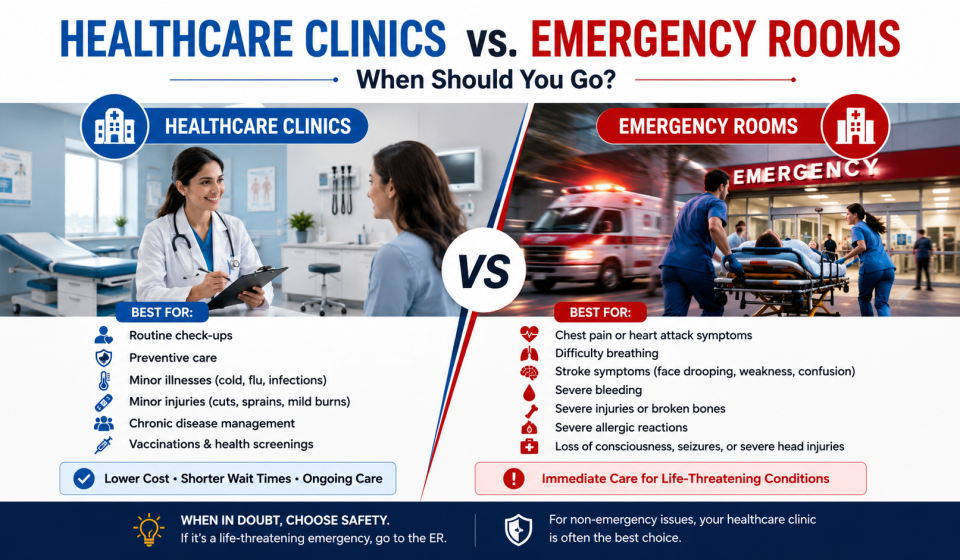

Healthcare clinics are ideal for non-life-threatening illnesses, preventive care, routine checkups, vaccinations, and ongoing management of chronic diseases.
When a health problem suddenly arises, one of the most common questions people face is whether they should visit a healthcare clinic or go directly to the emergency room (ER). Making the right decision can save valuable time, reduce healthcare costs, and ensure you receive the appropriate level of medical care. While both healthcare clinics and emergency rooms play essential roles in the healthcare system, they are designed to treat different types of medical conditions. Emergency rooms, on the other hand, are equipped to handle severe, life-threatening medical emergencies that require immediate intervention. Understanding the differences between these two healthcare options helps patients make informed decisions during stressful situations.
Understanding the Role of Healthcare Clinics
Healthcare clinics provide accessible, affordable, and comprehensive medical care for everyday health concerns. They are often the first point of contact for patients seeking diagnosis, treatment, and preventive services.
Most healthcare clinics offer:
- Routine physical examinations
- Treatment for minor illnesses
- Vaccinations
- Health screenings
- Prescription management
- Chronic disease monitoring
- Preventive healthcare
- Family medicine
- Pediatric care
- Women’s health services
Clinics focus on maintaining long-term health while preventing diseases before they become serious.
What Is an Emergency Room?
An emergency room (ER) is a specialized hospital department designed to treat life-threatening injuries and illnesses that require immediate medical attention.
Emergency rooms operate 24 hours a day, seven days a week, and are staffed by emergency physicians, trauma specialists, nurses, and advanced diagnostic teams.
ERs have immediate access to:
- Emergency surgery
- Intensive care units
- Advanced imaging (CT scans, MRI)
- Blood transfusions
- Cardiac care
- Trauma care
- Critical care specialists
These resources allow emergency departments to treat severe medical conditions quickly.
When You Should Visit a Healthcare Clinic
Healthcare clinics are the right choice when your condition is not life-threatening but still requires professional medical attention.
Common reasons to visit a clinic include:
Cold and Flu Symptoms
If you have fever, cough, sore throat, congestion, or body aches without severe breathing problems, a clinic can provide diagnosis and treatment.
Minor Infections
Healthcare clinics regularly treat:
- Ear infections
- Sinus infections
- Urinary tract infections
- Skin infections
Minor Injuries
Clinics can often handle:
- Small cuts
- Minor burns
- Sprains
- Mild strains
- Minor fractures (depending on available services)
Preventive Care
Regular preventive services include:
- Annual checkups
- Blood pressure monitoring
- Cholesterol testing
- Diabetes screening
- Cancer screenings
- Vaccinations
Chronic Disease Management
Patients with diabetes, hypertension, asthma, or arthritis benefit from regular clinic visits for ongoing monitoring.
When You Should Go to the Emergency Room
Emergency rooms should only be used for serious or life-threatening medical emergencies.
Seek emergency care immediately if you experience:
Chest Pain
Chest pain may indicate a heart attack and requires immediate evaluation.
Difficulty Breathing
Severe breathing problems should never be ignored.
Stroke Symptoms
Watch for:
- Sudden weakness
- Facial drooping
- Difficulty speaking
- Loss of balance
- Vision changes
Severe Bleeding
Heavy bleeding that cannot be controlled requires emergency treatment.
Serious Head Injuries
Any head injury involving loss of consciousness, confusion, or repeated vomiting needs emergency evaluation.
Severe Burns
Large or deep burns require specialized emergency care.
Broken Bones with Deformity
Complex fractures often require emergency imaging and orthopedic treatment.
Severe Allergic Reactions
Symptoms include:
- Swelling of the throat
- Difficulty breathing
- Severe rash
- Loss of consciousness
Immediate treatment can be life-saving.
Comparing Healthcare Clinics and Emergency Rooms
| Healthcare Clinics | Emergency Rooms |
|---|---|
| Treat non-emergency conditions | Treat life-threatening emergencies |
| Lower treatment costs | Higher treatment costs |
| Shorter waiting times | Priority based on severity |
| Preventive care available | Focus on emergency stabilization |
| Appointment options | Walk-in emergencies only |
| Family healthcare | Trauma and critical care |
| Chronic disease management | Immediate emergency intervention |
Understanding these differences helps patients choose the appropriate care setting.
Cost Differences Between Clinics and Emergency Rooms
One major difference is the cost of treatment.
Healthcare clinics generally provide:
- Lower consultation fees
- Affordable diagnostic testing
- Cost-effective preventive care
- Reduced out-of-pocket expenses
Emergency room visits typically involve:
- Higher physician fees
- Hospital facility charges
- Advanced imaging costs
- Emergency specialist fees
Choosing a clinic for non-emergency conditions can significantly reduce healthcare expenses.
Waiting Times and Convenience
Healthcare clinics often provide:
- Same-day appointments
- Scheduled visits
- Online booking
- Shorter wait times
Emergency rooms prioritize patients according to the seriousness of their condition.
As a result:
- Critical patients receive immediate care.
- Patients with minor illnesses may wait several hours.
How to Decide Where to Go
Ask yourself these important questions:
Is the condition life-threatening?
If yes, go directly to the emergency room.
Can the condition safely wait for evaluation?
If yes, a healthcare clinic is usually the better choice.
Is there severe pain or uncontrolled bleeding?
Emergency care is necessary.
Do you need routine medical advice or follow-up care?
Choose a healthcare clinic.
When uncertain, calling your primary care provider or a nurse advice line can help determine the appropriate level of care.
The Benefits of Having a Regular Healthcare Clinic
Building a long-term relationship with a trusted clinic offers many advantages:
- Better understanding of your medical history
- Personalized treatment plans
- Easier chronic disease management
- Preventive healthcare reminders
- Faster diagnosis
- Better coordination with specialists
A regular healthcare provider becomes your partner in maintaining lifelong health.
Common Mistakes Patients Should Avoid
Many people mistakenly visit the emergency room for conditions that could easily be treated at a clinic.
Common mistakes include:
- Going to the ER for mild colds
- Using emergency services for prescription refills
- Delaying emergency treatment for chest pain
- Ignoring stroke symptoms
- Waiting too long before seeking medical attention
Knowing when to choose the appropriate healthcare setting improves outcomes and reduces unnecessary healthcare costs.
Preparing for Unexpected Medical Situations
Every family should have a healthcare plan.
Consider:
- Knowing the location of your nearest healthcare clinic
- Identifying the closest emergency room
- Keeping emergency contact numbers accessible
- Maintaining updated medical records
- Carrying insurance information
- Learning basic first aid
Preparation helps reduce stress during unexpected medical emergencies.
source
https://sl1nk.com/4yk1u4j
https://l1nq.com/kbni63i
https://sl1nk.com/if3dz04
Conclusion
Understanding the difference between healthcare clinics and emergency rooms is essential for making informed healthcare decisions. Healthcare clinics are the best choice for routine checkups, preventive care, minor illnesses, chronic disease management, and non-life-threatening injuries. Emergency rooms, however, are designed to provide immediate treatment for severe injuries, heart attacks, strokes, major trauma, and other life-threatening conditions. Choosing the appropriate healthcare setting not only ensures you receive the right level of care but also helps reduce healthcare costs, improve treatment efficiency, and ease the burden on emergency medical services. By recognizing the signs of a true emergency and maintaining a relationship with a trusted healthcare clinic, you can protect both your health and your family’s well-being.
Frequently Asked Questions (FAQs)
1. What is the main difference between a healthcare clinic and an emergency room?
Healthcare clinics treat non-emergency conditions and provide preventive care, while emergency rooms handle serious and life-threatening medical emergencies.
2. Should I visit a clinic for the flu?
Yes. Most flu symptoms, colds, sore throats, ear infections, and minor illnesses can be treated at a healthcare clinic unless severe complications develop.
3. When should I go directly to the emergency room?
Go to the emergency room if you experience chest pain, difficulty breathing, stroke symptoms, severe bleeding, major injuries, or loss of consciousness.
4. Are healthcare clinics less expensive than emergency rooms?
Yes. Clinics generally offer significantly lower treatment costs for non-emergency medical conditions.
5. Can healthcare clinics treat minor injuries?
Yes. Most clinics can treat cuts, sprains, mild burns, infections, and some minor fractures depending on their available services.