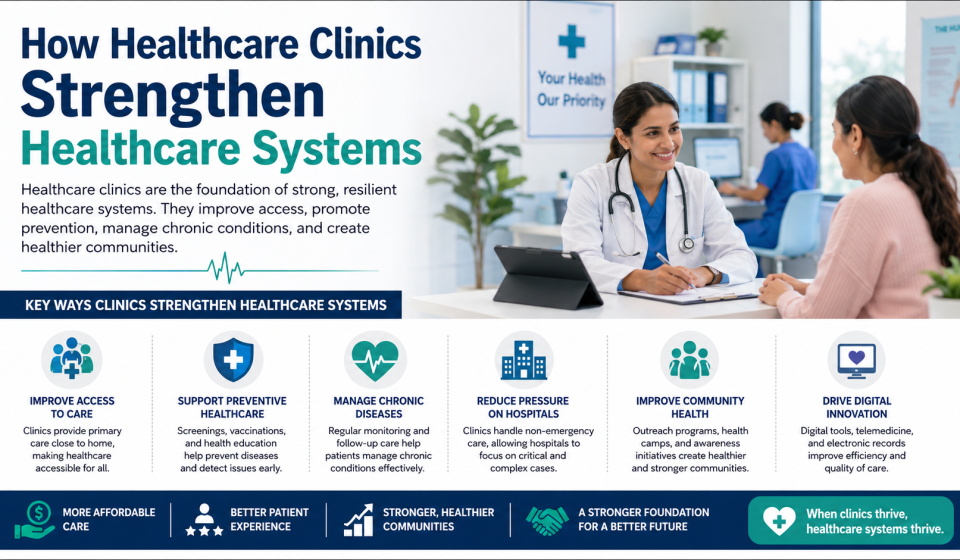

Healthcare clinics play a powerful role in building stronger, more accessible, and more efficient healthcare systems. While hospitals often handle emergencies and complex medical cases, clinics support communities through primary care, preventive services, early diagnosis, chronic disease management, follow-up care, and health education. They act as the first point of contact for many patients and help reduce pressure on larger healthcare facilities.
Clinics Improve Access to Primary Care
One of the biggest ways healthcare clinics strengthen healthcare systems is by improving access to primary care. Many patients visit clinics for common health concerns, regular checkups, vaccinations, screenings, and minor illnesses.
Primary care clinics provide convenient medical support close to where people live and work. This reduces the need for patients to travel long distances or visit hospitals for basic healthcare needs.
When people can access care early, health problems can be identified and treated before they become serious. This helps reduce complications, emergency visits, and hospital admissions.
Clinics Reduce Pressure on Hospitals
Hospitals are designed to manage serious, emergency, and specialized medical conditions. However, when patients visit hospitals for minor illnesses or routine checkups, hospital systems become overloaded.
Healthcare clinics help solve this problem by handling non-emergency medical needs. Patients can visit clinics for fever, infections, minor injuries, health screenings, medication refills, and follow-up care.
By managing these services at the clinic level, hospitals can focus on critical care, surgeries, and emergency treatment. This improves the overall efficiency of the healthcare system.
Clinics Support Preventive Healthcare
Preventive healthcare is one of the most important parts of a strong healthcare system. Instead of waiting for diseases to become serious, clinics help patients prevent illness through early action.
Common preventive services include:
- Routine health checkups
- Vaccinations
- Blood pressure monitoring
- Diabetes screening
- Cancer screening
- Cholesterol testing
- Lifestyle counseling
Preventive care helps detect health risks early. This leads to better treatment outcomes and lower healthcare costs in the long term.
Clinics Help Manage Chronic Diseases
Chronic diseases such as diabetes, hypertension, asthma, obesity, and heart disease require regular monitoring and long-term care. Clinics play a major role in helping patients manage these conditions.
Through regular visits, doctors and healthcare professionals can track symptoms, adjust medications, provide lifestyle advice, and monitor progress.
Chronic disease management at clinics helps patients stay healthier and reduces the risk of serious complications. This also lowers the burden on hospitals and emergency departments.
Clinics Improve Community Health
Healthcare clinics are closely connected to the communities they serve. Because they understand local health needs, clinics can provide targeted services that improve community health.
For example, clinics may organize:
- Free health camps
- Vaccination drives
- Awareness programs
- Maternal and child health services
- Nutrition counseling
- Mental health support
These community-focused efforts help educate people and encourage healthier lifestyles.
Clinics Make Healthcare More Affordable
Healthcare costs are a major concern for many patients. Clinics often provide more affordable care compared to hospitals, especially for routine medical needs.
Patients can receive consultations, basic tests, preventive services, and follow-up care at lower costs. This makes healthcare more accessible for families, low-income groups, and underserved communities.
Affordable clinic services help reduce financial barriers and support a more inclusive healthcare system.
Clinics Strengthen Early Diagnosis
Early diagnosis is essential for successful treatment. Clinics help identify diseases at an early stage through screenings, checkups, and regular patient monitoring.
When diseases are detected early, treatment is usually simpler, less expensive, and more effective. This is especially important for conditions such as diabetes, cancer, heart disease, and high blood pressure.
Early diagnosis also helps prevent disease progression and improves long-term patient outcomes.
Clinics Support Digital Healthcare Transformation
Modern healthcare clinics are adopting digital tools to improve service quality and efficiency.
Digital healthcare technologies include:
- Electronic health records
- Online appointment booking
- Telemedicine services
- Digital prescriptions
- Patient portals
- Remote patient monitoring
These tools make healthcare faster, safer, and more convenient. Digital records also help doctors access patient history quickly, reducing errors and improving treatment decisions.
Clinics Improve Patient Experience
A strong healthcare system is not only about treatment; it is also about patient experience. Clinics often provide a more personal and comfortable healthcare environment.
Patients may experience shorter waiting times, easier communication, better follow-up, and more personalized attention.
When patients feel heard and supported, they are more likely to follow medical advice, attend appointments, and take care of their health.
Clinics Promote Health Education
Health education is a key part of long-term wellness. Clinics help patients understand their health conditions, treatment options, medications, and lifestyle choices.
Doctors and healthcare staff educate patients about:
- Healthy eating
- Exercise
- Medication use
- Disease prevention
- Mental health
- Hygiene
- Regular screenings
Educated patients make better health decisions, which strengthens the overall healthcare system.
Clinics Support Maternal and Child Health
Clinics play an important role in maternal and child healthcare. They provide prenatal care, postnatal care, child vaccinations, nutrition advice, and growth monitoring.
Regular clinic visits during pregnancy help detect risks early and support safe childbirth. Child health services ensure proper development and protection against preventable diseases.
Strong maternal and child healthcare improves the health of future generations.
Clinics Improve Mental Health Support
Mental health is now recognized as an essential part of overall healthcare. Many clinics are beginning to offer mental health screenings, counseling, stress management support, and referrals to specialists.
By including mental health services in primary care, clinics make it easier for patients to seek help early.
This reduces stigma and supports a more complete healthcare system that cares for both physical and mental well-being.
Clinics Help During Public Health Emergencies
During public health emergencies such as disease outbreaks, pandemics, or natural disasters, clinics are essential frontline healthcare providers.
Clinics help with:
- Testing
- Vaccination
- Patient guidance
- Community awareness
- Basic treatment
- Referrals to hospitals
Because clinics are located within communities, they can respond quickly and provide support where it is needed most.
Clinics Encourage Continuity of Care
Continuity of care means patients receive consistent medical support over time. Clinics are well-positioned to provide this because they often maintain long-term relationships with patients.
A regular clinic doctor understands a patient’s medical history, lifestyle, and health risks. This helps create better treatment plans and improves trust between patients and healthcare providers.
Continuity of care leads to better health outcomes and stronger patient satisfaction.
Clinics Support Healthcare Equity
Healthcare equity means ensuring that everyone has access to quality healthcare, regardless of income, location, age, or background.
Clinics help promote healthcare equity by serving rural areas, low-income neighborhoods, and underserved populations.
Mobile clinics, community clinics, and low-cost healthcare centers make medical care available to people who may otherwise struggle to access it.
Clinics Strengthen Referral Systems
Clinics also strengthen healthcare systems by connecting patients to the right level of care. When a patient needs specialized treatment, the clinic can refer them to hospitals, specialists, or diagnostic centers.
This organized referral system ensures patients receive appropriate care without unnecessary delays.
It also helps prevent overcrowding in hospitals by making sure only patients who truly need advanced care are referred.
Clinics Support Better Healthcare Data
Healthcare clinics collect valuable patient data through checkups, screenings, and treatment records. This data helps healthcare systems understand disease trends, patient needs, and community health risks.
With proper data management, clinics can help improve planning, resource allocation, and public health strategies.
Better healthcare data leads to smarter decision-making and improved healthcare delivery.
Source
https://sl1nk.com/y7z5wfx
https://sl1nk.com/6lqxdoi
Conclusion
Healthcare clinics are essential building blocks of strong healthcare systems. They improve access to primary care, reduce pressure on hospitals, support preventive healthcare, manage chronic diseases, and promote better community health.
By offering affordable, accessible, and patient-centered services, clinics help create a healthcare system that is more efficient and responsive to people’s needs. As healthcare challenges continue to grow, clinics will remain vital in delivering early care, improving health outcomes, and supporting healthier communities.
A strong healthcare system depends not only on hospitals and specialists but also on well-functioning clinics that serve patients every day.
FAQs
1. Why are healthcare clinics important for healthcare systems?
Healthcare clinics are important because they provide primary care, preventive services, early diagnosis, chronic disease management, and follow-up care. They help reduce pressure on hospitals and improve access to healthcare.
2. How do clinics reduce hospital overcrowding?
Clinics treat non-emergency conditions such as minor illnesses, routine checkups, screenings, and follow-up care. This allows hospitals to focus on emergencies and complex medical cases.
3. How do clinics support preventive healthcare?
Clinics offer vaccinations, screenings, health checkups, lifestyle counseling, and early disease detection. These services help prevent serious health problems.
4. Why are clinics important for chronic disease management?
Patients with chronic diseases need regular monitoring and long-term care. Clinics help manage conditions like diabetes, high blood pressure, asthma, and heart disease.
5. How do digital tools improve clinic services?
Digital tools such as electronic health records, telemedicine, online booking, and patient portals make clinic services faster, more organized, and more convenient.