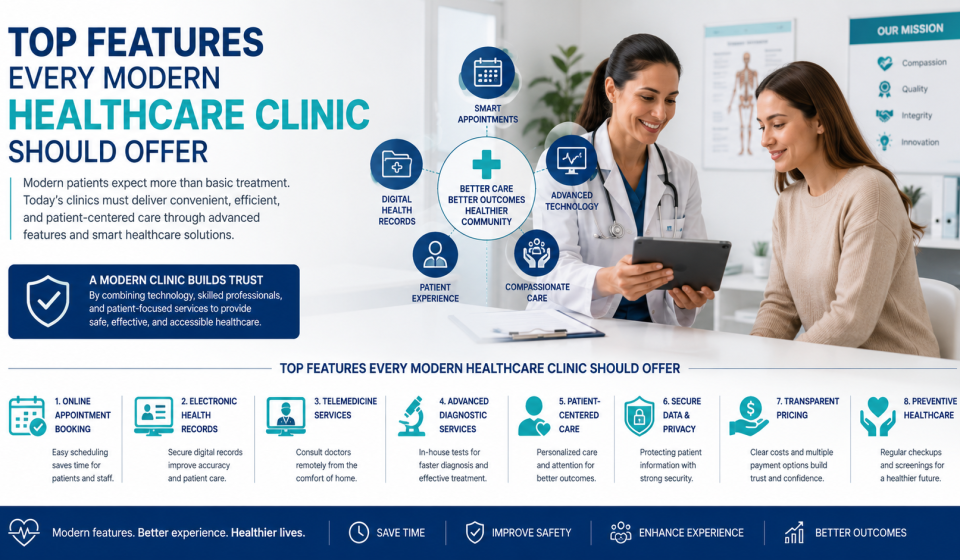

Healthcare clinics are no longer simple places where patients visit only when they feel sick. Today, a modern healthcare clinic plays a major role in preventive care, early diagnosis, personalized treatment, and long-term wellness. Patients now expect faster service, digital convenience, expert doctors, clean facilities, and a smooth overall experience.
1. Easy Online Appointment Booking
One of the most important features every modern healthcare clinic should offer is online appointment booking. Patients do not want to wait on long phone calls or visit the clinic just to schedule a consultation.
With online booking, patients can choose a doctor, select a suitable time, and confirm their appointment within minutes. This saves time for both patients and clinic staff. It also reduces confusion, missed calls, and scheduling errors.
2. Electronic Health Records
Electronic Health Records, also known as EHR, are essential for modern clinics. Instead of keeping paper files, clinics can store patient history, test reports, prescriptions, allergies, and treatment plans digitally.
This helps doctors access accurate patient information quickly. It also improves diagnosis, avoids repeated tests, and supports better treatment decisions. EHR systems make healthcare more organized, secure, and efficient.
3. Qualified and Experienced Medical Staff
A modern clinic must have skilled doctors, nurses, and support staff. Patients trust clinics that have experienced professionals who can explain health issues clearly and provide proper treatment.
Friendly and trained staff also improve the patient experience. From reception to consultation, every team member should be professional, polite, and helpful.
4. Clean and Comfortable Environment
Cleanliness is one of the most important features of a healthcare clinic. A clean clinic protects patients from infections and creates trust.
Modern clinics should have hygienic waiting areas, sanitized consultation rooms, clean washrooms, proper waste disposal, and comfortable seating. A peaceful and well-maintained environment helps patients feel relaxed and safe.
5. Advanced Diagnostic Services
Patients prefer clinics that offer basic diagnostic services in one place. Facilities like blood tests, X-rays, ECG, ultrasound, and health screenings can make treatment faster and more convenient.
When diagnostic services are available within the clinic, patients do not need to visit multiple locations. This saves time and helps doctors start treatment quickly.
6. Telemedicine Services
Telemedicine has become an important part of modern healthcare. It allows patients to consult doctors through video calls, phone calls, or online platforms.
This feature is especially useful for follow-up visits, minor health issues, elderly patients, and people living far from the clinic. Telemedicine improves healthcare access and makes medical advice more convenient.
7. Transparent Pricing
A trusted healthcare clinic should offer clear and transparent pricing. Patients should understand consultation fees, test charges, treatment costs, and payment options before receiving services.
Transparent pricing builds trust and avoids confusion. It also helps patients make informed healthcare decisions without stress.
8. Patient-Centered Care
Modern clinics should focus on patient-centered care. This means treating every patient with respect, understanding their needs, and offering personalized treatment plans.
Doctors should listen carefully, explain conditions in simple language, and answer patient questions. When patients feel heard and respected, they are more likely to follow medical advice and continue care.
9. Preventive Health Checkups
A modern healthcare clinic should not only treat diseases but also help prevent them. Preventive health checkups can detect health problems early before they become serious.
Services like annual health exams, blood pressure checks, diabetes screening, cholesterol tests, and vaccination programs help patients maintain better health. Preventive care also reduces long-term medical expenses.
10. Digital Prescription System
Digital prescriptions make the treatment process faster and safer. Doctors can create prescriptions electronically, reducing handwriting errors and confusion.
Patients can easily understand their medicines, dosage, and instructions. Some clinics also send prescriptions through email or mobile apps, making it easier for patients to access them anytime.
11. Emergency Support and First Aid
Every modern clinic should be prepared for basic medical emergencies. While clinics may not replace hospitals in serious cases, they should provide first aid, emergency stabilization, and quick referral support.
Emergency support can help patients during sudden illness, minor injuries, allergic reactions, breathing problems, or accidents. Having trained staff and basic emergency equipment is very important.
12. Multi-Specialty Services
Many patients prefer clinics that offer multiple healthcare services under one roof. A modern clinic may include general physicians, pediatricians, gynecologists, dermatologists, dentists, physiotherapists, and nutrition experts.
Multi-specialty services save time and provide complete care for families. Patients can consult different specialists without visiting separate medical centers.
13. Secure Patient Data Protection
Patient privacy is a major responsibility for every clinic. Modern clinics must protect personal health information using secure digital systems.
Strong passwords, encrypted records, limited staff access, and proper data policies help keep patient information safe. When patients know their data is protected, they feel more confident using clinic services.
14. Health Education and Awareness
A good clinic should educate patients about healthy living, disease prevention, medicine use, diet, exercise, and lifestyle changes.
This can be done through blogs, posters, videos, newsletters, workshops, or doctor counseling. Health education helps patients take better care of themselves and avoid future complications.
15. Smooth Billing and Payment Options
Modern clinics should offer simple billing and multiple payment options. Patients should be able to pay through cash, card, UPI, online payment, or insurance support.
A smooth billing system reduces waiting time and improves the overall clinic experience. Clear invoices and digital receipts also make the process more professional.
16. Follow-Up Care System
Follow-up care is very important for complete treatment. A modern clinic should remind patients about future visits, test reviews, medicine updates, and ongoing health monitoring.
Automated SMS, email reminders, or phone calls can help patients stay connected with their treatment plan. Regular follow-ups improve recovery and long-term health outcomes.
17. Accessible Location and Facilities
A healthcare clinic should be easy to reach. Good location, parking space, wheelchair access, clear signage, and comfortable entry points are important for patients of all ages.
Accessibility is especially important for elderly patients, disabled individuals, pregnant women, and emergency cases. A patient-friendly clinic should make every visit easy and stress-free.
Source
https://l1nq.com/ka313dx
https://l1nq.com/a26q2st
Conclusion
A modern healthcare clinic must offer more than basic medical treatment. Today’s patients expect convenience, safety, technology, transparency, and compassionate care. Features like online appointment booking, electronic health records, telemedicine, preventive checkups, advanced diagnostics, and patient-centered service can greatly improve clinic quality.
Clinics that invest in modern facilities and digital healthcare solutions can provide faster, safer, and more reliable care. By combining skilled medical professionals with advanced technology, healthcare clinics can build trust, improve patient satisfaction, and create better health outcomes for the community.
FAQs
1. What makes a healthcare clinic modern?
A modern healthcare clinic uses advanced technology, trained medical staff, digital records, online booking, clean facilities, and patient-focused care to improve service quality.
2. Why are electronic health records important in clinics?
Electronic health records help doctors access patient information quickly, reduce errors, improve diagnosis, and make treatment more organized.
3. Should every clinic offer telemedicine?
Yes, telemedicine is useful for follow-ups, minor health concerns, remote patients, and people who cannot visit the clinic physically.
4. Why is preventive care important in clinics?
Preventive care helps detect health problems early, reduces serious illness risks, and supports long-term wellness.
5. How can clinics improve patient satisfaction?
Clinics can improve patient satisfaction by offering easy appointments, friendly staff, clean facilities, transparent pricing, quick service, and personalized care.