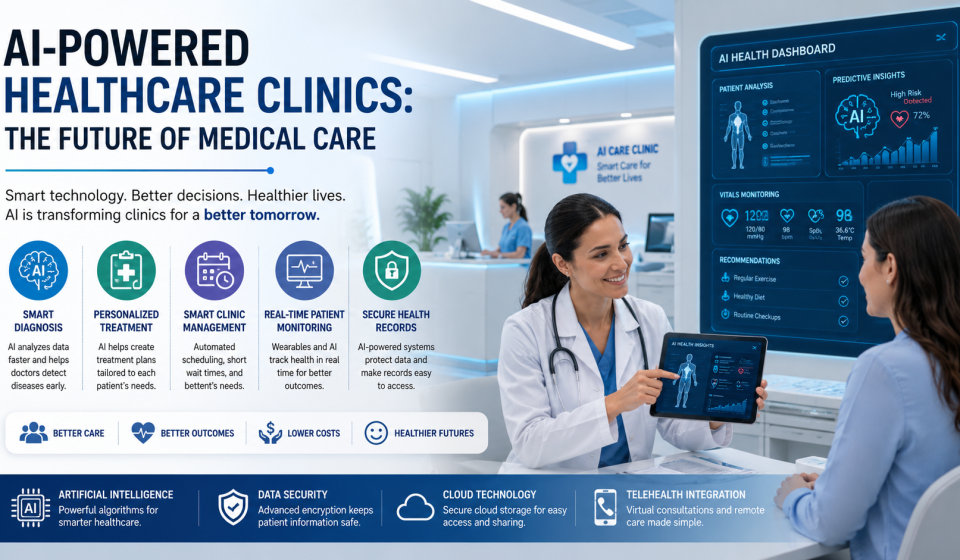

Artificial intelligence is changing the way healthcare clinics diagnose, treat, and support patients. From faster medical reports to personalized treatment plans, AI-powered healthcare clinics are becoming an important part of modern medical care. These clinics use smart technology to help doctors make better decisions, reduce waiting time, improve patient experience, and provide more accurate healthcare services.
What Are AI-Powered Healthcare Clinics?
AI-powered healthcare clinics are medical clinics that use artificial intelligence tools to improve healthcare services. These tools can analyze patient data, support diagnosis, predict health risks, manage appointments, read medical images, and assist doctors in treatment planning.
AI does not replace doctors. Instead, it works as a smart assistant that helps healthcare professionals provide faster and more informed care. Doctors still make the final decisions, but AI helps them access useful insights quickly.
How AI Improves Diagnosis
One of the biggest benefits of AI in healthcare clinics is faster and more accurate diagnosis. AI systems can study medical reports, symptoms, test results, and patient history to identify possible health conditions.
For example, AI can help detect early signs of diseases such as diabetes, heart disease, skin problems, eye disorders, and respiratory conditions. It can also support doctors in reading X-rays, scans, and lab reports. This helps reduce human error and improves the chances of early treatment.
Personalized Treatment Plans
Every patient is different. Age, lifestyle, medical history, genetics, allergies, and existing conditions can affect treatment. AI-powered clinics can analyze these factors and help doctors create personalized treatment plans.
Instead of using the same approach for every patient, AI helps clinics offer care that fits individual needs. This can improve recovery, reduce side effects, and increase patient satisfaction.
Faster Appointments and Reduced Waiting Time
Long waiting time is a common problem in many clinics. AI can improve clinic management by automating appointment scheduling, patient registration, reminders, and follow-up messages.
Smart systems can also prioritize urgent cases and guide patients to the right department. This saves time for both patients and medical staff. As a result, clinics can serve more patients without reducing care quality.
AI in Preventive Healthcare
Preventive care is one of the most important areas where AI can help. AI can identify health risks before they become serious problems. By analyzing patient data, AI tools can predict the chances of conditions such as high blood pressure, diabetes, heart disease, obesity, and chronic illness.
Healthcare clinics can then guide patients with lifestyle advice, regular checkups, diet plans, and early screenings. This helps patients stay healthier and reduces future medical expenses.
Better Patient Monitoring
AI-powered healthcare clinics can monitor patients more effectively, especially those with chronic diseases. Patients with diabetes, heart problems, asthma, or hypertension may need regular tracking.
AI tools connected with wearable devices can monitor heart rate, blood sugar, oxygen levels, sleep patterns, and physical activity. Doctors can use this data to understand patient health in real time and recommend changes when needed.
Improved Medical Records Management
Manual paperwork can slow down clinic services. AI-powered systems make medical records easier to store, update, and access. Digital health records allow doctors to quickly review patient history, past treatments, test results, and prescriptions.
This improves communication between doctors and patients. It also reduces mistakes caused by missing or incomplete information.
AI Chatbots for Patient Support
Many AI-powered clinics use chatbots to answer basic patient questions. These chatbots can help with appointment booking, medication reminders, symptom guidance, clinic timings, and follow-up instructions.
AI chatbots are available 24/7, which improves patient support outside clinic hours. However, they should be used for basic guidance only. Serious symptoms should always be checked by a qualified doctor.
Role of AI in Medical Imaging
Medical imaging is an important part of diagnosis. AI can help doctors analyze X-rays, CT scans, MRIs, ultrasounds, and other images more quickly. AI tools can identify patterns that may be difficult to notice at first glance.
This is especially useful for detecting early signs of tumors, fractures, infections, lung problems, and other medical conditions. Faster imaging analysis means quicker treatment decisions.
Benefits for Doctors and Healthcare Staff
AI is not only helpful for patients; it also supports doctors and clinic staff. Doctors can spend less time on repetitive tasks and more time focusing on patient care. AI can help prepare reports, organize records, suggest possible diagnoses, and track treatment progress.
Clinic staff can also manage appointments, billing, patient communication, and follow-ups more efficiently. This improves the overall working environment inside the clinic.
Benefits for Patients
Patients benefit from AI-powered healthcare clinics in many ways. They receive quicker service, better communication, personalized care, and improved follow-up support. AI also helps patients understand their health better through digital reports, reminders, and preventive care guidance.
For patients living in busy cities or remote areas, AI-based systems can make healthcare more accessible and convenient.
Challenges of AI in Healthcare Clinics
Although AI has many benefits, there are also challenges. Clinics must protect patient data and privacy. AI systems should be accurate, secure, and regularly updated. Doctors and staff also need proper training to use AI tools correctly.
Another challenge is trust. Some patients may feel uncomfortable with AI-based systems. Clinics must explain that AI supports doctors but does not replace human care.
The Future of AI-Powered Healthcare Clinics
The future of healthcare clinics will likely include more digital tools, smarter diagnosis, remote monitoring, virtual consultations, and personalized treatment. AI will help clinics become more efficient, patient-friendly, and preventive-focused.
As technology improves, AI-powered clinics may become common in cities, towns, and rural areas. These clinics can help reduce pressure on hospitals and make quality healthcare available to more people.
Source
https://sl1nk.com/egk2k8f
https://l1nq.com/fplc7w5
Conclusion
AI-powered healthcare clinics represent the future of medical care. By combining human expertise with smart technology, these clinics can improve diagnosis, reduce waiting time, personalize treatment, and support preventive healthcare.
AI is not replacing doctors; it is helping them provide better care. Patients can benefit from faster services, better monitoring, digital records, and more personalized health guidance. As healthcare needs continue to grow, AI-powered clinics will play a major role in creating a smarter, safer, and more accessible medical system.
FAQs
1. What is an AI-powered healthcare clinic?
An AI-powered healthcare clinic is a medical clinic that uses artificial intelligence tools to improve diagnosis, treatment planning, patient support, and clinic management.
2. Can AI replace doctors in clinics?
No, AI cannot replace doctors. It supports doctors by providing data-based insights, but final medical decisions are made by qualified healthcare professionals.
3. How does AI help in diagnosis?
AI analyzes medical reports, symptoms, images, and patient history to help doctors detect health problems faster and more accurately.
4. Are AI-powered healthcare clinics safe?
Yes, AI-powered clinics can be safe when they use secure systems, protect patient data, and allow doctors to supervise all medical decisions.
5. How does AI improve patient experience?
AI improves patient experience by reducing waiting time, managing appointments, sending reminders, supporting follow-ups, and providing faster reports.