
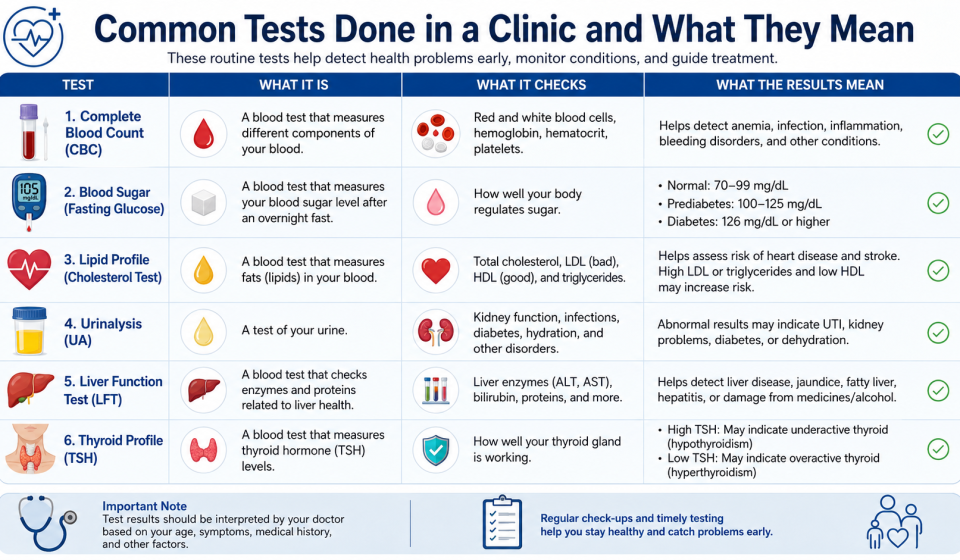

Learn about the most common tests done in a clinic, what they measure, why doctors recommend them, and how to understand the results. A simple guide for Indian patients and families.
Have you ever visited a clinic for a routine checkup and been advised to undergo a few tests? Many people feel confused when doctors recommend blood tests, urine tests, blood pressure checks, or ECGs. Some patients even worry that these tests mean something serious is wrong.
In reality, diagnostic tests are an important part of healthcare. They help doctors understand what is happening inside the body and make accurate treatment decisions. Whether you visit a clinic for fever, fatigue, diabetes management, heart concerns, or a routine health checkup, these tests provide valuable information about your health.
For example, if someone visits a clinic complaining of constant tiredness, a simple blood test may reveal anemia. Similarly, frequent urination and excessive thirst could indicate diabetes through a blood sugar test.
This guide explains the most common tests performed in clinics and what their results generally mean, helping patients feel more informed and confident during their healthcare journey.
Why Do Clinics Recommend Diagnostic Tests?
Doctors do not recommend tests without reason. Medical tests help healthcare professionals:
- Confirm a diagnosis
- Detect diseases early
- Monitor existing medical conditions
- Evaluate treatment effectiveness
- Prevent future health complications
Early detection often leads to better treatment outcomes and lower healthcare costs.
1. Blood Pressure Test
One of the first checks performed during a clinic visit is blood pressure measurement.
What It Measures
Blood pressure indicates the force of blood pushing against artery walls.
The reading is displayed as:
- Systolic Pressure (top number)
- Diastolic Pressure (bottom number)
Example: 120/80 mmHg
Why It Is Important
High blood pressure often develops without noticeable symptoms. Left untreated, it can increase the risk of:
- Heart disease
- Stroke
- Kidney problems
Real-Life Example
Rajesh, a 45-year-old office worker, visited a clinic for occasional headaches. During a routine blood pressure check, his reading was consistently high. Early detection helped him make lifestyle changes and avoid future complications.
2. Complete Blood Count (CBC)
A CBC is among the most commonly ordered blood tests in clinics.
What It Measures
The test evaluates:
- Red Blood Cells (RBCs)
- White Blood Cells (WBCs)
- Hemoglobin levels
- Platelets
Why Doctors Recommend It
A CBC helps identify:
- Anemia
- Infections
- Blood disorders
- Inflammation
Understanding the Results
- Low hemoglobin may indicate anemia.
- High white blood cells may suggest infection.
- Low platelets may increase bleeding risk.
Real-Life Example
Priya frequently felt tired and dizzy. A CBC test revealed low hemoglobin levels, confirming iron deficiency anemia. After treatment and dietary improvements, her energy levels improved significantly.
3. Blood Sugar Test
Blood sugar testing is extremely common, especially in India where diabetes cases continue to rise.
What It Measures
The test checks glucose levels in the blood.
Common types include:
- Fasting Blood Sugar (FBS)
- Post-Meal Blood Sugar (PPBS)
- HbA1c Test
Why It Is Important
The test helps diagnose:
- Prediabetes
- Type 2 Diabetes
- Poor diabetes control
Understanding the Results
Higher-than-normal glucose levels may indicate diabetes or increased diabetes risk.
Real-Life Example
A 38-year-old businessman noticed excessive thirst and frequent urination. A blood sugar test confirmed diabetes, allowing early management through medication, diet, and exercise.
4. Urine Routine Examination
Urine tests provide valuable information about overall health.
What It Measures
The sample is examined for:
- Sugar
- Protein
- Blood cells
- Bacteria
- Ketones
Why Doctors Recommend It
It helps detect:
- Urinary tract infections (UTIs)
- Kidney disorders
- Diabetes
- Dehydration
Understanding the Results
- Presence of bacteria may indicate infection.
- Protein in urine may suggest kidney issues.
- Sugar in urine can be linked to diabetes.
5. Lipid Profile Test
A lipid profile measures different types of fats present in the blood.
What It Measures
- Total Cholesterol
- LDL (Bad Cholesterol)
- HDL (Good Cholesterol)
- Triglycerides
Why It Is Important
The test helps assess heart disease risk.
Understanding the Results
- High LDL levels can increase heart risks.
- Higher HDL levels are generally beneficial.
- Elevated triglycerides may indicate metabolic concerns.
Real-Life Example
A 50-year-old patient underwent a preventive health checkup. Although he felt healthy, a lipid profile revealed high cholesterol levels, allowing early intervention through lifestyle modifications.
6. Thyroid Function Test
The thyroid gland controls metabolism and energy production.
What It Measures
Common markers include:
- TSH
- T3
- T4
Why Doctors Recommend It
Symptoms prompting thyroid testing include:
- Fatigue
- Weight changes
- Hair loss
- Mood changes
Understanding the Results
Abnormal levels may indicate:
- Hypothyroidism
- Hyperthyroidism
Real-Life Example
Neha experienced unexplained weight gain despite healthy eating habits. A thyroid test revealed hypothyroidism, and treatment helped restore her energy levels.
7. Electrocardiogram (ECG)
An ECG records the heart’s electrical activity.
What It Measures
The test evaluates:
- Heart rhythm
- Heart rate
- Electrical conduction patterns
Why Doctors Recommend It
Doctors may order an ECG for:
- Chest pain
- Palpitations
- Dizziness
- Heart disease screening
Understanding the Results
Abnormal ECG patterns can indicate:
- Arrhythmias
- Previous heart damage
- Heart-related conditions
Real-Life Example
A patient experiencing irregular heartbeats underwent an ECG during a clinic visit. The test identified a rhythm issue that was treated before it became serious.
8. Liver Function Test (LFT)
The liver performs many essential functions including digestion and detoxification.
What It Measures
The test evaluates:
- Liver enzymes
- Bilirubin levels
- Protein levels
Why Doctors Recommend It
It helps detect:
- Fatty liver disease
- Hepatitis
- Liver injury
- Medication-related liver problems
Understanding the Results
Elevated enzyme levels may suggest liver inflammation or damage.
9. Kidney Function Test (KFT)
Kidney function tests assess how effectively the kidneys filter waste.
What It Measures
Key markers include:
- Creatinine
- Blood Urea Nitrogen (BUN)
- Estimated filtration rate
Why Doctors Recommend It
Doctors often recommend it for patients with:
- Diabetes
- High blood pressure
- Kidney disease symptoms
Understanding the Results
Abnormal results may indicate reduced kidney function and require further evaluation.
10. Vitamin D and Vitamin B12 Tests
Modern lifestyles often contribute to vitamin deficiencies.
What They Measure
The tests determine vitamin levels in the body.
Why Doctors Recommend Them
Deficiencies may cause:
- Fatigue
- Weakness
- Bone pain
- Numbness
- Memory issues
Understanding the Results
Low levels may require supplements, dietary changes, or additional medical evaluation.
Preparing for Clinic Tests
Patients can improve test accuracy by following medical instructions carefully.
Tips include:
- Follow fasting requirements when advised.
- Stay hydrated unless instructed otherwise.
- Inform the doctor about current medications.
- Carry previous reports for comparison.
- Ask questions if any instructions are unclear.
Being prepared helps ensure reliable test results and better clinical decisions.
The Importance of Regular Health Screening
Many health conditions develop silently. High blood pressure, diabetes, high cholesterol, and thyroid disorders may not cause obvious symptoms initially.
Routine clinic tests allow doctors to identify problems before they become serious. Preventive healthcare not only improves quality of life but can also reduce long-term treatment costs.
A simple checkup today can prevent major health complications tomorrow.
Sources
https://l1nq.com/xv5tqzk
https://sl1nk.com/ohtpdwc
Conclusion
Diagnostic tests are valuable tools that help doctors understand your health and provide appropriate treatment. From blood pressure checks and blood sugar tests to ECGs and thyroid evaluations, each test serves a specific purpose in identifying health concerns early.
Patients should not view these tests as something to fear. Instead, they should see them as an opportunity to gain important insights into their health. Understanding what common clinic tests mean can reduce anxiety, improve communication with healthcare providers, and encourage proactive healthcare decisions.
Regular screenings, timely medical consultations, and healthy lifestyle habits remain some of the most effective ways to maintain long-term well-being.
Frequently Asked Questions (FAQs)
1. Are clinic diagnostic tests painful?
Most clinic tests involve little or no discomfort. Blood tests may cause a brief needle prick, while tests like blood pressure measurement, ECG, and urine tests are generally painless.
2. How often should I get routine health tests done?
Healthy adults should generally consider annual health checkups. Individuals with diabetes, hypertension, or other chronic conditions may require more frequent monitoring.
3. Do I need to fast before every blood test?
No. Some tests, such as fasting blood sugar and certain lipid profile tests, may require fasting. Always follow your doctor’s instructions.
4. Can abnormal test results always mean a serious disease?
Not necessarily. Many factors can affect test results, including temporary illness, medications, dehydration, and lifestyle habits. Doctors interpret results alongside symptoms and medical history.
5. Why do doctors recommend multiple tests together?
Different tests provide different pieces of information. Combining results helps doctors make a more accurate diagnosis and create an effective treatment plan.