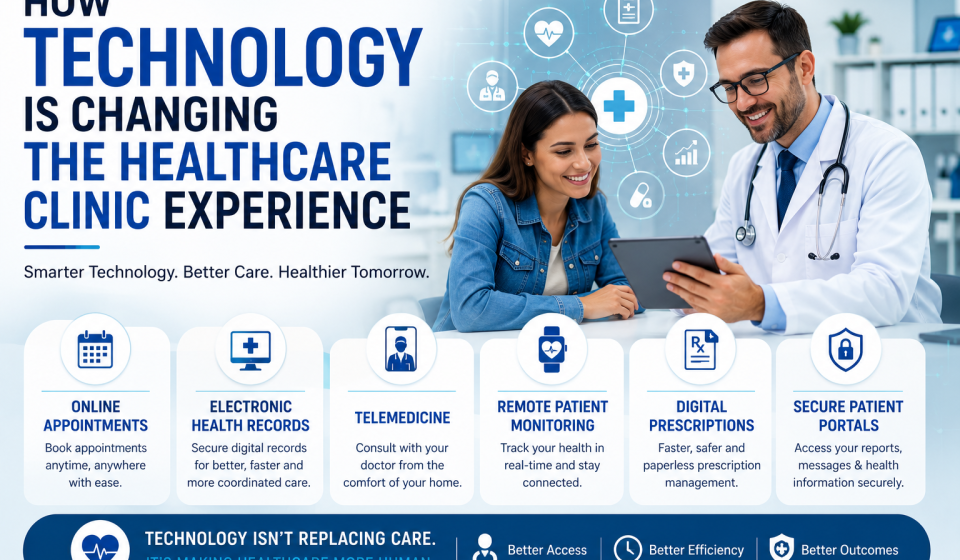

Patients today expect convenient healthcare experiences that save time while providing accurate diagnoses and personalized treatment plans.
Technology has transformed nearly every aspect of our daily lives, and healthcare is no exception. Modern healthcare clinics are rapidly adopting innovative technologies that improve patient care, streamline operations, and enhance communication between healthcare providers and patients. From online appointment scheduling and electronic health records to telemedicine consultations and artificial intelligence (AI)-powered diagnostics, technology is making healthcare more accessible, efficient, and patient-centered than ever before. Healthcare clinics have responded by integrating digital tools that reduce paperwork, shorten waiting times, improve medical accuracy, and increase patient satisfaction. These technological advancements not only benefit patients but also enable healthcare professionals to deliver higher-quality care with greater efficiency.
The Digital Transformation of Healthcare Clinics
Healthcare clinics have evolved from paper-based systems to digitally connected healthcare environments.
Modern clinics now utilize technologies such as:
- Electronic Health Records (EHR)
- Online appointment booking
- Patient portals
- Telemedicine services
- AI-assisted diagnostics
- Digital prescription management
- Remote patient monitoring
These innovations reduce administrative work while improving patient care and operational efficiency.
Electronic Health Records Improve Patient Care
Electronic Health Records (EHRs) have largely replaced traditional paper files.
Benefits include:
- Faster access to medical history
- Better coordination between healthcare providers
- Reduced paperwork
- Fewer documentation errors
- Improved medication tracking
- Easy sharing of patient information between specialists
Doctors can quickly review previous diagnoses, allergies, medications, and lab results, leading to better clinical decisions.
Online Appointment Scheduling Saves Time
Gone are the days of waiting on hold to book a medical appointment.
Many healthcare clinics now offer online scheduling systems that allow patients to:
- Book appointments anytime
- Reschedule visits
- Cancel appointments
- Receive appointment reminders
- Check doctor availability
This convenience reduces missed appointments and improves clinic efficiency.
Telemedicine Is Expanding Access to Healthcare
Telemedicine has become one of the biggest healthcare innovations in recent years.
Patients can now consult healthcare providers through secure video or phone appointments.
Telemedicine is ideal for:
- Follow-up visits
- Minor illnesses
- Medication reviews
- Mental health consultations
- Chronic disease management
- Health education
Benefits include:
- Reduced travel time
- Greater convenience
- Increased access for rural communities
- Lower healthcare costs
- Faster consultations
Artificial Intelligence Is Supporting Better Diagnoses
Artificial Intelligence (AI) is assisting healthcare professionals by analyzing large amounts of medical data quickly and accurately.
AI applications include:
- Medical image analysis
- Disease risk prediction
- Clinical decision support
- Appointment optimization
- Symptom assessment
- Personalized treatment recommendations
While AI does not replace doctors, it enhances their ability to make informed decisions.
Remote Patient Monitoring Enhances Chronic Care
Remote monitoring devices allow healthcare providers to track patients’ health without requiring frequent clinic visits.
Examples include:
- Blood pressure monitors
- Glucose monitoring devices
- Heart rate trackers
- Smartwatches
- Pulse oximeters
Healthcare providers receive ongoing health data, allowing early intervention when necessary.
Digital Prescriptions Improve Medication Safety
Electronic prescribing has simplified medication management.
Benefits include:
- Faster prescription delivery
- Reduced handwriting errors
- Improved medication tracking
- Automatic refill reminders
- Better communication with pharmacies
Patients receive medications more efficiently while reducing prescription-related mistakes.
Patient Portals Improve Communication
Patient portals provide secure online access to personal healthcare information.
Patients can:
- View test results
- Access medical records
- Message healthcare providers
- Request prescription refills
- Schedule appointments
- Review treatment plans
This improves transparency and encourages patients to take a more active role in their healthcare.
Faster Diagnostic Technology Improves Treatment
Modern diagnostic equipment enables quicker and more accurate diagnoses.
Technologies commonly found in healthcare clinics include:
- Digital X-rays
- Ultrasound imaging
- Automated laboratory testing
- Point-of-care diagnostic devices
- Portable imaging systems
Rapid diagnostics help doctors begin treatment sooner and improve patient outcomes.
Enhanced Data Security Protects Patient Information
As healthcare becomes more digital, protecting patient data is a top priority.
Healthcare clinics invest in:
- Data encryption
- Secure cloud storage
- Multi-factor authentication
- Cybersecurity monitoring
- Access controls
- Regular security updates
These measures help protect sensitive medical information from unauthorized access.
Technology Improves the Overall Patient Experience
Patients benefit from technology throughout their healthcare journey.
Advantages include:
- Shorter waiting times
- Easier appointment scheduling
- Faster diagnoses
- Better communication
- Convenient virtual consultations
- Personalized healthcare
- Increased access to specialists
Overall, technology creates a smoother, more efficient healthcare experience.
Challenges of Healthcare Technology
Despite its many advantages, technology also presents challenges.
Some concerns include:
- Cybersecurity risks
- Privacy concerns
- High implementation costs
- Staff training requirements
- Digital literacy barriers for some patients
- Dependence on internet connectivity
Healthcare organizations must balance innovation with patient privacy and accessibility.
The Future of Healthcare Clinics
Healthcare technology continues to evolve rapidly.
Future innovations may include:
- AI-powered virtual assistants
- Predictive healthcare analytics
- Wearable health sensors
- Robotic assistance
- Personalized genomic medicine
- Smart clinic automation
- Virtual reality rehabilitation
- Blockchain-based health records
These advancements have the potential to further improve patient outcomes while making healthcare more efficient and accessible.
Tips for Patients Using Digital Healthcare Services
To make the most of modern healthcare technology:
- Create secure passwords for patient portals.
- Keep personal health information updated.
- Attend virtual appointments from a private location.
- Use wearable devices as recommended by your healthcare provider.
- Ask questions if you’re unfamiliar with digital tools.
- Continue routine in-person visits when necessary.
Being comfortable with digital healthcare services can improve your overall healthcare experience.
source
https://sl1nk.com/nzhkz9q
https://l1nq.com/37r3d71
https://l1nq.com/r0k3bf1
Conclusion
Technology is transforming healthcare clinics by making medical care more accessible, efficient, and personalized than ever before. From electronic health records and telemedicine to AI-assisted diagnostics and remote patient monitoring, digital innovations are helping clinics deliver higher-quality care while improving convenience for patients. Although challenges such as cybersecurity and digital accessibility remain, the benefits of healthcare technology continue to outweigh the limitations. As new technologies emerge, healthcare clinics will become even more connected, patient-focused, and capable of providing faster, safer, and more effective medical care. Embracing these advancements allows both patients and healthcare professionals to build a healthier future together.
Frequently Asked Questions (FAQs)
1. How is technology improving healthcare clinics?
Technology improves healthcare clinics through electronic health records, telemedicine, online appointment scheduling, AI-assisted diagnostics, remote monitoring, and digital prescriptions, making care faster and more efficient.
2. What are Electronic Health Records (EHRs)?
Electronic Health Records are digital versions of patients’ medical histories that allow healthcare providers to access, update, and securely share health information.
3. What is telemedicine?
Telemedicine enables patients to consult healthcare providers remotely through secure video or phone appointments for many non-emergency medical needs.
4. How does AI help healthcare providers?
AI assists doctors by analyzing medical data, identifying patterns, supporting diagnoses, predicting health risks, and improving clinical decision-making.
5. Is online appointment scheduling safe?
Yes. Reputable healthcare clinics use secure systems that protect patient information while allowing convenient appointment management.